Six testing lines begin trials in Bac Ninh
FPT has begun trial operations at a semiconductor testing and packaging plant in northern Vietnam, adding a facility with six testing lines and a maximum design capacity of 300 million chips a year. The company announced the start on November 3, 2026, as Vietnamese businesses expand their role in an industry where domestic operations have largely focused on design and services provided by foreign investors.
Contents
- Six testing lines begin trials in Bac Ninh
- What happens when a chip is tested?
- Heat, humidity and static electricity also matter
- Management standards and AI are part of the buildout
- Experienced engineers will train the next group
- From power chip designs to a larger factory
- Vietnam is building several parts of the chip chain
- Viettel adds a security chip and an AI partnership
- A new business within a much larger technology group
- Key Points
The plant occupies 1,600 square metres in Yen Phong II-C Industrial Park in Bac Ninh province and is operated by FPT Analysis Technologies JSC. FPT describes it as the first facility of its kind in Vietnam owned and operated by a domestic company.
Its first commercial testing order is expected to come from a South Korean partner. FPT has not named the customer, disclosed the order volume or given a date for completing that work. The 300 million figure describes the plant's maximum annual design capacity; actual output will depend on orders and operating conditions as the facility moves through trials.
The immediate focus is checking chip functionality, quality and reliability. FPT also plans to develop more advanced testing and chip packaging technology, while using the plant to train students and expand services for customers in Vietnam and overseas.
What happens when a chip is tested?
FPT's plant combines automated test equipment, known as ATE, with machines called handlers. The tester checks whether a chip performs its intended functions and meets technical requirements. The handler places each chip in position, then sorts it according to whether it passes or fails.
A chip can contain many tiny electronic circuits, so testing involves more than switching it on. Engineers must decide which measurements matter for that particular design, set the conditions under which the measurements are taken and examine the results. A chip controlling electrical power needs a different testing programme from one processing images.
FPT engineers are developing programmes tailored to each chip's functions and specifications. Their work covers the parameters to measure, the testing conditions and the analysis needed to decide whether the product meets its requirements.
The testing area operates inside a Class 10,000 cleanroom, equivalent to ISO Class 7. This classification concerns the concentration of airborne particles. Controlling dust and the surrounding environment helps protect small electronic components and keep testing conditions consistent.
Packaging serves a different purpose: it places a chip in a protective structure and provides the connections needed to use it in an electronic device. FPT's initial operating priorities centre on testing, with deeper packaging capabilities included in its development plans.
Heat, humidity and static electricity also matter
FPT is also checking how chips withstand demanding conditions. The facility's reliability work includes exposure to high temperatures, repeated changes in temperature, and combinations of heat and humidity. These tests help engineers assess whether a component can meet the conditions required for its intended use.
A chip that functions during a short electrical check may still need to withstand extended heat or repeated temperature changes in a finished product. Reliability testing examines those demands, giving customers information beyond a simple pass or fail result for basic functions.
Static electricity is another concern during handling. A small electrical discharge from a person or a piece of equipment can damage sensitive components. The plant uses controls intended to reduce that risk as chips move through its processes.
FPT says it will expand the reliability testing area in line with international requirements for the competence of testing and calibration laboratories. Calibration means checking that measuring equipment gives dependable readings, an essential part of producing results customers can use.
Management standards and AI are part of the buildout
FPT is working towards management standards covering several parts of factory operations: ISO 9001 for quality, ISO 14001 for environmental management and ISO 45001 for occupational health and safety. Cleanroom controls follow the ISO 14644 framework.
Descriptions of the plant's standards differ in how far implementation has progressed. Some describe the management systems as operating under those standards, while others describe compliance as a goal still being pursued. The practical programme covers quality procedures, environmental controls, worker safety and product testing requirements.
FPT is also developing an artificial intelligence platform to automate parts of test programme development. Planned functions include standardising data, processing technical requirements, configuring tests and evaluating results.
The proposed AI work targets the engineering preparation needed for each chip design. Engineers currently define what to test and how to interpret the measurements. Automating parts of that preparation could help FPT handle a wider range of products as its customer base grows. The platform remains under development.
Experienced engineers will train the next group
FPT has assembled semiconductor testing and packaging specialists, including engineers who spent years working at Intel's Vietnam facility. Their responsibilities include establishing technical procedures, running equipment and training employees.
The company plans to open the plant to practical student training through a pilot programme with FPT Polytechnic College from December 2026. Students are expected to gain direct experience with testing equipment, production lines and operating procedures.
Vietnam's semiconductor workforce figures show why that practical element matters. Figures presented at the launch of a national chip prototyping support centre put the country's ecosystem at about 60 chip design companies, 7,000 chip engineers and 166 higher education institutions offering related programmes.
The factory gives students access to equipment and routines that classroom instruction alone cannot provide. For FPT, bringing training into the same facility as commercial testing creates a route for developing staff familiar with its machinery and technical processes.
From power chip designs to a larger factory
FPT says it has more than a decade of semiconductor experience. Its design work includes power integrated circuits and power management integrated circuits, or PMICs. These components help supply, regulate and distribute electricity inside electronic products.
The company delivered its first batch of chips based on its own power chip designs to a Japanese partner in 2025. The Bac Ninh facility adds testing services to that design activity, giving FPT another role in bringing semiconductor products to customers.
FPT is also researching AI-on-Edge systems on a chip. A system on a chip combines several computing functions in one component. Edge AI means processing information close to where it is collected, such as inside a camera or another device, rather than sending every task to a remote data centre.
The next planned expansion is substantial. During a second phase scheduled for 2028 to 2030, FPT intends to increase the plant's area from 1,600 to about 6,000 square metres and add testing and packaging lines. That would make the facility about 3.75 times its current size, an increase of roughly 4,400 square metres.
The main milestones stretch from the plant's announcement to a broader service and training operation:
- January 2026: FPT announced the testing and packaging plant.
- June 26, 2026: Vietnam's Ministry of Science and Technology launched the national VNMPW/CC chip prototyping support centre.
- November 3, 2026: FPT announced that the Bac Ninh facility had entered trial operations.
- December 2026: The practical training pilot with FPT Polytechnic College is planned to begin.
- 2028 to 2030: FPT plans to expand the factory to about 6,000 square metres.
Vietnam is building several parts of the chip chain
Vietnam's Ministry of Science and Technology put the industry at about 60 chip design companies, eight packaging and testing projects, and more than 20 semiconductor materials and equipment suppliers as of late 2025. Foreign companies already operating in the country include Intel, Amkor Technology and Hana Micron in assembly, testing and packaging.
The national semiconductor strategy aims for at least 100 design companies, one small fabrication plant and 10 packaging and testing facilities by 2030. Longer term goals for 2050 include 300 design companies, three fabrication plants and 20 packaging and testing facilities.
FPT's plant fits into the testing and packaging part of that plan. Wafer fabrication is a separate stage, where electronic circuits are manufactured on thin discs of semiconductor material before individual chips are separated and prepared for use.
The national VNMPW/CC centre addresses another step: helping researchers and companies turn designs into physical prototypes. Its role is to connect domestic design needs with manufacturing services and support testing and evaluation after fabrication.
Nguyen Khac Lich, director of the information technology industry department at the Ministry of Science and Technology, has identified the ability to turn designs into actual chips as a constraint on Vietnam's progress. Prototype production involves costly steps, including tape-out, the release of a completed chip design for manufacturing.
Together, the prototyping centre and FPT's testing facility address different practical needs. Designers need access to manufacturing to obtain a physical chip, then measurements to learn whether it works as intended.
Viettel adds a security chip and an AI partnership
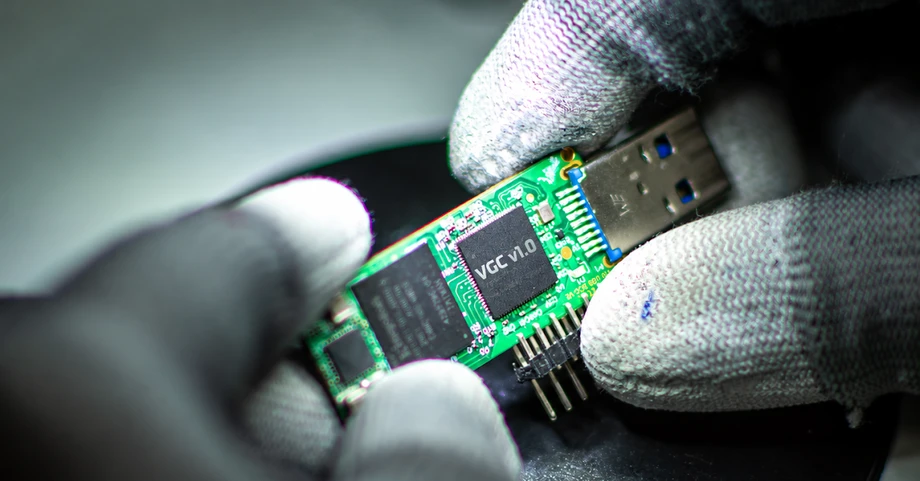
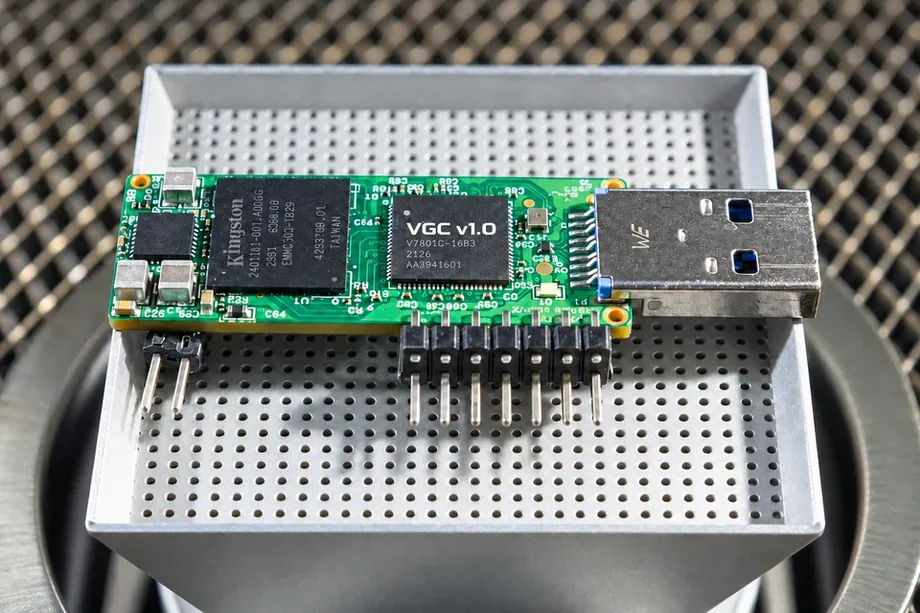
Viettel and the Government Cipher Committee also unveiled domestic security semiconductor capabilities on November 3. Viettel's VGC v1.0 security chip contains 300 million transistors, uses a 28 nanometre manufacturing process and fits into a package measuring 10 by 10 millimetres.
The developers say tests showed the chip could encrypt and decrypt data about 15 times faster than a solution performing the same tasks only through software. Encryption turns readable information into protected data that requires the correct key to unlock.
Viettel says VGC v1.0 is already used in secure USB storage devices for government and defence agencies. Viettel and the Government Cipher Committee signed an agreement to plan volume production and develop a security platform with multiple processing cores and dedicated cryptographic components.
The associated security semiconductor platform uses RISC-V, an open standard defining the instructions a processor can execute. Viettel says this gives its engineers scope to design and modify processors while controlling core design and verification work.
Viettel chairman and chief executive Tao Duc Thang described the company's ambition to develop domestic technology:
Being a latecomer does not mean accepting dependence on others,
He also set out the approach Viettel intends to take:
With the right strategy, focused resources and sustained commitment, we can progressively close the gap and ultimately gain control over technologies of strategic importance to our country.
FPT and Viettel had announced plans in January to jointly develop AI chips for cameras, drones and other smart devices. Their partnership spans design, manufacturing, testing and packaging, connecting FPT's new services to a wider domestic development effort.
A new business within a much larger technology group
FPT's factory programme comes as the group reports growth across its broader business. For the first nine months of 2026, consolidated revenue reached VND40,023 billion, about $1.5 billion, up 12.4 percent. Profit before tax rose 17 percent to VND8,770 billion.
The technology segment, including domestic and overseas information technology services, contributed 89 percent of revenue and 58 percent of profit before tax. Those figures show the scale of the existing services business alongside the newer semiconductor operation.
Revenue in the education, investment and other segment fell 3.1 percent to VND4,508 billion, while its profit before tax rose 17.6 percent to VND3,719 billion. FPT did not disclose a separate revenue or profit figure for the Bac Ninh plant.
The next concrete steps are the expected South Korean testing order and the student training pilot planned for December. Over the following years, FPT intends to expand laboratory capabilities, develop packaging technology and enlarge the factory. For Vietnamese chip designers, the immediate change is access to another domestic provider able to check whether their products function correctly and withstand demanding conditions.
Key Points
- FPT announced trial operations on November 3, 2026, at its semiconductor testing and packaging plant in Bac Ninh.
- The 1,600 square metre facility has six testing lines and maximum design capacity of 300 million chips annually.
- Initial services focus on chip functionality, quality and reliability, with the first testing order expected from a South Korean partner.
- FPT is developing AI tools for test programme preparation and plans student training from December 2026.
- An expansion planned for 2028 to 2030 would increase the factory's area to about 6,000 square metres.
- The plant adds domestic testing capacity alongside Vietnam's chip design, prototyping and security semiconductor initiatives.