Engineering recruitment meets investment in aircraft testing
Viettel is recruiting engineers to develop aircraft with pilots on board while preparing equipment for helicopter and fixed wing aircraft research at a site covering 14.6 hectares. A procurement package published on October 21, 2026, covers tools and equipment for aircraft integration and testing, with a contract implementation period of 170 days.
Contents
- Engineering recruitment meets investment in aircraft testing
- What the engineering vacancies reveal
- Helicopter work brings a separate set of demands
- What the H2 workshop and TN1 test area will support
- Simulation research adds another strand
- How the aviation effort developed
- A broader research investment at Hoa Lac
- What is still awaiting announcement
- Key Points
The recruitment is being led by the Viettel Aviation Technology Center (VATC), part of Vietnam's Military Industry and Telecoms Group. Its vacancies span engine research, aerodynamics, mechanical design, composite materials, electrical systems and flight testing. Helicopter integration specialists are expected to bring at least 10 years of experience.
VATC describes the crewed aircraft effort as a national priority project intended to enable Vietnamese engineers to research, manufacture and test aircraft themselves. The center also describes it as Vietnam's first effort to research and manufacture crewed aircraft, a claim it makes in its recruitment announcement.
The hiring and procurement activity show two connected strands of preparation: assembling people who can design aircraft systems and providing places where those systems can be brought together and checked. Viettel's stated aviation ambitions cover both military and civilian uses.
What the engineering vacancies reveal
VATC is seeking engineers across much of the aircraft development process. Most positions require at least three years of experience, while some principal engineering roles require five years or more. The principal aerodynamics position gives preference to applicants with aviation experience.
The engine research vacancies specifically include internal combustion engines, which produce mechanical power by burning fuel inside the engine. Other positions cover mechanical design, production processes for composite materials, and the integration of electrical, electronic, transmission and energy systems.
Composite materials combine different substances to obtain useful properties, such as strength with relatively low weight. In aircraft manufacturing, engineers need production methods that deliver consistent parts, alongside designs that meet the aircraft's requirements. VATC's recruitment therefore reaches beyond drawing components to how they will be made.
Aerodynamics engineers study how air moves around an aircraft and how that movement affects lift, resistance and stability. Their work connects directly with mechanical design and propulsion: changing an aircraft's shape, weight or available power can alter how it flies.
VATC says recruits can participate throughout product development, from foundational engineering problems through production, integration and flight testing. The range of vacancies points to a need for teams that can work across those stages, with individual systems eventually operating together as one aircraft.
Helicopter work brings a separate set of demands
Viettel's recruitment also identifies detailed work on helicopter technology. Transmission engineers will help design gearboxes, gears, drive shafts and other components that carry mechanical power between parts of the aircraft.
A helicopter's transmission transfers engine power to its rotor system. Engineers must account for how those components operate together under changing loads, making transmission design closely connected to the engine, rotor and aircraft structure.
VATC is also seeking specialists with at least 10 years of experience to integrate helicopter flight controls, propulsion, hydraulics and avionics, and to take part in ground testing. Avionics means the electronic equipment used for functions such as navigation, communication and monitoring. Hydraulic systems use pressurized fluid to move or control mechanical equipment.
The experience requirement is higher than the three years sought for most advertised engineering positions. That difference reflects the breadth of the integration role: a specialist must understand how several major systems interact, as well as how each performs individually.
What the H2 workshop and TN1 test area will support
The October 21 procurement notice appeared on Vietnam's National E-Procurement System, which is under the Ministry of Finance. It concerns equipment and tools for aircraft testing and integration at the H2 Integration Workshop and the TN1 Ground Test Area.
The package forms part of a first phase of investment serving helicopter and fixed wing aircraft research on the 14.6 hectare site. Funding comes from the Science and Technology Development Fund of Viettel's parent company. Earlier procurement records also covered metal floor system components for helicopter integration.
Integration is the stage when separately developed parts are connected and checked together. An electrical system, for example, must supply the equipment attached to it, while controls and sensors must exchange information correctly. Ground testing allows engineers to examine these interactions before progressing to flight activities.
The combination of an integration workshop, a ground test area and specialist recruitment gives the project a broader engineering scope than aircraft design alone. It brings production, assembly and system checks into the same development effort, with equipment procurement supporting the work advertised in the vacancies.
Simulation research adds another strand
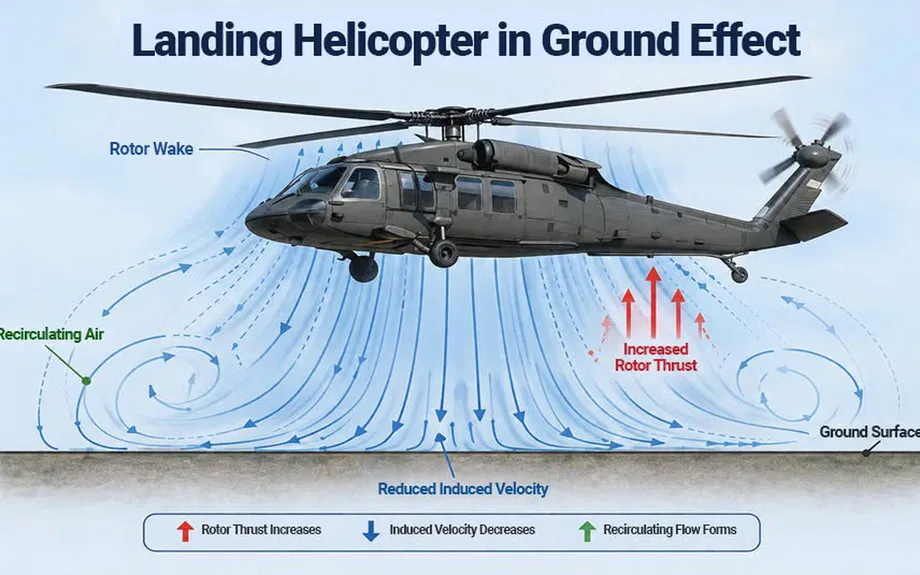
On October 16, VATC announced that research on simulating an autonomous helicopter operating near the ground had been published at the IEEE National Aerospace and Electronics Conference (NAECON) 2026.
Simulation uses mathematical and computer models to examine how an aircraft may behave under particular conditions. For helicopters, operating close to the ground matters because the surface can change airflow around the rotor and affect the lift it produces. Studying that behavior helps engineers examine a demanding part of helicopter operation.
The research concerns an autonomous helicopter, while the recruitment campaign includes aircraft with pilots on board. These are distinct parts of VATC's aviation work, connected by technical subjects such as flight dynamics, control systems and testing.
Viettel has previously pursued research into unmanned aerial vehicles, commonly called UAVs or drones. Its announced plans for an economy based on activity in lower airspace include unmanned aircraft and the potential development of crewed aircraft for economic and defense purposes.
How the aviation effort developed
VATC was established in August 2025 by transferring all personnel and responsibilities from the Helicopter and Fixed Wing Aircraft Development Department under Viettel's High Technology Industry division. The organizational change brought existing aircraft development work into a dedicated aviation technology center.
The center's stated aim is to strengthen research, design and command of aviation technology for military and civilian applications. Its formation preceded the latest public recruitment and equipment procurement activity by more than a year.
The main dated developments are:
- August 2025: VATC was established through the transfer of an existing helicopter and fixed wing aircraft development team.
- August 2025: Construction began on Viettel's broader research and development center at Hoa Lac Hi-Tech Park.
- October 16, 2026: VATC announced the publication of autonomous helicopter simulation research at NAECON 2026.
- October 21, 2026: Viettel published the equipment procurement package for the H2 workshop and TN1 ground test area.
- November 2, 2026: Public details described recruitment and preparations for helicopter and fixed wing aircraft integration and testing.
- 2030: Viettel's broader research and development center is scheduled for completion.
The sequence shows organizational preparation followed by more visible activity in recruitment, research and testing infrastructure. The establishment of VATC also gives the aviation program a defined institutional home within the group.
A broader research investment at Hoa Lac
Viettel began construction of a research and development center at Hoa Lac Hi-Tech Park in August 2025. The project has an announced investment of 10 trillion dong, occupies 13.3 hectares and is planned for completion in 2030.
The center is intended to bring together research, design, prototype development and production of advanced technology products. Its remit includes military, civilian and dual use applications. Dual use technology can serve both civilian and defense needs.
The 13.3 hectare research center and the 14.6 hectare site named in the aircraft testing investment have different stated purposes. The former covers a broad technology development program; the latter is identified with helicopter and fixed wing aircraft research facilities. Keeping those project descriptions separate helps explain where the aviation procurement fits within Viettel's wider investment.
For the aviation effort, the practical connection is the need to move from research into physical products. Engineers working on engines, materials or flight controls require equipment and production processes to turn designs into components that can be assembled and tested.
What is still awaiting announcement
Viettel has not announced a specific aircraft model, technical specifications, selected engine, intended operational mission or date for a first test flight. Those details will determine what the aircraft is designed to do and the scale of the remaining development work.
The advertised internal combustion engine research role identifies an area of technical work, while the eventual propulsion choice remains undisclosed. Likewise, the procurement package's 170 day implementation period concerns delivery of the contracted work; the starting date needed to calculate its completion has not been given.
The next dated milestone identified for Viettel's broader research infrastructure is the planned 2030 completion of the Hoa Lac center. For the aircraft program itself, the concrete public developments are the recruitment of specialist engineers, simulation research and purchases supporting integration and ground testing.
For applicants, the vacancies offer roles across design, manufacturing and test activities, with more demanding experience requirements for senior and helicopter integration positions. For Vietnam's aviation development effort, the immediate task is to bring those disciplines together and build the capacity to evaluate complete aircraft systems.
Key Points
- VATC is recruiting engineers for crewed aircraft development, including engines, aerodynamics, materials, electrical systems and flight testing.
- Most vacancies require at least three years of experience; helicopter integration specialists need at least 10 years.
- An October 21, 2026, procurement package supports the H2 Integration Workshop and TN1 Ground Test Area on a 14.6 hectare site.
- The package is funded by Viettel's Science and Technology Development Fund and has a 170 day implementation period.
- VATC was established in August 2025 from an existing helicopter and fixed wing aircraft development team.
- Viettel has yet to announce an aircraft model, specifications, selected engine, operational mission or first flight date.