Stadium confrontation brings calls for action
The Football Association of Thailand has ordered evidence collection and a disciplinary review after Kanchanaburi Power manager Park Hang-seo and Madagascar player John Baggio allegedly faced racist abuse following a 2-2 draw with Pattaya United at Nong Prue Stadium in Chonburi.
Contents
Association president Nualphan Lamsam, widely known as Madam Pang, directed competition organizers to begin the review process. The association issued its statement on November 2, following a confrontation that accounts describing the investigation date to the evening of November 1. Another account dates the same match to October 1. The fixture was identified as round nine of the 2026-2027 Thai League 2 season.
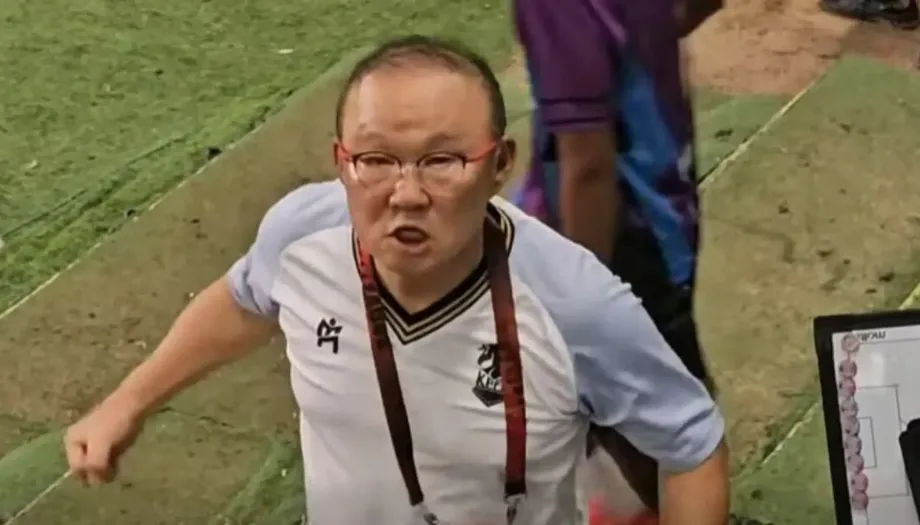
Video circulated on social media shows a spectator repeatedly directing the words "kimchi man," accompanied by profanity, toward Park as the South Korean coach moved toward the changing rooms. Park initially put a finger to his lips, asking the spectator to stop, before turning toward the stands and gesturing for him to come down.
Players, club staff and match officials intervened. Kanchanaburi chairman Prawat Kitthammakunnit went onto the field and directed the squad into the changing rooms. The confrontation ended without a physical altercation.
The response has extended beyond the two clubs. The South Korean Embassy in Thailand formally complained to the Thai football association and tourism authority and met with police. Park's representative company, DJ Sports, also requested an investigation and stronger protection for people working in football.
How the confrontation escalated
The spectator was described as a Western man supporting Pattaya United. The repeated references to kimchi, a traditional Korean food, were allegedly used to mock Park's Korean identity. Park, formerly the manager of Vietnam's national team, appeared increasingly angry as the shouting continued.
Footage shows Park making what appeared to be a punching gesture and moving toward the stands. His assistant, Roh Yeong-su, was also involved in the confrontation. Staff members and players stepped between the coaching group and the spectator as tensions rose.
Park was also reported to have returned to protest after initially leaving the stadium area. The spectator continued taunting another foreign player with remarks about being short. The repeated insults help explain why efforts to move the team away did not immediately end the confrontation.
Park was reportedly especially angry that local police had not stopped the spectator's remarks. The police response became part of the concern raised around the incident, alongside the conduct of the spectator and the need to protect players and staff as they left the field.
Baggio was also a target
John Baggio, the Madagascar player who scored Kanchanaburi's opening goal, was allegedly called "monkey" and subjected to insults about his height. The club treated the incident as involving both racial abuse and other degrading language directed at its personnel.
Chairman Prawat said on Facebook that the words "monkey" and "kimchi" had been used. He described Baggio as a victim of racial discrimination and said the club would continue pursuing the matter if it was not handled appropriately.
Kanchanaburi Power condemned discrimination based on race, skin color and ethnicity, as well as other forms of discrimination. In its statement following the match, the club explained the principle behind its response:
Football is a sport that brings people around the world together.
The club also stated:
Everyone deserves respect, regardless of who they are, where they come from or the color of their skin.
For Kanchanaburi, the complaint therefore concerns more than Park's exchange with a spectator. It also covers the treatment of Baggio and the conditions in which visiting players and coaches leave a stadium after a heated match.
A tense match preceded the abuse
Pattaya United and Kanchanaburi had already played a contentious match before the confrontation near the stands. The teams received eight yellow cards between them, and a disputed decision preceded Pattaya's equalizer in the 35th minute of the second half, around the 80th minute of the game.
Kanchanaburi argued that the foul leading to the penalty occurred outside the penalty area. The location matters because a defending team's foul inside that area can give the opposing side a penalty kick, while the same foul outside normally results in a free kick.
Thai League 2 had no video assistant referee system available to review the incident. VAR allows designated officials to examine video of certain major decisions, including penalties. Without that review mechanism, the referee's decision stood during the match.
Kanchanaburi personnel protested to the referees after the final whistle. The subsequent confrontation with spectators added allegations of discrimination to an evening already marked by disagreement over the officiating.
The draw left Kanchanaburi sixth with 14 points, seven behind leader Khon Kaen United. Those figures put Khon Kaen on 21 points, making the gap half of Kanchanaburi's total at that stage of the season.
What the Thai FA ordered
Nualphan directed competition organizers to collect information and immediately bring the incident into the association's formal review process. The November 2 statement opposed racist conduct on the field, around stadiums and on social media.
The association cited its disciplinary and conduct regulations, originally issued in 2016 and amended for the 13th time in 2026. It also referred to professional sports ethics rules issued in 2017 and amended in 2022.
The ethics rules require footballers and professional sports personnel to speak respectfully and avoid unfair criticism of others based on matters including origin, ethnicity, language, sex and age. The disciplinary rules cover abusive words, threatening conduct, gestures and acts expressing racial or ethnic contempt.
The review will need to determine who was involved, what happened and which provisions apply. No final disciplinary ruling, police action against the spectator or date for announcing a decision was specified.
Pattaya United, Thai League organizers and DJ Sports also condemned racial discrimination. DJ Sports called for a thorough investigation, suitable action and better mechanisms to protect coaches, players and others in football from discriminatory and insulting behavior.
Which penalties could apply?
The association's cited regulations set different penalties for different categories of conduct and participants. Under the provision addressing abusive or racist behavior in public at a match venue, an individual can face a fine of 10,000 to 30,000 baht.
Coordinated conduct by several people carries a fine of 20,000 to 40,000 baht. If the conduct uses sound amplification equipment or is transmitted through online media, the cited range rises to 30,000 to 50,000 baht. The rules also allow a ban on bringing the equipment into a venue for one to four matches.
Other provisions address people subject to sporting discipline. One sets suspensions of one to three matches and fines of 10,000 to 60,000 baht for explicit abusive, threatening or racist conduct. Another provides a suspension from duties for two matches and fines of 10,000 to 40,000 baht for officials.
Supporter banners are covered separately. For a first offense involving prohibited messages, the rules allow a fine of up to 50,000 baht, a ban on using the home ground for one match, or both. Repeat offenses can bring fines of 50,000 to 100,000 baht, a ban covering three home matches and a deduction of three points.
For players and coaches, a suspension means missing matches or being barred from duties. For a club, a home ground ban affects where it can stage fixtures, while a points deduction directly reduces its league total. The association will decide the relevant category through its review.
Earlier disputes add context
Park had already challenged refereeing decisions during Kanchanaburi's season. After a September match against Nakhon Pathom, he linked his criticism of the officiating to Thailand's results against Vietnam. He later issued an apology through the club and said he had not intended to belittle Thailand's national team.
A penalty awarded against Kanchanaburi in an October match against Prae United also prompted an appeal. The Football Association of Thailand's referee committee subsequently judged that the opposing player had fallen without being fouled, ruled the penalty incorrect and suspended the referee from assignments for six weeks.
Park also protested the handling of added time and an equalizing goal in a match against Muanglui United. Those episodes explain the existing friction over refereeing that surrounded the Pattaya fixture.
Park had experienced a similar personal insult while managing Vietnam. In November 2019, a member of Thailand's national team coaching staff was dismissed after racially taunting him. The latest incident has again drawn attention in Vietnam, where Park remains closely associated with the national team he previously led.
From the final whistle to formal review
The main developments moved quickly from a dispute inside the stadium to complaints involving football authorities and diplomats:
- At the final whistle: Pattaya United and Kanchanaburi Power finished level at 2-2 in round nine of Thai League 2.
- After the match: Park and Baggio allegedly faced discriminatory insults, and staff intervened as Park confronted a spectator.
- Following the confrontation: Chairman Prawat directed Kanchanaburi's squad into the changing rooms, and the club condemned discrimination.
- November 2: The Thai FA announced its stance against racism and directed evidence collection and a formal review.
- After the incident: The South Korean Embassy lodged complaints with Thai bodies and met with police, while DJ Sports requested action and stronger protections.
The immediate task for organizers is to turn the video, complaints and other evidence into a disciplinary decision. For the clubs and their personnel, the case also concerns how stadium staff and police respond when abuse continues as a team tries to leave the pitch.
Key Points
- Park Hang-seo and John Baggio allegedly faced racist abuse after Kanchanaburi Power's 2-2 draw at Pattaya United.
- Staff and officials intervened in Park's confrontation with a spectator, and no physical fight occurred.
- The Thai FA ordered evidence collection and a formal disciplinary review in its November 2 response.
- The South Korean Embassy complained to Thai authorities and met with police.
- The cited rules include fines, sporting suspensions and separate penalties for prohibited supporter banners.
- A final ruling and an announcement date have not been given.