VinFast Prepares Indian Scooter Debut
VinFast is preparing to enter India's electric two-wheeler market with three distinct electric scooters, following the launch of its first two electric cars in the country. The upcoming lineup will feature models named Evo, Kyo and Kinet, with local manufacturing scheduled to take place in 2027. Local assembly will occur at the company factory in Thoothukudi, Tamil Nadu via the completely knocked down route. The manufacturer previously identified India as one of five priority markets for its international electric scooter expansion in January 2026. The new models are expected to be presented at the Bharat Mobility Global Expo 2027 in New Delhi.
Contents
While the scooters draw inspiration from vehicles currently sold in Vietnam, the Indian versions will undergo substantial changes. The company confirmed that the India-spec models will feature market-specific modifications to their chassis and design. Their names could also change before the official launch. The chassis will be adapted to suit Indian road conditions, featuring increased ground clearance and larger underseat storage compartments compared to their Vietnamese counterparts.
The Entry Level Evo Scooter
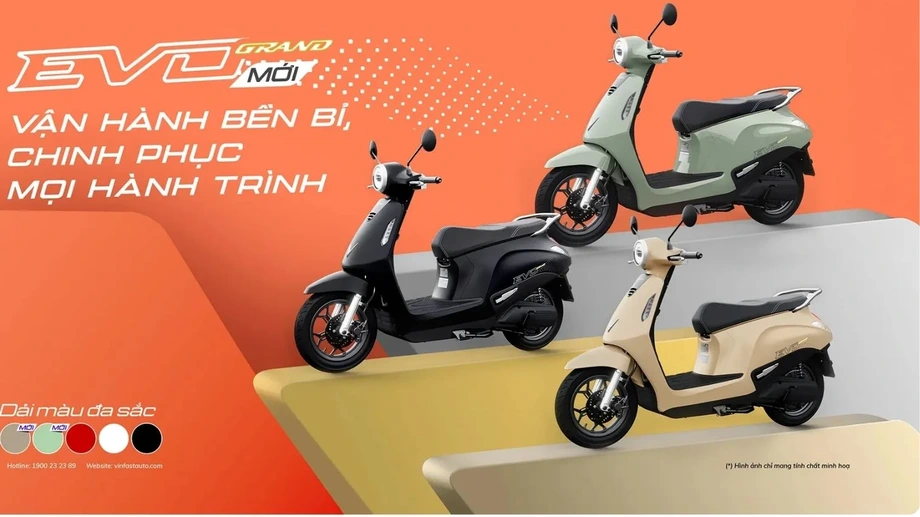
The Evo-based model will serve as the entry-level offering in the Indian lineup. In Vietnam, the Evo uses two removable batteries, comprising a standard 1.5kWh lithium iron phosphate battery and an optional additional 1.5kWh unit. A hub-mounted electric motor produces a peak power of 3.3 brake horsepower, which translates to 2.45 kilowatts. The scooter has a claimed top speed of 64 kilometers per hour for the single battery version and 80 kilometers per hour for the dual battery version. Claimed range reaches 85 kilometers for the single battery setup and 150 kilometers with the dual battery configuration. Acceleration from zero to 50 kilometers per hour takes 16 seconds for the single battery variant and around six seconds for the dual battery version. With both batteries installed, the scooter offers 12 liters of underseat storage. Additional equipment includes an LCD instrument display, a front disc brake, 12-inch wheels at both ends and smartphone connectivity for vehicle tracking and trip statistics. In Vietnam, prices start at 18.8 million Vietnamese Dong, which is approximately Rs 68,000 in Indian currency. Competitors in the local market are expected to include the Hero Vida VX2, Bajaj Chetak C25 and TVS Orbiter.
Mid-Range Kyo Offers Family Practicality
The Kyo is positioned as a family-oriented scooter in the middle of the portfolio. It shares a combined 3 kilowatt-hour battery capacity using two 1.5 kilowatt-hour removable lithium iron phosphate battery packs. The hub-mounted motor delivers a peak power of 4 brake horsepower, which is 3 kilowatts, allowing for a top speed of 90 kilometers per hour. The claimed range on a single charge is 145 kilometers, slightly lower than the Evo due to higher performance output. Standard charging from zero to 100 percent takes approximately 4 hours and 30 minutes. Compared to the Evo, the Kyo features larger 14-inch wheels at both ends, telescopic front forks, dual rear shock absorbers and a larger 21-liter underseat storage compartment. It also includes a TFT instrument display, keyless functionality, hill-hold assist and a smart key system. The scooter weighs 116 kilograms and offers a ground clearance of 160 millimeters alongside a 20-degree gradability. The Vietnamese reference price is 30 million Vietnamese Dong, roughly translating to Rs 1.09 lakh. In India, it will compete against models such as the Ather Konarc, TVS iQube, Bajaj Chetak and Ola S1.
Kinet Serves as the Performance Flagship
The Kinet is designed as the sportier and more performance-oriented offering in the lineup. It retains the combined 3 kilowatt-hour battery configuration using two removable packs and 14-inch alloy wheels. The electric motor develops a higher peak power of 7 brake horsepower, equivalent to 5.2 kilowatts. This increased output enables the Kinet to achieve a claimed top speed of 90 kilometers per hour and accelerate from zero to 50 kilometers per hour in under six seconds. The claimed range on a full charge is 145 kilometers. Charging takes approximately nine hours for a zero to 100 percent charge in its Vietnamese specification. The Kinet features angular and muscular maxi-scooter bodywork, 22 liters of underseat storage, a weight of 118 kilograms, 160 millimeters of ground clearance, a 20-degree gradability and keyless go capability. It shares most of its equipment with the Kyo. The Vietnamese price is 40 million Vietnamese Dong, which is equivalent to Rs 1.46 lakh, while expected Indian pricing is around Rs 1.50 lakh with a scheduled launch date of March 2027. Competitors will include the Ather Rizta, Yamaha EC-06, Suzuki e-Access and Hero Vida V2.
Additional Models and Infrastructure Plans
VinFast has filed design patents for two more electric two-wheelers in India, expanding beyond the initial three models. These filings include an electric scooter based on the Vento S and a sporty electric bike based on a performance-oriented motorcycle concept. The Vento S-based scooter features a side-mounted electric motor rated at 5.2 kilowatts paired with a 3.5 kilowatt-hour lithium iron phosphate battery, a claimed top speed of 89 kilometers per hour and a range of 160 kilometers. The electric motorcycle platform could use a 50-kilowatt electric motor delivering a top speed of 130 kilometers per hour. VinFast signed letters of intent with over 50 electric two-wheeler dealerships across 15 states to support its distribution network.
To support its vehicles, VinFast plans to offer battery-swapping capability alongside home charging. Users will have the option to charge removable battery packs at home or utilize a swapping service. The company partnered with V-Green to develop charging and swapping infrastructure. Offering battery-swapping services creates a distinct operational challenge, requiring heavy investment in setting up swapping stations and ensuring proper upkeep while keeping services affordable. Removable batteries could benefit residents in apartments without dedicated parking area charging, though practical success depends on battery weight and station availability.
Timeline of Key Developments
- January 2026: VinFast identifies India as one of five priority markets for international electric scooter expansion.
- November 17, 2026: VinFast files design patents for a Vento S-based scooter and an electric motorcycle, having signed letters of intent with over 50 dealerships across 15 states.
- November 18, 2026: Details emerge regarding the planned 2027 launch of the Evo, Kyo and Kinet scooters via local assembly in Tamil Nadu.
- March 2027: Expected launch window for the flagship VinFast Kinet in India.
- 2027: Scheduled commercial introduction and local manufacturing of the three electric scooters in India.
Market Context and Strategic Outlook
VinFast reported global deliveries of 406,453 electric scooters in its home market of Vietnam during 2025, establishing an industrial base before entering foreign markets. The planned three-model strategy covers distinct consumer requirements across price-sensitive commuting, family mobility and sporty performance. However, product specifications alone will not determine success in India's competitive two-wheeler industry. Buyers evaluate battery reliability, real-world range, service accessibility, financing options and long-term ownership costs. Local manufacturing helps improve cost competitiveness, while a developed dealer network remains essential for consumer confidence.
The current market environment includes established competitors such as TVS Motor with the iQube and Orbiter, Bajaj Auto with the Chetak range, Ather Energy with the Rizta and Konarc, and Ola Electric. While Vietnamese reference prices provide an initial baseline, final ex-showroom prices will depend on localization levels, battery ownership arrangements, equipment choices and distribution costs. The exact battery capacity, certified range and homologated motor outputs for the Indian market remain subject to final testing and official disclosure ahead of the 2027 rollout.
At a Glance
- VinFast plans to launch three electric scooters in India in 2027, manufactured locally at its factory in Thoothukudi, Tamil Nadu.
- The lineup consists of the entry-level Evo, the family-oriented Kyo and the performance-focused Kinet.
- Vietnamese specification reference ranges reach up to 165 kilometers for the Evo, 160 kilometers for the Kyo and 145 kilometers for the Kinet.
- All three models utilize removable lithium iron phosphate battery packs and support potential battery-swapping infrastructure developed with V-Green.
- Competitors in the Indian market include established models from TVS Motor, Bajaj Auto, Ather Energy and Ola Electric.