A landmark listing built from ordinary shopping trips
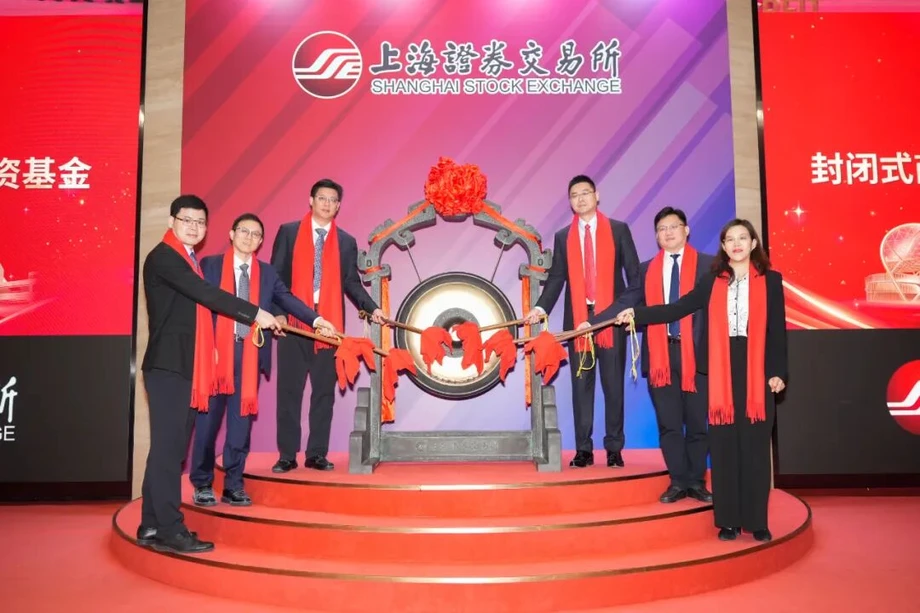
The GF Seazen Wuyue Commercial REIT began trading on the Shanghai Stock Exchange on 25 November 2026, under securities code 508610. The real estate investment trust raised 1.553 billion yuan by issuing 500 million units at 3.106 yuan each. It became China's 100th listed public REIT and the first public commercial property REIT sponsored by a private Chinese property developer.
Contents
- A landmark listing built from ordinary shopping trips
- Why were these two malls chosen?
- From regulatory approval to a crowded order book
- How does a shopping centre REIT work?
- What changes for shoppers, tenants and investors?
- Which policy changes made the listing possible?
- What does the 100th listing reveal about the wider market?
- Why Seazen's 181 malls matter to its strategy
- Can other private developers repeat the model?
- The Bottom Line
The properties behind the milestone are not new infrastructure megaprojects. They are Changzhou Tianning Wuyue Plaza and Nantong Qidong Wuyue Plaza, two established shopping centres in Jiangsu where residents shop, eat and take their children at weekends. Their inclusion places rents from shops, restaurants and entertainment venues, alongside income from services such as parking, at the centre of the landmark listing.
For Seazen Holdings, the transaction converts part of the value stored in mature properties into capital while leaving the company responsible for daily operations. For other private developers, it demonstrates a route for raising equity against existing commercial assets rather than relying solely on property sales, asset disposals or borrowing. For investors, it creates a way to buy exchange traded fund units whose performance depends on the operation of the two malls.
Why were these two malls chosen?
Changzhou Tianning Wuyue Plaza and Qidong Wuyue Plaza have combined gross floor area of about 290,000 square metres and have each operated for more than six years. Both are in established commercial districts. Qidong is a city with county status under Nantong's administration, giving the portfolio an example of consumer property outside one of China's largest metropolitan centres.
Average occupancy at the two properties stayed above 97% from 2023 through 2025, and rent collection was stable. Qidong Wuyue Plaza reached full occupancy in 2024. Project materials also give it a net operating income margin of 68.34%. This margin measures how much operating revenue remains as net operating income after the relevant property operating costs, providing one indication of how efficiently a mall converts revenue into property income.
Public issuance information put the combined value of the two assets at about 2.029 billion yuan, while project materials gave a figure of about 2.143 billion yuan. Changzhou and Qidong had weighted average remaining lease terms of 3.82 years and 3.47 years respectively. Leases for their main and secondary anchor tenants generally ran for about six years, giving the fund some visibility over future occupancy and rental income.
Qidong's figures also show why a city's administrative rank alone cannot determine the quality of a retail asset. Local consumption, competing shopping districts, tenant selection and actual cash collection all affect value. A mall serving a smaller city can produce dependable income when it draws customers from a wide surrounding area and keeps its space occupied.
From regulatory approval to a crowded order book
The offering moved from registration to trading in less than three months. The main steps were:
- 3 September 2026: the China Securities Regulatory Commission approved the fund's registration.
- 23 September: the price inquiry process began.
- 22 to 27 October: the formal offering took place.
- 3 November: the fund contract became effective.
- 25 November: the REIT listed on the Shanghai Stock Exchange.
Demand during the sale was strong. Offline investors indicated orders amounting to 8.08 times the initial offline offering, and their eventual allocation ratio was 19.03%. Public investors subscribed about 4.198 billion yuan, roughly 30 times the amount available to them, leaving a public allocation ratio of just 3.33%.
Trading after the offering was less dramatic than those subscription figures. The REIT closed its first day at 3.138 yuan, up 1.03% from the issue price, with turnover of 40.3392 million yuan. It finished at 3.17 yuan on 26 November, about 2% above the issue price.
How does a shopping centre REIT work?
A public REIT pools money from investors and places income producing property into a regulated fund structure. In this case, 500 million standardised units provide exposure to the financial performance of the two Wuyue Plazas. Investors do not each receive a deed to a shop. They hold fund units whose distributions depend on the cash generated by the portfolio.
The first source of return is cash distributions from activities including rent, property management and parking. Product materials forecast a net cash flow distribution rate of about 5.61% for April to December 2026 on an annualised basis, followed by about 5.73% for 2027. Annualised means the nine month forecast for 2026 was converted into a yearly rate. The calculation uses the expected annual distributable amount divided by the proposed size of the public fund.
Those forecasts were roughly four percentage points above the approximately 1.66% yield available at the time on Chinese government bonds maturing in 10 years. The comparison helps explain investor interest, but the REIT's payments depend on occupancy, rents, operating expenses and distributable cash. The distribution figures are forecasts rather than fixed interest payments.
The second source of return is a change in the unit price. The fund has a closed period lasting 32 years, meaning it does not operate like an open fund offering routine redemptions. Investors can nevertheless sell their units on the exchange. Prices can rise or fall with interest rates, market sentiment and the malls' operating results, so an investor can receive distributions and still record a loss when selling units.
What changes for shoppers, tenants and investors?
Seazen Holdings will remain the operation management coordinator for both shopping centres. It will continue overseeing tenant recruitment, daily operations and property management. The listing changes the ownership and financing structure at asset level, while shops, restaurants and customer services continue under the existing operating team.
Wuyue Shunrui, the original owner, and its related parties committed to subscribe for at least 34% of the fund's units. That substantial holding keeps a considerable share of their own money exposed to the same asset performance as public investors. Seazen also retains a commercial interest in managing the properties effectively and preserving their suitability for the REIT market.
Investors still face practical risks. Remaining lease terms averaging less than four years mean that renewals and rent negotiations will be important during the coming years. New leases could bring higher rents, but they could also require concessions or periods of vacancy. Occupancy could fall from its recent level above 97%, operating costs could increase, and an uneven recovery in consumer spending could affect tenants.
Exchange prices add another source of uncertainty. Interest rate movements can change the appeal of property distributions, while investors may reassess the value of the malls if revenue or cash collection weakens. The sponsor's commitment and the crowded subscription process coexist with those operating and market risks.
Which policy changes made the listing possible?
The China Securities Regulatory Commission's 2025 notice on improving the quality of the REITs market called for equal treatment of enterprises under different forms of ownership. It supported private companies in using REITs to put existing assets to work and widen their access to equity finance. That language addressed a market in which private property developers had not previously appeared as the original owners behind a public commercial property REIT.
A consultation on a commercial property REIT pilot followed in late November 2025, and the pilot was formally launched at the end of December. This extended China's public REIT system beyond its original infrastructure focus. On 28 August 2026, the securities regulator published an opinion on capital market support for a new property development model, calling for commercial property REITs to advance steadily and prudently while helping developers activate existing assets.
Jiangsu's 2026 government work report supplied a local policy connection. It called for improving new supply while activating existing assets, alongside measures to stimulate consumption and encourage debut stores, product launches, shows and exhibitions. The two malls provide a working example of how financial markets can release capital from established commercial property while Jiangsu seeks fresh consumption activity.
At the listing ceremony, Dou Gang, deputy general manager of GF Fund Management, described the transaction's relevance for private capital and the property industry.
This listing sets a benchmark for private capital participating in the revitalisation of existing assets, and it provides a practical case for exploring a new model of property development.
Dou also said public REITs can connect investment, financing, construction, management and exit in commercial property. In plain terms, a developer can recover money from a mature asset, continue managing it and direct capital towards other projects or improvements instead of leaving all of its funds tied up indefinitely.
What does the 100th listing reveal about the wider market?
China began testing public infrastructure REITs in 2020, and the first products listed in 2021. The range of assets subsequently expanded from toll roads, industrial parks, warehouses and environmental facilities to rental housing, consumer infrastructure, data centres and broader commercial property. The 100th listing therefore marks a change in both the number and variety of cash producing assets available through public funds.
Nine commercial property REITs were listed by the time the Seazen product debuted, with another 24 at the application or issuance stage. Public REIT listings during 2026 had reached 22, raising a combined 57 billion yuan. China ranked second only to the United States by the number of listed public REITs.
Property developers were already participating before Seazen arrived. Between 21 June 2021 and 18 June 2026, developers issued 13 public REITs that raised about 34.016 billion yuan. Their assets covered industrial parks, subsidised rental housing, consumer infrastructure and commercial property. Seazen's distinction is the combination of a private developer sponsor and commercial property.
Ten listed REITs had also completed expansions, with more expansion proposals under review. An expansion allows an existing fund to issue additional units, raise money and buy more assets rather than remaining confined to its initial portfolio. The first four REIT index products arrived in 2026 as well, while participants across the market came to include insurers, securities firms, trusts, public and private funds, industrial investors and individuals.
Why Seazen's 181 malls matter to its strategy
Seazen Holdings generated 10.871 billion yuan of commercial operating revenue in the first three quarters of 2026, an increase of 3.42% from the same period a year earlier. September alone contributed about 1.226 billion yuan, up 4.52%. At the end of the third quarter, the company operated 181 Wuyue Plazas across China, with network occupancy of 98.16%. Its mall count ranked first among mainland listed companies.
Commercial property offers a different financial model from building homes for sale. A shopping centre requires substantial investment before it matures, after which rent can provide recurring revenue for many years. That model produces cash but also ties up capital. Selling economic exposure through a REIT allows Seazen to recover some of that money without giving up its operating role.
The public listing followed several earlier transactions. Seazen began exploring REITs between institutions in 2025 and completed China's first expansion of a consumer REIT in that market in June 2026. In October, the Shanghai Stock Exchange accepted its second institutional expansion application of the year, involving about 2.1 billion yuan. Seazen now has channels covering preparations before a public REIT, transactions between institutions and a listed public fund.
Wang Xiaosong, Seazen's chairman, used the listing ceremony to stress the responsibilities that accompany public capital.
The listing is not the end. It is the beginning of a lasting responsibility to those who have entrusted their capital to us.
Wang called the deal a milestone in Seazen's transformation and its effort to connect investment, financing, construction, management and exit. At the company's third quarter results briefing, he also said Seazen planned to keep selecting mature Wuyue Plazas with stable rental cash flow and measures that satisfy regulatory requirements. The initial public portfolio contains just two of the company's 181 malls, about 1.1% of the network by count, leaving a large pool from which future candidates could be assessed.
Can other private developers repeat the model?
Huang Guojun, head of valuation and professional advisory services for Savills China and a managing director at the firm, described Seazen's transaction as a breakthrough for the issuer and a broader industry development.
Seazen Holdings' successful REIT issuance is both an individual breakthrough for a private property developer in China's REITs market and a turning point for the industry. It is a milestone for private enterprises. The focus of REITs is the dual sustainability of the assets and asset management capabilities. I believe many cities have quality projects of this kind.
Huang linked valuations to durable revenue and distributions, stable or growing income, cost efficiency and compliant management. He also said that transferring property from a private owner to a publicly held trust requires stronger asset management and disclosure. Performance will affect whether a manager can attract further capital and expand its REIT, making operating results a continuing public test rather than a private annual exercise.
CBRE has described a cycle in which owners develop, renovate and improve properties before securitising them, then recycle the recovered money into new projects or upgrades. Huatai Securities said Seazen's public and institutional channels could support fresh valuations for existing assets and return capital to commercial operations. Changjiang Securities said the malls Seazen owns had already become an important source of cash flow and profit.
For other private owners, the entry requirements centre on mature assets, reliable rent collection, capable operators and records that can withstand public scrutiny. For the new Seazen REIT, the immediate measures will be occupancy, rental income, operating margins, cash distributions and any proposal to acquire more malls. Seazen has not identified the next properties for inclusion or given a timetable for an expansion.
The Bottom Line
- The GF Seazen Wuyue Commercial REIT listed in Shanghai on 25 November 2026 as China's 100th public REIT.
- It was the first public commercial property REIT from a private Chinese developer, issuing 500 million units at 3.106 yuan to raise 1.553 billion yuan.
- Its assets are Changzhou Tianning Wuyue Plaza and Nantong Qidong Wuyue Plaza, with about 290,000 square metres of combined floor area.
- Average occupancy exceeded 97% from 2023 to 2025, while Qidong reached full occupancy in 2024.
- Forecast net cash distribution rates were 5.61% on an annualised basis for April to December 2026 and 5.73% for 2027.
- Seazen remains responsible for mall operations, and the original owner and related parties committed to hold at least 34% of the units.
- Seazen operated 181 Wuyue Plazas at the end of September 2026, providing potential assets for future expansion, although no additional properties or timetable have been announced.
- Investor returns remain exposed to lease renewals, occupancy, consumer spending, operating costs and movements in the exchange price.