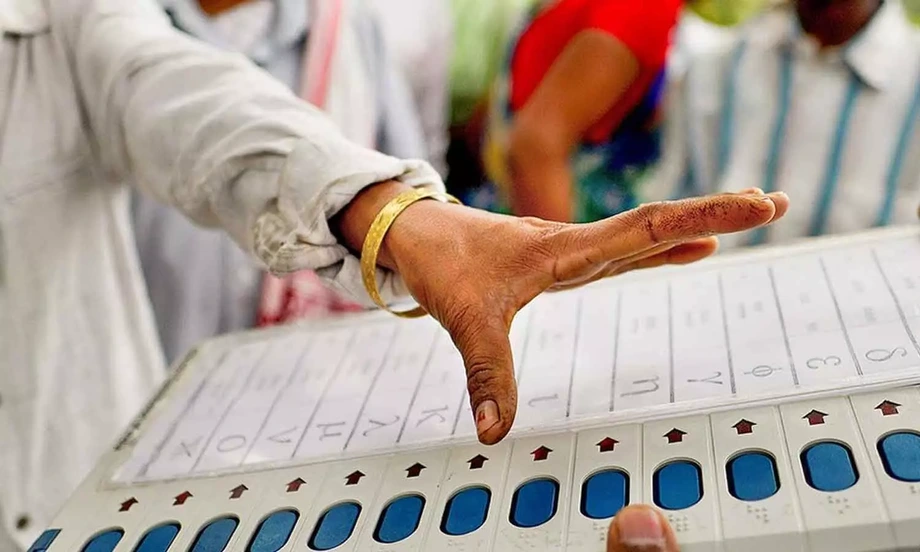
Early Queues and a Record Turnout
Mangalagiri-Tadepalli Municipal Corporation and Ponnur Municipality recorded a combined turnout of 73.30 per cent on Thursday, with 218,372 of 297,912 registered voters casting ballots across 102 wards and 341 polling stations, District Collector and District Election Officer C.M. Saikanth Varma said. The final district figures put MTMC at 74.65 per cent, or 177,449 votes from 237,712 voters, and Ponnur at 67.98 per cent, or 40,923 votes from 60,200 voters.
Contents
- Early Queues and a Record Turnout
- How the Voting Pace Built Through the Day
- Why This Round Came Later
- Where Arrangements Helped and Where They Slipped
- Women, Young Voters and Older Residents Turned Out
- Political Leaders Vote on Constitution Day
- Why the Mayoral Contest Carried Extra Weight
- How the Vote Compared Across Andhra Pradesh
- Security Plans and Polling Day Incidents
- What Happens After the Count
- Key Points
The 5 pm figures released during the day were lower. The State Election Commission listed 172,632 votes in MTMC, for 72.62 per cent, and Ponnur at 66.75 per cent. Figures released at the same hour elsewhere put MTMC at 72.69 per cent and Ponnur at 67.55 per cent.
Long lines formed at several polling stations by 6 am, even though voting began at 7 am. Polling closed at 5 pm, and local figures showed turnout had crossed 60 per cent by 3 pm. Guntur Municipal Corporation had polled 56.15 per cent in the first round, while Tenali Municipality polled 58.10 per cent. MTMC's 74.65 per cent was 18.50 percentage points above Guntur and 16.55 points above Tenali.
How the Voting Pace Built Through the Day
Mangalagiri-Tadepalli's 62 wards had 261 polling stations, and 30,770 voters cast ballots by 9 am. Ponnur's 40 wards, counted locally as having 84 polling centres, saw 8,423 voters in the same period. The final district tally listed 80 polling stations in Ponnur.
By 11 am, Ponnur had reached 31.23 per cent and MTMC 24.36 per cent. Across the 23 urban local bodies voting in this phase, the average was 13.26 per cent at 9 am, 27.09 per cent at 11 am, 43.81 per cent at 1 pm, 55.07 per cent at 3 pm and 62.5 per cent at 5 pm. The hourly pattern showed Mangalagiri-Tadepalli finishing 12.15 points above that 5 pm figure.
Cloud cover helped keep the morning cool. Between 11 am and 1 pm, 58,882 votes were cast in MTMC and 11,192 in Ponnur, the busiest stretch of the day.
Why This Round Came Later
The vote was a first for the new Mangalagiri-Tadepalli Municipal Corporation, but its path to polling had been delayed. It was not part of the 1 November round because a court case held up the process. The High Court cleared the matter on 2 October, and ward delimitation, the redrawing of electoral boundaries, was being redone. The poll date was to be announced separately by the State Election Commission. It was one of 23 urban bodies whose earlier schedule had been held up by court cases. Ponnur was also set for a later round.
Before the vote, the 2026 ward-wise reservation list for Mangalagiri-Tadepalli had not been notified. The mayoral post was reserved for Scheduled Tribes (General), meaning candidates from that category could contest, and the seat was open to men and women. A photo roll, a voter list with photographs used to check identity at the booth, had been prepared by the municipal commissioner from the Assembly roll, using 1 January 2026 as the qualifying date.
Voters could check their ward through the AP SEC Voter Portal. The required choices were District Guntur and ULB Name Mangalagiri Tadepalli, followed by name, relation name and gender. The portal displayed the ward number on screen and offered a print option, but it did not provide a ward PDF.
Where Arrangements Helped and Where They Slipped
Polling staff and volunteers set up shade with shamianas, kept drinking water ready, arranged wheelchairs for older voters and people with disabilities, and managed queues. Those steps mattered as turnout surged and many voters arrived before opening time. Election officials also arranged ramps and special security at polling stations considered vulnerable.
Mobile phone deposit counters caused trouble. Phones were not allowed inside polling stations, a rule meant to protect the secrecy of the ballot. At several places, no dedicated staff were present to accept phones and return them, or staff lacked coordination. Voters described jostling and delays. Some centres did not run the token system properly, and phones were placed together in boxes, leaving people to search for their own devices.
Voter slips were another pressure point. Several voters said they did not receive slips and had to ask several people for their names and booth numbers. The poll continued despite these problems, though the experience was harder for people who had waited in crowded lines.
Women, Young Voters and Older Residents Turned Out
Women arrived in large numbers in the morning, including many voting for the first time. Their priorities were local and practical: clean drinking water, sanitation, streetlights, safety and better roads. Municipal elections matter for those issues because city and town governments handle drains, local streets, water supply and waste collection.
Mangalagiri-Tadepalli's 62 divisions mix town and village life, bringing infrastructure, taxes and regional development into discussion. Vinnakota Samrajyam, aged 106, cast her vote in Ponnur. Her presence reflected the participation of older voters, people with disabilities and new voters across the two civic bodies.
Political Leaders Vote on Constitution Day
Chief Minister N. Chandrababu Naidu, his wife Nara Bhuvaneswari, Minister Nara Lokesh and his daughter-in-law Nara Brahmani voted at the Mandal Parishad Upper Primary School in Undavalli. Records listed the station as booth No. 53/3 and as the MPUP School polling station. Deputy Chief Minister K. Pawan Kalyan voted at the Mangalagiri Municipal Corporation Primary School in the 34th division, also described as the Sri Lakshmi Narasimha Colony polling centre.
Chief Minister N. Chandrababu Naidu marked Constitution Day after casting his ballot. He addressed reporters about equal voting rights, democracy and the responsibility of citizens to take part in elections.
The Constitution has provided equal voting rights to everyone, irrespective of whether they are rich or poor, men or women. Dr. BR Ambedkar gave this powerful weapon of the right to vote to all. India is the most vibrant democracy. India is one of the countries where a large number of people participate in the electoral process. Every living citizen should cast their vote.
Naidu also said voting gave people the moral standing to question those in power and urged voters to keep money out of elections. Ponnur MLA Dhulipalla Narendra Kumar voted with his family in Chintalapudi and expressed confidence that alliance candidates would win. Guntur district Superintendent of Police Vakul Jindal monitored polling from the Command and Control Room at the District Police Office, while Joint Collector Ashutosh Srivastava inspected arrangements in Ponnur and urged voters to use their democratic right.
Why the Mayoral Contest Carried Extra Weight
The Mangalagiri-Tadepalli mayoral election drew attention because voters were set to choose the Mayor directly for the first time. In many civic elections, councillors elect the Mayor among themselves. A direct vote lets all voters choose the city's political leader, so the contest can turn on party leadership and local development instead of only ward level issues.
The post is reserved for the Scheduled Tribes category. Before the vote, TDP candidate Peram Yedukondalu, described as a grassroots party worker, faced YSRCP candidate Kethavath Poorna Naik. A pre election political account said the direct mayoral vote covered all 50 divisions, while election day figures for the corporation counted 62 wards.
Across the four corporations voting that day, 36 candidates contested mayoral posts and 911 candidates sought 257 corporator seats. Those four corporations had 11.44 lakh voters, or about 1.14 million voters, and around 12,000 personnel were deployed for election duties.
Mangalagiri Assembly constituency is represented by Nara Lokesh, who won more than 91,000 votes there in the 2024 Assembly election. The alliance viewed the new corporation as a test of his influence, especially with Amaravati's return as the state capital adding weight to the area. Development work cited before the vote included underground drainage, better drinking water supply and permanent housing pattas, or title papers, for eligible poor families. Party leaders believed Yedukondalu's nomination could attract support among tribal communities.
The alliance counted on support in Mangalagiri's handloom localities and among middle class families, employees and business communities in Tadepalli, with coordination between TDP, Jana Sena and BJP. The YSRCP entered with its own challenge. Tadepalli is home to former Chief Minister YS Jagan Mohan Reddy, but the party was rebuilding after its 2024 Assembly defeat.
How the Vote Compared Across Andhra Pradesh
Thursday was a second phase for 23 urban local bodies. The State Election Commission's 5 pm figures showed 1,561,531 votes cast from 2,498,312 eligible voters, a rate of 62.5 per cent. By 3 pm, 1,375,799 ballots had been cast, and 20 of the 23 bodies had crossed 50 per cent.
Kandukur in Prakasam district led the 23 bodies with 76.07 per cent, followed by Podili at 75.68 per cent and Amadalavalasa at 75.13 per cent. MTMC's final 74.65 per cent was 1.42 points below Kandukur. At 3 pm, Kandukur had 68.89 per cent, Podili 68.46 per cent, Amadalavalasa 68.14 per cent, MTMC 62.91 per cent and B Kothakota 62.47 per cent.
Among the four municipal corporations, MTMC led. Kakinada recorded 57.64 per cent, Rajamahendravaram 56.61 per cent and Srikakulam 53.93 per cent. Ponnur's 67.98 per cent was above Narasaraopet at 67.55 per cent, Gudivada at 64.83 per cent and Bhimavaram at 62.62 per cent.
Gram panchayat elections were held in their first phase on the same day. Those polls saw clashes in Ahobilam and Jammadinne in Nandyal district, Kesarapalli in Krishna district and parts of Sri Sathya Sai district. Residents of Thoravagallu village in Aspari mandal of Kurnool district boycotted their gram panchayat poll. Average gram panchayat turnout reached 77.65 per cent, with Chittoor district at 83.37 per cent and Alluri Sitharama Raju district at 58.85 per cent.
Security Plans and Polling Day Incidents
Guntur district deployed 2,025 police personnel for the two polls, with 1,443 for Mangalagiri-Tadepalli and 582 for Ponnur. Ponnur had 12 hyper sensitive and 25 sensitive stations among its 80 polling stations. Mangalagiri-Tadepalli had 84 sensitive and 177 normal stations among 261. Mobile patrol teams, striking forces and special striking forces were arranged. Following Election Commission guidelines, district officials and police set up special security and CCTV cameras, or closed circuit television cameras, at vulnerable stations.
Guntur district Superintendent of Police Vakul Jindal briefed officers on 25 November and told them to stay impartial, prevent cash and liquor distribution, restrict unauthorised gatherings and keep political activity outside prescribed limits around stations. Police were told to check voters carefully, enforce entry rules and keep polling running until 5 pm. State Election Commissioner Anil Punetha visited polling stations at Kanuru and Enikepadu.
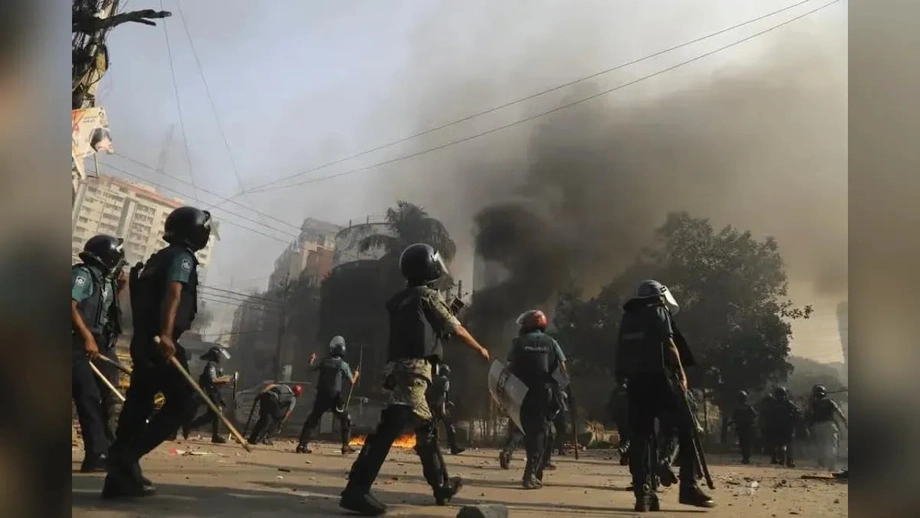
Polling in the 23 urban local bodies was largely peaceful, and the district police chief said 44 incidents were reported from 18 districts across the wider local body elections. In Mangalagiri, allegations surfaced at booth No. 17/1. At the 62nd division, TDP polling agents said alleged YSRCP workers tried to cast fake votes and handed them to police. Officials said some fake votes had already been cast, and tension broke out between party leaders at the booth.
At the first division, police stopped former YSRCP constituency leader T. Vemareddy from entering while he claimed to be chief agent. He alleged that police pushed him out after he showed his finger and spoke to them. Police questioned local residents about the role of former leaders where polling was proceeding peacefully. No figure was given for the number of alleged fake votes, and no later police action was stated.
Some voters in urban centres complained that they could not carry phones into stations. At Boggula Dibba near Rythu Bazaar in Rajamahendravaram, voters said no place had been provided to keep phones. A minor disturbance in Mallayapeta followed a confrontation over YSRC supporters near the booth, when BJP MLC Somu Veerraju made a challenge gesture. Repolling was ordered at Ward No. 1 of Vellaturu panchayat after unidentified people entered a polling station and damaged a ballot box.
What Happens After the Count
Counting is scheduled for 30 November. The winner in Mangalagiri-Tadepalli, the Ponnur result and the direct mayoral outcome were not known when polling ended. Ballot boxes were to be moved safely to strong rooms, where security was arranged through the day and night.
The first phase of urban local body elections was held on 1 November, with counting on 3 November. MPTC and ZPTC elections, for village and district level bodies, were held on 5 November and results were declared on 7 November. Gram panchayat polls were scheduled for 26 November, 29 November and 2 December, with results on each polling day.
For voters in Mangalagiri-Tadepalli and Ponnur, the immediate change is local representation. Corporators and the Mayor will shape decisions on drains, water, roads, waste, taxes and the pace of development around Amaravati. For parties, the count will show whether high turnout helped the ruling alliance in the new corporation and whether the YSRCP recovered ground in a constituency with high symbolic value.
Key Points
The turnout figures and the sequence of events can be reduced to a short list of developments.
- Mangalagiri-Tadepalli and Ponnur recorded a combined turnout of 73.30 per cent, with 218,372 votes from 297,912 registered voters.
- MTMC polled 74.65 per cent and Ponnur 67.98 per cent, above the 62.5 per cent recorded across 23 urban local bodies by 5 pm.
- Voters queued before 7 am, and the poll closed at 5 pm after heavy participation and cloudy weather.
- The corporation's poll came after a court case and redrawing of wards kept it out of the 1 November round.
- Shade, water, ramps and wheelchairs were provided, while phone deposits and voter slips caused delays at some stations.
- Women, first time voters and older voters were visible at the booths, including Vinnakota Samrajyam, aged 106.
- Chief Minister N. Chandrababu Naidu and his family voted in Undavalli; Deputy Chief Minister K. Pawan Kalyan voted in Mangalagiri.
- Security included 2,025 police personnel, while allegations of fake votes and booth tension were reported at some locations.
- Counting is scheduled for 30 November, when the Mayor and ward representatives will be decided.