Movement restrictions deepen the dispute over December polling
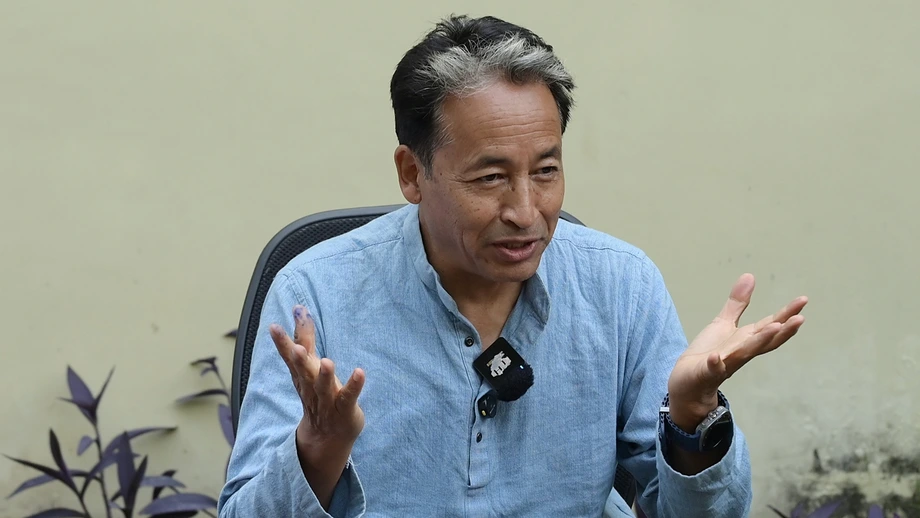
Climate activist Sonam Wangchuk faces 60 days of restrictions under an order issued by the Leh additional district magistrate as protests grow against Ladakh Autonomous Hill Development Council elections scheduled for December 4. The election will create eight councils with 100 constituencies, including 36 seats reserved for women, amid demands to postpone voting because of winter weather and seasonal migration.
Contents
- Movement restrictions deepen the dispute over December polling
- What happened outside Wangchuk's home?
- Why residents want the elections postponed
- The administration promises heating and voter facilities
- Eight councils replace the earlier two
- New boundaries face objections
- The election calendar and voting already settled
- Statehood talks and demands for justice remain unresolved
- Key Points
The administration invoked Section 163 of the Bharatiya Nagarik Suraksha Sanhita, citing a police report and a request from the Leh police chief for preventive restrictions. The order takes effect immediately and bars Wangchuk from public rallies and processions. Wangchuk says police have also prevented him from leaving his home.
The confrontation brings together several disputes: when residents can realistically vote, how new constituency boundaries were drawn, who controls local development, and why a judicial inquiry into deaths during last year's protests has not produced a publicly available report.
Chief Secretary Ashish Kundra says elected councils must be formed promptly so they can prepare budgets for the next financial year. Political and civil society organisations in Leh and Kargil argue that holding elections when residents have left for warmer places will exclude people from decisions about their communities.
What happened outside Wangchuk's home?
Wangchuk said dozens of uniformed personnel were stationed outside his residence and institute in Leh. Videos he posted showed him being moved from a tent where he had been resting ahead of a protest against the election timetable. He subsequently said police stopped him when he tried to leave home on Friday.
Wangchuk, a climate activist involved in the campaign for constitutional safeguards for Ladakh, described the restriction in a video:
They may say this is an advice to stay home but clearly, I am not being allowed to move out,
Police said he had been escorted home and advised to remain there under prohibitory orders issued by the Chief Electoral Officer and the Leh district magistrate. Those orders regulated rallies, protests and other public gatherings within Leh Municipality.
An order dated November 11 directed Wangchuk to refrain from organising or joining unauthorised rallies, processions or public meetings, and from activities that could disturb public peace or obstruct the election process. Section 163 gives magistrates powers to issue urgent preventive directions where they consider public order or safety at risk.
Wangchuk wrote to Union Home Minister Amit Shah, Lieutenant Governor VK Saxena, Kundra and senior police officers seeking clarification. He said no explicit order confining him to his residence, or written authority for the police deployment, had been shown or served on him. The precise written authority for preventing him from leaving home remains disputed.
In his letter, Wangchuk challenged the use of election conduct rules to restrict his movement and speech:
The imposition of the Model Code of Conduct, as recorded in the order, cannot, by itself, be invoked as a blanket justification to curtail this right or to impose restrictions that effectively confine me to my residence, in the absence of any intervening reason,
Why residents want the elections postponed
Leh Apex Body cochair Chering Dorje Lakrook says at least 25 percent of Ladakh's population has already left for Kashmir and other parts of India because of the cold. His estimate puts the argument about winter voting in concrete terms: potentially one person in every four is away from the region.
Some places in Ladakh can experience December temperatures of around minus 20 degrees Celsius. Opponents of the timetable say the problem extends beyond reaching a polling station on a cold morning. Residents who have moved away for the season may need to make a return journey to participate.
Ladakh's Lok Sabha representative, Haji Mohammad Haneefa Jan, has also called for postponement. The Leh Apex Body began an indefinite sit-in at Nangwang Dorjay Stobdan Park, while the Kargil Democratic Alliance backed protests and a shutdown in Kargil.
The Ladakh Buddhist Association announced a boycott of panchayat and municipal elections. Other organisations, including the Ladakh Gompa Association and Anjuman Imamia, supported the Leh protest. These actions connect objections to the calendar with a wider demand for greater local influence over government decisions.
The administration promises heating and voter facilities
Kundra has defended the timetable, saying polling stations will have heaters and elderly voters will receive separate queues. Deputy commissioners have been directed to arrange the facilities needed for voting in winter conditions.
The chief secretary pointed out that schools generally remain open until December 15 or 16 and argued that adults should also be able to come out to vote. His response focuses on making polling accessible for people present in Ladakh; protest leaders also want the administration to address the absence of residents who have already migrated.
Kundra says further delay would leave the new councils without enough time to prepare their budgets for the coming financial year. Budgets determine which local works receive money, making the timing relevant to development planning as well as political representation.
The administration says panchayat elections have not been held for three years. Its stated aim is to restore elected institutions and give the new districts functioning councils. The Bharatiya Janata Party has supported the elections and urged residents to participate.
Eight councils replace the earlier two
Ladakh previously had autonomous hill councils in Leh and Kargil, each with 26 elected constituencies. Six additional districts bring the total to eight, with eight councils now expected to take shape.
The new arrangement increases the number of elected constituencies from 52 to 100, a rise of 48, or about 92 percent. Kundra described the distribution as 50 constituencies across the territory of each of the former Leh and Kargil districts. Women will have 36 reserved seats, representing 36 percent of the total.
The councils are responsible for local planning and development under the Ladakh Autonomous Hill Development Councils Act, 1997. Kundra says the restructured bodies will retain their existing statutory powers and receive additional functions envisaged for district panchayat institutions under the 73rd Constitutional Amendment, which provides a constitutional framework for rural local government.
The Leh council's five year term ended on October 31, 2025. The Kargil council was dissolved early after important councillors resigned. Filling the resulting gaps in elected government is part of the administration's case for proceeding quickly.
New boundaries face objections
A delimitation notification issued on November 5 set out the new electoral map. Delimitation means deciding which villages or neighbourhoods belong to each constituency, so residents know which seat they vote for and candidates know whom they would represent.
Kundra says the boundaries follow district populations and the notified council rules. A panchayat halqa, a village council area, or a municipal ward cannot be divided to create a constituency. Two or more panchayats may be combined.
Kargil Democratic Alliance member Sajjad Kargili says local people and affected organisations were not adequately consulted before the map was prepared. His organisation is seeking an independent delimitation commission.
The two positions concern different parts of the process. The administration describes the rules used to draw boundaries; opponents want an independent body and more public participation in deciding them. Constituency boundaries matter because they determine which communities elect a representative together.
The election calendar and voting already settled
The principal hill council timetable puts polling on December 4 and completion of the process by December 8. November 21 has also been given as a hill council polling date, while that date is listed for panchayat and municipal voting. A consolidated clarification from the administration is needed to resolve the conflicting hill council dates.
The announced sequence includes the following dates:
- October 26: The panchayat and municipal election programme was announced and the Model Code of Conduct took effect.
- November 5: The delimitation notification was issued.
- November 8: Kargil observed a shutdown against the election schedule.
- November 11: Restrictions on Wangchuk were ordered under Section 163.
- November 17, 2026: The deadline for hill council nominations.
- November 18: Scrutiny of nomination papers.
- November 20: The deadline for candidates to withdraw.
- December 4: The principal announced date for hill council polling.
- December 8: The deadline for completing the election process.
Kundra says 55 of the 192 sarpanch positions have already been filled without a contest, leaving 137 for polling. A sarpanch heads a village panchayat. He also says 1,186 of 1,428 panch candidates were elected unopposed. Panch members serve on those village bodies.
Leh's municipal election has 42 candidates across 21 wards. In Kargil's 17 municipal wards, four candidates have been declared elected unopposed. An unopposed candidate wins without a ballot contest because no other eligible candidate remains for that seat.
The administration is considering counting hill council, municipal and panchayat votes simultaneously so results from one election do not influence another. That counting arrangement has been proposed rather than confirmed.
Statehood talks and demands for justice remain unresolved
The Leh Apex Body and Kargil Democratic Alliance are also campaigning for statehood and protection under the Constitution's Sixth Schedule. Ladakh became a separate Union Territory without a legislative assembly in 2019. The Sixth Schedule provides arrangements for autonomous administration in specified tribal areas, including powers concerning land and local affairs.
Talks between the organisations and the Union Home Ministry have been stalled since October 22. Both groups accuse the ministry's high level committee of retreating from earlier commitments. The election dispute has therefore developed while negotiations over Ladakh's wider political status are paused.
Wangchuk has also questioned the delay in the judicial commission's report on the September 24 violence in Leh last year. At least five people were reported killed during clashes involving protesters and security forces, including retired soldier Tsewang Tharchin.
Tharchin's son, Mepham Khasdup, released a video on November 12 seeking justice for his father and punishment for those responsible. Families and protest leaders continue to seek publication of the inquiry's findings. No release date for the report or date for renewed Home Ministry talks has been announced.
Kargili says the organisations also want the new liquor policy withdrawn. Kundra has promised a review through public consultation after the elections, citing the Model Code of Conduct. For residents, the immediate decisions concern whether voting proceeds in winter and who can participate, while negotiations over constitutional safeguards and accountability remain unfinished.
Key Points
- Wangchuk faces restrictions lasting 60 days and says police have prevented him from leaving his home.
- The principal hill council schedule sets December 4 for voting and December 8 for completion; a conflicting November 21 date needs clarification.
- Eight councils will have 100 constituencies, including 36 seats reserved for women.
- Protest leaders cite winter migration and challenge the consultation behind new constituency boundaries.
- The administration promises heated polling stations and says councils need time to prepare budgets.
- Statehood talks have been stalled since October 22, while families await the judicial inquiry report into last year's deaths in Leh.