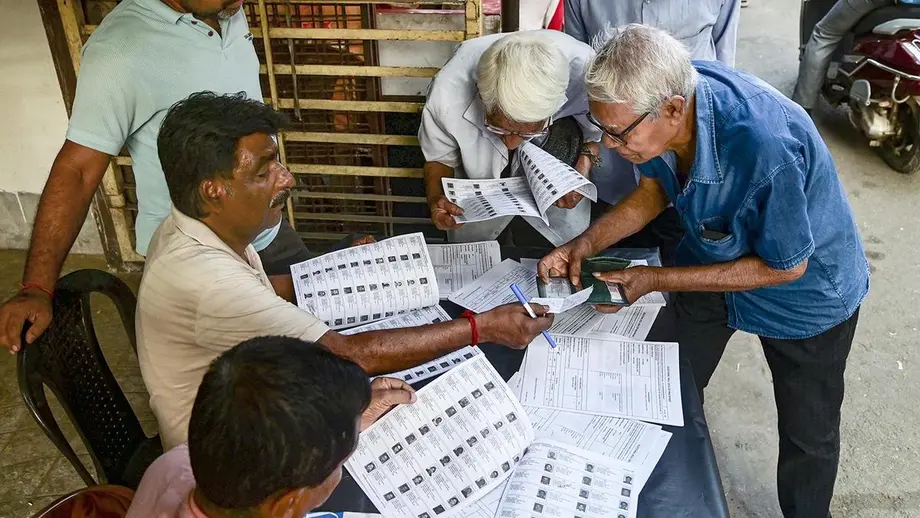
Nearly half of cleared voters faced another challenge
West Bengal's former special electoral roll observer, Subrata Gupta, says he had no information about appeals seeking to remove roughly 16.10 lakh voters whose names judicial officers had already approved. The Election Commission of India told the Supreme Court that officials in the state Chief Electoral Officer's office filed 16,10,311 appeals against voter inclusion, bringing a vast second round of scrutiny to people who had successfully defended their eligibility.
Contents
- Nearly half of cleared voters faced another challenge
- What Gupta knew about the revision
- What the Election Commission told the court
- How the numbers fit together
- What the appeal numbers reveal about timing
- Why the filing method matters
- Tribunal orders name the Additional CEO
- From revision to a backlog of millions
- Accountability inside and outside the Commission
- Key Points
The scale is visible in records collected and verified by the Civic Research Group, an independent group of researchers, analysts and field contributors. It identified challenges against 16,08,175 of the 32,53,401 cleared voters in its records, or 49.4%. In plain terms, nearly one in every two people approved by judicial officers faced an appeal seeking their removal.
Gupta, a retired Indian Administrative Service officer appointed special roll observer in November 2025, said the observers' responsibilities ended with publication of the supplementary electoral lists. Those lists recorded the outcomes of judicial scrutiny during the Special Intensive Revision, known as SIR, an extensive exercise to check who belongs on the voter register.
The Election Commission's October 26, 2026, counter-affidavit said the appeals were filed by officers acting as electoral authorities under the Representation of the People Act, 1950. It said the matters had not previously been brought before the Commission and cited an October 22 communication from the Bengal CEO's office. The identities of the officers who authorised the appeals, the full grounds for challenging so many favourable decisions and the chain of approval remain unresolved in the pending proceedings.
What Gupta knew about the revision
Gupta described a process in which about 60 lakh disputed cases went to judicial officers, who cleared roughly 33 lakh names for inclusion and rejected about 27 lakh. He said the approved voters became eligible to vote and most exercised that right in the Assembly election.
Explaining the observers' role after judicial officers took responsibility for deciding cases, Gupta said:
Once judicial officers came into the picture, the entire system was handed over to them. Whatever names they approved were included in supplementary lists.
Gupta said observers had informally heard about appeals from excluded voters seeking restoration. They had also heard about challenges to the retention of voters, but received no official communication about those cases and had no access to the appeal records.
His account puts the focus on how information moved between the observers, the state electoral administration and the national Commission. Gupta now serves as adviser to Chief Minister Suvendu Adhikari. Manoj Agarwal, who served as West Bengal's Chief Electoral Officer during the revision, subsequently became the state's chief secretary.
What the Election Commission told the court
The Commission's October 26 affidavit drew a line between actions taken by officials in the state CEO's office and decisions taken by the Commission itself. According to its account, the October 22 communication explained that the officers had acted in their capacity as authorities under the Representation of the People Act, 1950.
The Commission relied on Supreme Court orders dated April 1 and April 6. It said those directions allowed appeals by electors challenging exclusion and by electoral authorities challenging inclusion decisions made by the judicial officers.
The affidavit also addressed the immediate position of the affected voters: their names were already on the electoral rolls, they had favourable judicial orders and they were entitled to vote in the recent Assembly election. Their supporting documents were available on the relevant portal, the Commission said.
For a voter, the appeal is another legal challenge to a decision already won. The tribunals must consider whether the favourable inclusion order should stand. The Commission's description of voting eligibility is therefore central to understanding what happened during the election: the challenged voters remained on the register used for polling.
How the numbers fit together
The Commission's September submission counted 38,31,429 appeals in total. Of those, 22,21,118 came from excluded voters seeking restoration, while 16,10,311 challenged inclusion. Appeals against approved voters therefore accounted for about 42% of the tribunal caseload, calculated from those two official figures.
The Civic Research Group found 16,08,175 inclusion challenges, just 2,136 fewer than the Commission's total, covering 99.87% of that figure. Its wider collection covered 59,84,512 of the 60,06,675 voters placed under adjudication, or about 99.6%.
The clearance totals quoted in accounts of the judicial exercise vary: one tally puts the number approved by 700 judicial officers at 32,77,360, while another gives 32,68,119. The Civic Research Group's own collected records contain 32,53,401 approved voters. Its 49.4% calculation uses that collected group as the denominator.
The broader revision also involved deletions outside this particular appeal dispute. About 91 lakh electors, approximately 13% of the electorate before revision, were reported deleted during the SIR. Within the judicial scrutiny stage, around 27 lakh people were rejected over what the electoral administration called logical discrepancies, meaning apparent inconsistencies in voter records that required examination.
The two groups before the tribunals now face opposite problems. Excluded voters are trying to get back onto the register; approved voters are defending their continued inclusion. Both depend on a system handling millions of cases.
What the appeal numbers reveal about timing
An analysis of appeal identification numbers points to a heavy concentration of filings around the first week of April, as judicial scrutiny was ending and the electoral roll was being frozen for polling. The detailed analysis used an October 17 extract covering 30,00,541 approved voters and 14,75,885 appeals, with a table examining 13,95,794 distinct appeal IDs.
Within those distinct IDs, 12,15,318 belonged to the C series, associated with April 5. Another 1,39,954 were in the D series, associated with April 6, and 30,102 were in the E series, associated with April 8. Together, these three groups accounted for 99.3% of the analysed IDs.
The C series alone represented 87.07% of the distinct IDs. Portal status records associated C entries with April 5 evening timestamps around 7.12pm to 7.15pm, while E entries across different constituencies carried the same April 8 timestamp of 7.04pm. A smaller F series was associated with April 10.
The electoral roll was frozen at midnight on April 7, before the first phase of voting on April 23. The April 8 and April 10 batches therefore came after that freeze, while the largest batch preceded it.
Why the filing method matters
The appeal system used two broad numbering patterns. IDs associated with individual online or offline submissions were 20 characters long and included a calendar date. The C, D, E and F series used 17 characters, with a letter marking a batch and a block identifying the Assembly constituency.
Matching timestamps across constituencies point to a process that created or uploaded large groups of appeals together. Understanding that process matters because each entry represents a person whose eligibility had already been examined by a judicial officer.
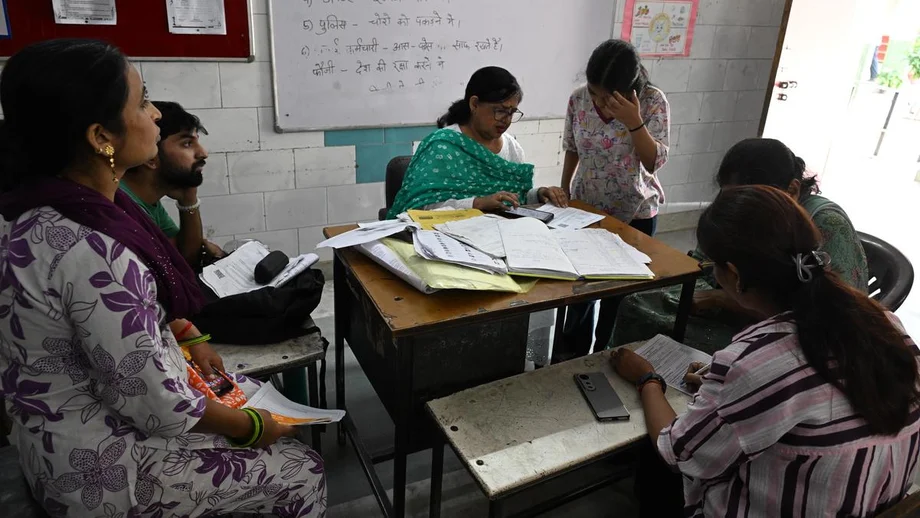
Field accounts from booth level officers described restored electors discovering pending challenges even though they had submitted no appeal themselves. Some said those voters had received no notice. In an April 20 discussion among booth officers, one participant said 80% of the restored voters checked in that booth showed pending appeals carrying the same April 5 date and time. Another described matching April 8 timestamps.
Those accounts describe individual booths rather than a statewide survey. Their practical concern was concrete: voters who believed their cases were settled could encounter another proceeding without understanding who had initiated it or why.
Questions about the digital process also connect with the Commission's earlier refusal to disclose software details. In an October 16 Right to Information reply, it withheld the name and version of software used to identify electoral roll errors, citing commercial confidence, trade secrets and intellectual property protections. The Commission said no new software had been developed or purchased for the revision and maintained that electoral registration officers decide inclusion or exclusion using facts and records.
Tribunal orders name the Additional CEO
Two Murshidabad tribunal orders provide specific examples of who appeared as appellant. On May 8 and May 11, retired Justice Indrajit Chatterjee, sitting as Appellate Tribunal No. 11, considered challenges involving voters in Farakka and Raghunathganj. Both orders identified the Additional Chief Electoral Officer as the appellant.
The two cases concerned voters whom judicial officers had cleared during the revision. The challenges involved discrepancies relating to parentage and age. Justice Chatterjee also said a substantial proportion of the appeals before his tribunal had been filed by the Additional CEO.
The legal dispute centres on the authority to bring those challenges. The Representation of the People Act assigns responsibilities to Chief Electoral Officers, District Election Officers, Electoral Registration Officers and Assistant Electoral Registration Officers. The Commission says officials were authorised to appeal under the Supreme Court's directions.
Congress leader Prasenjit Bose, a petitioner in the case, argues that officers described simply as belonging to the CEO's office lacked the required authority. His objection is that the appellate tribunals were created through the Supreme Court's intervention and are not provided for in the Act. The court proceedings will determine how the statutory roles and its directions apply.
From revision to a backlog of millions
The dispute developed over several months, moving from checks on voter records to judicial decisions, appeals and questions about authorisation. The main dates trace how the workload accumulated:
- October 2025 to February 2026: West Bengal conducted the SIR exercise.
- December 24, 2025: The WBCS Executive Officers' Association complained to the CEO about alleged system driven deletions bypassing electoral registration officers and the hearing requirements under Section 22 of the 1950 Act.
- March 10, 2026: The Supreme Court directed that a separate appellate body be established.
- March 21: The Election Commission constituted the appellate tribunals.
- April 1 and April 6: The Supreme Court issued orders the Commission later cited as authority for appeals against inclusion.
- April 5 to April 10: Portal records placed major appeal batches within this period.
- Around April 13: The tribunals began functioning.
- April 16: The Supreme Court ordered the addition of successful appellants through supplementary lists.
- April 23: The first phase of Assembly polling began.
- October 22 and October 26: The CEO's office sent its explanation, followed by the Commission's counter-affidavit.
- October 29: Congress submitted a memorandum demanding cancellation of the inclusion challenges and an information technology audit.
The Commission said around 1.2 lakh of approximately 38 lakh appeals had been decided by September. Using those rounded figures, about 3% had been resolved at that stage. Millions of cases therefore still required decisions.
Congress's requested audit seeks the dates, times and process used to file the appeals. A Supreme Court petition has also sought preservation and forensic examination of ECINet and ERONet logs, the digital records that could show actions taken within the electoral systems. Allegations about automated interference remain before the court.
Accountability inside and outside the Commission
Election Commissioners Sukhbir Singh Sandhu and Vivek Joshi raised questions in file notings about the appeals and the process behind them. On August 12, Sandhu asked who had authorised appeals on the Commission's behalf and who had actually filed them. His questions also addressed the basis on which officials acted.
The dispute forms part of a broader court challenge alleging that Chief Election Commissioner Gyanesh Kumar took important SIR decisions without the required collective process. The Commission rejects that allegation. Citing Article 324 of the Constitution, which gives it responsibility for supervising elections, it says SIR decisions followed the applicable legal framework and that an individual commissioner's observations or queries are not themselves Commission decisions.
Opposition parties have pressed for accountability. Mohammad Salim, West Bengal state secretary of the Communist Party of India (Marxist), criticised officials for distancing themselves from responsibility:
Everyone is busy dodging responsibility. Is it some ghostly affair?
The Trinamool Congress also challenged the Commission's accountability, citing Gupta's remarks. Congress sought cancellation of the appeals and an audit, while opposition leaders called for judicial scrutiny. These political demands accompany the narrower legal task before the tribunals: deciding whether each challenged voter should remain included.
For affected residents, the immediate consequence is another round of uncertainty after judicial review. The Commission says the approved voters were entitled to vote in the Assembly election. Their continuing registration now depends on the outcomes of the pending challenges and the courts' decisions on the disputed process.
Key Points
- The Election Commission counted 16,10,311 appeals against voters whose inclusion judicial officers had approved.
- Former special observer Subrata Gupta said he had no official information about those appeals.
- The Commission says officials in the West Bengal CEO's office filed them under legal authority supported by Supreme Court orders.
- Civic Research Group records show challenges against 49.4% of the cleared voters it documented.
- Three batches associated with April 5, 6 and 8 accounted for 99.3% of the distinct appeal IDs analysed.
- Two Murshidabad tribunal orders identified the Additional CEO as appellant.
- Around 1.2 lakh of approximately 38 lakh appeals had been decided by September.
- Authorisation, filing procedures and the grounds for the mass challenges remain central issues in the pending proceedings.