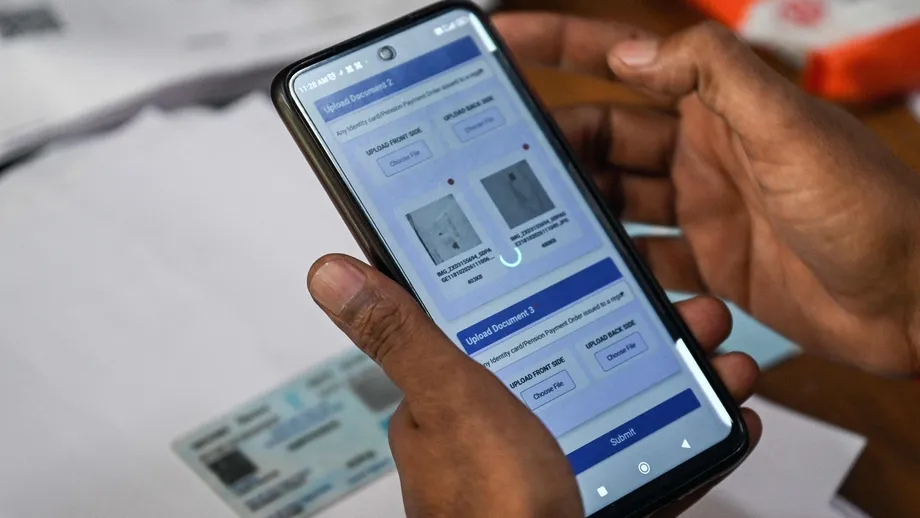
October 16 reply leaves voter screening process undisclosed
The Election Commission of India has refused to disclose the name and version of software used to identify errors in electoral rolls during its Special Intensive Revision (SIR), invoking protections for commercial confidence, trade secrets and intellectual property under the Right to Information Act.
Contents
- October 16 reply leaves voter screening process undisclosed
- What the activist wanted to know
- Three legal grounds for withholding answers
- Who has the legal power to change a voter record?
- West Bengal allegations put the workflow under scrutiny
- Two commissioners recorded repeated objections
- Congress targets ECINET and demands suspension
- How the dispute developed
- Former election chief urges an appeal
- Key Points
The October 16 reply to Karimnagar, Telangana, social activist MA Mujeeb Ayyub also withheld details about who reviews records flagged for possible problems. Questions about automated screening, artificial intelligence and safeguards against wrongly flagging genuine voters were treated as requests for clarification rather than information covered by the law.
The commission said no new software had been developed or purchased for the revision. It maintained that electoral registration officers, known as EROs, decide whether to include or exclude voters using facts and records.
The refusal comes amid scrutiny of an exercise reported to have removed 130 million names from electoral rolls, allegations of irregular deletions in West Bengal, and objections recorded by two election commissioners. Congress has demanded the suspension of the SIR and the removal of Chief Election Commissioner Gyanesh Kumar. The commission maintains that its decisions follow the law and established procedures.
What the activist wanted to know
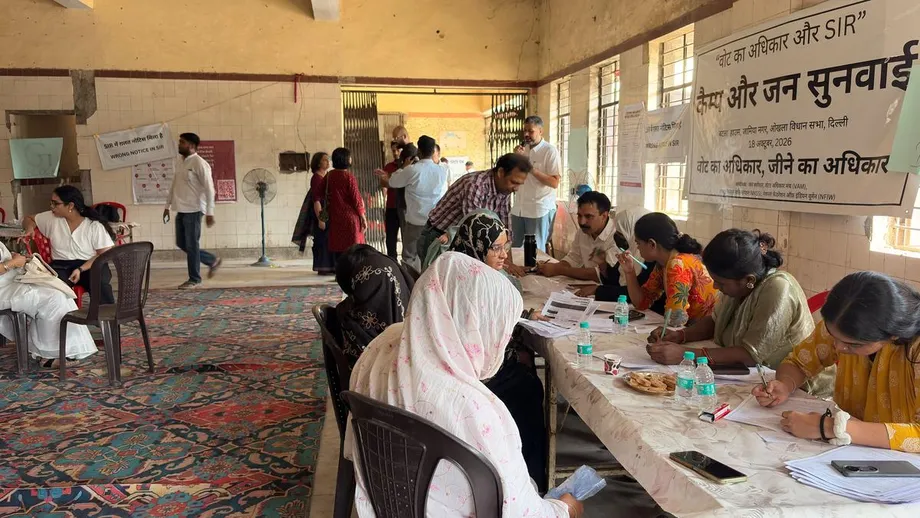
Ayyub's application sought an explanation of how voter records move through the commission's digital systems. Beyond a software name, he requested the version, application or artificial intelligence platform used to detect inconsistencies, and whether it automatically marks records for verification, correction or deletion.
He also asked what happens after a record is flagged, what safeguards protect genuine electors from mistakes, and which authority reviews or approves an anomaly before action is taken.
A false positive, one of the concerns raised in the application, occurs when a system labels a valid record as potentially wrong. For a voter, the practical issue is whether that alert leads to a careful check, a demand for documents or removal from the roll.
Ayyub separately asked whether artificial intelligence, machine learning, predictive analytics or automated tools supporting decisions were used at any stage. Such tools can search for patterns or assign records for further checking. Their role can range from helping officials sort information to influencing which cases receive scrutiny.
Three legal grounds for withholding answers
The commission relied on different parts of the Right to Information Act for different questions. For the software's identity and version, it cited Section 8(1)(d), which covers commercial confidence, trade secrets and intellectual property where disclosure would harm a third party's competitive position.
The ECI described the information as relating to those protected categories. Its reply also said that no new software had been developed or procured for the SIR, placing the focus on tools already in use.
Questions about automatic flagging, artificial intelligence and safeguards received a different response. The commission said they sought clarification outside the definition of information under Section 2(f). In practical terms, it treated those requests as asking for explanations rather than disclosing the operational details Ayyub wanted.
For the authority reviewing flagged anomalies, the commission invoked Section 8(1)(g). That exemption covers information whose release could endanger a person's life or physical safety, or identify a confidential source assisting law enforcement or security work.
The reply therefore left several operational details undisclosed: the software's identity, whether artificial intelligence was used, the safeguards applied to alerts, and the review process before action on a record.
Who has the legal power to change a voter record?
The ECI pointed to Sections 13B(1) and 13B(2) of the Representation of the People Act, 1950, in explaining the ERO's responsibility for preparing and revising a constituency's electoral roll.
The commission described how those officers make inclusion and exclusion decisions:
on the basis of facts and records.
An electoral roll is the official list of people registered to vote in a constituency. Revising it means adding eligible people, correcting entries and removing names where the legal requirements for removal are met. A person's place on that list matters directly to their ability to cast a ballot.
The commission's response identifies the official with statutory responsibility. Ayyub's questions concern the earlier steps as well: how a record attracts attention, what evidence reaches the officer, and who checks a computer alert before a decision follows.
West Bengal allegations put the workflow under scrutiny
In West Bengal, 538,000 voters were reportedly deleted through Form 7 objections that no person had filed, with automatically generated rejections giving no reason. Form 7 is used to object to an entry or seek the removal of a name from an electoral roll.
Another reported episode involved 1.6 million appeals filed by the Election Commission against voters who had been included on the rolls. Those appeals were lodged over three days while West Bengal's rolls were frozen for assembly elections in April.
The figures concern different actions: 538,000 reported deletions and 1.6 million appeals against inclusion. They cannot simply be added together as a total number of voters removed.
Senior officials in the commission's information technology division also linked some problems in West Bengal's SIR to the Electoral Registration Officer Network, or ERONET, portal. That places the operation of a named administrative system alongside the wider dispute over how officials use digital tools.
For affected electors, the concrete issues are whether they receive a reason for an adverse decision, whether the underlying objection is traceable, and whether an official can examine the record used to change their status.
Two commissioners recorded repeated objections
Election Commissioners Sukhbir Singh Sandhu and Vivek Joshi reportedly recorded written dissents and objections at least 14 times between November 2025 and August 2026. The objections concerned decisions and orders mostly related to the SIR, including some allegedly taken without their knowledge.
The two commissioners also raised concerns with Cabinet Secretary T.V. Somanathan. Allegations that the central information technology team curtailed election officials' access to ECI software added another issue: how much access officials responsible for electoral decisions had to the systems supporting their work.
The commission responded that differing views and observations are a normal part of institutional deliberations. It said its digital platforms operate under strict data security protocols and that its orders have full legal sanction and follow established statutory procedures.
The dispute brings together two parts of electoral administration: the legal responsibility assigned to constituency officials and the access permissions controlled through central digital systems. Both affect how an officer can examine a case and act on it.
Congress targets ECINET and demands suspension
Congress general secretary for communications Jairam Ramesh accused the ECI of concealing information about ECINET, its online platform for voter registration and related services. He alleged that the platform had been used to centralise manipulation of electoral rolls.
Ramesh also questioned why, in his account, disclosures by Tata Consultancy Services had revealed that the company developed ECINET, rather than the commission announcing that information transparently. He alleged that artificial intelligence was being used in electoral revision and challenged the commission's position on the issue.
Explaining Congress's objection to the lack of disclosure, Ramesh said:
The lack of transparency around the ECINET software and the use of AI has damaged the credibility of the entire process among citizens.
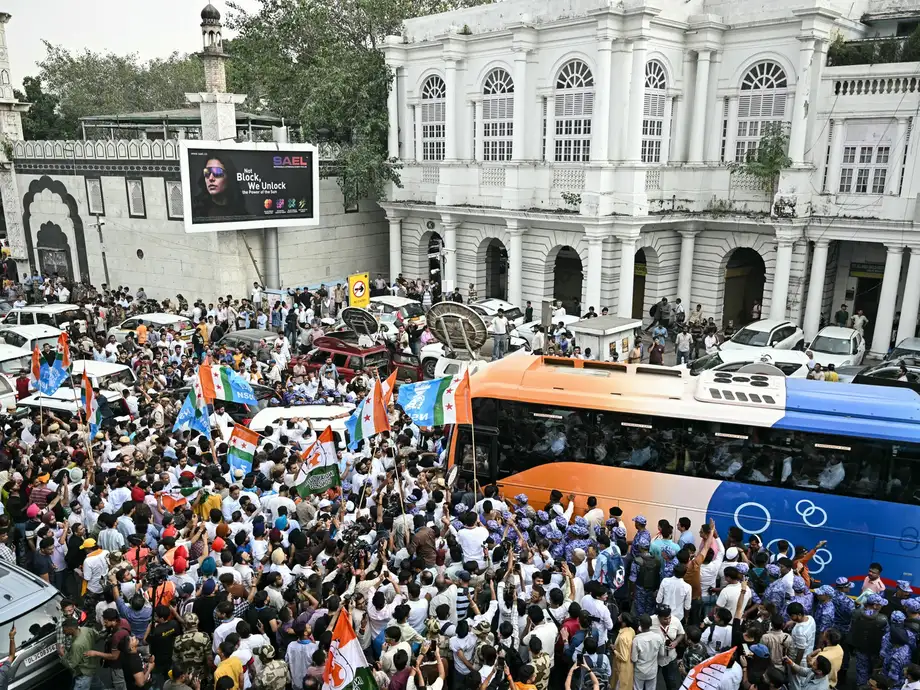
Ramesh said objections involving ECINET and the commission's information technology division had reached the Department of Personnel and Training. Congress renewed its demands for Kumar's removal and an immediate suspension of the SIR, amid protests over the commission's functioning and alleged irregularities in the revision.
The allegations of manipulation and artificial intelligence use are Congress's claims. The ECI's stated position is that its decisions are lawful, its procedures are established and its platforms follow strict security protocols.
How the dispute developed
The controversy has grown across the revision itself, internal objections and the later request for software information. The main dates are:
- June 2025: The SIR exercise began.
- November 2025 to August 2026: Sandhu and Joshi reportedly recorded at least 14 written dissents and objections.
- September 23: Details of the commissioners' objections became public.
- October 16: The ECI replied to Ayyub's application, withholding software details and other requested information.
The Supreme Court upheld the legality of Bihar's SIR, initiated by the commission's order of June 24, 2025, in Association For Democratic Reforms & Ors. v. Election Commission of India & Ors. on May 27, 2026. Its judgment, 2026 INSC 564, held:
The Impugned SIR exercise neither stands in direct conflict with the RP Act and the 1960 Rules, nor does it detract from the constitutional imperative of free and fair elections. It is, instead, an exercise traceable to Section 21(3) of the RP Act read with Article 324 of the Constitution, undertaken to advance the very objective which Part XV of the Constitution is designed to protect.
The court also held that the exercise satisfied proportionality requirements, that notice and hearing safeguards were preserved in substance, and that the deletions did not contravene Rule 21A of the 1960 Rules. It upheld the documentation framework as neither arbitrary nor contrary to the statutory scheme. Existing enrolment creates a rebuttable presumption of validity, not a bar on a special intensive revision.
On citizenship, the court permitted a limited enquiry into eligibility for electoral enrolment, but distinguished this from a final determination of citizenship, which belongs to the competent authority under the Citizenship Act. Electoral exclusion does not itself deprive a person of citizenship. Where the commission is not satisfied that a person meets the statutory conditions for inclusion, it must refer the person to the competent authority within the Central Government, and any deletion on citizenship grounds remains subject to that authority's adjudication.
The court directed the commission to refer cases of people deleted from the 2003 roll on citizenship grounds to the competent authority within four weeks. That authority must give notice and an opportunity of hearing and should preferably decide before the next Parliamentary, Assembly or Local Body elections, whichever comes first. Those found to be citizens must be restored to the roll. People domiciled in Bihar whose names were erroneously deleted as absent, dead, shifted or duplicated may challenge the decision through judicial review.
Former election chief urges an appeal
Former Chief Election Commissioner OP Rawat advised Ayyub to challenge the response through the appropriate authorities. He described the matter as a legal dispute and accused the commission of evading the questions.
Rawat said:
This is a legal matter and the applicant must file an appeal to the competent authorities to seek answers to questions ECI is evading.
An appeal would put the commission's reasons for withholding information before the authority reviewing its RTI decision. The immediate issue is access to records about software, safeguards and review responsibilities, alongside the separate controversy over how electoral rolls have been revised.
Key Points
- The ECI's October 16 reply withheld the name and version of SIR software, citing commercial confidence, trade secrets and intellectual property.
- Questions about automated flagging, artificial intelligence and safeguards were classified as requests for clarification.
- The commission says no new software was developed or purchased for SIR and that EROs decide voter inclusion or exclusion using facts and records.
- Reported West Bengal irregularities and repeated objections by two election commissioners have increased scrutiny of digital systems and official access.
- Congress demands the SIR's suspension and the chief election commissioner's removal. The ECI maintains that its actions follow the law.
- The Supreme Court's May 27, 2026 ruling upheld Bihar's SIR and permitted limited citizenship enquiries for electoral eligibility, while reserving final citizenship determinations to the competent authority under the Citizenship Act.
- Former Chief Election Commissioner OP Rawat has urged the applicant to appeal the RTI response.