A television pioneer remembered through his family's words
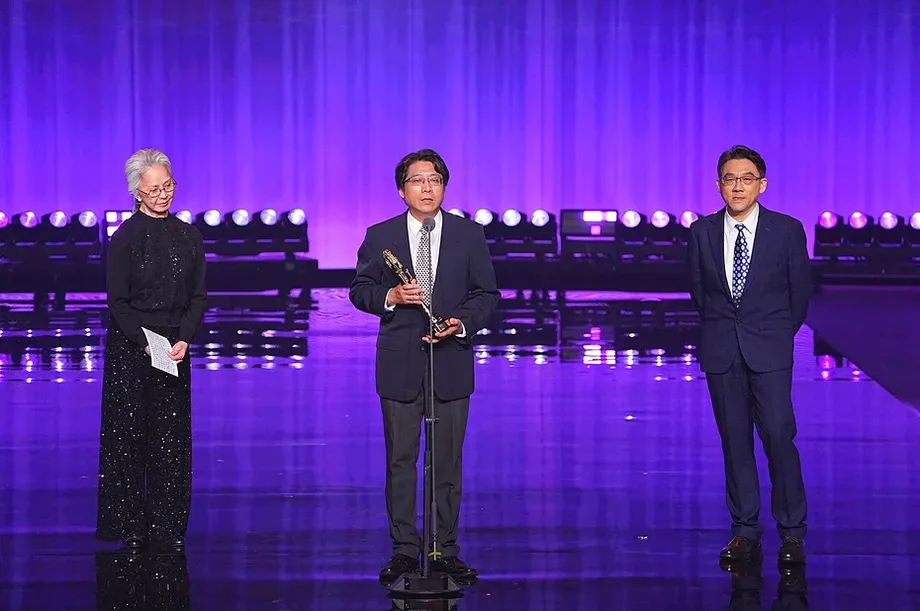
Lin Teng-yi, whose television career began in 1962 and spanned more than 40 years, received a posthumous Lifetime Achievement Award at the 61st Golden Bell Awards on October 25. His sons, Lin Ta-ching and Lin Ta-sen, accepted the honour for a man whose work ranged from Taiwan's first live television drama to singing competitions, basketball broadcasts and National Day military parades.
Contents
- A television pioneer remembered through his family's words
- The broadcast that changed his working life
- What a television director does
- From live drama to colour serials
- Music, games and events beyond the studio
- The overnight work his children remembered
- A familiar name in his final days
- The milestones behind the lifetime honour
- Key Points
Lin was named the Lifetime Achievement Award recipient when the nominations were announced on September 15, 2026. The Ministry of Culture said he established the production methods and visual approaches for Taiwan's first programmes across different formats, laying foundations that later television workers followed. His influence also extended to training and passing on professional expertise, making a pioneering contribution to the development of television programme production in Taiwan.
The tribute at the Taipei Music Center brought attention to someone audiences rarely saw: the director deciding how a programme would appear on their screens. Veteran actress Li Hsuan, who worked with Lin on Taiwan's first colour television serial, Qing Gong Can Meng, introduced the award.
His sons remembered both the demands of that work and the father behind it. They described overnight recording sessions, scripts written late into the night and mornings when children leaving for school passed their father as he returned home.
Lin Ta-sen also recalled his father's final hospital stay in April 2025. Calls of Dad or Grandpa brought little response, he said, while the familiar workplace address, Director Lin, prompted a noticeable reaction. For the family, that memory captured how closely Lin's identity had become tied to television.
The broadcast that changed his working life
Lin was born in 1934 and came from Yilan in northeastern Taiwan. Before entering television, he worked as a substitute teacher at Suao Middle School and as a seal engraver, carving the stamps used to mark names on documents.
His change of direction began on May 20, 1960, during the inauguration of Taiwan's third presidential and vice presidential term. Lin witnessed Taiwan's first attempt at a live television broadcast and recognised that a new medium was taking shape.
Television offered something different from the work he already knew: pictures and sound could carry an event to people beyond the place where it happened. Two years later, he joined the Educational Television Broadcasting Experimental Station and became Taiwan's first television director.
Equipment was still limited and standard production procedures had yet to be established. Lin entered an industry where workers were learning how to make programmes while also developing the practical methods needed to produce them.
He later passed the recruitment examination for a directing position at Taiwan Television, known as TTV, becoming part of its founding generation. His subsequent career covered different responsibilities and programme formats rather than a single series or genre.
What a television director does
Lin's title refers to the person who coordinates how a television production reaches the screen. In a production using several cameras, the director decides which camera view viewers see and coordinates those choices with the action, performers and production team.
A live drama requires those decisions as the actors perform. A basketball game demands attention to movement that cannot be scripted. A military parade follows a planned order, but its broadcast still requires coordinated pictures at the right moments.
Lin worked across all three settings. His career joined technical decisions with storytelling: choosing a close view or a wider shot changes what viewers notice and how they follow an event.
His son's memories also show that the job extended beyond the broadcast itself. Writing scripts, preparing productions and recording through the night were regular parts of Lin's working life during television's early years.
From live drama to colour serials
Lin's credits include Chong Hui Huai Bao, identified as Taiwan's first television drama broadcast live, and Feng Xiao Xiao, its first television serial. A serial tells a continuing story across multiple episodes, giving viewers a reason to return for the next instalment.
He also directed Qing Gong Can Meng, Taiwan's first colour television serial. Together, those productions trace several changes in the medium: staging drama for an immediate broadcast, sustaining a story over time and moving from black and white pictures to colour.
Li Hsuan recalled working with Lin on Qing Gong Can Meng about 55 years before the award ceremony. Television was still developing, she said, and production workers had to find their way through unfamiliar techniques as the industry moved into colour.
Her tribute described Lin as knowledgeable and modest, someone who spent his life helping others succeed in front of the camera. The award reversed that familiar arrangement, placing the attention on the director behind the pictures.
Music, games and events beyond the studio
Lin's contribution also reached programmes built around entertainment rather than scripted stories. His credits included Qun Xing Hui, Taiwan's first singing variety programme, and Da Qian Shi Jie, an early variety format combining amusement and quizzes.
Wu Deng Jiang, a pioneering talent competition, added another kind of television to his career. A talent show asks the production team to present contestants and performances in a way that lets viewers follow the competition as well as enjoy the music.
Basketball and National Day parade broadcasts took Lin's work beyond studio entertainment. Their inclusion alongside dramas and variety shows helps explain the breadth of the lifetime award: he helped develop several of the forms that became familiar parts of Taiwan's television schedules.
Li Hsuan's recollections connected those technical achievements with his manner at work. Actress Yang Kuei-mei also remembered encouragement she had received from him. Director Lin Fu-ti and performer Chang Chi were among those who paid tribute, adding memories of personal support to the record of programmes he helped create.
The overnight work his children remembered
Lin Ta-ching said his father's schedule made a lasting impression on the children. Recording overnight and staying awake to write scripts were routine. Sometimes the family encountered him only briefly at the doorway, as their school day began and his working night ended.
He and his siblings saw enough of that exhaustion to agree as children that they would never become television directors. Their father's profession appeared demanding long before they understood the responsibility it carried.
Adulthood changed Lin Ta-ching's view. After entering working life and becoming a father himself, he sometimes complained to his own children about being busy or tired. He then realised that he could not remember his father making such complaints to them.
Lin Ta-ching described a humorous, lively man whom the children regarded as a perfect father. His recollection ended with a simple expression of grief:
I miss him very, very much.
A familiar name in his final days
Lin Ta-sen said his father entered hospital in April 2025 and died about a week later. During that final stay, Lin became extremely weak, and relatives struggled to get a response by addressing him as a father or grandfather.
The words Director Lin brought a more noticeable response, his son recalled. Medical staff subsequently used the professional form of address too. Lin Ta-sen understood the reaction as a sign of how deeply the work had become part of his father's life.
Biographical accounts list Lin's lifespan as 1934 to 2025 and his age at death as 90; several ceremony tributes gave his age as 91. His sons accepted the award after his death, and Lin Ta-sen conveyed thanks on behalf of their mother, who did not attend.
The brothers thanked the Ministry of Culture, the audiovisual authorities and the award judges for recognising their father. They also acknowledged recommendations from Beautiful Life Television and Shih Hsin University president Chen Ching-ho, and said the family would treasure the award.
The milestones behind the lifetime honour
Lin's career began with an encounter with an experimental broadcast and continued through more than four decades of television work. The main dates connect that personal decision with the later recognition:
- 1934: Lin was born, beginning a life rooted in Yilan.
- May 20, 1960: He witnessed Taiwan's first attempt at a live television broadcast during the presidential inauguration.
- 1962: He joined the Educational Television Broadcasting Experimental Station and became Taiwan's first television director, later joining TTV.
- April 2025: He died after a final hospital stay of about a week, according to his son.
- October 25: His sons accepted the posthumous Lifetime Achievement Award at the 61st Golden Bell Awards.
The honour brought together two accounts of the same working life. Performers remembered a modest director who helped establish television production methods and encouraged the people around him. His children remembered the long hours, the humour at home and a father whose attachment to his profession remained vivid in his final days.
Key Points
- Lin Teng-yi received a posthumous Lifetime Achievement Award at the 61st Golden Bell Awards.
- His sons, Lin Ta-ching and Lin Ta-sen, accepted the award on October 25.
- He entered television in 1962 and worked in the industry for more than 40 years.
- His credits included pioneering live drama, serials, colour television, variety programmes, talent competitions and outside broadcasts.
- Li Hsuan recalled their collaboration on Qing Gong Can Meng and his modest approach to helping others succeed.
- His sons remembered an affectionate father who worked through the night and never complained to them about the demands of his job.