A flawless demo leaves a real singer in tears
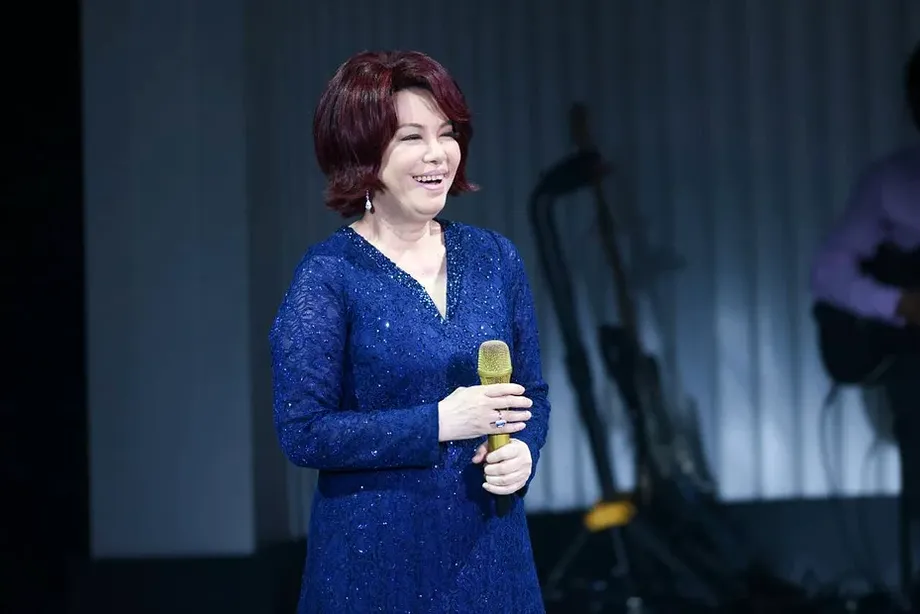
Taiwanese singer Hebe Tien went into the recording studio to make an album after a six year gap and found herself competing with a voice that never needed to breathe. Several demonstration tracks had been sung by artificial intelligence. Their smooth delivery, wide vocal range and elaborate runs left the S.H.E member questioning the skill that built her career.
Contents
- A flawless demo leaves a real singer in tears
- Why Hebe's experience reaches beyond the studio
- Stefanie Sun's AI counterpart already had a vast catalogue in 2023
- A familiar tone is only part of a performance
- Virtual performers are competing for attention too
- Khalil Fong's estate draws a boundary around AI use
- The dispute involves more than ownership of a voice
- Voice imitation can generate income beyond music
- How the developments unfolded
- Key Points
Tien said she cried during a telephone call to a record company executive, telling them she felt she no longer knew how to sing. Reassurance helped her regain her confidence, and she subsequently adjusted lyrics and arrangements. Her experience shows how AI is changing music before a recording even reaches listeners: a synthetic demonstration can become the standard a human performer feels expected to match.
Singaporean singer Stefanie Sun has faced another version of the same pressure. By May 2023, online estimates put the number of covers using an imitation of her voice at more than 1,000. Some attracted more than one million plays. Her response mixed humour with concern about a technology capable of producing music at a pace no person could sustain.
The developments stretch beyond imitation covers. Virtual performers are attracting audiences, an account using a copy of a Japanese actor's voice reportedly earns advertising revenue, and the managers of late singer Khalil Fong's estate have demanded prior permission for AI uses of his work. Across these cases, the practical questions are who controls a recognisable voice, who earns money from it and what listeners believe they are hearing.
Why Hebe's experience reaches beyond the studio
Tien described the AI demos as exceptionally pleasing to the ear, with impressive vocal thickness and ornamentation. A demo is a sample recording used to show how a song might sound before the final performance is made. When that sample contains phrases unconstrained by a human need for air, it can set difficult expectations for the recording session.
Tien encountered the same appeal during a visit to her family home. Her father enthusiastically played her a song, marvelling at how high the singer could go and how the vocal runs seemed never to stop. She recognised the performance as AI generated.
Her father's reaction captures a problem that reaches ordinary households. Listeners can first encounter a synthetic performance as an impressive song, without knowing how it was made. For Tien, the pressure came both from the production process and from hearing someone close to her admire those seemingly effortless abilities.
The changes she made to lyrics and arrangements also show a concrete artistic response. Rather than simply reproducing the demonstration, she reshaped the material for her own performance.
Stefanie Sun's AI counterpart already had a vast catalogue in 2023
Sun addressed the spread of her artificial counterpart in a May 22, 2023 post titled My AI. Covers circulating on Chinese social platforms, including Bilibili, placed her recognisable vocal tone into songs associated with other performers.
The catalogue included Jay Chou's Hair Like Snow, released in 2005, and Love Before BC, released in 2001, as well as Nan Quan Mama's Rainy Day. Rainy Day and Chou's Iron Box Peninsula were among the covers reported to have passed one million plays.
Sun, whose debut album Yan Zi was released in 2000, described the imbalance between a working singer and an endlessly productive synthetic counterpart:
My fans have officially switched sides and accepted that I am indeed 'an unpopular singer' while my AI persona is the current hot property. I mean really, how do you fight with someone who is putting out new albums every few minutes?
The estimate of more than 1,000 covers was circulating by May 24, 2023, when Sun had a career spanning 23 years. That comparison helps explain the scale of the disruption: the synthetic catalogue was expanding through other people's songs, while a human artist's recorded work accumulated through years of writing, rehearsing and production.
A familiar tone is only part of a performance
Sun's listeners did not respond uniformly. Some enjoyed hearing familiar songs in her vocal style. Others criticised the imitations for lacking her emotion and the qualities she brings to live performances.
One listener pointed to a specific mismatch: an AI cover of Hair Like Snow sounded like Sun around 2001, although Chou's song was released in 2005. The observation shows how a model can place a voice associated with one period into music from another. For fans who know an artist's career closely, those combinations can feel strange.
Voice cloning uses recordings to learn patterns associated with a speaker or singer, then generates or transforms audio to resemble those patterns. The resulting familiarity can be powerful because audiences often recognise a performer within a few notes.
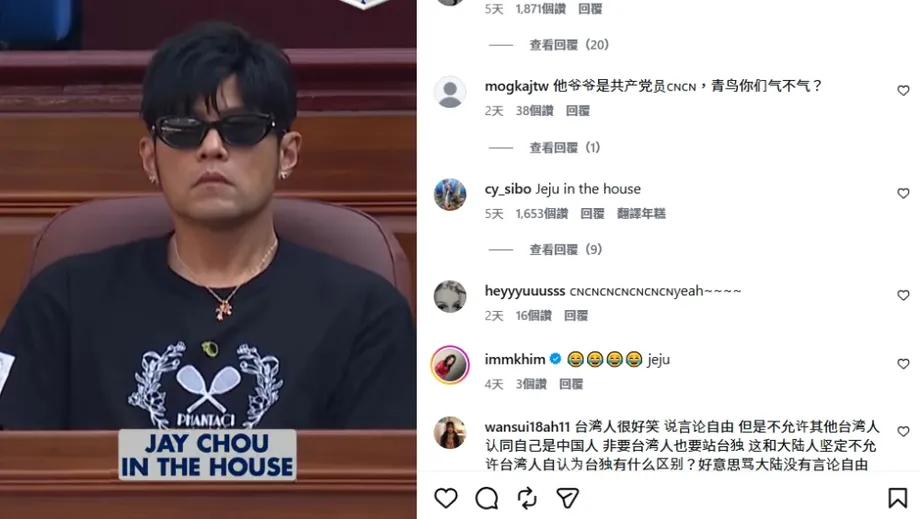
Jay Chou has taken a more confident position, saying AI can accomplish many things while human creativity and genuine emotion remain irreplaceable. Sun's post expressed greater unease about the speed of technological change and its effect on human work. Their responses reveal different assessments of the same pressure, even as both artists have become subjects of AI imitation.
Virtual performers are competing for attention too
Datouzhen, a virtual male performer developed by a mainland Chinese music platform and a laboratory, represents a different route into the market. Instead of circulating solely as an imitation bearing a famous singer's name, the project presents an identifiable digital performer with its own appearance.
Its covers include Tears Sea, Look at the Moon's Face and Encounter, the last closely associated with Sun. Those versions have attracted attention on music platforms and appeared in their rankings. A familiar song can therefore gain a new synthetic competitor through either an imitation of its singer or a separately branded virtual act.
Yuri, promoted as an A-Pop virtual female idol for an international audience, has taken another approach. Her English debut Surreal reportedly surpassed seven million plays worldwide. That figure covers a different release and audience from the Chinese cover videos, whose individual play counts have also reached into the millions.
For listeners, the distinction is straightforward: an AI imitation borrows the sound of a known person, while a virtual idol is presented as a digital character. Permission to use voices, recordings and songs remains a practical issue wherever those materials enter production.
Khalil Fong's estate draws a boundary around AI use
Fong's record company, Fu Music, and the administrators of his estate issued a joint statement on October 7, 2025, reserving rights over his work and identity in relation to AI. Fong died on February 21 that year, aged 41.
The statement covered recordings, musical compositions, audiovisual works, his name, likeness and image, along with text, data and metadata. Metadata means descriptive information attached to material, such as details identifying a recording or its creator.
The administrators objected to unauthorised copying, machine learning, web scraping, data development and training of AI systems, including large language models. Web scraping means automatically collecting material from websites. The statement cited European Union directives and Hong Kong's Copyright Ordinance and reserved rights to the fullest extent permitted by law.
The reservation applied to existing and future works, including material already made public. Anyone seeking AI related use was instructed to contact the rights managers beforehand and obtain explicit permission, with the managers deciding whether to authorise it and on what terms.
Fong had spoken during his illness about continuing to have creative ideas and had wondered whether audiences who accepted AI singing might also accept hearing a person who was ill. His estate's subsequent action places decisions about reuse with those responsible for his artistic legacy.
The dispute involves more than ownership of a voice
China's Civil Code protects a person's voice by reference to the rules protecting their image. That makes a recognisable voice a personal rights issue alongside the copyright questions raised by the music itself.
A synthetic cover can involve several interests at once: the person whose voice is copied, the writers of the song, performers whose recordings are used and producers holding rights in those recordings. Permission concerning one element may leave other permissions to be addressed.
Fong's estate statement reflects that breadth by listing both creative works and information associated with them. Its demand for advance authorisation also addresses an early stage of the process, when material is collected or used for training, rather than waiting until a finished synthetic song appears.
The practical consequence for music production is that a convincing result and a properly authorised result involve different tasks. Producers must consider how the audio was created and which people or organisations control the material used.
Voice imitation can generate income beyond music
Japanese voice actor Kenjiro Tsuda has also had his voice copied for videos on a social media account. The account reportedly earned approximately 500,000 to 740,000 yen a month in advertising revenue, showing how a recognisable synthetic voice can support a business outside song releases.
Taylor Swift has reportedly applied to register her voice as a trademark in response to unauthorised AI uses of her voice and image. The application date, filing details and outcome were not specified in the account of the move.
Swift has also been targeted by AI generated sexual images. One social media post containing such material accumulated more than 47 million views. Her experience brings together two forms of identity misuse, fabricated sound and fabricated imagery, that can spread to large audiences.
The money reported in the Tsuda case makes the stakes particularly tangible. A copy of a person's recognisable sound can become part of someone else's advertising income, leaving the person whose identity attracts attention seeking control over its use.
How the developments unfolded
Sun's response dates to 2023, while Fong's estate acted in October 2025. Keeping those dates in view shows a dispute developing over several years, from viral covers and public reactions to formal demands governing AI use.
- 2000: Stefanie Sun released her debut album Yan Zi.
- May 22, 2023: Sun published My AI, responding to the popularity of covers imitating her voice.
- By May 24, 2023: Estimates put the AI Sun catalogue at more than 1,000 covers, with some exceeding one million plays.
- February 21, 2025: Khalil Fong died, aged 41.
- October 7, 2025: Fu Music and Fong's estate administrators issued their joint statement reserving rights over AI uses.
Tien's studio experience adds another dimension to that progression. AI is now part of the material some singers hear while preparing their own recordings, as well as a source of competing performances online. The pressure concerns artistic confidence, audience attention and permission to use a person's creative identity.
Key Points
- Hebe Tien said AI demos shook her confidence during recording; she later adjusted lyrics and arrangements.
- More than 1,000 covers imitating Stefanie Sun's voice were estimated to be circulating by May 2023.
- Virtual performers Datouzhen and Yuri are attracting audiences alongside imitations of established singers.
- Khalil Fong's estate and Fu Music demanded explicit advance permission for AI uses in an October 2025 statement.
- Voice cloning can involve personal rights, songwriting rights and rights in recordings, with advertising income also at stake.