79 fingerprints offer a new picture of the ancient workforce
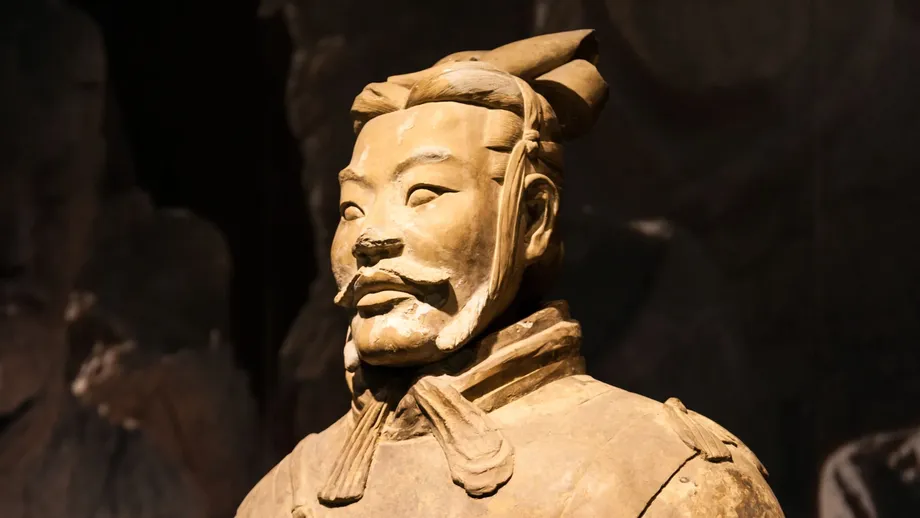
Seventy-nine fingerprints preserved on 36 terracotta warriors suggest that women and children helped make the clay army guarding the tomb of China's first emperor, Qin Shihuang. A statistical analysis assigned 45% of the impressions to adult men, 32.7% to adult women and 22.3% to children younger than 15.
Contents
- 79 fingerprints offer a new picture of the ancient workforce
- How ordinary handling left lasting marks
- What the spaces between fingerprint ridges reveal
- Why the estimates need a wider test
- Earlier microscopy also found signs of young workers
- Were children learning a trade?
- A vast burial complex, uncovered in stages
- From imperial construction to fingerprint research
- Key Points
The findings, published in the Journal of Cultural Heritage, bring the people behind the statues into sharper focus. For decades, research concentrated largely on how the figures were manufactured. The fingerprints address another question: whose hands shaped them about 2,200 years ago?
The percentages describe the fingerprints examined. The actual balance of workers remains uncertain because individuals could leave several impressions, while skill and working habits affected how many visible marks they left.
The investigation examined warriors from a single excavation area, identified as unit T23 in Pit 1 of the emperor's mausoleum near Xi'an, in Shaanxi province. Its small sample offers a detailed glimpse into one part of a much larger production effort.
The research team, led by museum archaeologist Xiaoxi Li, described its findings as a challenge to the familiar image of workshops staffed entirely by grown men.
These findings challenge the long-held assumption that Terracotta Army production relied exclusively on adult male labor," the researchers wrote, "providing the first quantitative biological evidence for a diverse workforce including women and children.
Historical records already describe women and young people working in workshops supervised by the Qin state, including those producing lacquerware. The impressions now connect that broader history of work with the manufacture of the emperor's clay soldiers.
How ordinary handling left lasting marks
The researchers initially documented 91 fingerprints. They removed 12 apparent repeats before analyzing the remaining 79, seeking to reduce the influence of multiple impressions left by the same people.
Seventy-three were surface impressions, made when fingers pressed directly into wet clay during molding, shaping or assembly. The other six were relief impressions associated with attaching decorations prepared separately, principally armor studs and waistbands.
Heads and arms carried many of the marks. Workers gripped these parts while joining them to other components and smoothing the clay. Impressions also survived on armor, hands and collars, with one recorded on a foot.
The locations make the fingerprints useful for understanding work as well as workers. A mark beside an attached decoration records a different action from one left while holding an arm in place. Together, they preserve small moments within a complicated manufacturing process.
The statues were built from components and then given details such as hairstyles, hats, ears, footwear and facial hair. This combination of repeated production steps and individual finishing helped create thousands of figures with varied appearances.
What the spaces between fingerprint ridges reveal
Fingerprint ridges are the fine raised lines on the skin. As a child grows, those ridges generally become farther apart. After physical maturity, adult men tend, on average, to have slightly wider spacing than adult women.
The researchers measured mean ridge breadth, a measure of the average spacing of these lines. The method uses a biological pattern across groups rather than identifying people in the way a modern police fingerprint database does.
Age and sex categories overlap substantially. A teenage boy, for example, may have ridge spacing similar to that of an adult woman. The researchers therefore estimated the mixture of groups across the whole sample instead of giving every impression a firm individual identity.
A Bayesian mixture model performed that calculation. In simple terms, the model compares the spread of measurements with reference patterns and estimates which combination of groups best fits the collection of prints.
The estimated shares attributed to women and children add up to 55%, compared with 45% attributed to adult men. The category for children covered those younger than 15, an age boundary informed by historical legal sources from the Qin period.
The team also adjusted for changes in the clay. Drying and firing shrink a clay object, bringing the preserved fingerprint lines closer together than they were when a hand first touched its surface. Population differences also required adjustments.
Why the estimates need a wider test
The model relied on reference measurements from modern European populations. Applying those patterns to people who lived in ancient China introduces uncertainty, even after adjustments for population differences.
The researchers warn that the estimated shares for women and young people may be too high. A larger collection of ancient impressions and more suitable comparison data could change the numerical balance.
Working experience introduces another complication. A beginner might leave more obvious fingerprints while handling wet clay than an experienced artisan whose movements were more controlled. Some production tasks also created more opportunities to leave a mark than others.
The 36 warriors represent a very small part of an army estimated at about 8,000 soldiers. Expanding the fingerprint database across additional figures and excavation areas is the researchers' proposed next step; no completion date was given.
Earlier microscopy also found signs of young workers
Findings described in July 2025 involved more than 100 fingerprints extracted from over 40 restored warriors. Museum researchers used microscopy capable of capturing fine detail across uneven surfaces to record the impressions.
That preliminary analysis described most fingerprints as belonging to adult men, with a small number attributed to minors. The later analysis of 79 retained prints produced the specific estimates of 45% adult men, 32.7% adult women and 22.3% children. The relationship between the two sample groups has not been explained.
Li, a researcher at Emperor Qinshihuang's Mausoleum Site Museum, said in the earlier findings that further investigation was needed to determine which stages involved minors and whether tasks were divided by age.
The museum's conservation laboratory combines controlled temperature and humidity with systems for collecting three dimensional data. Those facilities help protect fragile remains while creating detailed records for subsequent research.
A study in 2022 had already suggested that three fingerprints on the abdomen of a terracotta acrobat from pit K9901 might belong to a teenage craft worker. Zhou Ping, the museum's deputy director, and colleagues reached that conclusion, extending the evidence for young participants beyond the soldier figures.
Were children learning a trade?
Qin legal manuscripts written on bamboo, known as the Yuelu Academy Qin slips, describe a structured system of craft instruction. The account sets out a year of apprenticeship training and a further period of two years associated with becoming a new artisan.
That written evidence gives the younger fingerprints a possible setting: children and adolescents learning practical skills under experienced workers. The researchers suggest that beginners may have attached simpler decorative pieces while more practiced artisans handled demanding shaping and assembly.
The allocation of tasks remains an interpretation to test. Archaeologists have yet to identify a reliable pattern showing exactly which jobs women, children or adult men performed.
Names carved or stamped on objects provide another view of workshop organization. Such markings supported a system in which responsibility for the quality of a finished product could be traced to particular makers or supervisors.
Fingerprints add a different kind of detail. An inscription records an assigned name or responsibility; a finger impression preserves physical contact during manufacture. Examining both can help archaeologists connect the administration of production with the actions that took place at the clay surface.
A vast burial complex, uncovered in stages
The first warrior fragments emerged in March 1974, when farmers digging a well about 1.5 kilometers from the emperor's tomb encountered broken clay figures. Excavations revealed an underground army intended to accompany and protect Qin Shihuang after death.
The army is estimated to include about 8,000 warriors, 130 chariots, 520 horses associated with the chariots and another 150 cavalry horses. The two horse categories total about 670 animals.
Excavation accounts describe more than 2,000 warriors brought to light, while another estimate puts the excavated share at about one third and the number still buried at roughly 6,000, mainly in Pits 1 and 2. Much of the army remains underground.
The burial complex extends far beyond the military figures. Archaeologists have identified about 600 pits across an area of roughly 22 square miles, or 57 square kilometers. Finds include officials, musicians, acrobats and bronze water birds, presenting a broader model of the emperor's court.
Duan Qingbo, who headed the mausoleum excavation team, described how those discoveries changed the understanding of the site.
"We find the underground pits are an imitation of the real organization in the Qin dynasty," he said.
The emperor's tomb itself has never been excavated. Soil testing at its mound has detected high mercury levels, adding another reason for careful investigation of the burial environment.
From imperial construction to fingerprint research
Construction of the mausoleum began around 246 BCE, when the future emperor became ruler of Qin. Accounts describe work continuing for about 40 years, within a wider imperial building program that reportedly employed hundreds of thousands of people.
The often cited figure of about 720,000 workers concerns the emperor's vast projects. The fingerprint investigation focuses on the much narrower question of who handled the clay used for particular statues.
- Around 246 BCE: Work on the mausoleum began after the future Qin Shihuang became ruler of Qin.
- 221 BCE: Qin Shihuang proclaimed himself emperor after unifying rival states.
- March 1974: Farmers digging a well discovered fragments of terracotta figures in Shaanxi.
- 1987: The mausoleum and terracotta warrior pits entered UNESCO's World Heritage List.
- 2022: A study suggested that fingerprints on an acrobat figure might belong to a teenage artisan.
- July 2025: Preliminary findings described signs of minors among more than 100 fingerprints from restored warriors.
Conservation shapes how quickly the buried figures can be studied. The warriors were originally painted, and preserving their fragile color remains a major challenge. Controlled excavation and restoration help retain both that decoration and minute traces such as fingerprints.
The new analysis changes the human picture behind the familiar ranks of soldiers. Alongside experienced adult men, women and young learners may have taken part in the daily work of molding, joining and decorating the figures. More impressions from more parts of the complex could show how widely that pattern extended.
Key Points
- Researchers analyzed 79 retained fingerprints on 36 warriors from one area of Pit 1.
- The model attributed 45% of the prints to adult men, 32.7% to adult women and 22.3% to children younger than 15.
- The estimates concern fingerprints; the workforce composition remains uncertain.
- Modern European reference data, overlapping biological measurements and differences in working habits affect the estimates.
- Qin records describe craft apprenticeships, offering a possible explanation for young participants.
- Researchers plan to expand the fingerprint database to test the findings across a larger sample.