A global meeting with a local mission
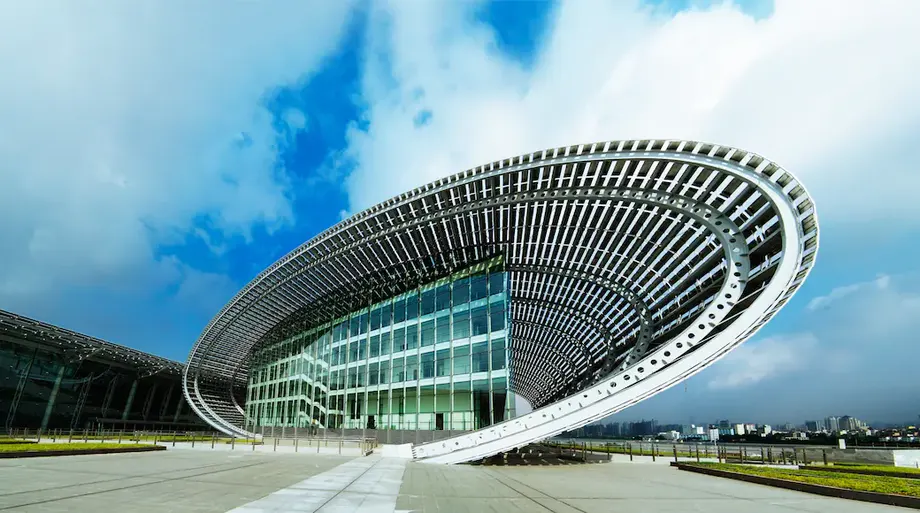
The 2026 World Life Science Conference opened on the morning of November 28 at the International Hall of the Guangzhou Baiyun International Convention Center. About 3,000 scientists, research institutions and industry representatives attended the gathering, which runs through November 30. It is the first edition held in Guangzhou and the first in South China.
Contents
- A global meeting with a local mission
- Nobel voices and China's agenda for cooperation
- What the 37 specialist forums will examine
- A university mobilizes, and science goes public
- Why a proteome project matters to Guangzhou
- How measuring proteins could change medicine
- A research network built across borders
- From laboratory demand to industrial investment
- Cooperation extends to Latin America
- What Guangzhou keeps after the delegates leave
- Key Points
The theme is Life Sciences: Openness, Integration and Innovation. Sessions span life sciences, medicine and health, agriculture and environmental science. They are intended to connect laboratory discoveries with responses to serious diseases, population ageing, pollution, resource shortages, food security and climate change.
The China Union of Life Science Societies and Sun Yat-sen University are the joint hosts. South China University of Technology, Guangzhou Medical University, Guangzhou Laboratory, the Guangdong Anticancer Association, the Guangdong Precision Medicine Society and Guangzhou Pharmaceutical Holdings are among the institutions helping to organize the event. Lingnan Group is providing conference support.
A briefing held on November 25 had forecast nearly 2,000 participants, including more than 50 academicians and experts from China and abroad. Attendance reached about 3,000. The scale reflects both the international speaking program and Guangzhou's effort to turn a scientific meeting into lasting research and industrial cooperation.
Nobel voices and China's agenda for cooperation
Hartmut Michel, winner of the 1988 Nobel Prize in Chemistry and international chair of the conference, used his opening address to argue that scientific progress depends on exchange across borders.
The development of the life sciences requires international scientific and technological exchange and cooperation.
Michel drew on his own research into membrane proteins, which sit in the thin boundaries around cells and help control the movement of substances and signals. Determining their structures can reveal how they work and provide a foundation for drug development. He said basic research supports advances in medicine and biotechnology, while a complete understanding of the human body, especially the brain, will require new methods and international collaboration.
Chong Kang, an academician of the Chinese Academy of Sciences, joint chair of the organizing committee and rotating chairman of the China Union of Life Science Societies, presided over the opening ceremony. He said artificial intelligence and big data are accelerating the integration of scientific disciplines, creating opportunities to improve health and address challenges involving food, the environment and energy.
Four researchers delivered opening keynote lectures: Thomas Südhof and Randy Schekman, both recipients of the 2013 Nobel Prize in Physiology or Medicine; Napoleone Ferrara, recipient of the 2010 Lasker Award for Clinical Medical Research; and He Fuchu, an academician of the Chinese Academy of Sciences. Across the full program, organizers invited Nobel, Lasker and Wolf Prize laureates to speak.
Ni Zhiyu, a member of the Leading Party Members Group and secretary of the Secretariat of the China Association for Science and Technology, connected the meeting with the Healthy China initiative. She cited President Xi Jinping's call for health for all and a global community of health, then set out three priorities for the delegates.
We should promote the orderly opening and sharing of scientific data, experimental platforms and clinical resources, so that innovations in the life sciences serve all humanity.
- Open sharing would give researchers broader access to data, experimental facilities and clinical resources.
- Closer integration would connect life science with data science, information science, materials and engineering, while linking laboratories, hospitals and companies.
- Responsible innovation would require a stronger global framework for ethics, so that new applications serve human health and welfare.
What the 37 specialist forums will examine
The conference includes 11 keynote lectures and 37 specialist forums. Gene editing, synthetic biology, precision medicine using artificial intelligence and computer assisted diagnosis appear alongside public health systems and health governance. This means the program moves from the molecular machinery of life to the practical question of how societies deliver care.
A public health forum will examine pandemic risks, virus prevention, the health effects of air pollution and climate change, epidemiology using large datasets, and whether artificial intelligence can make health services more accessible and equitable. The session also marks the 50th anniversary of the School of Public Health at Sun Yat-sen University.
A separate summit on scientific journals will consider the responsible use of artificial intelligence in peer review, open scientific communication and research evaluation. Delegates will discuss assessing work for its originality and scientific value rather than relying heavily on journal measurements. Another forum, organized by South China University of Technology, brings together scholars from Ireland, Canada, France, New Zealand, Japan and China to examine how food science, medicine and synthetic biology can contribute to nutrition and health.
A university mobilizes, and science goes public
Sun Yat-sen University has coordinated nine schools related to life sciences and medicine, as well as 10 affiliated hospitals. More than 1,000 students and teachers are serving as volunteers, while another 1,000 students and teachers are taking part. The university is organizing forums for young scientists and women scientists, a summit on scientific journals and a session on public health and health governance.
Tang Hongwu, president of the university and an academician of the Chinese Academy of Engineering, noted that 2026 marks 160 years of medical education at the institution. Its history traces to Boji Medical School, founded in 1866. Tang recalled its motto about saving people, the country and the world while treating disease, the body and the heart.
Lin Haotian and Napoleone Ferrara are jointly chairing the young scientists forum, organized by the Zhongshan Ophthalmic Center. A mobile eye clinic connected through 5G will demonstrate diagnosis assisted by artificial intelligence and remote reading of medical images. The women scientists forum includes Li Lanjuan, Chen Wei, Gao Yue, Yu Jun and Sun Ying, with subjects ranging from digestive cancers to gut microorganisms.
Public activities extend beyond the convention center. Nobel laureates and academicians are scheduled to visit universities, secondary schools and primary schools through the Nobel Laureates on Campus program. A separate Conversation with Women Scientists session invites students and researchers beginning their careers to discuss career decisions, obstacles and scientific turning points.
Why a proteome project matters to Guangzhou
One of the largest research projects connected with Guangzhou is the Human Proteome Navigation project, known as π-HuB. It is China's first international big science project in the life sciences, meaning a collaboration built around shared instruments, data and goals rather than the work of one laboratory. He Fuchu initiated it in 2019, and it formally started in Guangzhou in 2020. Following approval by the State Council in 2026, this is its first year of formal implementation.
Its international executive headquarters is at the Guangdong International Institute of Intelligent Medicine in Huangpu District. Yang Jing, secretary general of the project's international council, explained the proteome by comparing it with the more familiar genome.
If the genome is the design sketch of the precise building that is the human body, the proteome is the main building material.
The genome contains inherited instructions, while the proteome is the collection of proteins produced through gene activity. Proteins build tissues, carry signals and perform much of the work inside cells. Unlike genes, which generally remain fixed from birth, proteins change with age, environment and disease. This helps explain why a genetic test does not always identify the right treatment. Yang said the success rate for matching cancer patients with targeted drugs remains low, leaving researchers interested in the additional information proteins can provide.
- 2019: He Fuchu initiated π-HuB and proposed precision medicine driven by proteomics.
- 2020: The project formally started in Guangzhou.
- Late 2024: More than 100 scientists from 18 countries signed a white paper published in the journal Nature.
- 2026: State Council approval and formal implementation followed six years of preparation.
How measuring proteins could change medicine
The project's immediate aim is to analyze disease related proteins in fine molecular detail, classify illnesses more precisely and guide treatment. Its longer ambition is described by the Chinese phrase zhi wei bing, which means addressing illness before it develops. Yang described three stages.
- Measure: Automated platforms would map the structures and states of proteins throughout the body, building a large and reliable collection of proteome data.
- Navigate: Computer models trained on that information would assess a person's current condition and estimate how protein patterns might change, including possible disease risks.
- Use: At an early stage, people might alter diet, exercise or their surroundings to influence protein activity and reduce a predicted risk, much as a navigation system suggests another route around an obstruction.
Several studies show why the project is pursuing this approach. In work on liver cancer beginning in 2019, He Fuchu's team identified a subgroup of tumor cells with marked metabolic reprogramming, meaning that the cells had changed how they use nutrients and energy. The researchers found potential treatment targets and subsequently reported that a statin, a type of drug normally used to lower cholesterol, was effective against this tumor class.
In nasopharyngeal cancer, He worked with Ma Jun of the Sun Yat-sen University Cancer Center. About 20 percent of patients respond poorly to radiotherapy and chemotherapy. Protein analysis identified immune deficiencies in this group, pointing toward immunotherapy as a possible treatment route.
A collaboration with teams led by Zhong Nanshan and Professor He Jianxing examined pulmonary nodules, small growths in the lung that can be benign or cancerous. The researchers found an abnormal product of amino acid metabolism in the exhaled breath of lung cancer patients. The marker showed relatively high accuracy in distinguishing malignant from benign nodules. Larger validation experiments are now underway, and no date for clinical deployment has been given.
A research network built across borders
The π-HuB collaboration now covers 20 countries and regions and more than 100 research teams. Its organizers argue that discoveries need to be tested across varied populations if resulting drugs, diagnostics and predictive models are to work internationally.
Yang gave Singapore as an example because its population includes people with different genetic backgrounds, providing a useful setting for testing whether a navigation model works broadly. He described Europe as a center for advances in proteomics technology. Under the project's division of work, participants contribute according to their scientific strengths and local conditions.
The Huangpu laboratory uses mass spectrometry, a technique that identifies and measures molecules by their mass, to compare proteins in samples. Its platforms support sensitive protein analysis, studies of individual cells, examination of proteins within tissue sections and measurement of metabolites. A separate targeted platform that does not use mass spectrometry is being planned. The laboratory works with three multinational suppliers of mass spectrometry instruments.
From laboratory demand to industrial investment
Zheng Yuzi, deputy director of the Guangdong International Institute of Intelligent Medicine, said the project brings companies into the research process at an early stage rather than waiting until a discovery is complete.
We firmly believe that big science will inevitably ignite big industry.
Zheng described three waves of activity. Demand for customized instruments, reagents and laboratory materials could first attract suppliers to Guangzhou. Shared facilities, data platforms and computer models could then draw international projects seeking technical and product validation. Finally, resulting discoveries could be applied in biopharmaceuticals, biological manufacturing, health, agriculture and environmental work. Joint innovation centers have already been established with Danaher and Thermo Fisher, while separate work with companies aims to develop scientific enzymes and reduce dependence on imported products.
Guangzhou Pharmaceutical Holdings provided a second set of investment figures. Its research and development spending exceeded 1 billion yuan from January through October, an increase of more than 35 percent from the same period a year earlier, with nearly 200 projects underway. Over the next five years, it plans to spend 20 billion yuan on research and development and allocate 30 billion yuan for acquisitions, while establishing more than 20 research institutes with universities.
The company is helping build a Greater Bay Area center for transferring biomedical research from universities into practical use. The center plans 23 technical platforms, with concept testing and drug screening facilities already operating. A special fund totaling 1 billion yuan is supporting an initial group of 33 projects involving cell and gene therapy. A joint laboratory with Huawei has shortened work on early candidate compounds from the usual 12 to 18 months to between three and six months. In nuclear medicine, a subsidiary is investing 480 million yuan in an initial 100 mu site, about 6.7 hectares, for medical isotope production and radiopharmaceutical development.
Cooperation extends to Latin America
Examples of international health cooperation extend beyond the conference halls. China and Brazil operate a joint tropical microbiology laboratory studying tropical infectious diseases and public health. Chinese scientific institutions and public health bodies in Ecuador have signed a memorandum of understanding, an agreement setting out cooperation on drug development and exchanges of scientists.
China and Cuba have worked together in biotechnology for years, while Colombia is pursuing local vaccine production with Chinese companies. These activities cover laboratory research, medicine development, technology exchange and manufacturing capacity. Latin America's extensive plant resources and traditions of medicinal knowledge also create possibilities for research into natural medicines, tropical disease prevention, chronic illness and new drugs.
What Guangzhou keeps after the delegates leave
The China Union of Life Science Societies plans to establish a Greater Bay Area service headquarters in Guangzhou. It could draw on member organizations, including the Botanical Society of China, to continue work generated by the conference. The intention is to give international academic exchanges a permanent local point of contact rather than allowing contacts and project proposals to lapse when the meeting closes. No opening date for the headquarters was announced.
Hosting the event has also tested the city's conference infrastructure. The Baiyun International Convention Center covers more than 450,000 square meters and contains over 100 meeting rooms and more than 1,000 guest rooms. Lingnan Group created 12 working groups covering venue operations, reception, security and transport, with practical rehearsals and equipment load tests conducted before opening.
The immediate conference program ends on November 30. The longer work is already defined: continued protein measurements and model development, larger validation of the lung nodule marker, industrial projects supported by the new fund, and the planned service headquarters. Those activities will determine how much of the three day meeting becomes durable research capacity for Guangzhou and the Greater Bay Area.
Key Points
- The 2026 World Life Science Conference opened in Guangzhou on November 28 and runs through November 30.
- About 3,000 people attended the first edition held in Guangzhou and South China.
- The program includes 11 keynote lectures and 37 specialist forums covering science, medicine, public health and research governance.
- Hartmut Michel called for international cooperation, while Ni Zhiyu proposed open sharing, disciplinary integration and stronger ethical governance.
- Sun Yat-sen University mobilized nine schools, 10 affiliated hospitals and more than 1,000 volunteers.
- The π-HuB proteome project entered formal implementation in 2026 after State Council approval.
- Its research network spans 20 countries and regions and more than 100 teams, with clinical studies in liver, nasopharyngeal and lung diseases.
- Guangzhou plans a permanent Greater Bay Area service headquarters to continue conference cooperation, although no opening date has been set.