Political Tensions Rise as Ousted Leader Prepares for Comeback
Bangladesh is sliding toward a major political crisis as former Prime Minister Sheikh Hasina prepares to return to the country in December 2026. Ms. Hasina, who served as prime minister across two long periods from 1996 to 2001 and from 2009 to 2024, fled to India in August 2024 after a massive student uprising ended her iron-fist rule. Now approaching age eighty, she intends to make a final push back into national politics. Her planned homecoming has triggered fierce resistance from the government of Prime Minister Tarique Rahman, creating an existential political clash that threatens to plunge the nation into widespread violence and instability.
Contents
The political landscape has shifted dramatically since the 2024 uprising that brought Nobel laureate Muhammad Yunus to power to lead an interim administration. That interim government banned Ms. Hasina's political party, the Awami League, and revoked her passport. In November 2025, Bangladesh's International Crimes Tribunal convicted her in absentia of crimes against humanity connected to the deadly crackdown on the 2024 student-led protests, sentencing her to death. United Nations estimates indicate that as many as 1,400 people lost their lives during that upheaval. Following elections in February 2026, Prime Minister Tarique Rahman and the Bangladesh Nationalist Party (BNP) took power with 212 parliamentary seats, inheriting a fractured nation facing economic hardship and severe security challenges.
A Standoff Over Passports and Extradition
The immediate catalyst for the current unrest is a bitter standoff over travel documents and legal jurisdiction. On November 9, 2026, lawyers from the London-based firm Matrix Chambers emailed the Bangladesh High Commission in New Delhi on behalf of Ms. Hasina, asking for a new passport and national identity card. The current government in Dhaka rejected the request within hours, maintaining that a convicted fugitive cannot receive travel documents and must instead return through official extradition channels. Bangladesh previously requested her extradition from India in December 2024 under a bilateral treaty signed in 2013, as noted in geopolitical tensions rise as Bangladesh pressures India over Sheikh Hasina extradition.
State Minister for Foreign Affairs Humaiun Kobir rejected any compromise on the matter, describing the former leader as a terrorist and a fugitive criminal. Law Minister M Asaduzzaman confirmed that the legal process inside Bangladesh is complete and stated that the Supreme Court's Appellate Division has no provision under special laws to delay or condone appeals in crimes against humanity cases. Meanwhile, Prime Minister Rahman's information adviser, Zahed Ur Rahman, firmly declared that no foreign nation could dictate terms to Bangladesh, responding to media reports that India had sought judicial safeguards and a military handover. The Ministry of External Affairs in New Delhi has maintained that extradition remains a legal matter while expressing a desire for constructive relations.
Street Protests and Escalating Violence Across Districts
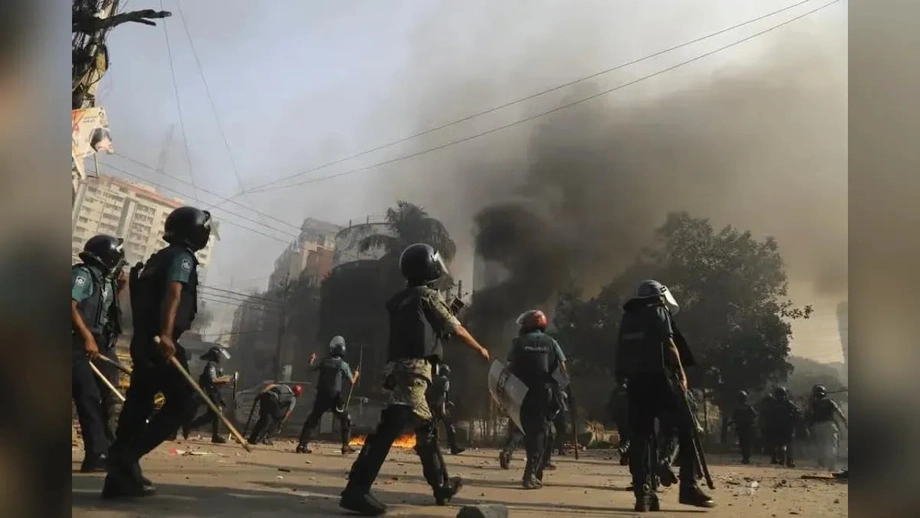
The government's refusal to issue travel documents has galvanized supporters of the banned Awami League, sparking a wave of protests, roadblocks, and arson attacks across at least 28 districts. Demonstrators have clashed repeatedly with security forces, and the government has deployed 90 additional platoons of the paramilitary Border Guard Bangladesh to restore order. Police-cited figures place the death toll at at least four individuals, including three BNP members and a bus helper who died when his vehicle was torched during transport disruptions. The violence also caused a 36-hour blockade on a major highway linking the western part of the country with Dhaka before traffic resumed on Friday morning.
The unrest has targeted critical infrastructure, government offices, and political residences across the country. In Gopalganj, Ms. Hasina's birthplace and a traditional stronghold of her party, a mob stormed the Tungipara Police Station on November 17, releasing detained activists and setting parts of the facility on fire. Similar attacks occurred in Chattogram, where an unused room at the ancestral home of former interim leader Muhammad Yunus was torched, and in Sylhet, where a petrol bomb was thrown at the residence of State Minister Humaiun Kobir. Analysts have noted that the protests are heavily concentrated in Awami League strongholds rather than representing a spontaneous nationwide revolution, yet the widespread property destruction and transport blockades have severely strained local law enforcement.
Simultaneous Labor Strikes Add Economic Pressure
Prime Minister Rahman's administration is facing simultaneous pressure from striking garment workers demanding higher wages amid soaring inflation and a cost-of-living crisis. Thousands of factory employees have taken to the streets in industrial hubs such as Dhaka, Gazipur, Ashulia, and Savar, blocking highways and clashing with police. The Ready-Made Garments sector is vital to the national economy, accounting for approximately 8.5 percent of nominal gross domestic product in the 2025 financial year and generating roughly 81 percent of total export earnings. Factory closures and transportation stoppages threaten to cripple this crucial industry, compounding the political instability caused by the Awami League's ongoing agitations.
Compounding these difficulties, the government is grappling with complex diplomatic and resource challenges, including the impending December 12, 2026 deadline for the 1996 Ganga Water Sharing Treaty with India, which governs dry-season water allocations. As previously detailed in Ganga treaty deadline tests India-Bangladesh ties as Dhaka seeks water guarantees, negotiations over water rights require careful diplomacy while bilateral relations remain strained over the shelter provided to Ms. Hasina. Furthermore, domestic political friction between the ruling BNP and its former electoral allies, such as the Jamaat-e-Islami and the National Citizen Party, has complicated governance and stalled legislative priorities.
The Risks of Confrontation for the Ruling Administration
For Prime Minister Rahman, managing the impending return of his chief political rival is a critical test of administrative competence and political survival. Observers point out that deploying party cadres alongside paramilitary forces to suppress opposition protests risks escalating communal tensions and cycles of retaliation. Former Information Minister Mohammad Ali Arafat and various human rights monitors have raised concerns over targeted attacks on minority communities and political opponents during the unrest. Conversely, failing to prevent Ms. Hasina's entry or mishandling her detention could alienate hardline allies who demand the strict execution of her court-ordered death sentence.
As the December target date approaches, the political situation remains highly volatile. Whether Ms. Hasina attempts to cross the border without documents or continues to pressure New Delhi for an extradition decision, her return will test the resilience of Bangladesh's legal institutions and democratic governance. The outcome will shape not only the political future of the ruling administration but also the broader stability of South Asia.
At a Glance
- Former Prime Minister Sheikh Hasina announced plans to return to Bangladesh in December 2026 after two years of self-imposed exile in India.
- Bangladesh authorities rejected her November 9 passport application submitted through a London law firm, insisting she face justice only under the bilateral extradition treaty.
- The International Crimes Tribunal sentenced Ms. Hasina to death in absentia in November 2025 for crimes against humanity linked to the 2024 uprising.
- Protests and clashes organized by supporters of the banned Awami League have resulted in at least four deaths and widespread arson across multiple districts.
- Simultaneous nationwide strikes by garment workers demanding higher wages have added severe economic pressure to the administration of Prime Minister Tarique Rahman.