A New Era in Kathmandu-Delhi Relations
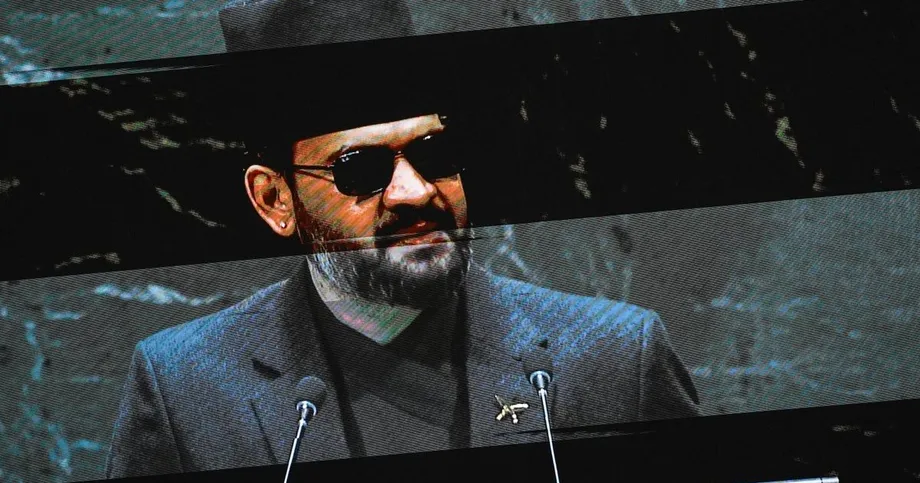
Nepal Prime Minister Balendra Shah arrived in New Delhi on Sunday, November 22, 2026, marking his first bilateral visit abroad since taking office in March. The 36-year-old former rapper and structural engineer assumed power following youth-led political upheaval in Nepal, leading a government that won a sweeping mandate in last year's attacks and subsequent elections. India rolled out the red carpet with full ceremonial honours at Indira Gandhi International Airport, where Union Minister of State for Commerce and Industry Jitin Prasada welcomed the visiting leader. Prime Minister Shah is leading a 34-member government delegation that includes Foreign Minister Shishir Khanal, Finance Minister Swarnim Wagle, and Chief Advisor Kumar Byanjankar, alongside a separate group of 52 business representatives.
Contents
The visit follows a period of diplomatic friction that began when Shah previously called for international involvement to address long-standing border disputes. New Delhi dismissed third-party intervention, asserting that bilateral mechanisms already exist to manage such matters. Diplomatic efforts through quiet channels, mirroring approaches used with other regional neighbours, eventually helped pave the way for the current summit. Rastriya Swatantra Party (RSP) chair Rabi Lamichhane and Foreign Minister Khanal travelled to New Delhi in early June to repair ties, setting the stage for formal engagement as Nepal prepared for high-level talks. Indian Ambassador Naveen Srivastava and Army Chief General Dhiraj Seth subsequently visited Kathmandu to solidify diplomatic channels before the official invitation was accepted.
High-Stakes Talks on Flood Reconstruction and Aid
Discussions in New Delhi focus heavily on financial assistance for rebuilding infrastructure following catastrophic natural disasters. Nepal's government estimates that recovery efforts after the devastating floods of August 26 will cost nearly $5 billion. The disaster left some 1,500 people dead, over 7,500 killed or injured by various accounts, and more than 5,200 missing, destroying roads, bridges, and homes across the Bhotekoshi region. A proposed $2 billion Indian assistance package is central to the bilateral agenda, aimed at supporting post-flood reconstruction and rehabilitation across affected areas.
Migrant workers and ordinary citizens have also voiced hopes that the summit will address practical difficulties faced at the frontier. Thousands of travellers cross the Trinagar customs point daily to reach employment in India, often enduring delays and administrative hurdles. Workers such as vehicle driver Deepak Thapa, returning to Bengaluru, and Lal Bahadur Mahara from Dadeldhura, who highlighted the scarcity of local jobs, expressed optimism that improved bilateral arrangements would ease border movement and boost regional employment.
Expanding Energy Trade and Hydropower Partnership
Energy cooperation remains a cornerstone of the relationship, underpinned by a long-term power trade agreement between the two nations. Nepal generated approximately 1,800 crore Nepalese rupees from net electricity exports to India during the 2025–26 fiscal period. Both leaders are reviewing plans to expand electricity trade, support additional hydropower projects, and finalize the laying of foundation stones for initiatives such as the Lower Arun hydropower project. India currently serves as Nepal's largest trading partner, receiving roughly 80 percent of its goods exports under duty-free market access while accounting for nearly one-third of total foreign direct investment.
During his stay, Prime Minister Shah is scheduled to hold delegation-level talks with Prime Minister Narendra Modi at Hyderabad House on Monday, November 23, 2026. The two leaders will also meet with External Affairs Minister S. Jaishankar and call on President Droupadi Murmu. In a departure from tradition, Shah presented cultural gifts reflecting historical ties rather than conventional temple replicas, offering an idol of Rato Machhindranath to Prime Minister Modi and an artifact linked to Charumati Vihar to President Murmu.
Connectivity, Air Corridors, and Railway Links
Enhancing cross-border connectivity is another major priority for the two delegations. Nepal is pressing for additional international air entry routes through Indian airspace to support commercial flight operations at newer regional hubs in Bhairahawa and Pokhara. Discussions also cover the proposed Raxaul-Kathmandu railway link designed to facilitate passenger and freight transit across the border. Additionally, a new passenger train service is set to connect Ayodhya and Janakpur Dham, linking two cities historically associated with the Ramayana tradition.
The visit is expected to culminate in the exchange of memorandums of understanding covering education, health, agriculture, sports, disaster management, and human resource development. Both governments will also unveil a 10-point Joint Vision Document titled Samriddha Nepal, Samunnat Bharat, which translates to Prosperous Nepal, Developed India, establishing long-term targets for economic growth and regional integration.
Infrastructure Launches and Future Cooperation
Several concrete infrastructure milestones are scheduled for inauguration during the summit. The two prime ministers will virtually inaugurate the Nepal Police Academy in Panauti and the Bhairahawa Integrated Check Post. Foundation stones will be laid for the Lower Arun hydropower project and a cross-border oil pipeline stretching from Siliguri to Jhapa. These projects reflect a shared commitment to modernizing regional infrastructure and expanding economic connectivity across the Himalayan frontier.
Bilateral discussions also encompass disaster response mechanisms and climate change adaptation strategies, addressing shared environmental vulnerabilities. Foreign Secretary Amrit Bahadur Rai briefed reporters prior to the visit, emphasizing that India remains a vital partner for Nepal's trade, transit, and overall development. The ongoing negotiations are expected to provide clear political direction for bilateral relations over the coming years.
The Essentials
- Nepal Prime Minister Balendra Shah arrived in New Delhi on November 22, 2026, for a two-side state visit.
- Talks with Prime Minister Narendra Modi on November 23 focus on a $2 billion post-flood reconstruction package, energy cooperation, and rail links.
- Nepal earned approximately 1,800 crore Nepalese rupees from net electricity exports to India in 2025–26.
- The two leaders will inaugurate the Nepal Police Academy in Panauti and lay foundation stones for the Lower Arun hydropower project.
- Both nations will unveil a Joint Vision Document titled Samriddha Nepal, Samunnat Bharat to guide long-term partnership goals.