The Sudden Collapse of Australia's Data Center Giants
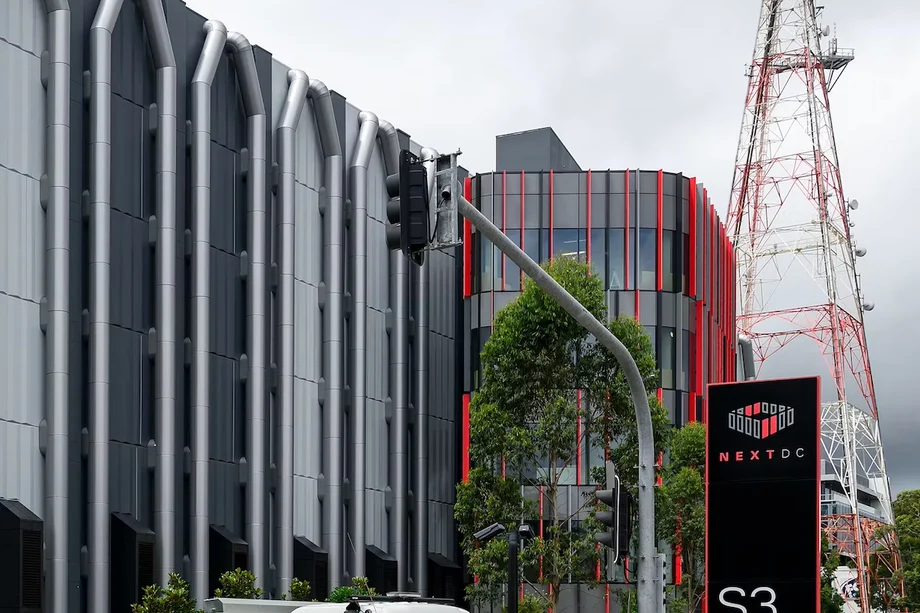
For two decades, data centers were treated as safe and reliable real estate investments because they served as the digital infrastructure that keeps the internet running. That sense of security shattered when shares in NextDC, one of Australia's largest data center builders, collapsed by 40 percent in a single day after the company revealed that delays at its flagship Melbourne site would force its revenue forecasts to fall short of expectations. The company told the Australian Stock Exchange that its net revenue for the current financial year would be slashed by a third to between $475 million and $500 million, down from earlier forecasts of $615 million to $640 million. Operating profitability was similarly revised down to a range of $245 million to $265 million, a steep drop from the previously expected $385 million to $410 million. These financial shocks stem directly from a local neighbourhood dispute over power infrastructure in West Footscray, where residents and local councils raised significant concerns about the scale of the facility and the installation of giant concrete power poles.
Contents
- The Sudden Collapse of Australia's Data Center Giants
- Community Resistance and the Loss of Social Licence
- The Global Race for Power and Infrastructure Bottlenecks
- Environmental Pressures and Resource Consumption
- The Treadmill of Hardware Upgrades and Chip Hoarding
- Policy Responses and the Push for Enforceable Standards
- The Essentials
Energy distributor Jemena was forced to pause the construction of towering 22-meter power poles that had been snaking along Footscray streets after facing intense local resistance. Data center operators make their profits by selling access to the massive amounts of electricity that specialized computer processors need to train and run artificial intelligence models. Without that power, these multi-billion-dollar facilities cannot remain viable or deliver the services promised to corporate clients. NextDC is not alone in facing these severe headwinds, as other industry players also struggle with shifting market conditions and financing challenges. Data center company Firmus abruptly canceled its multi-billion-dollar listing on the Australian stock exchange due to a lack of investor demand, while London-based developer Nscale struggles to attract buyers for a Wall Street listing. CoreWeave, a prominent cloud provider that claims to operate the world's most powerful artificial intelligence supercomputer, saw its shares drop 15 percent in a single day amid mounting concerns regarding its overall financial strength.
Community Resistance and the Loss of Social Licence
The mounting friction between tech developers and local communities highlights a growing crisis over the social licence required to operate massive digital facilities. In West Footscray, the NextDC facility is located just 15 meters from residential homes, exposing residents to persistent noise from energy transmission, visual impacts, localized heating, and environmental concerns regarding diesel generators used during power outages. In September, residents blocked construction crews by leaving their cars and bins out to stop the installation of 15-meter-high power poles that carry up to 66,000 volts of electricity, which is approximately 160 times the voltage of previous neighbourhood power poles. Local councils and residents argued they were never adequately consulted about upgrades that would transform their streets into industrial power corridors. Residents group Citizens of Tottenham welcomed the subsequent construction delays as a David versus Goliath victory for local families. Citizens of Tottenham president Jacqui Glover noted that people living beside these massive developments cannot simply be pushed aside. Fellow member Sean Brown emphasized that the company lacks a social licence for its existing building and certainly lacks one for any future expansion. Independent senator David Pocock used a National Press Club address to propose a 5 percent levy on data centres operating in Australia, accusing the federal government of being starstruck by foreign artificial intelligence companies while remaining blind to community sentiment. Senator Pocock estimated that the proposed levy would generate more than $500 million by the end of 2030, which he argued was a modest contribution in the context of a forecast $200-billion investment and minimal corporate tax paid by foreign data center operators.
NextDC chief executive Craig Scroggie told investors in a briefing that the earliest approval for the contested M3 site expansion would be February 2027, as the Victorian government enters caretaker mode ahead of the November 28 state election. Scroggie blamed the change of political leadership and cabinet reshuffle for delaying planning permits that have been pending since February 2026. NextDC group chief development officer Simon Cooper added that the company is exploring all available avenues, including finding alternative locations for power poles or placing electrical cables underground, though he conceded that undergrounding takes significant time. Amid this growing resistance, the Victorian government announced new regulations to ban data centers near homes and schools, establishing 150-meter buffer zones while mandating the use of renewable energy and non-drinking water.
The Global Race for Power and Infrastructure Bottlenecks
Beyond local neighbourhood disputes, the entire artificial intelligence sector is colliding with the hard limits of electrical grids and water supplies worldwide. Global asset manager IFM Investors released its 2027 Private Markets Macro Outlook report, concluding that the true profit opportunity in the artificial intelligence boom lies in securing power and transmission infrastructure rather than in data center construction itself. Global data center power consumption is projected to double from current levels to reach 945 TWh by 2030, according to base-case scenarios from the International Energy Agency. In South Korea, data center capacity is projected to surge from about 10 gigawatts in October 2026 to 20.6 gigawatts by 2035, based on analysis by Mirae Asset Securities. IFM Investors chief economist Alex Joiner explained that data centers need power grids just as renewable energy needs storage facilities, making energy infrastructure the critical bottleneck for the entire digital economy. The International Energy Agency warned that data center electricity consumption worldwide is on track to double by 2030, rising from 1 to 2 percent of worldwide electricity use up to 3 or 4 percent. That increase is equivalent to adding the entire electricity consumption of a major industrialized nation to global power grids in just a few years. Microsoft, Google, Amazon, and Meta have committed billions to artificial intelligence infrastructure buildouts, but they are running into acute limits on power availability. OpenAI chief financial officer Sarah Friar doubled down on expansion plans despite growing political opposition, illustrating how critical infrastructure capacity has become to corporate ambitions. Meanwhile, voters in multiple states during recent midterm elections blocked or restricted new data center facilities over concerns about grid strain and environmental degradation, forcing technology companies to slow down or relocate projects.
Environmental Pressures and Resource Consumption
The massive electricity and water demands of modern computing facilities threaten to overwhelm local utilities and undermine national climate targets. A report published by the Climate Council warned that nine proposed hyperscale data centres in Australia could add 39 million tonnes of greenhouse gases into the atmosphere within a decade if powered primarily by fossil fuels, roughly matching the annual emissions of a country like Sweden. Climate Council chief executive Amanda McKenzie said that if artificial intelligence expansion extends the reliance on coal or brings on new gas generators, it will trigger a massive increase in climate pollution and drive up power prices for ordinary consumers. Data Centres Australia chief executive Belinda Dennett disputed the worst-case projections, stating that operational data centres already offset 70 percent of their energy use with renewable energy agreements well ahead of government requirements. University of Technology renewable energy researcher Chris Briggs acknowledged that while the Climate Council report reflects a worst-case scenario, it remains a distinct possibility if the rollout of wind and solar energy projects does not accelerate to match data center demand. In regional areas like Victoria's Latrobe Valley, where coal-fired power stations have begun to close, residents have raised urgent alarms about the impact of proposed data centres on water resources. Local resident Tracey Anton pointed out that public discussions focus heavily on electricity while water consumption is pushed into the background, threatening local rivers used for agriculture and household supplies. Forecasts indicate that New South Wales data centres could consume up to 25 percent of Sydney's daily water demand within a decade. In Victoria, transmission company AusNet is reviewing requests from data center operators for more than 10 gigawatts of connections, an amount that could exceed the entire supply capacity of the state and inevitably push up consumer utility bills.
The Treadmill of Hardware Upgrades and Chip Hoarding
The physical equipment that powers artificial intelligence introduces financial risks that did not exist during the era of traditional cloud computing. Historically, data centers could operate for decades with minimal maintenance, guaranteeing steady rents and predictable financial returns for investors. Modern artificial intelligence chips, however, have a functional shelf life of only a few years before becoming obsolete. Each new generation of hardware requires expensive upgrades to power delivery and cooling systems, trapping data center operators on a relentless treadmill of multi-billion-dollar capital expenditures. Even if artificial intelligence revenues stabilize enough to support these expenses, there is no guarantee that companies will be able to secure the specialized semiconductors they need. Amazon recently admitted it is hoarding billions of dollars worth of artificial intelligence chips despite lacking the physical capacity to install them immediately, driven entirely by anxiety over long-term supply shortages. This global gold rush for microchips has made American chip manufacturer Nvidia one of the few highly profitable entities in the sector. Nvidia has also invested directly in the companies that buy its chips, raising complex questions across financial markets regarding circular financing and inflated valuations.
Policy Responses and the Push for Enforceable Standards
Governments are scrambling to establish regulatory frameworks to hold technology companies accountable for the grand promises they make during the planning approval process. Australia's federal government released five national expectations covering energy, water, jobs, research, and the national interest, following a public consultation on binding minimum standards for large digital facilities. Researchers Zhixi Liu and Chong Zhou proposed the concept of a legislated social-licence floor in a recent study published in Telecommunications Policy, arguing that minimum and enforceable duties must cover what a company owes to the communities affected by its infrastructure. The proposed framework seeks to connect initial planning promises with ongoing operational realities, ensuring that if a developer promises new renewable electricity or free computing time for local researchers, those commitments are actually delivered years after the servers begin humming. Without binding statutory duties, communities have few recourses when promised power projects run late or research access agreements quietly expire.
The federal government is expected to introduce legislation for large data centres and artificial intelligence infrastructure early next year, requiring developers to bring on new clean energy generation to match their massive electricity demand. As capital costs rise alongside sticky inflation and high interest rates, analysts estimate that leading artificial intelligence developers will need to increase revenues by 80 percent annually for the next six years just to meet investor expectations. Yet indicators suggest that consumer and corporate spending on paid artificial intelligence models is slowing down. These mounting pressures signal that the era of data centers acting as risk-free stock market investments has drawn to a close, forcing investors and regulators to demand greater efficiency, stricter environmental safeguards, and genuine community engagement before a single new server is switched on.
The Essentials
- NextDC slashed its net revenue forecast to between $475 million and $500 million, down from earlier estimates of $615 million to $640 million.
- Shares in NextDC collapsed by 40 percent following the announcement of delays at its flagship Melbourne data center expansion in West Footscray.
- Energy distributor Jemena suspended the installation of 22-meter power poles after intense local community opposition and council pushback.
- The International Energy Agency projects that global data center electricity consumption will roughly double to 945 TWh by 2030.
- The Victorian government introduced new regulations banning data centers near homes and schools, establishing 150-meter buffer zones and renewable energy mandates.