New York Court Seeks Assistance from Delhi Judiciary
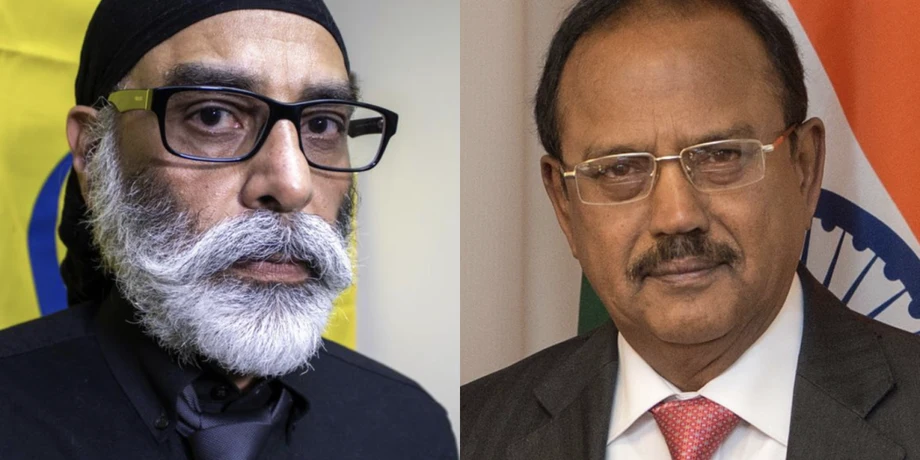
A federal court in the United States has asked three district courts in New Delhi to help deliver legal summonses to National Security Adviser Ajit Doval and former Research and Analysis Wing chief Samant Goel. The clerk of the Southern District Court of New York stated that the legal documents were dispatched by FedEx on Friday, November 20, 2026. The move stems from a civil lawsuit filed by Gurpatwant Singh Pannun, a Khalistani separatist lawyer and legal counsel for the banned organisation Sikhs for Justice.
Contents
- New York Court Seeks Assistance from Delhi Judiciary
- Understanding the Hague Convention and Alternative Service
- Previous Failed Attempts to Serve Documents in Washington
- The Official Stance and Response from New Delhi
- Timeline of Key Developments in the Legal Proceedings
- Procedural Nature of the US Court Order
- The Essentials
Pannun is wanted by Indian investigative agencies on several terror-related charges. In his civil lawsuit, he is seeking financial damages and alleges that Doval and Goel orchestrated a conspiracy to assassinate him on American soil. The civil proceedings are separate from past criminal indictments in the United States that involved other individuals. US District Judge Katherine Polk Failla signed the order on November 13, 2026, invoking international legal frameworks to advance the case after standard diplomatic channels faced hurdles. On November 13, the Southern District Court of New York ordered that summonses be issued to Doval and Goel, citing the Hague Convention, with the text of US District Judge Katherine Polk Failla's November 13, 2026 order reading: "The court respectfully requests the assistance of receiving Indian courts in effecting service of process upon the defendants in this civil action pending before this court."
Understanding the Hague Convention and Alternative Service
The Hague Convention is an international treaty that helps courts in one country send legal documents to defendants located in another country. When a lawsuit crosses international borders, delivering court papers requires following specific diplomatic or judicial protocols to ensure fairness and respect for national sovereignty.
In this case, the standard method of service through India's central authority was attempted but rejected. Under the Hague Convention and relevant sections of India's Code of Civil Procedure, courts can sometimes pursue alternative methods when traditional delivery fails. Judge Failla cited Article 19 of the convention and domestic procedural rules to authorize transmitting the documents directly to Indian district courts for delivery.
Previous Failed Attempts to Serve Documents in Washington
Pannun's legal team previously attempted to serve court documents on Ajit Doval during a diplomatic visit to Washington in February 2026. At the time, Prime Minister Narendra Modi and his delegation, including Doval, were staying at Blair House, the official presidential guest house for foreign dignitaries. The visit coincided with high-level engagements as Donald Trump began his second term as US President.
Court filings submitted by Pannun detailed multiple unsuccessful delivery attempts by hired process servers. On February 12, 2026, a process server named Ambiko Wallace approached the heavily secured checkpoint at Blair House. Despite showing a court order permitting service on security personnel, Secret Service agents refused the documents and instructed him to leave.
A second process server, Wayne Engram, tried again the following day on February 13, 2026, while Republican leader Vivek Ramaswamy was visiting the guesthouse. Secret Service agents again blocked entry and threatened arrest if the documents were left on the ground. The process server ultimately placed an envelope containing the summons outside a nearby coffee shop and notified the agents, while legal counsel also emailed copies to Blair House executive director Elizabeth Lewis.
The Official Stance and Response from New Delhi
The Indian Ministry of External Affairs has strongly rejected the lawsuit and the attempts to serve judicial notices, describing the legal action as fabricated, malicious, and baseless. Ministry spokesperson Randhir Jaiswal addressed the press regarding the matter, emphasizing that foreign judicial requests must follow established national channels.
External Affairs Ministry spokesperson Randhir Jaiswal stated on November 10, 2026:
We reject the fabricated and malicious attacks on our high officials. Also, we reject the frivolous lawsuits. A request for serving of judicial documents in India can only be routed through India's designated central authority, which is the Ministry of Law and Justice.
The Indian Ministry of Law and Justice has not issued an official response or formal filing regarding the FedEx delivery to the Delhi courts.
Timeline of Key Developments in the Legal Proceedings
- September 17, 2024: Gurpatwant Singh Pannun files a civil lawsuit in a US court naming the Government of India, Ajit Doval, Samant Goel, and others as defendants.
- October 9, 2026: The US State Department transmits court documents to the Indian Embassy in Washington via a diplomatic note.
- November 13, 2026: US District Judge Katherine Polk Failla orders the issuance of summonses under the Hague Convention to be sent via Indian district courts.
- November 20, 2026: The clerk of the Southern District Court of New York dispatches the summonses by FedEx to the Patiala House Court, Tis Hazari Court, and Dwarka District Court in Delhi.
Procedural Nature of the US Court Order
Legal experts note that the delivery of summonses is purely a procedural step and does not constitute a finding of liability or establish the truth of the allegations. The civil lawsuit remains in its preliminary stages, with the defendants yet to formally acknowledge or accept service through the prescribed domestic judiciary channels.
Furthermore, the civil case is entirely distinct from federal criminal proceedings in the United States involving other defendants. While the broader geopolitical context involves investigations into foiled plots on American soil, the current actions by the New York court focus strictly on the mechanics of delivering legal paperwork across international borders.
The Essentials
- A New York federal court dispatched summonses to Indian officials Ajit Doval and Samant Goel through Delhi district courts on November 20, 2026.
- The civil lawsuit was filed by Khalistani separatist Gurpatwant Singh Pannun, who alleges an assassination plot.
- India dismissed the lawsuit as baseless, malicious, and fabricated, insisting that judicial requests must be routed through the Ministry of Law and Justice, which has provided no official response or formal filing regarding the FedEx delivery to the Delhi courts.
- Judge Katherine Polk Failla authorized alternative service under the Hague Convention after standard diplomatic attempts were unsuccessful.
- The court action is a procedural step for delivering legal documents and does not establish any wrongdoing by the named officials.