Missing counts and large gaps in election records
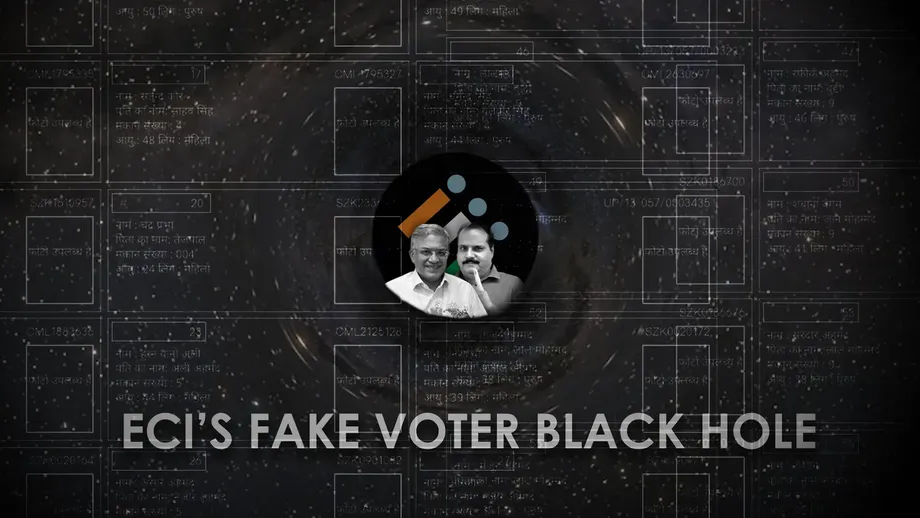
Election Commission of India records covering 530 constituencies in Maharashtra, Haryana and Jammu and Kashmir contain missing voter totals or differences between votes recorded as cast and votes counted in 51 electoral contests during 2024, according to an investigation into internal election documents.
Contents
- Missing counts and large gaps in election records
- What the examination covered
- Mumbai North and Badkhal used the electorate as turnout
- Kaithal and Srinagar show the reverse gap
- How the two election records should fit together
- What the ECI has said about mismatches
- A wider dispute over access to Form 17C
- The dispute developed across several dates
- What public scrutiny still needs
- Key Points
The examination found 19 constituencies where officials entered zero or nil for the number of voters who came to vote, despite election results being declared. In another 32 contests, the recorded voter total and the electronic voting machine count did not match. The detailed breakdown totals 51 constituencies, although a published summary gives 52.
Some entries were striking. Haryana's Kaithal assembly constituency recorded just 215 voters against 167,285 votes counted on electronic voting machines, known as EVMs. Mumbai North's parliamentary records listed 1.811 million votes polled against 1.033 million counted. In Mumbai North and Haryana's Badkhal, officials had apparently entered the entire registered electorate in the field meant for people who voted.
The findings put the quality of election records and their scrutiny at the centre of a dispute over the 2024 polls. The ECI has rejected opposition allegations of rigging in Maharashtra and Haryana, defending its procedures and the participation of candidates and their agents throughout the process.
For voters, the practical issue is straightforward: election officials keep both a record of people admitted to vote and a machine record of votes cast. Those figures should reconcile after recorded exceptions are taken into account. Incorrect or missing totals make that check harder to perform and harder for citizens to examine.
What the examination covered
Researchers Sumedha Mittal, Venkatesh Nayak and Firquan Ameen examined internal reports covering 467 assembly constituencies and 63 parliamentary constituencies. They digitised, rechecked and evaluated 4,212 physical records submitted by returning officers, the officials responsible for elections in individual constituencies.
The search covered 531 constituencies, but the report for Devsar in Jammu and Kashmir could not be obtained. Returning officers send these constituency reports to the ECI within a fortnight of an election's completion, bringing together information collected at individual polling stations.
The 51 flagged contests represent about 9.6% of the 530 examined. Within the 32 contests showing numerical differences, 12 had fewer EVM votes counted than voters recorded as having voted. The remaining 20 had more votes counted than the recorded voter total.
The 19 zero or nil entries create a different problem: the constituency records lack a usable voter total for comparison. Ten of those constituencies were in Maharashtra and Haryana, and seven of those ten were won by the BJP or its allies. Other examples of mismatches involved seats won by Congress and the National Conference.
Mumbai North and Badkhal used the electorate as turnout
Mumbai North, won by BJP politician and Union minister Piyush Goyal against Congress candidate Bhushan Patil, had a recorded gap of about 778,000 between votes polled and votes counted. The internal figure of 1.811 million matched the number of registered voters, while the declared EVM count was about 1.033 million.
The ECI's declared turnout was about 57%. Entering the registered electorate as votes polled instead produces an apparent turnout of 100%. The immediate task for election administrators is to correct the constituency total and reconcile it with the underlying polling station documents.
Badkhal showed the same pattern. Its internal record listed about 332,000 votes polled, against about 160,000 counted on EVMs. Official turnout was approximately 48%, while the internal entry again corresponded to the registered electorate.
Congress candidate Vijay Pratap Singh lost Badkhal to BJP candidate Dhanesh Adlakha by 6,181 votes. Singh approached the Punjab and Haryana High Court alleging vote theft and seeking election documents and footage from polling day. Four other constituencies also reportedly had registered voter totals entered as votes polled, suggesting a repeated problem with how the reports were completed or checked.
Kaithal and Srinagar show the reverse gap
Kaithal's record points in the opposite direction. Officials counted 167,285 EVM votes, while the internal voter figure was only 215, a difference of 167,070. Congress candidate Aditya Surjewala defeated BJP candidate Leela Ram there by 8,124 votes.
A total of 215 for an entire assembly constituency leaves administrators needing to establish the correct number from the original polling station records. The constituency summary alone cannot identify which polling stations contributed incorrect or missing entries.
Srinagar's parliamentary constituency had a smaller but still substantial difference. Internal records showed 666,046 votes polled, while 672,942 votes were counted on EVMs, leaving 6,896 more votes counted than recorded as cast. National Conference candidate Aga Syed Ruhullah Mehdi won the seat.
The examples involve different winners and different types of errors. Mumbai North and Badkhal require correction of entries apparently copied from electorate totals. Kaithal requires reconstruction of a largely missing voter count. Srinagar requires an explanation for a specific excess in the EVM count. Each calls for checking the documents from the polling stations concerned.
How the two election records should fit together
Polling officials create a paper trail as each voter passes through a polling station. One official checks identity and eligibility. Another enters the voter's details in Form 17A, the Register of Voters, and issues a numbered slip. An official controlling access to the EVM collects that slip before allowing the person to vote.
Voters are required to use the machine in the same order in which their names are entered in the register. At the end of polling, the presiding officer presses the Close button on the EVM control unit, which displays the number of votes recorded.
Form 17C, the Account of Votes Recorded, brings the relevant totals together. Part 1 records polling station information, including the voter and vote totals and specified exceptions. Part 2 records the votes received by each candidate during counting. Copies of Part 1 are supplied to candidates' polling agents.
The Conduct of Election Rules, 1961, provide for situations in which a registered voter does not cast a vote. Rule 49O concerns a person who decides not to vote after being entered in the register. Rule 49M concerns a voter prevented from voting after failing to observe ballot secrecy requirements. These cases must be accounted for when reconciling the figures.
The returning officer scrutinises polling documents the day after voting to identify possible concealed electoral malpractice and can recommend another poll. No repeat poll was conducted in the 51 constituencies flagged by the examination.
What the ECI has said about mismatches
The ECI has previously described several reasons why votes recorded as polled and votes counted can differ. At a January 7, 2025, press conference, then Chief Election Commissioner Rajiv Kumar referred to machines failing to start, machine mismatches and mock poll data being left uncleared.
A mock poll is a test conducted before actual voting to check that the equipment works. Its test votes must be cleared before voters begin using the machine. Kumar said a problematic machine could be set aside while the rest of the count proceeded, with its voter verified paper audit trail slips counted depending on the winning margin.
Kumar explained why some votes might then remain outside the declared machine count:
Therefore, that much would be counted less but it does not have any consequence as far as the result is concerned because the margins are too high.
Uttar Pradesh's chief electoral officer had described a related procedure involving uncleared mock poll data or an incorrect number entered in Form 17C. Under that explanation, votes from affected polling stations are counted at the end if their combined total equals or exceeds the margin between the first and second candidates.
The 51 constituencies now under scrutiny need explanations tied to their particular records. A machine set aside during counting, a total copied into the wrong field and an incomplete constituency summary require different corrections. The ECI response to questions about this investigation requested the underlying data through its grievance system; it did not provide a reconciliation for each flagged constituency.
A wider dispute over access to Form 17C
The Association for Democratic Reforms, or ADR, sought Supreme Court directions in 2024 requiring the ECI to publish Form 17C copies within 48 hours of polling. The request would have allowed citizens to compare exact polling station totals with subsequent results.
ADR also questioned changes between initial turnout announcements for the first two phases of the Lok Sabha election and figures released on April 30, 2024. It described differences of 5% to 6%. The ECI answered that the earlier releases were tentative and had explicitly said turnout would rise as information arrived.
On May 24, 2024, Justices Dipankar Datta and S.C. Sharma adjourned the application. The request was part of existing proceedings involving ADR and Trinamool Congress politician Mahua Moitra, whose petition concerned the 2019 election. The bench said granting the immediate request would effectively grant relief sought in the main proceedings.
The ECI argued that the rules required Form 17C to be shared with candidates' polling agents rather than the public. It also warned that wider disclosure could invite misuse. After opposing the application, the commission released absolute vote totals for the first five phases and stated its position in a public announcement:
Any alteration in the number of votes polled is not possible.
The dispute developed across several dates
Demands for records continued after the national election and the Maharashtra and Haryana assembly polls. Court proceedings, administrative responses and a change to election rules shaped how citizens could seek access.
- April 30, 2024: The ECI released updated turnout figures for the first two Lok Sabha phases, prompting questions about changes from initial figures.
- May 24, 2024: The Supreme Court adjourned ADR's application seeking online publication of Form 17C within 48 hours.
- July 29, 2024: ADR presented its analysis of differences between EVM votes polled and counted in the Lok Sabha election.
- December 10, 2024: The Punjab and Haryana High Court directed the ECI to provide requested election records and footage.
- December 20, 2024: The Union government notified an amendment narrowing public inspection provisions under the Conduct of Election Rules.
- January 7, 2025: Rajiv Kumar publicly explained some possible causes of vote count mismatches.
- February 7, 2025: Opposition leaders challenged the conduct of the Maharashtra election at a press conference.
Four months after the February press conference, Congress alleged rigging in 85 Maharashtra constituencies, including claims about votes recorded after polling ended. The ECI rejected those allegations and referred to its earlier response of 66 pages explaining election procedures and scrutiny.
The commission also rejected Congress demands for repeat polling in 20 Haryana constituencies through a response of about 1,600 pages. In Maharashtra, returning officers rejected requests for repeat polling in two seats after the Nationalist Congress Party led by Sharad Pawar submitted videos alleging suppression and bogus voting.
What public scrutiny still needs
ADR's earlier national analysis used ECI website figures and identified differences in 538 of 543 parliamentary constituencies. It calculated 554,598 fewer EVM votes counted than polled across 362 constituencies and 35,093 more counted than polled across another 176. Postal ballots were excluded from that comparison.
The newer examination uses internal constituency reports and covers both parliamentary and assembly elections in three jurisdictions. Its most useful contribution is the detail of the entries themselves: zero totals, an implausibly small voter count and registered electorate figures placed in the votes polled field.
Polling station documents are needed to trace those entries to their origin. Candidates' copies of Form 17C, the original registers and the EVM totals can help establish whether a difference arose during polling, counting or preparation of a constituency summary. Publishing corrected totals with reasons would give voters a concrete account of what happened.
The researchers plan to release the raw data and original documents with the concluding instalment of the investigation. No release date or timetable for an ECI reconciliation was given. Until those steps occur, citizens seeking an explanation face a gap between declared results and the internal records intended to check them.
Key Points
- An examination of 4,212 physical records flagged 51 of 530 constituencies across Maharashtra, Haryana and Jammu and Kashmir.
- Nineteen constituencies had zero or nil voter entries; another 32 showed differences between recorded votes polled and EVM votes counted.
- Mumbai North and Badkhal apparently used registered electorate totals in the field for votes polled.
- Kaithal recorded 215 voters against 167,285 EVM votes counted; Srinagar showed 6,896 more votes counted than recorded as cast.
- The ECI has rejected rigging allegations and previously cited machine problems, uncleared test votes and incorrect form entries as possible causes of mismatches.
- Polling station records and corrected constituency totals are needed to explain the individual discrepancies.