A demanding partner brings Carlsen back to reality
Magnus Carlsen says training with Uzbekistan's Nodirbek Abdusattorov in Spain helped him confront careless habits picked up in online blitz, just as the world No. 1 prepares for a tournament that will test players at three different speeds.
Contents
- A demanding partner brings Carlsen back to reality
- What the Spain sessions were meant to fix
- How Carlsen chooses a move
- Budapest turns that preparation into a new test
- Why the opening stage rewards longer games
- How one longer game can outweigh several quick wins
- A pilot before a wider championship tour
- London adds another meeting with Abdusattorov
- The calendar leads towards Istanbul
- Key Points
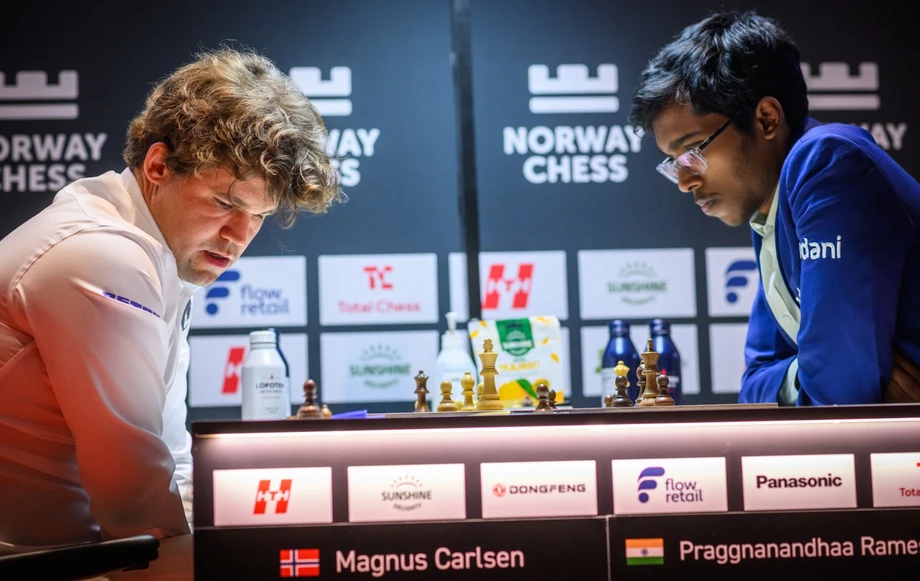
Speaking during a charity livestream supporting UNICEF on November 7, the Norwegian described the value of facing an opponent strong enough to punish mistakes that might slip through in a quick internet game. Their preparation comes before the Total Chess World Championship Tour pilot in Budapest, where both grandmasters are confirmed participants.
Carlsen, the former classical world champion, explained why sitting across a real board from Abdusattorov made him assess his own play more critically.
"When you play across the board against one of the best chess players in the world, you return to reality a bit and start evaluating yourself critically," said Carlsen.
The camp took place at Carlsen's holiday home in Spain. English grandmaster David Howell and Carlsen's longtime coach, grandmaster Peter Heine Nielsen, joined the sessions. Photographs and footage shared by Carlsen showed the two leading players testing each other in blitz games.
For Abdusattorov, the partnership comes during a season that has included victories at Tata Steel Chess and the Prague Masters. He enters Budapest as both a training partner and a potential obstacle to Carlsen's ambitions, giving their work together an immediate competitive edge. At 35, Carlsen is the tournament's top seed and favourite, with preparation described as his most serious since defending his classical world title in 2021.
What the Spain sessions were meant to fix
Carlsen said playing large amounts of online blitz can encourage sloppy decisions and lapses in attention. Blitz gives players only a few minutes for an entire game, so speed often determines whether a promising position can be converted into a win.
Training against Abdusattorov demanded greater concentration. An inaccurate move against an elite opponent can lead to sustained pressure, making the cost of a casual decision much easier to see. Carlsen described the sessions as useful in restoring the focus needed for longer games.
The footage of blitz practice also fits Budapest's demands. Players there must move between short games and a longer format called Fast Classic. Carlsen's preparation therefore involves both quick decisions and the discipline to slow down when a position requires careful calculation.
Abdusattorov also made a strong impression away from the board. Carlsen said the Uzbek grandmaster's personal qualities were appreciated by his family, including his young son, who was present during the camp.
How Carlsen chooses a move
Carlsen offered a simple description of a process that can look mysterious to spectators: on roughly 90 percent of his moves, he said, he usually considers just one candidate.
A candidate move is an option a player regards as worth examining. Experienced players use patterns learned from thousands of positions to narrow their choices before calculating what an opponent might do next. Carlsen's account suggests that much of his work begins with that rapid recognition.
Sometimes he considers two or three options and calculates their consequences. When he has to search through more choices, he said, it often means his position contains a problem and no comfortable plan is immediately apparent.
Carlsen also reconsidered the London System, an opening often associated with a dependable arrangement of pieces. He said it contained richer and more complicated tactical possibilities than he had previously thought. Tactics are short sequences involving threats, captures or sacrifices, where the exact order of moves matters.
Budapest turns that preparation into a new test
FIDE's August 25 Budapest pilot announcement scheduled the event for November 10–21, 2026. Subsequent tournament previews give November 10–20, with play at the Anantara New York Palace Hotel. The opening date is the same in both schedules.
The competition brings together 24 players for an experimental format developed by Norway Chess and approved by FIDE. Budapest is a standalone pilot, intended to help organisers adjust the rules before a wider tour begins in 2027.
Carlsen described the format during his charity appearance as interesting, though somewhat unsettling. In FIDE's announcement, the world No. 1 expressed his interest in taking part.
I look forward to playing the Total Chess World Championship in Budapest this year. It's always interesting to try out new formats.
FIDE initially named 18 participants and said the remaining six would be announced in September. Its August standard rating list placed Abdusattorov at world No. 8; November coverage describes him as No. 5, reflecting the different points in the season.
The field includes Fabiano Caruana, Alireza Firouzja, Arjun Erigaisi and Praggnanandhaa R, as well as Kazakhstan's Bibisara Assaubayeva and India's Vaishali Rameshbabu. Assaubayeva and Vaishali are the two women competing in the pilot.
Why the opening stage rewards longer games
Budapest begins with four groups of six players. Each competitor faces the other five twice over five days, producing ten Fast Classic games per player and a schedule of two games a day.
Fast Classic gives each player 45 minutes, with 30 seconds added after every move. That extra time is called an increment. It helps players keep making moves late in a game, but spending too much time early can still leave them under severe pressure.
A group victory earns three points and a draw earns one. Two draws therefore bring two points, while one win and one loss bring three, giving players a concrete incentive to pursue a decisive result.
Only the four group winners remain in contention for the Budapest title. Other competitors enter separate knockout brackets according to their group positions and continue playing for final places.
Blitz matters before those standings are settled. A nine round Swiss tournament on the opening day establishes the order used to separate players tied in the groups and helps determine knockout pairings. In a Swiss tournament, competitors generally meet opponents on similar scores rather than playing everyone.
How one longer game can outweigh several quick wins
The knockout phase changes the task. Each semifinal and final lasts two days, and each day includes four blitz games, two rapid games and one Fast Classic game.
Blitz uses three minutes per player with two seconds added per move. Rapid uses 15 minutes with a ten second increment. Fast Classic retains the 45 minute starting clock and 30 second increment used in the groups.
The scoring gives greater value to longer games:
- A blitz win earns one point, and a draw earns half a point.
- A rapid win earns four points, and a draw earns two.
- A Fast Classic win earns eight points, and a draw earns four.
Winning the single Fast Classic game is therefore worth the same as winning both rapid games, or twice the value of winning all four blitz games. Speed matters, but success in the longest game carries the greatest weight within each day's schedule.
The score resets overnight. If each player wins one day, or both days finish tied, the match goes to Armageddon. In that deciding game, Black advances with a draw, while White must win. A large margin on the first day cannot cancel out defeat on the second.
Kjell Madland, the founder of Norway Chess and chief executive of Total Chess, said the reset was intended to keep the second day competitive. He also warned that players would need to watch the clock closely in Fast Classic rather than spend too much time on a few early decisions.
A pilot before a wider championship tour
Madland says Budapest is a chance to discover what needs changing before the full tour. The opening stage and knockout rounds make different demands: longer games decide who can challenge for the title, while all three speeds help decide the eventual winner.
Madland explained the purpose of testing the format before expanding it.
That's the reason we have this pilot, that we can adjust something if we feel that's necessary," Madland said. "This is new for everyone.
FIDE's launch announcement outlined four international tournaments from 2027. Madland later described three tour legs followed by a Grand Final for the four leading players, where the FIDE World Combined Champion would be decided.
The project also involves commercial and broadcast plans. Madland said a global media partner was still being sought, while footballer Erling Haaland had invested in Norway Chess and participated with his team in discussions about the venture. International master Levy Rozman is among the presenters associated with the Budapest broadcast.
Madland has also expressed an ambition to involve more women and eventually stage a separate women's competition using the format. For now, Assaubayeva and Vaishali face the same group and knockout demands as the rest of the field.
London adds another meeting with Abdusattorov
Carlsen's schedule extends beyond Budapest. He has entered the XTX Markets London Chess Classic Super Rapid on December 5–6 at the Novotel London West in Hammersmith, with Abdusattorov also among the entrants.
The event is open to amateurs as well as grandmasters. Its ten rounds are split evenly across two days, using 15 minutes per player with ten seconds added per move, the same rapid time control planned for Budapest's knockouts.
The Super Rapid has a £35,000 prize fund, including £10,000 for the winner, and a standard entry fee of £50. Levon Aronian, Nihal Sarin, Maxime Vachier-Lagrave and Anish Giri are also entered.
Abdusattorov, the reigning London champion, is also regarded as the favourite for the separate London Classic Masters competition and its £50,000 first prize. The Super Rapid gives him and Carlsen another possible encounter after their shared preparation in Spain.
For Carlsen, London offers an unusual mix of opponents. He generally concentrates on elite invitation events, major championships and selected online competitions. His last notable appearance in a traditional open tournament was the Qatar Masters in 2023, where he finished sixth.
The calendar leads towards Istanbul
Carlsen said holding the World Rapid and Blitz Championships in Istanbul made him much more likely to participate, although he had not made a final decision at the November 7 livestream. His subsequent London entry has been described as preparation to defend his rapid and blitz titles.
Istanbul's championships are scheduled for December 25–30, leaving less than three weeks between the end of the London Super Rapid and the opening in Turkey.
Budapest also falls close to the classical world title match between Gukesh Dommaraju and Uzbekistan's Javokhir Sindarov, scheduled for Geneva from November 24 to December 12. Neither player is competing in the pilot, and Hikaru Nakamura is also absent.
The main dates across this busy period are:
- November 7: Carlsen discusses Abdusattorov, intuition and his plans during the charity livestream supporting UNICEF.
- November 10: The Budapest pilot opens, beginning the competitive test of Total Chess.
- November 24: The Geneva classical world title match and the London Classic schedule begin.
- December 5–6: Carlsen and Abdusattorov are entered in London's Super Rapid.
- December 25–30: Istanbul hosts the World Rapid and Blitz Championships.
Carlsen's immediate challenge is to carry the concentration sharpened in Spain into a competition that repeatedly changes pace. Abdusattorov has helped him prepare for that task and now stands among the players capable of making it difficult.
Key Points
- Carlsen said training with Abdusattorov helped correct careless habits developed through online blitz.
- The Spain camp included grandmasters David Howell and Peter Heine Nielsen.
- Budapest's 24 players will compete in a pilot combining Fast Classic, rapid and blitz.
- Only four group winners stay in title contention, with longer games carrying greater weight in the knockouts.
- Carlsen and Abdusattorov are also entered in London's Super Rapid on December 5–6.
- The Istanbul World Rapid and Blitz Championships are scheduled for December 25–30.