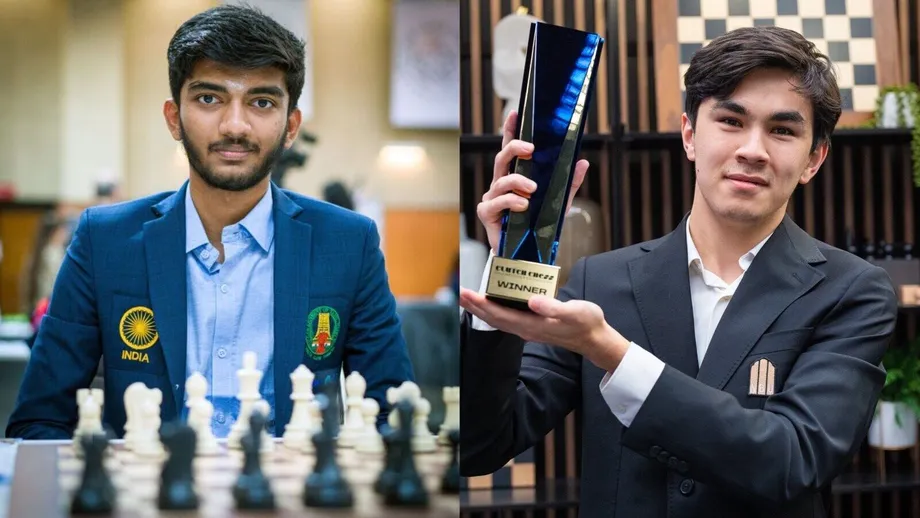
Two players aged 20, one world title
India's D Gukesh and Uzbekistan's Javokhir Sindarov will meet in Geneva for the youngest World Chess Championship contest in history, with the first game scheduled for November 24. Both will be 20 when they sit across the board, one defending the crown he won at 18 and the other arriving after an unbeaten, record setting Candidates campaign.
Contents
- Two players aged 20, one world title
- Why Geneva was chosen
- How the championship will work
- The unbeaten run that earned Sindarov his chance
- From his grandfather's lessons to an elite support team
- Saint Louis added momentum before Geneva
- Gukesh brings a champion's experience through uneven form
- Their record is short, and predictions are divided
- Uzbekistan's challenger carries a wider chess boom
- Key Points
The event is now scheduled to run from November 22 to December 13 under match regulations approved by the FIDE Council on August 23. FIDE's July 28 Geneva hosting announcement originally gave November 25 to December 15; the later regulations brought the programme forward.
Sindarov's most recent tournament victory came in Saint Louis, where he overturned a deficit of 2.5 points on the final day of the Clutch Chess Champions Showdown. Gukesh enters his first title defence after helping India win silver at the 2026 Chess Olympiad, although his individual results have raised concerns about his form.
The central contest is between recent performance and championship experience. Sindarov has lost only twice across 45 games in four major classical tournaments this year. Gukesh already knows what it takes to survive a world title match and win its decisive final game.
Why Geneva was chosen
FIDE selected Switzerland after receiving interest from India, the United States and Cyprus. Holding the match in Geneva puts both players outside their home countries and returns the championship to Switzerland 22 years after Vladimir Kramnik defended his classical title against Peter Leko in Brissago in 2004.
Viswanathan Anand, FIDE's interim president and a former world champion, explained the choice in the hosting announcement:
After carefully considering all the proposals, FIDE has decided to stage the match on neutral soil and bring it to Geneva, a city with a historic tradition of bringing nations and cultures together.
Swiss Chess Federation president André Vögtlin described the championship as a chance to attract new players and give chess a larger public presence. For spectators, the programme stretches across almost three weeks, although the contest can finish early if either player reaches the winning score.
How the championship will work
Gukesh and Sindarov will play up to 14 classical games. Classical chess gives players more thinking time than rapid chess, allowing deeper calculation and making preparation for a particular opponent especially valuable. A win earns one point, a draw half a point and a loss none.
The first player to reach 7.5 points becomes champion, and any remaining games are cancelled. If the classical games finish level at 7 points each, tiebreaks will decide the title. The schedule provides a rest day after every three games.
The revised programme sets out the main dates:
- November 20: Players arrive in Geneva.
- November 22: Media day and opening ceremony.
- November 23: Further media duties and the technical meeting.
- November 24: Game 1, scheduled for 3 p.m.
- November 27, December 1, December 5 and December 9: Rest days.
- December 11: Game 14, if needed.
- December 12: Tiebreaks, if needed, and closing ceremony.
- December 13: Departures.
The prize fund is $2.5 million. Each classical victory earns $200,000, with the remaining money divided equally between the players. If the contest reaches tiebreaks, the winner receives $1.3 million and the runner up $1.2 million. FIDE's original bidding documents estimated an event budget of $8.5 million, covering a much wider operation than the players' prizes.
Anish Giri is first in line to replace either player if someone withdraws. Fabiano Caruana would be next if a second replacement were required. Their positions reflect the importance of finishing behind Sindarov in the Candidates, even after the tournament winner had been decided.
The unbeaten run that earned Sindarov his chance
Sindarov qualified for the title match by winning the Candidates Tournament in Peyia, Cyprus, with 10 points from 14 games. His six victories and eight draws produced the highest score in the modern double round robin Candidates era, which began in 2013. In that format, each of the eight players faces every opponent twice, once with each colour.
FIDE's April 14 Candidates victory report confirmed that Sindarov had secured first place with a round remaining. A draw against Giri left him on 9.5 points, two ahead of the field with only one point still available to each player.
The deciding encounter lasted 58 moves. Sindarov had prepared the opening closely, then steered the game toward a position he felt confident he could hold after the queens were exchanged. A draw was enough to settle the tournament.
Sindarov, speaking at the press conference after securing the title shot, explained how his preparation reduced the danger:
We had a good fight, but after we exchanged queens, I felt I wouldn't have any problems holding the draw. That proved true: I played quickly, and it was an easy draw.
Sindarov completed the tournament on April 15 with a draw against Wei Yi. The game ended through threefold repetition, a rule allowing a draw when the same position occurs three times with the same player to move and the same legal possibilities.
Giri finished second with four wins and one loss, while Caruana took third on 7.5 points. Sindarov gained 30.6 rating points and rose to fifth in the live rankings immediately after the event. Live ratings update as games finish, before the next official monthly list.
The Candidates victory followed Sindarov's success at the 2025 FIDE World Cup. Together, those results show his ability to win both a knockout event, where a bad match can end a campaign, and a long tournament requiring consistent results against the same elite field.
From his grandfather's lessons to an elite support team
Sindarov grew up in Tashkent and began learning chess from his grandfather, Komil Sindarov, at about four and a half. Komil is a vice president of the Uzbekistan Chess Federation and a detective novelist.
Javokhir became a grandmaster in 2018 at 12 years, 10 months and eight days. At the time, he was the second youngest player ever to achieve the title. His later progress included helping Uzbekistan win Olympiad gold in both 2022 and 2026.
Coach Roman Vidonyak has become an important part of Sindarov's development. After winning the Candidates, Sindarov said they had worked together for more than a year. He described a coach who reviews his tournament games, identifies recurring mistakes and provides both practical advice and personal support.
Sindarov also spoke about the strain behind his calm play. He said the final week of the Candidates had been the hardest of his life and that he had slept badly in the closing days. Winning with a round to spare brought relief as well as celebration.
Uzbek teammate and grandmaster Nodirbek Abdusattorov said in October that he would spend a week helping Sindarov prepare for Geneva. Preparation partners help investigate opening ideas, test positions and search for weaknesses in an opponent's choices. Abdusattorov also gave his friend an 80–20 chance of winning the championship.
Saint Louis added momentum before Geneva
Sindarov's final competitive appearance before the championship ended with another trophy. At the three day Clutch Chess Champions Showdown, he finished on 20.5 points, ahead of Praggnanandhaa Rameshbabu on 19, Caruana on 16.5 and Hikaru Nakamura on 12.
The rapid event used a scoring system that increased the value of decisive results as the tournament progressed. On the final day, a win counted for three points and a draw for one. Sindarov collected three wins and three draws, adding 12 points and overturning the deficit he had carried into the session.
His attacking victory with Black against Nakamura was the standout game. From a King's Indian Defence, an opening in which Black often allows White more space before striking back, Sindarov sacrificed a bishop and later surrendered further material to keep his attack moving.
Sindarov, describing the victory to commentator Maurice Ashley, called it:
one of the best King's Indian games I've ever played in my life
The result brought him $168,000 in prize money and bonuses. It also required a late reversal: Praggnanandhaa still led by 1.5 points with two rounds remaining, before Sindarov's win over Nakamura helped turn the standings around.
Sindarov's classical results provide the longer measure of his year. Across four major tournaments, he recorded 14 wins, 29 draws and two losses in 45 games, with an average tournament performance rating of 2837. That performance figure expresses the strength of his results against the opponents he faced. He also leads the 2026–27 FIDE Circuit, another route toward a future Candidates place.
Gukesh brings a champion's experience through uneven form
Gukesh won the crown in Singapore in December 2024 by defeating China's Ding Liren 7.5–6.5. He secured the decisive victory in the 14th and final classical game, becoming the 18th world champion and the youngest player to hold the title, at 18.
His results in 2026 have been less consistent. At the Prague International Chess Festival in March, he won one of nine games and finished in a tie for last place. He subsequently said he and his team intended to reduce the intensity of his competition schedule while working to recover his best form.
Gukesh addressed supporters in an Instagram post after his disappointing results:
In order to find my best form my team and I have decided that I should compete with slightly less intensity over the next few months.
The Olympiad in Samarkand offered a mixed picture. Gukesh scored 8.5 points from his first 10 games before losing in the final round, while India finished with team silver. During the tournament, a draw with Indonesia's international master Satria Duta Cahaya also took Gukesh below 2700 in the live ratings for the first time in four years.
Caruana has argued that Gukesh's playing strength can return quickly. The champion's central advantage in Geneva is concrete: he has already prepared for, played through and won a world championship match. Sindarov will experience that particular pressure for the first time.
Their record is short, and predictions are divided
Sindarov leads their three recorded classical meetings with one win and two draws. His victory came at the 2022 Sharjah Masters, while their latest classical encounter, at Tata Steel in January 2026, ended in a draw. Gukesh has beaten him in rapid chess at the Grand Chess Tour event in Warsaw.
Former world champion Garry Kasparov gave Gukesh a slight advantage when speaking in Antwerp on October 21. Kasparov said his criticism of Gukesh's recent form still stood, including his impression of the champion's Olympiad play, yet he placed considerable weight on experience against a single opponent.
Kasparov explained his assessment at the press conference:
As far as I can judge, Sindarov provides more entertainment, but experience is important. And Gukesh has that. You can hardly beat Gukesh. That is why I give him slightly more chances.
Kasparov also said Sindarov could win if he took the lead. Magnus Carlsen, by contrast, has called Sindarov the clear favourite while acknowledging that the psychology of a match can change quickly. Uzbek grandmaster Alexei Barsov also favours the challenger.
Their differing assessments centre on identifiable strengths: Sindarov's sustained results and attacking confidence, against Gukesh's defensive resilience and experience of the championship setting. Geneva will demand repeated adjustments as each player studies the other's choices over successive games.
Uzbekistan's challenger carries a wider chess boom
Uzbekistan won its second Olympiad gold in Samarkand on September 27, losing only one of 11 team matches. Its route included victories over India, China and the United States, followed by a final round win against Ukraine. Former FIDE world champion Rustam Kasimdzhanov coached the team.
The host country's strength extended beyond its leading squad. Uzbekistan's women finished 13th, and its second team placed 18th in the open section. The tournament attracted 208 open teams and 192 women's teams.
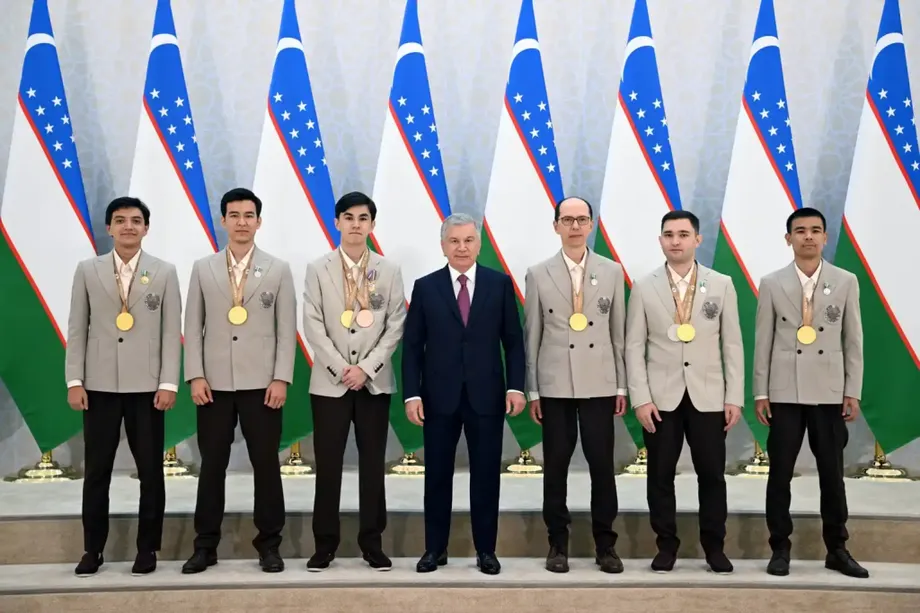
Government support has helped make elite chess a more secure career. On September 28, President Shavkat Mirziyoyev presented each of the five gold medallists with a $200,000 cheque, a car and an apartment. Leading national team players receive monthly payments of up to $1,500, while federation support covers coaching, education and travel.
Chess classes were introduced in many public elementary schools between 2018 and 2025. In the Samarkand region, federation membership grew from about 1,000 to approximately 4,500 over a decade, roughly four and a half times its earlier size. Clubs and chess spaces have also opened in schools and workplaces.
Sindarov's title challenge gives that expansion a highly visible focus. Uzbekistan already has an Olympiad winning generation; now one of its leading players has the chance to take the individual world crown. For India, Gukesh's defence offers the chance to keep the championship after his historic breakthrough in Singapore.
Key Points
- Gukesh and Sindarov will both be 20, making Geneva the youngest world championship contest in history.
- The revised event dates are November 22 to December 13, with Game 1 on November 24.
- The match has up to 14 classical games. The first player to 7.5 points wins, with tiebreaks scheduled for December 12 if needed.
- Sindarov qualified with an unbeaten Candidates score of 10/14 and won his final preparation tournament in Saint Louis.
- Gukesh is defending the title he won against Ding Liren in December 2024.
- Sindarov leads their recorded classical encounters with one win and two draws.
- The championship prize fund is $2.5 million.