Six main routes begin a difficult transition
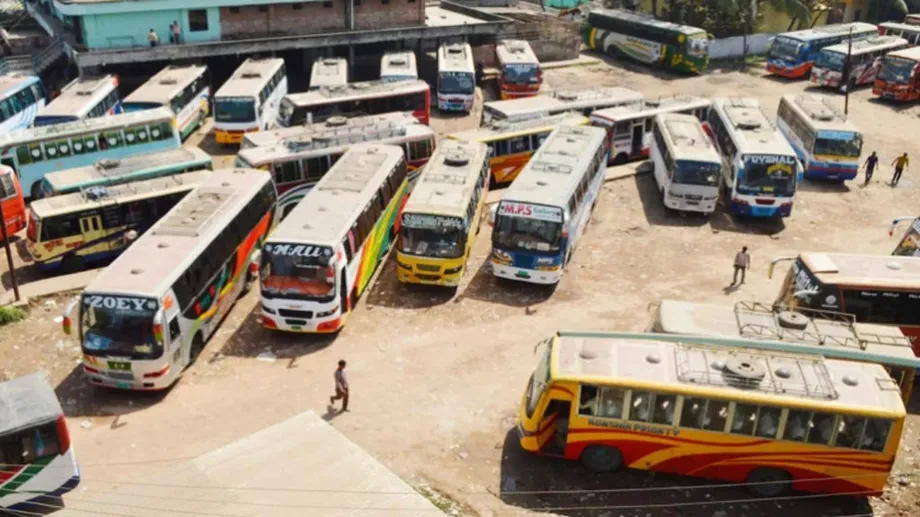
Dhaka launched a new system for operating buses on six main routes on November 1, 2026, bringing services previously run under about 18 company banners into six designated companies. The change began with existing buses, while vehicle fitness, route allocations and the colours intended to help passengers identify services remained unfinished.
Contents
- Six main routes begin a difficult transition
- What changes under the franchise system?
- Where the six main services will run
- A circular service joins the launch
- Old buses make enforcement central
- Workers could move from contracts to salaries
- Owners seek help to replace the fleet
- Officials give different signals on permanence
- Earlier attempts explain the stakes
- Key Points
The inauguration took place at about 11 a.m. on Manik Mia Avenue in Sher-e-Bangla Nagar. An air conditioned circular service between Mirpur-1 and Ansar Camp was also inaugurated, bringing the launch to seven routes when that service is included.
The Dhaka Transport Coordination Authority (DTCA) is implementing the reorganisation as part of a plan to reduce the capital's 98 existing bus routes to 32. That would mean 66 fewer routes, a reduction of about 67 percent. The aim is to replace overlapping operations with clearer responsibility for each route and reduce competition to pick up passengers.
The fleet figures need clarification. DTCA's plan was described as covering 780 buses, while another launch figure put the total at 816, comprising 796 buses without air conditioning and 20 with it. The individual allocations announced for the six main routes also add up to 816. The number actually carrying passengers at the launch was not specified.
For commuters, the immediate change is therefore mainly about which company is responsible for a route, rather than a replacement fleet. The practical test will be whether buses use designated stops, competing operators follow the allocations and passengers can identify the correct service.
What changes under the franchise system?
A franchise system assigns responsibility for a route to a designated company. In simple terms, passengers should see an organised service along a defined corridor instead of several competing companies trying to collect the same fares from the same roadside crowds.
Dhaka Metropolitan Police Commissioner Mosleh Uddin Ahmed said about 18 company banners had previously operated across the six corridors. He linked competition for passengers to congestion and accidents. Bringing those operations under six companies is intended to reduce that pressure.
The planned identification system combines different colours, route numbers and digital displays at the front of buses. Colours would give passengers a quick visual clue, while numbers and destination displays would identify the route more precisely.
Those changes were incomplete at the inauguration. Although repainting existing buses forms part of the programme, the launch went ahead before the planned colour changes had been completed. Vehicle fitness also remained an unresolved issue as the older fleet entered the new arrangement.
Where the six main services will run
The corridors connect Gazipur, Tongi, Mirpur, Keraniganj, Demra and the eastern approaches to Dhaka. Several services converge on Ghatarchar, while two connect the northern suburbs with the Dhakeshwari Temple area in Azimpur.
The announced company allocations and more detailed route descriptions are:
- Shibbari Chowrasta in Gazipur to Dhakeshwari Temple in Azimpur, via Abdullahpur: VIP Paribahan is allocated 253 buses without air conditioning. The DTCA route description gives a length of 26.47 kilometres.
- Mirpur Zoo to Chulkutia in Keraniganj, via Science Lab: Chiriyakhana City Bus Company is allocated 133 buses.
- Ghatarchar to Demra Staff Quarters, via Shahbagh and Matsya Bhaban: Ramzan Ali Enterprise is allocated 70 buses.
- Ghatarchar or Basila to the Chittagong Road and Kanchpur Bridge corridor, via Science Lab and Jigatola: Four Star Bus Line is allocated 150 buses.
- Ghatarchar to Dhour Bridge in the Abdullahpur area, via Mirpur-10: PNP City Service is allocated 190 buses. This corridor was also described more broadly as Ghatarchar to Uttara.
- Tongi College Gate to Dhakeshwari Temple in Azimpur, via Abdullahpur: 20 air conditioned buses are planned.
Four main routes are intended to use only buses without air conditioning, while two are intended to have both types. The detailed descriptions identify the Tongi allocation of 20 air conditioned buses, but leave the distribution of air conditioned vehicles on the other mixed route unclear.
A circular service joins the launch
Mirpur-1 to Ansar Camp is the additional circular route inaugurated alongside the six main corridors. Its path runs through Kachukhet, Sainik Club, Jahangir Gate and Agargaon. The service uses air conditioned buses.
Police Commissioner Mosleh Uddin Ahmed said authorities had identified 25 circular routes within the city and approved five for the first stage. The Mirpur service is the first of those five to begin.
The other four are intended to use minibuses with 27 seats. Their arrival and introduction were expected within roughly one and a half to two months of the launch, putting the next stage around mid to late December 2026. No exact opening dates were announced.
The distinction between the six main corridors and the circular service explains why the inauguration was described as covering either six or seven routes. The main network reorganisation and the smaller circular network are connected parts of the same effort, with different vehicle plans.
Old buses make enforcement central
VIP Paribahan already operates along the Shibbari to Dhakeshwari corridor. Chiriyakhana City Bus Company and Ramzan Ali Enterprise also have buses on Dhaka's streets. Assigning them routes changes the organisation of existing services before it changes the vehicles passengers use.
Other operators already serving the corridors include Bikash, Dishari, Tanzil, Metrolink, Rajanigandha, Malancha, Samay, Midline, Paristhan and Projapati. Some companies have objected to the route allocations, leaving their participation uncertain.
For the designated companies to control their routes, authorities will have to enforce the new arrangements against overlapping operations. Otherwise, drivers could continue facing the same competition for passengers that the reform is meant to reduce.
DTCA Executive Director Mohammad Mashiur Rahman called for traffic police and executive magistrates to take legal action against people obstructing the initiative by leaving buses standing on roads. His remarks show that resistance from within the transport sector is already a concern for those implementing the change.
The Shibbari corridor also carries a recent warning from experience. Pink buses were introduced there during the interim government in an earlier attempt to improve order, but the expected improvement did not follow. The current programme adds company responsibility and route allocation to the planned colour changes.
Workers could move from contracts to salaries
Mosleh Uddin Ahmed said a proposal had been put to bus owner and worker associations to replace contract arrangements with salaried employment. That would change how workers are paid, alongside the changes to which company operates each route.
The proposal matters because the reform is trying to reduce competition on the road. A regular salary could give workers a more predictable income while companies take responsibility for organising services. The commissioner described this as a proposal to the associations, with acceptance and implementation still to be settled.
Bangladesh Road Transport Owners Association Secretary General Saiful Alam asked passengers to board and leave buses at designated stops. He also called on transport workers to follow the new rules.
For a commuter, consistent stopping places would mean knowing where to wait rather than trying to flag down a bus wherever it appears. For drivers, compliance would mean resisting requests to stop between designated locations. Both sides would need to change familiar habits for the stopping rules to work.
Owners seek help to replace the fleet
Saiful Alam said owners wanted government policy support to obtain new buses, rather than a subsidy. Under the arrangement he described, owners would make a down payment, and the owners association would provide a guarantee.
A down payment is the amount paid at the start of a purchase, with the remaining cost paid later under an agreed arrangement. An association guarantee would back the participating owners in obtaining the vehicles.
Alam said owners would gradually remove old buses themselves as replacements became available. The launch therefore begins a transition using existing vehicles, with fleet renewal intended to follow rather than happen all at once.
The financing terms, the number of replacement buses and a full retirement timetable for old vehicles were not announced. Those details will determine how quickly passengers experience a change in the condition and comfort of the buses, beyond the new company names and route assignments.
Officials give different signals on permanence
Mosleh Uddin Ahmed described the initial introduction on six routes as operating on a trial basis. DTCA Executive Director Mohammad Mashiur Rahman, who chaired the inauguration, gave a firmer description of the programme's status.
Speaking at the event, Rahman said, translated from Bengali:
This programme is not a pilot project; this is final implementation, and there is no opportunity to turn back from here.
The difference matters for operators and passengers because it concerns whether the launch is an experiment or an implementation that authorities intend to retain. Both officials supported extending clearer route identification across the planned network of 32 routes.
Advocate Shamsur Rahman Shimul Biswas, the Pabna-5 lawmaker and chief coordinator of the Transport Owners-Workers Unity Council, inaugurated the services as chief guest. He called for cooperation among owners, workers, police and the media, saying congestion disrupts daily life and economic activity.
Addressing concerns about whether the service would last, Biswas said, translated from Bengali:
It will not be that we just hold a photo session today and then it closes later.
Bangladesh Road Transport Authority Chairman Mohammad Habibur Rahman and Dhaka Road Transport Owners Association President M. A. Baten also spoke at the ceremony. DTCA and the Dhaka owners association jointly organised the event.
Earlier attempts explain the stakes
Dhaka has tried several versions of route reorganisation, with different targets for the number of routes and companies. The current proposal to move from 98 routes to 32 follows earlier plans with a much larger starting network.
- 2015: Then mayor Annisul Huq began an initiative to organise bus operations into eight routes, with different colours for each.
- 2017: The initiative stalled after Huq's death.
- A later plan under former mayor Sheikh Fazle Noor Taposh sought to combine 246 bus companies into six franchise companies and reorganise 278 routes into 22.
- December 2021: Dhaka Nagar Paribahan began an experimental service between Ghatarchar and Signboard. Other companies were not brought into the system, and the initiative later stopped.
- During the interim government: Another attempt to introduce franchises received insufficient support from bus owners.
- November 1, 2026: Six main corridors and the Mirpur circular service were inaugurated under the latest arrangement.
The earlier failure to bring competing companies into Dhaka Nagar Paribahan makes participation and enforcement especially important now. The current launch again begins on streets where several operators already carry passengers.
The next concrete milestone is the expected introduction of minibuses on four more circular routes within about two months. Alongside that expansion, commuters will be watching for completed route displays, consistent stops and the promised gradual replacement of old buses.
Key Points
- Dhaka inaugurated franchise operations on six main routes on November 1, 2026, alongside an air conditioned Mirpur circular service.
- The programme begins with existing buses while fitness, colours and some route allocations remain unresolved.
- The stated fleet plans range from 780 to 816 buses; the detailed allocations total 816.
- Authorities plan to reduce 98 main routes to 32 and introduce separate colours, numbers and digital displays.
- Salaried employment for workers has been proposed, while owners seek purchasing support and association guarantees for new buses.
- Four more circular routes are expected to receive minibuses with 27 seats within roughly two months of the launch.