Qwen moves into Siri, writing and camera tools
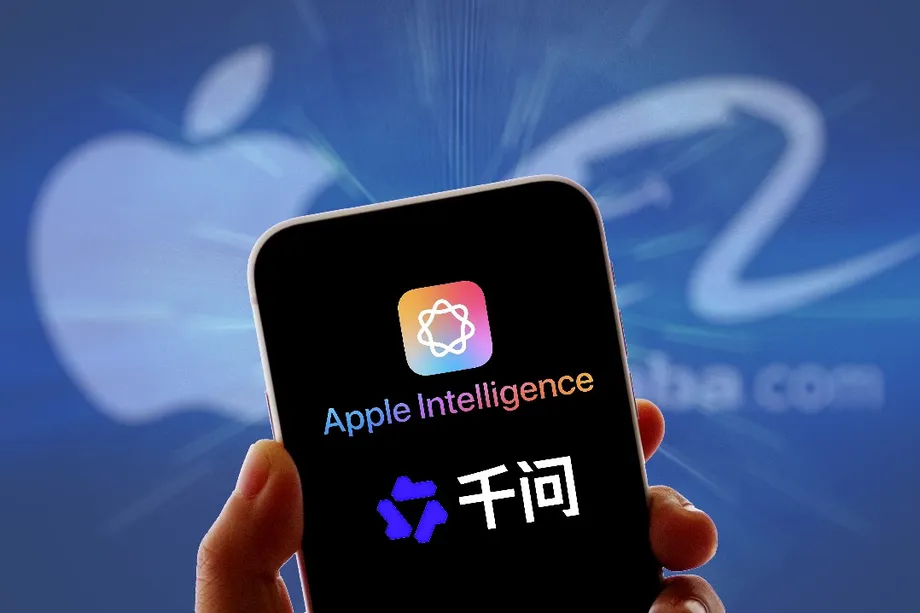
Alibaba's Qwen artificial intelligence models are set to enter Apple Intelligence in China through Siri, Writing Tools and Visual Intelligence, with developer testing scheduled for November 4 and a broader release planned for December through iOS 27.3. The announced rollout gives Chinese iPhone users a timetable for accessing services ranging from document questions to generated text and images.
Contents
- Qwen moves into Siri, writing and camera tools
- Two release stages, with December still a target
- What Siri will be able to ask Qwen
- Writing Tools and Visual Intelligence gain Qwen options
- Permission and account choices shape the service
- Which iPhones and settings qualify?
- The wider package extends beyond Qwen
- Why the partnership matters in China
- Key Points
Alibaba announced the cooperation on October 31. Users will be able to decide whether to enable Qwen and what information to share. Apple says it will request permission before sending a question, document or image to the service, while Alibaba says requests and generated responses will not be used to train its models.
The December package has a defined limit: it excludes the newer Siri AI capabilities and other next generation Apple Intelligence features announced at Apple's 2026 Worldwide Developers Conference. Qwen will handle selected requests within familiar Apple interfaces, alongside a broader collection of Apple Intelligence functions.
For users, the practical change is access to an external AI service while working with a message, photograph or document. Device compatibility, language settings and regional eligibility will determine who can use it.
Two release stages, with December still a target
November 4 marks the start of access through the latest iOS developer beta. A beta is a version of software released for testing before wider distribution, so its features and behavior can still change.
December is the announced month for the public release through iOS 27.3. No exact public launch day has been given. The schedule therefore separates an opportunity to test the integration from its planned arrival for eligible users more broadly.
Apple first introduced Apple Intelligence at its Worldwide Developers Conference in 2024. The China partnership became public in February 2025 following confirmation from Alibaba chairman Joe Tsai. The latest announcement adds a software release schedule to that earlier commercial agreement.
- 2024: Apple unveils Apple Intelligence at its Worldwide Developers Conference.
- February 2025: Apple's China AI partnership with Alibaba becomes public following confirmation from Joe Tsai.
- July, ahead of the announced rollout: China's cyberspace regulator completes filings for seven generative AI services for smartphones, including Apple Intelligence.
- October 31: Alibaba announces the Qwen integration and its release timetable.
- November 4: Developer testing is scheduled to begin.
- December: Wider availability is planned through iOS 27.3.
What Siri will be able to ask Qwen
Siri will be able to draw on Qwen's broader knowledge to answer some requests directly. Users will also be able to ask questions about selected photographs and documents, including PDF files and presentations.
A large language model is an AI system trained to recognize patterns in information and generate responses to instructions. Qwen's announced role includes understanding both text and images, allowing a request to involve a written question, a selected picture or the contents of a document.
For someone reading a presentation or a PDF, the useful change is the ability to ask about that material through Siri. The user selects what to share, and Apple requests permission before sending it to Qwen.
The release keeps two parts of Apple's assistant plans on separate schedules. Qwen assistance is included in the December package; the more advanced Siri capabilities announced at the 2026 developer conference are excluded. No release date for those excluded capabilities in China accompanies this announcement.
Writing Tools and Visual Intelligence gain Qwen options
Writing Tools will add a function called "Compose with Qwen." It will generate original content from a prompt, including text and images. A prompt is simply the instruction a person gives the AI, such as a description of the content they want it to create.
Visual Intelligence, Apple's camera based assistance feature, will include an "Ask Qwen" option. Users will be able to seek information about objects and places they see, bringing Qwen's image understanding into an interface built around the camera.
The three entry points serve different tasks. Siri supports questions and requests, Writing Tools supports creating content, and Visual Intelligence starts with something the user sees. Together, they place Qwen within several existing ways of using an iPhone.
The announced functions also bring image generation and image understanding into different parts of the experience. "Compose with Qwen" can create an image from an instruction, while "Ask Qwen" can help interpret visual information supplied by the user.
Permission and account choices shape the service
Apple says users will be asked for permission before a question, document or image is sent to Qwen. Alibaba says the integration is optional and that users will control when Qwen is invoked and what information is shared.
Users will be able to sign in through Apple or with an existing Qwen account. That account choice is part of setting up the integrated service, alongside the decision to enable it.
Alibaba's commitment covers both user requests and the responses generated through the integration: neither will be used to train its models. Model training is the process through which an AI system learns patterns from data to shape its future responses.
For a person sharing a document or photograph, the immediate decision is concrete: whether to send that selected material to Qwen for an answer. Permission prompts make that transfer a visible step in the workflow. Account setup and the applicable service terms will also matter when users decide how to use the feature.
Which iPhones and settings qualify?
The announced compatibility list includes the iPhone 15 Pro and iPhone 15 Pro Max, iPhone 16 and later models, iPhone Air and iPhone Duo. Both the device language and Siri language must be set to English or Simplified Chinese.
Regional access is described in two ways. Alibaba's announcement includes users who purchase an Apple Intelligence capable iPhone in China, as well as users whose device location and Apple Account country or region are both set to China. The narrower description accompanying the rollout requires both the device location and account region to be China.
That difference matters for people with a phone bought in one market and an account registered in another. The purchase location route appears in Alibaba's announcement, while the location and account settings route is repeated across the rollout descriptions. The exact eligibility wording in the released software will be important for those configurations.
Apple Intelligence also requires compatible hardware. For someone deciding whether their current phone qualifies, the named model, language settings and regional requirements all need to line up with the release conditions.
The wider package extends beyond Qwen
Apple's initial China rollout is also set to include translation, removal of objects from photographs, notification and email summaries, smart replies, and tools for rewriting, proofreading and summarizing text.
These functions cover several common tasks: making a message easier to read, shortening a long passage, preparing a reply or editing an unwanted object out of a picture. They sit within the wider Apple Intelligence package alongside the specifically named Qwen options.
Alibaba previously described plans to incorporate Qwen into Apple Intelligence across iOS, iPadOS, macOS and visionOS, covering Apple's phone, tablet, computer and headset software platforms. The November testing date and December release timetable described in the announcement focus on iOS and supported iPhones.
The immediate change is therefore clearest for eligible iPhone users. The broader platform plan gives the partnership a wider scope, but the announcement does not provide separate launch dates for the tablet, computer and headset integrations.
Why the partnership matters in China
China's cyberspace authority completed filings in July for seven generative AI services designed to operate on smartphones, including Apple Intelligence. That regulatory step preceded the announced Qwen testing and public rollout schedule.
Alibaba CEO Eddie Wu described the partnership as a way to bring the company's AI capabilities into Apple's products and services. He said:
We are delighted to partner with Apple. Drawing on Alibaba's deep AI capabilities, Qwen will be deeply integrated into experiences across the Apple ecosystem, and together we will bring new intelligent services to Apple users in China.
Wang Xiaojie, an AI expert at Beijing University of Posts and Telecommunications, described the agreement as the first time a leading global consumer hardware maker had adopted a Chinese large language model as the primary AI foundation at the operating system level for the Chinese market.
For Alibaba, the agreement gives Qwen distribution through Siri, writing interfaces and camera assistance. For Apple, it adds a Chinese AI partner to its effort to bring Apple Intelligence to users in China. The commercial relationship places Qwen inside tasks people already perform on their phones.
The first release will center on selected assistance: answering questions, working with shared documents and photographs, generating content and interpreting images. Whether users choose to enable those functions will depend on their usefulness and the information people are willing to share. The next scheduled step is the November 4 developer beta, followed by the planned December public release.
Key Points
- Qwen integration is scheduled for developer testing from November 4 and broader release in December through iOS 27.3.
- Siri, Writing Tools and Visual Intelligence will provide access to selected Qwen capabilities.
- Apple says it will seek permission before sending questions, documents or images to Qwen.
- Alibaba says requests and generated responses will not be used to train its models.
- Access depends on compatible hardware, supported languages and regional eligibility requirements.
- The December package excludes the newer Siri AI capabilities announced at Apple's 2026 developer conference.