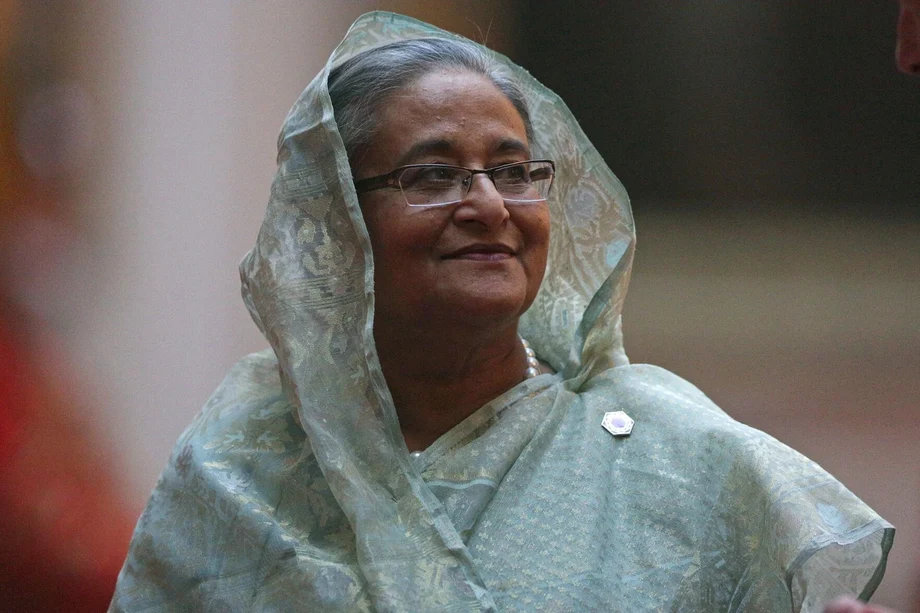
A December pledge meets a demand for extradition
Sheikh Hasina says she will return to Bangladesh in December 2026 despite a death sentence, but the government has ruled out issuing her a passport or travel document and insists that India hand her over through the countries' extradition agreement. The competing positions leave her proposed return caught between a personal pledge and a legal process controlled by two governments.
Contents
- A December pledge meets a demand for extradition
- Dhaka rules out an ordinary journey home
- India has not agreed to hand her over
- The death sentence and hundreds of cases
- From the uprising to the return announcement
- A banned party prepares, while opponents doubt her
- Claims of persecution and concerns about minorities
- Hasina rejects the need for foreign protection
- Key Points
On November 5, State Minister for Foreign Affairs Humaiun Kobir said Bangladesh would seek the former prime minister's formal handover from India through judicial and diplomatic channels. Hasina has lived in India since August 2024, when a mass uprising forced her from office after a deadly crackdown on protesters.
Hasina, responding by email on Wednesday to questions sent the previous week, reaffirmed the December plan she first announced in August. The former prime minister said she accepted the danger of returning:
If death is my destiny, I would rather die on the soil of my own country, among my own people.
A Bangladeshi special tribunal sentenced Hasina to death in 2025 for crimes against humanity, finding her responsible for ordering the crackdown. A United Nations report put the number killed during the 2024 unrest at nearly 1,400. Hasina denies wrongdoing and rejects both the verdict and the legitimacy of her trial.
Her promise also comes at a difficult moment for the Awami League. The party remains banned, senior figures are imprisoned or abroad, and its members were excluded from the February election that brought longtime rival Tarique Rahman to power. A return would place Hasina within reach of the authorities while her party has little room to organise openly.
Dhaka rules out an ordinary journey home
Kobir addressed the travel document issue on November 5 at Hazrat Shahjalal International Airport in Dhaka, after seeing off a Chinese delegation led by Liu Haixing, a senior Communist Party of China official. He said the government regarded Hasina's return as a matter of extradition rather than ordinary passenger travel.
The state minister cited an existing judicial warrant and the bilateral treaty as the route Bangladesh intended to pursue:
"There is a judicial warrant, there is an established judicial process, and there is an extradition treaty. Therefore, there is no need or requirement to issue or hand over a passport," he said.
Hasina's diplomatic and ordinary passports have been cancelled. A passport or travel pass would provide documentation for a voluntary journey, making the government's refusal a practical obstacle to the route she has publicly proposed.
Kobir said he did not yet know whether Hasina had applied for either document, having returned that day from a Commonwealth meeting in Antigua and Barbuda. Hasina has disclosed neither an exact arrival date nor a route, and no agreed arrangement for her return has been announced.
India has not agreed to hand her over
Bangladesh has repeatedly asked India to extradite Hasina under their 2013 treaty. Extradition means one country formally transfers a person to another country to face prosecution or serve a sentence. It requires action by governments and legal authorities, rather than simply booking a journey across the border.
Both Muhammad Yunus's interim administration and Rahman's elected government sent requests to New Delhi. Home Minister Salahuddin Ahmed said India had given neither an agreement to surrender Hasina nor an explicit refusal. India has continued to describe the request as undergoing legal examination.
India's high commissioner to Dhaka, Dinesh Trivedi, addressed the timing during an October discussion organised by a think tank in the Bangladeshi capital:
"Nobody can give you a timeframe (over Hasina's return)," he said.
The treaty has previously been used to transfer a prominent fugitive: Bangladesh handed Assam separatist leader Anup Chetia to India in 2015. In Hasina's case, Dhaka is seeking a transfer in the opposite direction. Her stated willingness to return and India's consideration of the extradition request remain separate processes, with different decisions needed to make either happen.
The death sentence and hundreds of cases
Bangladesh's International Crimes Tribunal imposed the death sentence in Hasina's absence in 2025. The ruling concerned her government's response to the protests that brought down her administration, including its finding that she ordered the deadly crackdown.
The United Nations estimate of nearly 1,400 deaths gives a measure of the violence surrounding the uprising. Thousands were also injured. Hasina disputes responsibility for ordering killings, while her lawyers have questioned the death toll.
Transparency International Bangladesh, an organisation that campaigns against corruption, recorded 663 cases against Hasina by November 19, 2025, including 453 murder cases, in a report released in February. Murder cases therefore represented about 68% of the recorded total, calculated from 453 out of 663. The figures describe cases filed against her; the tribunal's death sentence is a specific ruling within that much wider legal burden.
Hasina said she understood the risks of returning. Describing the possibilities she feared, she said:
I know that I may be arrested when I return. I may be imprisoned, tortured or even killed. I am fully aware of those possibilities. But I cannot spend the rest of my life watching my people suffer from a distance.
Bangladeshi authorities want her returned to face the country's judicial process. Hasina has also described a plan to surrender to a court after returning. Her rejection of the trial and the government's insistence on enforcing the legal proceedings remain central to their confrontation.
From the uprising to the return announcement
Hasina served as prime minister from 1996 to 2001 and again from 2009 to 2024. Her final period in office ended after weeks of protests expanded into a mass movement involving students and opposition forces.
The main developments trace how a dispute over her return became tied to a change of government, a death sentence and her party's exclusion from electoral politics:
- July and August 2024: Protests spread across Bangladesh, and security forces carried out a deadly crackdown.
- August 5, 2024: Hasina's government fell, and she fled to India.
- After her departure: Nobel Peace Prize laureate Muhammad Yunus headed an interim administration for about 18 months.
- 2025: The International Crimes Tribunal sentenced Hasina to death for crimes against humanity.
- February 2026: Tarique Rahman won a landslide election held under the interim administration. The Awami League was barred from contesting.
- August 2026: Hasina announced that she intended to return in December.
- November 5, 2026: Kobir ruled out issuing her a passport or travel document and reiterated Bangladesh's demand for extradition.
Rahman, the son of former prime minister Khaleda Zia, leads a government drawn from Hasina's longstanding political opponents. His administration inherited the extradition demand from Yunus, keeping the effort to secure her handover in place across the transition.
A banned party prepares, while opponents doubt her
Awami League spokesperson Mohammad Ali Arafat says Hasina remains determined to return in December and claims the party has made organisational preparations across Bangladesh. Party leaders abroad describe her announcement as part of an effort to restore its political presence.
Awami League supporters have held sudden, brief marches in Dhaka and elsewhere, despite the restrictions on their activities. Arrests have accompanied those efforts. Many senior leaders remain outside the country, while members inside Bangladesh face the risk of detention when they appear publicly.
Ruhul Kabir Rizvi, acting secretary general of Rahman's Bangladesh Nationalist Party, has expressed doubt that Hasina will take the risk. He argues that her pledge is intended to relieve despair among Awami League members rather than announce a journey she will carry out.
The disagreement has immediate consequences for party supporters. Arafat presents the return as a real objective around which members can organise. Political opponents accuse leaders living abroad of exposing those still in Bangladesh to danger through promises of a comeback.
The party's ban also means that Hasina's physical presence would be only one part of its predicament. Its exclusion from the February election and restrictions on public activity would still shape whether its members could campaign, gather openly or compete for power.
Claims of persecution and concerns about minorities
Hasina alleges that at least 20,000 Awami League members have been killed since August 2024. She also says thousands have been arrested, tortured or forced into hiding, and that supporters have lost homes, businesses and livelihoods because of their political affiliations. The figure of 20,000 is her allegation; no independent verification accompanied it.
Hasina described the conditions facing her party in these words:
"There is no normal political or democratic environment," she said.
Human Rights Watch and other rights organisations have criticised Rahman's government over civil and political rights. The government says arrests concern specific charges. The prime minister's office press wing did not respond to a request for comment on Hasina's latest statements.
Minority communities have also described intimidation. Accounts of violence since the uprising include arson, lynchings and attacks on cultural institutions, with political opponents and religious and ethnic minorities among those targeted. Rights groups and independent observers raised concerns about radical groups attempting to suppress liberal forces during the interim administration, which denied the allegations.
Yunus's administration lifted the ban on Jamaat-e-Islami and released several Islamist hardliners from prison. Hasina, whose government took a tough stance against radical groups, has linked the political changes to growing confidence among extremists. Rahman's government now faces criticism over deteriorating law and order as well as its treatment of political opponents.
Hasina rejects the need for foreign protection
Hasina says she is not seeking protection from foreign powers to make her return possible. Asked whether she expected India or the United States to press Bangladesh to guarantee her safety, she presented the decision as her own.
The former prime minister said:
But I do not need the blessing of a foreign power to return to my own country.
India nevertheless remains central to the practical outcome because Hasina is living on its territory and Bangladesh is asking it to arrange her handover. Bangladesh controls the travel documents it issues and is demanding custody through the treaty. Her declaration of personal resolve therefore sits alongside decisions that must be made in New Delhi and Dhaka.
For Awami League members, December is now the month around which their leader has built expectations. For the government, the stated objective remains her formal transfer into the judicial process. Neither side has announced an agreed way to bridge those positions.
Key Points
- Sheikh Hasina says she intends to return to Bangladesh in December 2026 despite a death sentence imposed in 2025.
- Bangladesh has ruled out issuing her a passport or travel document and wants India to hand her over under the 2013 extradition treaty.
- India says the extradition request is subject to legal examination; no transfer timetable has been announced.
- The United Nations estimated that nearly 1,400 people were killed during the 2024 unrest. Hasina denies ordering the killings.
- The Awami League remains banned and was excluded from the February election won by Tarique Rahman.
- Hasina has disclosed no exact arrival date or route, while party leaders insist preparations are underway and opponents question whether she will return.