Introduction to the ChiNext Market Maker Rules
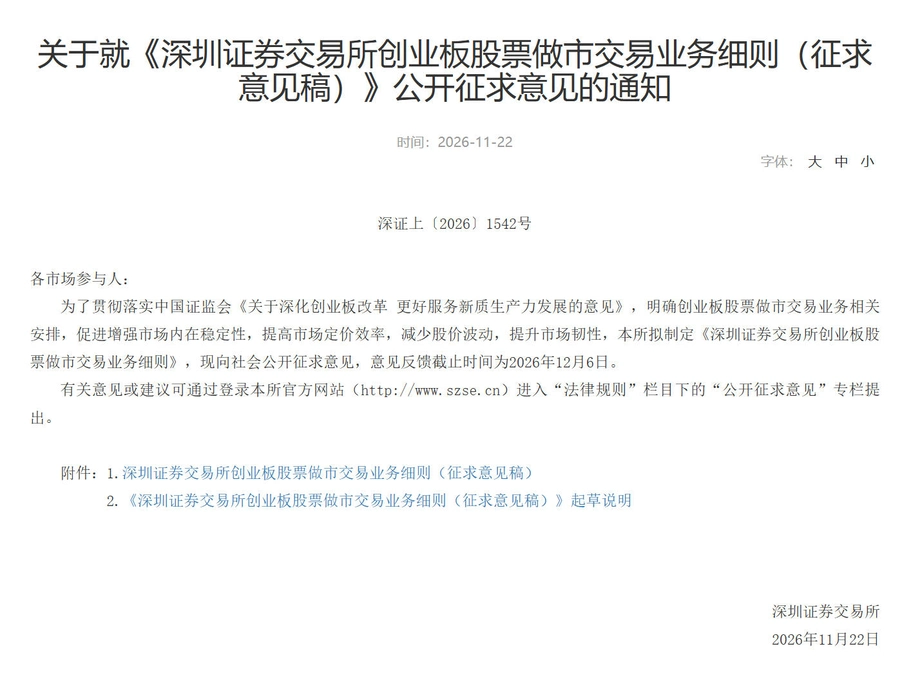
On November 22, 2026, the Shenzhen Stock Exchange released a draft of the business rules for public feedback regarding market making on its ChiNext board. This move marks a major milestone in China's financial sector, bringing a new trading mechanism to the growth enterprise market. Market making is a system where specialized financial institutions quote both buy and sell prices for specific stocks to ensure smooth trading. The public comment period for these new rules remains open until December 6, 2026.
Contents
ChiNext is a major Chinese stock market index that hosts numerous innovative start-ups and high technology companies. These enterprises often experience higher price swings due to rapid technological changes and shifting market sentiments. Introducing market makers aims to act as a buffer against these swings by providing continuous buy and sell prices. The framework is designed to increase market liquidity, which means making it easier for investors to buy and sell shares without causing massive price jumps.
The Path Leading to the New Proposal
Regulatory planning for this transition began earlier in the year under the guidance of the China Securities Regulatory Commission. On April 10, 2026, the commission released an official document titled Regarding Deepening ChiNext Reform, which formally proposed the introduction of market makers to strengthen market stability. Following this guidance, the Shenzhen Stock Exchange updated its core trading regulations in April 2026 to permit market making activities on the board. A specific section dedicated to ChiNext market making was officially added to the exchange rulebook starting July 6, 2026.
Market observers note that combining traditional bidding with market making is a standard practice in mature global financial markets. By allowing specialized institutions to quote prices continuously, the exchange expects to attract more long term capital into high technology sectors. This policy is part of a broader strategy to support new quality productive forces and build a robust financial ecosystem for innovative businesses.
Understanding the Draft Details
The newly proposed business rules consist of five chapters containing 31 distinct articles. These guidelines establish the entry requirements, operational duties, and supervisory controls for participating financial institutions. Securities firms that already hold official approval from the regulatory commission for securities trading can apply to participate through a simple filing process. Before starting operations, the exchange may conduct technical testing and specialized inspections on the applicant firms.
Participation requires strict adherence to specific operational metrics set by the exchange. These include maintaining maximum allowable spreads between buy and sell prices, committing to minimum quotation amounts, and ensuring high participation rates. Participating institutions must use their own capital and dedicated trading accounts to conduct these activities. They are permitted to use their own shares, borrowed stocks, or other legally held securities to fulfill their duties.
Supervisory Framework and Risk Controls
Supervision forms a core part of the newly drafted guidelines to ensure fair and orderly market operations. Participating firms must establish robust risk prevention protocols, internal controls, and strict business isolation systems. Furthermore, these institutions are required to submit monthly evaluation reports, annual performance assessments, and quarterly stress test reports to the exchange.
The exchange retains the authority to conduct on-site inspections of all participating brokers. Institutions that violate regulatory standards face disciplinary actions or regulatory penalties. The rules also outline strict penalties for severe violations, including the revocation of trading privileges and a mandatory one year ban from reapplying for any ChiNext market making activities if an institution receives the lowest rating category.
Expected Benefits for Investors and Markets
Financial analysts suggest that this regulatory update will bring five major advantages to the exchange. First, it introduces fresh capital and improves overall market liquidity. Second, professional pricing strategies will reduce extreme price fluctuations during volatile periods. Third, continuous quoting helps reflect the true underlying value of high growth enterprises more accurately. Fourth, narrower price spreads reduce transaction costs, allowing everyday investors to trade at better prices. Fifth, improved market quality enhances the appeal of growth stocks for long term institutional investors.
Market researchers frequently point out that stocks with active quoting structures generally experience lower intraday volatility compared to unassisted equities. This mechanism helps prevent sudden price gaps caused by temporary imbalances in supply and demand. By smoothing out these friction points, the exchange hopes to foster a healthier environment for both issuers and retail investors.
Comparison with Other A-Share Boards
ChiNext is not the first board in China to adopt this trading structure. The Shanghai Stock Exchange published its implementation rules for the STAR Market on July 15, 2022, and officially launched the mechanism on October 31 of that year with 14 participating brokerages covering 42 initial stocks. Data shows that the STAR Market model currently features 20 participating institutions supporting 273 stocks, which covers 44 percent of all listed companies on that board and includes major index components. Similarly, the Beijing Stock Exchange introduced its own version of the mechanism on February 20, 2023.
Deploying this framework on ChiNext creates a powerful synergy among China's three major growth oriented boards. Financial experts emphasize that this expansion helps complete the foundational structure of the domestic capital market. As these practices mature across different boards, they help cultivate a professional ecosystem of quoting institutions and enhance the global competitiveness of the domestic financial system.
Key Dates and Next Steps
The regulatory rollout follows a clear timeline established by the exchange and governing bodies:
- April 10, 2026: The securities commission issues the foundational reform guidance document.
- July 6, 2026: The updated exchange rulebook officially adds provisions for ChiNext trading mechanics.
- November 22, 2026: The exchange publishes the draft business rules for public consultation.
- December 6, 2026: The deadline arrives for submitting public feedback on the draft proposal.
Following the conclusion of the public feedback period, exchange officials will review all submitted comments and finalize the provisions. The final regulations will take effect upon formal approval, paving the way for the official launch of the new trading mechanism.
At a Glance
- The Shenzhen Stock Exchange released the draft business rules on November 22, 2026.
- The public consultation period for the proposal closes on December 6, 2026.
- The framework encompasses five chapters and 31 individual articles detailing broker obligations.
- Participating firms must use their own capital and dedicated accounts for all transactions.
- Similar mechanics are already active on the STAR Market and the Beijing Stock Exchange.