Two forged orders reach the prime minister's office
Indian Prime Minister Narendra Modi's office summoned Telecommunications Secretary Amit Agrawal on November 14 to explain how his department ordered internet providers to block 129 websites using fabricated High Court orders, according to two government officials familiar with the matter.
Contents
- Two forged orders reach the prime minister's office
- How the first email became a blocking direction
- A court seal and a misleading QR code
- From the first email to the criminal complaint
- Police seek the digital trail
- What the blocking rules require
- Why transparency matters to affected users
- A second impersonation case targeted rights groups
- Fabricated legal documents draw judicial concern
- Key Points
The blocking directions were issued on July 21 and September 2, 2026, covering 34 and 95 websites respectively. Documents emailed by people presenting themselves as lawyers claimed authority from the Rajasthan and Allahabad High Courts. The Allahabad High Court confirmed that the order bearing its name was fake, while the Rajasthan High Court's registrar said the document attributed to that court appeared fraudulent.
Agrawal, the telecommunications ministry's most senior bureaucrat, cut short a trip to another state to answer questions from Modi's office, the officials said. His department oversees telecommunications companies and internet service providers, which carry out government website blocking directions.
Uttar Pradesh police are investigating suspected forgery and cheating, and the ministry has opened an internal inquiry into its procedures. Police have sent the ministry 24 questions and requested digital records showing how the documents were handled.
The sites were described as illegal betting platforms. The larger concern is that the same route could be used against lawful websites: a person sends a convincing document, officials accept its claimed authority, and internet providers receive instructions to restrict access.
Agrawal, the telecommunications ministry and Modi's office did not respond to requests for comment. One government official attributed the action against betting accounts to the Department of Telecommunications' relevant field officers.
How the first email became a blocking direction
The Rajasthan document reached the telecommunications department at 8:59 p.m. on July 19. Its sender identified himself as Aryan Chaudhary, an advocate-on-record, and attached a purported court order requiring 34 websites to be blocked within 24 hours.
The department directed internet providers to act on July 21, two days after the email arrived. The Rajasthan High Court's registrar later said the purported order was absent from the court's server and appeared fraudulent. An email seeking a response from the sender's address bounced with a notification that the recipient could not be found.
The second document was dated August 14 and carried the name of Allahabad High Court Justice Garima Prashad. A person identifying himself as advocate Kartikey Pandey emailed it to the department on August 22. The resulting direction, issued on September 2, covered 95 websites, almost three times the 34 covered by the July instruction.
The identities behind those email accounts remain under investigation. Police registered their case against unidentified people, and no arrests had been reported when the investigation became public.
A court seal and a misleading QR code
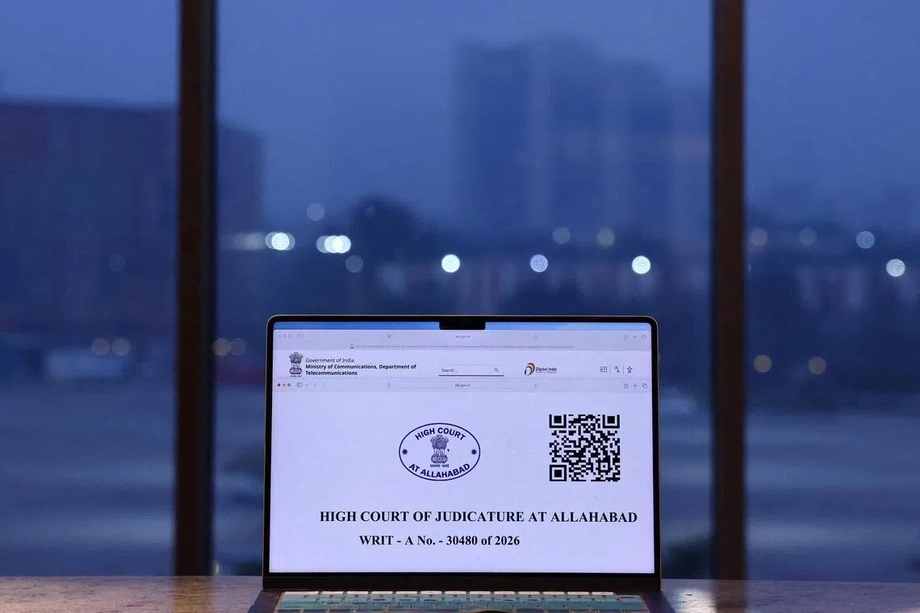
The purported Allahabad order carried a court logo, a seal and a QR code, features that made it resemble an official judicial document. The code led to a webpage displaying the case number Writ-A 30480/2026 rather than an authenticated court order.
The document presented the case as Sahil Singh v. Director General, DoT Cyber Law and others. Checks by the High Court administration found no corresponding case in its online records. Justice Prashad's office also confirmed that no such order had been passed.
The 95 websites covered by the resulting instruction included betting platforms and sites allegedly streaming fabricated Indian Premier League matches. The department asked internet service providers to take the necessary action against the listed addresses.
The department's correspondence shows further processing between receipt and enforcement. On August 24, its Law Division circulated a copy of the purported Allahabad order without the writ petition or supporting documents. On August 28, the technology division requested the 95 web addresses in an Excel file. The blocking instruction followed five days later.
Those steps give investigators specific points to examine: who received the attachment, who checked it, who approved the list and what authority was recorded before providers were told to act.
From the first email to the criminal complaint
The documents remained publicly accessible on the telecommunications department's website for months, alongside correspondence showing how officials instructed providers to block the sites. The Allahabad High Court began checking the document after a journalist asked its administration to verify it on October 30.
The main events span nearly four months:
- July 19: An email presented a purported Rajasthan High Court order requiring action against 34 websites.
- July 21: The department issued blocking directions covering those 34 sites.
- August 22: A sender presenting himself as Kartikey Pandey emailed the purported Allahabad High Court order dated August 14.
- September 2: The department directed providers to block another 95 websites.
- October 30: A verification request reached the Allahabad High Court administration.
- November 6: The High Court filed a police complaint after checking the document.
- November 14: Modi's office summoned Agrawal to explain how the department had acted on the forged orders.
By November 14, one of the fake court orders had been removed from the government website, while the other was still accessible. The ministry was planning to revoke the blocking directions and remove the related documents, according to an official with direct knowledge of its response. Completion of that revocation had not been announced.
Police seek the digital trail
Ghanshyam Yadav, a senior Uttar Pradesh cybercrime official, said investigators had asked the ministry for information about its content management system and digital logs. Such records can show when documents entered a system, which accounts handled them and when changes were made.
Yadav said police sent 24 questions to the ministry and would use its answers to decide their next steps. The ministry was also trying to identify the people behind the email addresses used to transmit the documents.
The Allahabad High Court's joint registrar filed the complaint on the chief justice's instructions. The resulting first information report, the formal police record that starts a criminal investigation, cited Sections 318(2), 336(2), 336(3), 337, 338 and 340(2) of the Bharatiya Nyaya Sanhita, 2023.
Section 337 addresses forgery of documents or electronic records presented as court records or proceedings, with a maximum punishment of seven years in prison and a fine. Section 340(2) covers fraudulent or dishonest use of a forged document as genuine by someone who knows, or has reason to believe, that it is forged.
Investigators therefore need to establish both the movement of the documents and what the people handling them knew. The ministry's administrative inquiry has a related task: examining how officials checked the claimed judicial authority before issuing directions.
What the blocking rules require
Section 69A of the Information Technology Act, 2000, allows the government to block public access to online information on specified grounds, including national security and public order. It requires reasons to be recorded in writing and action to follow prescribed procedures.
Rule 10 of the Information Technology Blocking Rules, 2009, deals with blocking directed by a court. It requires the designated officer to receive a certified copy of an order from a competent court, submit it to the Secretary of the Department of Information Technology and initiate the action directed by the court.
A certified copy is an officially authenticated version of a court document. The outstanding procedural question is whether officials received such copies and what checks they performed before acting on the emailed attachments.
The Supreme Court upheld Section 69A in its 2015 Shreya Singhal v. Union of India judgment, with the safeguards surrounding blocking central to the legal framework. Here, investigators must establish which powers the department invoked and whether the required process was followed.
The ministry's inquiry will review procedures and consider extra checks before officials act on court orders seeking website restrictions. Confirmation through the issuing court's records or registry would directly address the failure exposed in this case, although Rule 10 does not expressly prescribe that particular verification method.
Why transparency matters to affected users
Apar Gupta, founder director of the Internet Freedom Foundation, and Mishi Choudhary, founder of the Software Freedom Law Centre, have described limited disclosure and weak verification as central problems in India's content removal process.
Gupta said many takedown orders identify a legal provision and a web address without explaining why the content is unlawful. In his view, sparse reasoning makes it harder for recipients to judge whether a request is genuine. He also said the publicly accessible court orders on the telecommunications department's website represent only a small part of the wider blocking process.
Choudhary pointed to the difficulty of challenging restrictions when affected users lack the reasons behind them. SFLC.in has separately asked the Supreme Court to strike down Rule 16, which requires confidentiality around blocking requests and actions, and to change Rules 8 and 9 concerning notice to affected parties. The court issued notice on that petition in March 2025, and the group describes the case as pending.
The two campaigners also cited a reduction in the compliance period for platform takedown requests from 36 hours to three hours under the IT Rules. Choudhary argued that tighter deadlines leave less time to investigate authenticity and can encourage automated enforcement. Those platform requirements form a related part of the debate over content restrictions, alongside the court based website blocking process under examination here.
An anonymous government official familiar with the ministry's inquiry explained the concern about lawful sites:
"It's serious ... Maybe in future some genuine websites may also be blocked in the same manner," the official said.
A second impersonation case targeted rights groups
X told the Delhi High Court on November 6 that notices seeking restrictions on the accounts of the Internet Freedom Foundation and SFLC.in had come from an impostor posing as Delhi Police. The company said its internal investigation identified the notices as fraudulent and that it would take no action against the accounts.
X filed a police complaint, and Delhi Police registered a first information report against unidentified people under provisions covering forgery, impersonation of a public servant and computer related offences. The High Court disposed of the organisations' petitions while allowing them to return if necessary.
Choudhary said requests to restrict entire accounts were particularly serious because they affected access to existing posts and future speech. She also pointed out that ordinary users may lack the money and legal resources the two organisations used to investigate the notices and approach a court.
The two episodes show different outcomes after impersonation: the website documents reached government enforcement, while X identified the purported police notices before restricting the targeted accounts.
Fabricated legal documents draw judicial concern
India's Supreme Court has also confronted invented legal material in a different setting. On July 2, it set aside orders by the National Company Law Tribunal and the National Company Law Appellate Tribunal in Pooja Ramesh Singh v. Jammu and Kashmir Bank after reliance on nonexistent precedents generated using artificial intelligence.
The method used to create the forged website blocking orders, including whether artificial intelligence was involved, remains unknown. The immediate investigative task concerns the emails, attachments and official decisions that produced the restrictions.
Supreme Court justices warned in 2025 about fabricated judicial orders and forged signatures. Describing the damage to confidence in the courts, they said:
bearing forged signatures of Judges strikes at the very foundation of public trust
The justices also said that "such grave criminal acts cannot be treated as ordinary or routine offences". In the website case, the planned withdrawal of the directions, the police examination of digital records and the ministry's review will determine how the government responds to documents that borrowed judicial authority to trigger restrictions.
Key Points
- Modi's office summoned Telecommunications Secretary Amit Agrawal on November 14 over directions covering 129 websites.
- The department issued instructions for 34 sites on July 21 and 95 on September 2, 2026, using purported High Court orders.
- The Allahabad High Court confirmed its attributed order was fake; Rajasthan's registrar said the other appeared fraudulent.
- Uttar Pradesh police sent the ministry 24 questions and sought digital logs and system records.
- The ministry plans to revoke the directions and review verification procedures.
- X identified fraudulent notices targeting two digital rights groups and said it would not restrict their accounts.