Colombo faces a much larger clearance challenge
Sri Lanka's government is considering the rapid removal of unauthorised construction after receiving information that nearly 500,000 such structures exist across Colombo and its surrounding suburbs. The move, described on November 14, 2026, comes alongside an admission by Public Administration, Provincial Councils and Local Government Minister Professor Chandana Abeyratne that the city's drainage arrangements have not functioned properly.
Contents
- Colombo faces a much larger clearance challenge
- Heavy rain exposed the limits of the drainage network
- Why clearing a canal is only part of the work
- What the earlier plan meant for canal households
- How the plans developed from 2024 to 2026
- Which projects are meant to move the water?
- Waste adds a daily burden to waterways
- How small is the recycling share?
- Who must turn the announcements into action?
- Key Points
Abeyratne identified the stalled Norris Canal and Ingurukade projects among works the government intends to restart using public funds. He said the problem of unauthorised construction had developed over 30 to 40 years, while many projects intended to carry away rainwater and other waste had stopped before completion.
The scale of the latest estimate is far broader than a municipal initiative announced in January 2024, when Colombo Municipal Council identified 500 unauthorised buildings obstructing canals for relocation. That earlier figure covered particular canal obstructions within the city; the latest estimate covers various types of unauthorised construction across Colombo and its suburbs.
For residents, the practical challenge reaches beyond removing structures. Flood protection also depends on completing drainage works, keeping waterways clear, managing more than 1,000 metric tonnes of municipal waste each day across the named urban areas, and finding workable arrangements for households living beside canals.
The government has not provided a published inventory explaining how the estimate of nearly 500,000 structures was compiled, a removal schedule, the number of households affected, or a budget and completion dates for the projects it plans to restart. Those details will determine the reach and pace of the proposed action.
Heavy rain exposed the limits of the drainage network
Flooding on November 6 affected Pettah, Dematagoda, Orugodawatta, Kollupitiya, Bambalapitiya and Slave Island, disrupting traffic and daily activities. Some cars were partly submerged, and water entered several premises, including Colombo National Hospital.
Colombo Mayor Vraie Cally Balthazaar said the drainage system had been designed to cope with roughly 30 millimetres of rain, while the city experienced about 129 millimetres during the episode. Department of Meteorology Director General Ajith Wijemanna gave a measurement of 123.3 millimetres at the department's Colombo headquarters during the 24 hours from 8:30 a.m. on November 6 to the same time on November 7.
Wijemanna said between 80 and 98 millimetres fell between 5:40 p.m. and 6:40 p.m. on November 6. Municipal Commissioner and engineer A.D.S. Rohana also cited about 140 millimetres recorded in the Torrington area. Rainfall can vary across a city, and each measurement needs its location and recording period to be understood.
The hourly figures explain why the speed of rainfall matters. A drain has to move water as it arrives. When most of a day's rain falls within an hour, streets can fill even if water drains away after the downpour ends.
Why clearing a canal is only part of the work
Colombo's rainwater drainage network extends for about 467 kilometres, according to Rohana. Less than 5% was designed to cope with rainfall of 101.7 millimetres in an hour. On those figures, fewer than 23.35 kilometres of the network meet that particular design level.
Rohana said many places that flood lie only 1.8 to 2.7 metres above sea level. He also said water levels in the Torrington and Sebastian canals rose by around 1 to 1.5 metres during the November 6 rain.
Street drains normally discharge into canals because water flows downhill. When a canal fills, the difference in water level between the drain and canal becomes smaller. Water then leaves the drain more slowly and can sometimes flow back towards the street. Pumping facilities help move water when gravity alone cannot carry it away quickly enough.
Peradeniya University senior lecturer Dr Panduka Neluwala recommended designing drains for rainfall of at least 100 millimetres an hour. His recommendation places drainage capacity alongside obstruction removal as a practical engineering task. Rohana also identified ageing internal drain surfaces, which can slow the movement of water, as another constraint.
What the earlier plan meant for canal households
In January 2024, Colombo Municipal Council Commissioner Badrani Jayawardene said the council intended to relocate 500 unauthorised buildings blocking canals. Most were houses around Beira Lake, Maradana and Kirulapone. Some stood directly across waterways, while others occupied canal basins, the areas through which canal water collects or moves.
The council had identified about 22 locations prone to flooding. Its proposed response began with discussions involving building owners, followed by coordination with the Divisional Secretary, the Sri Lanka Land Reclamation and Development Corporation, and the Urban Development Authority.
Jayawardene, explaining the council's approach to residents and alternative housing, said:
"We have also engaged in dialogues with some building owners to see whether we can come to an amicable solution. We don't want to cause problems for these owners by demolishing their buildings but looking at providing alternate solutions with the help of our engineers. We also intend to initiate a dialogue with the Urban Development Authority (UDA) to provide alternative locations to those who live in unauthorized dwellings," she said.
The council said some families were unwilling to move even when new homes were offered. That experience makes the housing arrangements a central part of implementation: an instruction to clear a waterway still requires decisions about where affected residents will live and how the move will be organised.
How the plans developed from 2024 to 2026
Government and municipal announcements over more than two years have combined removal proposals with drainage improvements and maintenance. The main steps were:
- January 16, 2024: The municipal relocation proposal covered 500 buildings obstructing canals, with about 22 flood prone locations identified in Colombo city.
- June 11, 2024: Urban Development and Housing Ministry Secretary W.S. Sathyananda said a circular directing government institutions to remove unauthorised structures contributing to flooding would be issued within two weeks.
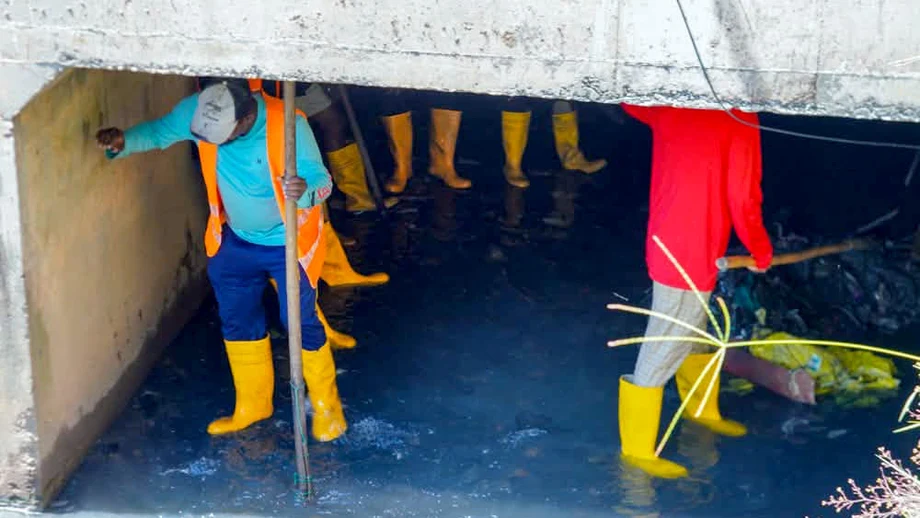
- October 13, 2026: Prime Minister Dr Harini Amarasuriya instructed officials to finish urgent canal and drain cleaning within two weeks and continue maintenance afterwards.
- November 6, 2026: Intense rain flooded roads and premises across Colombo and nearby areas.
- November 14, 2026: The government focus expanded to an estimate of nearly 500,000 unauthorised structures across Colombo and its suburbs, alongside plans to restart stalled projects.
The June 2024 announcement also called for protecting existing wetlands and identified blocked small waterways and drains as a major contributor to flooding. Wetlands provide space for rainwater to collect temporarily, reducing the volume that must immediately pass through drains and canals.
Which projects are meant to move the water?
Abeyratne said some foreign institutions had stopped funding drainage and waste disposal work, and the government was taking steps to resume projects with its own allocations. He named Norris Canal and Ingurukade among the interrupted schemes.
The wider programme described in June 2024 included the Palangastuduwa Pumping Station, drainage improvements under the Piliyandala Master Development Plan, and drainage and environmental improvements in the Battaramulla catchment, the area upstream of Parliament. A catchment is the land from which rainfall drains towards a particular waterway or location.
Sri Lanka Land Development Corporation Chairperson Hiran Balasuriya said the flood programme involved the Urban Development Authority, the Irrigation Department, provincial irrigation departments and local government institutions. The plans were divided into immediate work, work over an intermediate period and projects requiring more time.
Other named components included maintaining rainwater pumping stations and floodgates, as well as facilities for integrated flood management and data centres monitoring conditions as they change. These works address different parts of the same task: collecting rainwater, carrying it through the city and discharging it when receiving waterways are already high.
Waste adds a daily burden to waterways
Colombo Municipal Council's area generates between 700 and 800 metric tonnes of waste a day. Plastic and polythene account for an estimated 6% to 10%. Applying those shares to the stated daily totals gives a broad range of about 42 to 80 metric tonnes of plastic and polythene each day.
Dehiwala–Mount Lavinia, Kotte, Kolonnawa and Moratuwa together collect another 350 to 400 metric tonnes of solid waste daily. Added to Colombo's total, the stated quantities amount to approximately 1,050 to 1,200 metric tonnes a day across these urban areas. A substantial part of the suburban waste also consists of plastic and polythene.
Plastic bags and other loose waste can gather at narrow drain openings, trapping more material and reducing the space available for water. That creates a recurring maintenance task even after a blocked canal or an encroachment has been cleared.
Rohana said waste disposal becomes particularly difficult when the facility that accepts mixed waste for energy production is out of operation. He described the lack of an alternative destination for mixed waste and said dumping along canal banks and reserved land contributed to the flooding problem.
How small is the recycling share?
Sri Lanka generates an estimated 938 metric tonnes of plastic waste a day, while only 3% to 4% is formally recycled. That works out to roughly 28 to 38 metric tonnes entering formal recycling each day, using the stated national estimate.
The remaining quantity, approximately 900 to 910 metric tonnes daily, must be managed through other routes. The figures describe a large gap between the amount of plastic generated and the amount recovered through formal recycling.
Rohana urged households to separate waste before collection. Separating food scraps from plastic and other materials makes each stream easier to handle and reduces the amount of mixed rubbish for which disposal options are limited. Collection and dependable disposal capacity remain necessary alongside that household effort.
Who must turn the announcements into action?
Colombo Municipal Council manages the city's drains, while the land reclamation and development authority is responsible for the canal network, according to Rohana. The November flooding showed how closely those responsibilities connect: street drainage slows when the canal receiving its water is already full.
The Transport, Highways and Urban Development Ministry said it had identified 60 places where water flow was obstructed and had begun field inspections and clearance. The 60 obstruction sites concern a different measure from the approximately 22 flood prone locations identified by the municipal council in 2024.
Residents therefore face several linked programmes rather than a single clearance operation. The named tasks include inspecting obstructions, completing unfinished infrastructure, maintaining pumps and floodgates, protecting wetlands, collecting waste and arranging relocation where homes block waterways.
Abeyratne's acknowledgment of incomplete projects puts delivery at the centre of the latest pledge. For a household beside a canal or a business on a low road, the concrete results will be a functioning route for rainwater, reliable waste removal and, where relocation is required, a workable housing arrangement.
Key Points
- The government says it has received information about nearly 500,000 unauthorised structures across Colombo and its suburbs.
- A January 2024 municipal proposal covered 500 canal obstructing buildings, mostly houses in three areas of the city.
- Minister Chandana Abeyratne named Norris Canal and Ingurukade among stalled projects intended to restart with government funding.
- Less than 5% of Colombo's 467 kilometres of drainage was designed for rainfall of 101.7 millimetres an hour, according to the municipal commissioner.
- Colombo and the four named suburban council areas handle a combined 1,050 to 1,200 metric tonnes of waste daily.
- Flood protection plans combine obstruction removal, drainage improvements, wetland protection, waste management and arrangements for affected residents.