A 70% target puts mining permits in focus
Indonesian President Prabowo Subianto has instructed Energy and Mineral Resources Minister Bahlil Lahadalia to ensure that at least 70% of the benefits from mining permits go to the state, raising the possibility of government control of shares in mining companies where necessary.
Contents
- A 70% target puts mining permits in focus
- What would the state receive?
- Investors could recover capital before sharing most profits
- How the November instruction follows June's reversal
- A single export channel to address missing volumes
- Prabowo invokes the Constitution and profits sent abroad
- Indonesia's nickel scale gives the proposal wider weight
- The next step is turning the target into operating rules
- Key Points
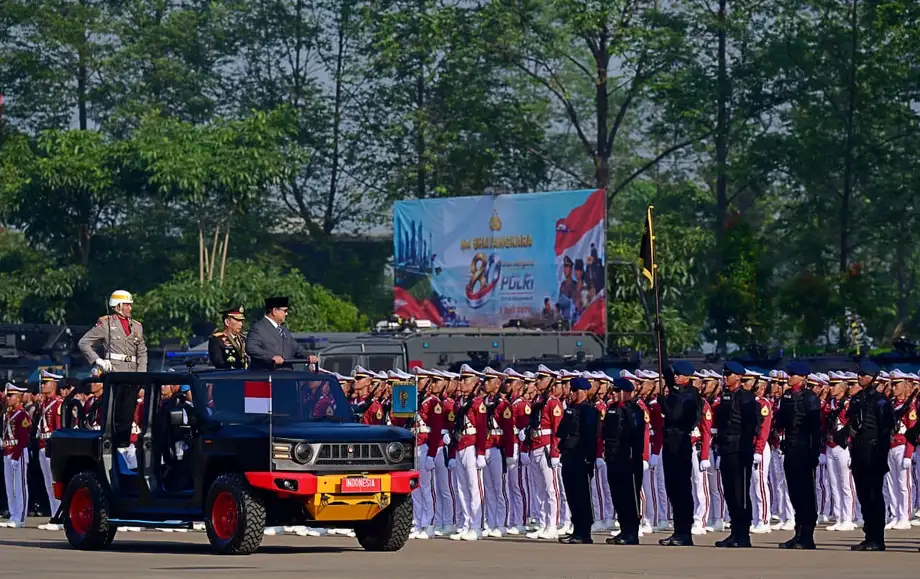
Speaking on November 14, 2026, at the opening of Muhammadiyah's Tanwir and 114th anniversary gathering in Palu, Central Sulawesi, Prabowo said Indonesia remained open to investment. His condition was that most of the gains from the country's mineral wealth should benefit Indonesians.
The presidential palace said the 70% figure referred to proceeds from managing mining permits. The announcement comes after the government abandoned an earlier proposal to give the state 70% of mineral and coal output, making the method chosen to carry out the latest instruction central to its effect on mining businesses.
Prabowo, addressing members of Muhammadiyah, one of Indonesia's largest Islamic organisations, set out his instruction:
From now on, all mining permits, at least 70% must benefit the state. If necessary, the shares should be state-controlled,
His wording on mining permits in Indonesian was: "Semua izin tambang, semua IUP, mulai dari sekarang minimal 70 persen harus dinikmati oleh negara."
The president directed the instruction principally at Bahlil, while saying he had given similar directions to other ministers. His remarks brought together three objectives: keeping more mining proceeds in Indonesia, securing greater state influence over mining companies and tightening oversight of commodity exports.
For companies, the practical issue is how the government will divide the value generated by a mine. For Indonesians, Prabowo presented the proposal as a way to retain more of the wealth produced from resources that belong to the country.
What would the state receive?
The palace's explanation ties the target to proceeds from operations conducted under government mining permits, known in Indonesia as IUPs. An IUP is an official authorisation allowing a company to conduct mining activities.
A percentage becomes meaningful only when the amount it applies to is defined. Sales revenue is the money a business receives for its products. Profit is what remains after relevant costs are deducted. A share of production, by contrast, allocates part of the minerals or coal produced.
The government has not specified whether the 70% would be calculated from revenue, profit or another measure; how taxes, royalties and other charges would count; or how existing permits would be treated. It has also not published implementation rules, a timetable, the names of companies that might come under state control or terms for acquiring their shares.
Those choices will determine how much money operators retain to cover expenses and reward investors. Royalties, for example, are payments for extracting resources. Counting them within the state's target would produce a different financial arrangement from collecting them on top of a separate share of proceeds.
Investors could recover capital before sharing most profits
Prabowo said foreign investors could provide additional capital where needed and recover their investment, after which the majority of profits should belong to Indonesians. Capital is the money put into developing and running a project, including spending needed before a mine generates income.
Mining can require substantial spending before production begins. Prabowo's comments acknowledged the need for that money while arguing that the country's long term return should extend beyond allowing a private investor to operate a deposit.
The president described Indonesia as open to mining investors, but said:
the profits must predominantly go to the Indonesian people
His remarks also placed ownership on the table. A controlling stake gives an owner decisive influence over company decisions. If the state acquired such a stake, it could gain a stronger voice in how a mining business is run, alongside any financial return it receives.
Ownership and a share of proceeds operate through different channels. The first concerns who directs the company; the second concerns how money generated by mining is distributed. Prabowo raised both as possible ways to increase the public benefit from extraction.
How the November instruction follows June's reversal
Earlier in 2026, officials discussed a gross-split arrangement for minerals and coal. Under that proposal, the government would receive 70% of output and the mine operator would receive 30%.
A gross split divides production before the operator's costs are deducted. The financial effect therefore depends heavily on what expenses the operator must meet from its allocation. This differs from dividing profit after costs have been accounted for.
Deputy Energy Minister Yuliot Tanjung was cited in descriptions of those discussions. Bahlil subsequently said the government had dropped the proposal after consultations with Prabowo.
The main dates trace a shift from a proposed production formula to a broader instruction about benefits:
- Earlier in 2026: Officials discussed allocating 70% of mineral and coal output to the government and 30% to operators.
- June 8, 2026: Bahlil said the proposed output split had been abandoned following consultations with Prabowo.
- November 14, 2026: Prabowo called for at least 70% of mining permit benefits to go to the state and raised the possibility of state control of company shares.
The November announcement uses the same percentage as the earlier proposal, while the palace described its basis as proceeds from managing mining permits. The mechanism chosen to translate that instruction into company obligations will determine its relationship to the approach abandoned in June.
A single export channel to address missing volumes
Prabowo also said exports must pass through a single institution designated by the government so that recorded shipments match the quantities actually leaving Indonesia. PT Danantara Sumberdaya Indonesia, or DSI, was identified as the official channel for mineral and natural resource exports.
The president illustrated his concern with a shipment of 100 tonnes being recorded as only 50 or 30 tonnes. He said governors in many regions had reported similar discrepancies.
In his example, recording 50 tonnes would leave half the shipment outside the declared volume. Recording 30 tonnes would leave 70% unreported. These figures describe the scale of the discrepancy in his illustration, rather than a national estimate of missing exports.
Accurate shipment records matter to the mining benefits proposal because the government needs a reliable account of what businesses produce and sell. A larger promised share is harder to administer when the underlying quantities are recorded incorrectly.
For exporters, the single channel concentrates reporting and oversight through a designated institution. Prabowo presented this as a way for the state to check commodity movements and reduce opportunities to disguise the size of shipments.
Prabowo invokes the Constitution and profits sent abroad
Prabowo linked the mining instruction to Articles 33 and 34 of Indonesia's 1945 Constitution. He described his objective as correcting an economic system that, in his view, had moved away from those provisions.
Article 33, as cited in his speech, places land, water and the natural wealth within them under state control for the greatest prosperity of the people. It also sets out an economy organised as a common endeavour based on the principle of family cooperation, with important branches of production under state control.
The president argued that permit holders had benefited for decades from access to Indonesia's resources while moving profits abroad. His criticism extended beyond mining permits to rights to use land for business, known as HGU, and industrial plantation forest permits, known as HTI.
Prabowo described businesses claiming Indonesian identity when seeking permits from regents, governors or ministers, then taking their gains outside the country. The allegation focused on where the proceeds ended up, including the behaviour of permit holders presenting themselves as Indonesian.
His proposed response combines a greater state share with closer supervision of exports. Together, those measures address two parts of the same concern: how much value resource businesses declare and how much of that value stays in Indonesia.
Indonesia's nickel scale gives the proposal wider weight
Indonesia's role in nickel production makes changes to its mining arrangements relevant beyond its borders. The US Geological Survey estimated Indonesian mine production at 2.6 million tonnes of contained nickel in 2025, compared with 3.9 million tonnes worldwide.
Dividing 2.6 million by 3.9 million gives approximately two thirds of global production. The figures measure the nickel contained in mined material, rather than the total weight of all rock extracted.
That scale means rules affecting the returns and ownership of Indonesian mining operations concern a large part of the world's nickel supply. For individual projects, a larger state claim could reduce the money available to existing owners, depending on the calculation used and the costs they must continue to cover.
State control of shares would also change who has influence over investment and operating decisions. Prabowo's stated willingness to accept private capital places the government's public return and investors' ability to recover spending at the centre of the proposed arrangement.
The next step is turning the target into operating rules
Prabowo said the mechanism was already being implemented and expressed confidence that benefits would be felt within months. His language conveyed urgency, particularly his instruction that the 70% target apply from now on.
Bahlil's ministry is the principal recipient of that instruction. The practical task is to turn the president's objective into a formula that mining companies and state agencies can apply to permits, company accounts and payments.
The most consequential decisions concern the amount to be shared, the costs investors can recover and the role of state ownership. Those choices will connect Prabowo's promise of greater public benefit to the daily operation of mines and the money they generate.
Key Points
- Prabowo called on November 14, 2026, for at least 70% of mining permit benefits to go to the state.
- The palace described the target as a share of proceeds from managing mining permits.
- The president welcomed investment but said most profits should benefit Indonesians after investors recover their capital.
- State control of mining company shares is an option he raised.
- Bahlil said on June 8 that an earlier proposal to divide output 70:30 had been dropped.
- Prabowo also called for a single export channel to improve the accuracy of shipment reporting.
- The calculation method and implementation rules remain unspecified.