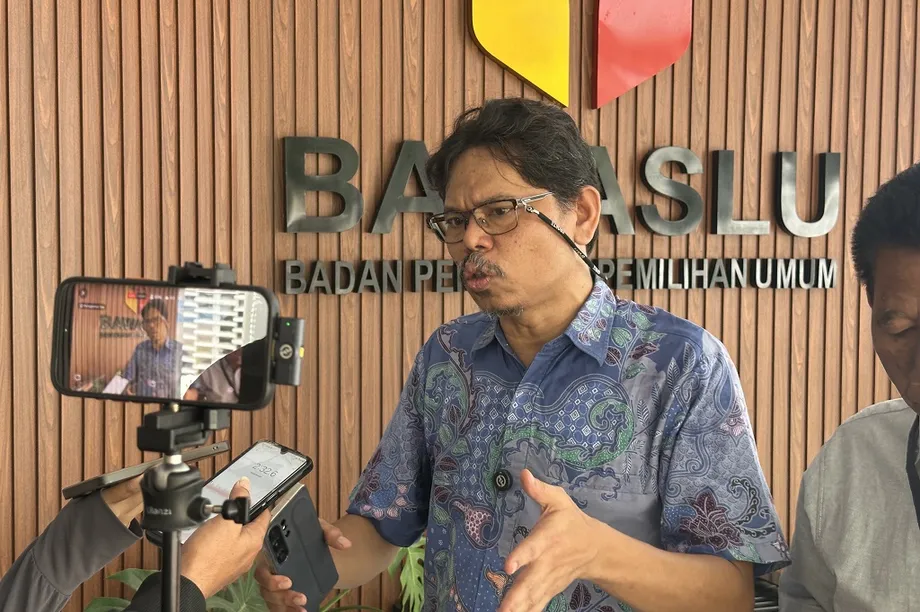
Complaint targets the qualification behind a 2024 candidacy
Researcher Bonatua Silalahi reported Indonesian Vice President Gibran Rakabuming Raka and the General Elections Commission (KPU) to the election supervisory agency, Bawaslu, on October 23, 2026, asking it to examine academic calendars from UTS Insearch covering 2003 to 2007. His complaint challenges whether Gibran met the minimum education requirement when he registered for the 2024 presidential election.
Contents
- Complaint targets the qualification behind a 2024 candidacy
- What Bonatua found in the academic calendar
- Which election requirements are being challenged?
- Gibran's supporters defend the equivalency assessment
- How access to the certificate became a court issue
- The court proceedings and complaint follow different routes
- A separate lawsuit challenges the ministry's certificate
- The sequence from certification to the latest complaint
- Recognition of overseas study is the central test
- Key Points
The dispute centres on a specific question: how studies at an Australian institution were assessed as equivalent to completing secondary school in Indonesia. A certificate issued by Indonesia's Education Ministry in 2019 states that Gibran completed Grade 12 at UTS Insearch in 2006 and had knowledge equivalent to that of an Indonesian vocational secondary school graduate. Bonatua argues that the institution's calendar describes different kinds of courses.
Gibran's supporters defend the assessment, saying officials considered his study duration, grades and curriculum across several institutions. The complaint also puts the KPU's verification process under scrutiny, alongside a court challenge to the ministry's certificate.
The stakes reach back to an election that Prabowo Subianto and Gibran won with 58.6 per cent of the vote, or more than 96.2 million votes, on February 14, 2024. They took office on October 20 that year. Bonatua is now asking Bawaslu to examine both the education documents submitted for registration and the commission's decision to accept them.
His submission includes the academic calendars, KPU Decision No. 1632 of 2023 establishing the presidential election candidates, a Constitutional Court decision and a book documenting his own investigation. Bawaslu member Puadi had not responded to requests for comment by 5:20 p.m. Western Indonesian Time on the day of the complaint.
What Bonatua found in the academic calendar
Bonatua says Gibran's curriculum vitae lists education equivalent to senior secondary school at UTS Insearch from 2004 to 2007. He examined the institution's academic calendars for 2003 to 2007, using the 2005 calendar as a sample.
According to his account, that calendar lists five programmes: English Course, Diploma Course, Foundation Studies Certificate, Study Tours and English Language. He says none is explicitly described as Grade 12, the wording used in the education certificate.
Bonatua wants Bawaslu to investigate how those programmes relate to the qualification accepted for Gibran's candidacy. His argument concerns the classification of the education, as well as the documents used to describe it.
A foundation or pathway programme generally prepares a student to enter further study. An equivalency assessment answers a different question: which level in the Indonesian education system the student's completed studies match. The dispute is over how officials reached that second judgment in Gibran's case.
Bonatua also says the calendars support a view he attributes to Indonesia's education attaché in Canberra, that the pathway involved preparatory or language study rather than formal education equivalent to senior secondary school. That description of the attaché's position comes through Bonatua's account.
Which election requirements are being challenged?
Article 169(r) of Law No. 7 of 2017 on General Elections requires presidential and vice presidential candidates to have completed at least senior secondary school, an Islamic senior secondary school, a vocational equivalent or another school of equivalent standing.
Bonatua argues that the KPU should first have established whether Gibran met that educational standard, then examined the administrative evidence required under Article 227. He alleges that the commission instead treated the underlying requirement as satisfied and moved directly to requesting an education certificate under Article 227(l).
Article 18(3) of KPU Regulation No. 19 of 2023 is another focus of his complaint. During the Constitutional Court proceedings, Judge Saldi Isra asked the KPU for records explaining a 2023 rule change concerning the graduation documents required from some candidates educated overseas.
The practical question is straightforward: what education did the candidate complete, and what evidence did officials use to recognise it? Bonatua alleges that the KPU either deliberately bypassed the necessary examination or failed to carry it out properly. Those are his allegations against the commission.
Bonatua has proposed that Gibran pursue Paket C, Indonesia's route to a qualification equivalent to senior secondary school. That is the remedy Bonatua advocates; no order requiring Gibran to take that route has been announced in connection with this complaint.
Gibran's supporters defend the equivalency assessment
Andi Azwan, chairman of the Militan Gibran Nusantara supporter group, says Gibran fulfilled the education requirement. According to Andi, the assessment used three criteria applied by the Directorate General of Primary and Secondary Education: duration of study, transcripts and curriculum.
Andi says the evaluation considered Gibran's education at Orchid Park Secondary School in Singapore, UTS Insearch and the Management Development Institute of Singapore (MDIS). KPU records place Gibran at Orchid Park from 2002 to 2004, before his studies at UTS Insearch.
MDIS has confirmed that Gibran studied there full time from 2007 to 2010, completing an advanced diploma and a Bachelor of Science with honours in marketing awarded by Britain's University of Bradford. The current eligibility dispute focuses on his education before entering MDIS and the basis for recognising it as equivalent to secondary school completion.
Andi maintains that Bonatua's evidence leaves Gibran's education documents intact. He also describes the matter as legally settled after the Constitutional Court declared a previous application inadmissible.
Bestari Barus, head of the Indonesian Solidarity Party's central political division, takes a related position. He says overseas education must be assessed with attention to differences in curricula and years of study. Indonesia's six years of primary school, three years of junior secondary school and three years of senior secondary school do not map neatly onto every foreign system.
How access to the certificate became a court issue
Former deputy law minister Denny Indrayana and 11 other petitioners brought the education challenge to the Constitutional Court. They questioned which records supported the ministry's 2019 certificate and whether those records showed that Gibran met the election requirement.
The Central Information Commission ruled on March 11 that the certificate and supporting records were public information that should be disclosed. Bonatua received the certificate from the Education Ministry on April 16. The petitioners said they still lacked some of the documents behind the assessment.
Denny, who served as deputy law and human rights minister from 2011 to 2014, told the court at its September 21, 2026 hearing that information about Gibran's education had been withheld. He argued that the information underlying the challenge emerged after the normal election dispute deadline.
Denny explained the petitioners' position in these words:
In this case, the information and knowledge that Gibran did not meet the education requirement only became known later,
Presidential election result disputes generally must be filed within three days of the KPU announcing the result. The petitioners sought a hearing despite filing long after that deadline. They asked the court to cancel Gibran's inauguration and sought a replacement process in which Prabowo would nominate two candidates for the People's Consultative Assembly to choose between.
Judge Saldi Isra asked Bawaslu to explain its eligibility checks and requested the KPU's records on the rule change. KPU commissioner Idham Holik said the commission would submit documents supporting its eligibility finding. A further hearing was scheduled for September 23.
The court proceedings and complaint follow different routes
Bonatua included a Constitutional Court decision dated October 6, 2026 in his Bawaslu submission. Andi's defence rests partly on his statement that the earlier application was declared inadmissible. Denny has continued to demand action, including Gibran's removal from office.
Denny has also alleged, citing information given to him, that Gibran failed a number of subjects at UTS Insearch. He has called for parliamentary action and asked President Prabowo to state his position. No subject names, marks or transcript details accompanied that allegation.
Bonatua's new complaint follows the election violation reporting route. He cites Article 454(6) of the Election Law, which sets a limit of seven working days from learning of an alleged violation to submit a report. His argument is that the newly discovered calendar evidence provides the basis for reporting now.
Bawaslu would have to assess the complaint's timing and substance. Bonatua has urged it to obtain comprehensive candidate records directly from the KPU and to summon Gibran if its preliminary examination finds that necessary.
He also wants any indications of an election crime referred to Gakkumdu, the integrated election law enforcement body bringing together Bawaslu, police and prosecutors. A decision on accepting the complaint, issuing summonses or making such a referral had not been announced, and no next examination date was given.
A separate lawsuit challenges the ministry's certificate
Jakarta's Administrative Court allowed Gibran to join another case on October 22, 2026, one day before Bonatua filed the Bawaslu complaint. The case, numbered 255/G/2026/PTUN.JKT, was brought by Mercy Sihombing over the school completion certificate issued in 2019.
The Ministry of Primary and Secondary Education is the principal defendant. Gibran entered as the second intervening defendant, giving him a formal role in defending his interests in the proceedings.
The judges allowed him to answer the allegations and submit evidence. They also instructed his side to avoid delaying an examination that was already under way.
Gibran's lawyer, Muhammad Rullyandi, cited Article 83 of Law No. 5 of 1986 on administrative courts as the basis for a third party to intervene to protect legal rights. The case concerns the ministry's administrative action in issuing the certificate, while Bonatua's Bawaslu complaint concerns election eligibility and verification.
The sequence from certification to the latest complaint
The dispute connects a certificate issued years before the election with requests for records, court proceedings and the latest complaint. The main developments are:
- 2019: The Education Ministry issued a certificate recognising Gibran's UTS Insearch education as equivalent to Indonesian vocational secondary school completion.
- February 14, 2024: Prabowo and Gibran won the presidential election with more than 96.2 million votes.
- October 20, 2024: The pair took office as president and vice president.
- March 11 and April 16: The Central Information Commission ordered disclosure of the certificate and supporting records; Bonatua subsequently received the certificate.
- September 21, 2026: The Constitutional Court questioned the KPU and Bawaslu about the eligibility assessment. Its next hearing was scheduled for September 23.
- October 6, 2026: The date of the Constitutional Court decision Bonatua included with his complaint.
- October 22, 2026: Jakarta's Administrative Court allowed Gibran to intervene in the certificate lawsuit.
- October 23, 2026: Bonatua reported Gibran and the KPU to Bawaslu.
Bonatua also submitted his book, Ijazah Gibran Juga Tidak Ada, Hasil Riset Berbasis Empiris. He says it records his visits to MDIS and Orchid Park Secondary School in Singapore as part of his investigation.
Recognition of overseas study is the central test
Bestari says citizens have a protected right to report suspected violations. He argues that the KPU is the more appropriate institution to challenge over the acceptance of education documents and that rules should account for differences between national education systems.
His concern is concrete: Indonesians who study abroad can return with qualifications whose names and structure differ from domestic school credentials. The dispute places the assessment of those qualifications at the centre of a presidential eligibility case.
Bestari also alleges that repeated challenges to Gibran's education serve a political operation and could damage the government's legitimacy. Bonatua and Denny, by contrast, are pressing institutions to revisit the candidacy and disclose the records behind its approval.
The records connecting Gibran's courses, grades and curriculum to the ministry's 2019 assessment are now the central issue across these proceedings. Bawaslu faces requests to examine the KPU's verification, while the Administrative Court is considering the certificate with Gibran participating directly in his defence.
Key Points
- Bonatua Silalahi reported Gibran and the KPU to Bawaslu on October 23, 2026, citing UTS Insearch academic calendars from 2003 to 2007.
- He challenges how Gibran's studies satisfied the minimum education requirement under Article 169(r) of the Election Law.
- A 2019 ministry certificate recognised education equivalent to Indonesian vocational secondary school completion.
- Gibran's supporters say the assessment considered study duration, transcripts and curriculum across several institutions.
- Jakarta's Administrative Court allowed Gibran to join the separate certificate lawsuit on October 22, 2026.
- Bawaslu had not announced a decision on the new complaint or a date for its examination.