Sharjah title lifts Afghanistan to seventh
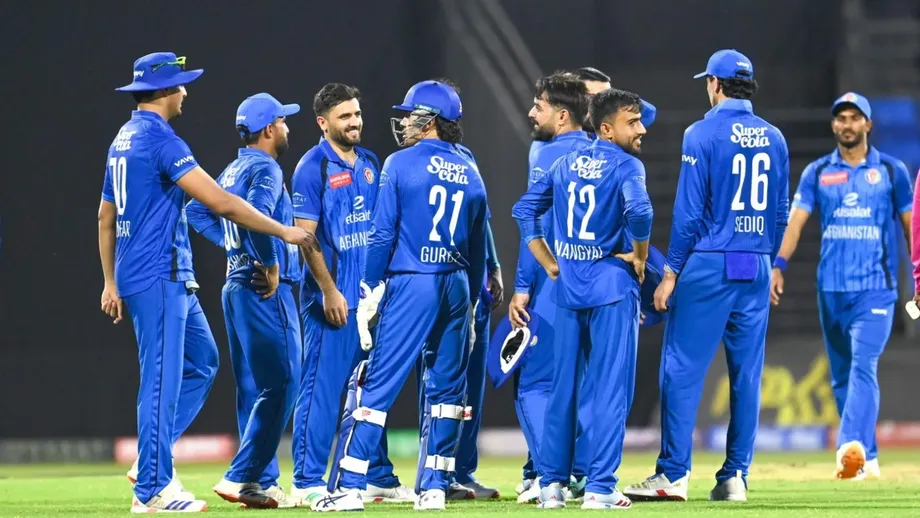
Afghanistan climbed above England to seventh in the International Cricket Council men's ODI team rankings after beating Zimbabwe by seven wickets in the UAE tri-series final at Sharjah on October 23, 2026. Ibrahim Zadran finished unbeaten on 70 as Afghanistan reached 170 for three in 34.3 overs, winning with 93 balls remaining.
Contents
The ICC's men's ODI rankings, dated October 23, put Afghanistan on a rating of 94, one point above England and one below Sri Lanka. Afghanistan gained two rating points and moved up from eighth, matching the highest position they first reached in May 2025.
England dropped from sixth to eighth after consecutive defeats against Pakistan and Sri Lanka in Rawalpindi, losing two rating points. Sri Lanka moved into sixth on 95, leaving three teams separated by just two points.
Afghanistan's final victory began with the ball. Rashid Khan took three wickets for 41 runs as Zimbabwe were dismissed for 169 in 43.3 overs. Fazalhaq Farooqi, Mohammad Nabi and Bilal Sami took two wickets each, while Azmatullah Omarzai claimed the other wicket.
Zimbabwe captain Sikandar Raza provided the strongest resistance with 68 from 83 balls. His innings kept Zimbabwe competitive after they fell to 55 for four, but Afghanistan's opening partnership and a patient stand between Zadran and captain Rahmat Shah put the chase firmly under control.
Zadran was named player of the match. Rashid took the player of the series award after finishing with 11 wickets, three more than the eight he carried into the final.
Early wickets leave Zimbabwe rebuilding
Zimbabwe chose to bat first, but Afghanistan quickly broke through their leading batters. Farooqi bowled Tadiwanashe Marumani, and Omarzai caught Brian Bennett off his own bowling. AM Ghazanfar then held a catch with one hand at short square leg to remove Tafadzwa Tsiga off Farooqi.
Sami had Brendan Taylor caught behind in the 13th over, leaving Zimbabwe at 55 for four. That meant four of their ten wickets had gone before they had completed much more than a quarter of the maximum 50 overs.
Raza and Ryan Burl steadied the innings by collecting singles and twos and getting through Rashid's first spell. Burl survived a dropped catch on 30, but added only one more run before Sami caught him at deep square leg off Nabi.
Nabi then dismissed Wessley Madhevere through a sharp stumping by Rahmanullah Gurbaz. Madhevere advanced out of his crease and missed the ball, which deflected off his pad. Gurbaz gathered it and broke the stumps before the batter could return to safety.
The dismissal gave Nabi his 300th wicket in international cricket across the three formats. His final figures of two for 25 helped keep Zimbabwe's middle order from turning its recovery into a larger total.
Raza resists as Rashid reaches another milestone
Raza struck three fours and three sixes in his 68, including a six off Rashid measured at 98 metres. At 40 or older, he became the first batter in that age group to make a half-century in an ODI tournament final.
Rashid's return to the attack brought three wickets. He dismissed Brad Evans for one, bowled Newman Nyamhuri and then removed Raza, whose attempt at another big hit ended in a catch at long-off.
Rashid also became the second bowler in ODI history to take at least three wickets in six consecutive innings. His three wickets in the final completed a tournament in which Afghanistan repeatedly kept opposing totals within reach.
Zimbabwe's last pair, Wellington Masakadza and Blessing Muzarabani, delayed the finish by adding 32 runs across nearly ten overs. Their stand was the second largest of Zimbabwe's innings, showing how much the lower order contributed after the early collapse.
Sami eventually dismissed Masakadza for eight to end the innings at 169. His two for 27, alongside Farooqi's two for 41, gave Afghanistan wickets from pace as well as spin. Zimbabwe were bowled out with 39 deliveries of their allotted innings unused.
Zadran and Rahmat control the chase
Afghanistan began their reply briskly. Zadran attacked Evans early, while Gurbaz hit six boundaries, including two sixes, in a 31-ball innings of 36. Their opening partnership produced 68 runs and reduced the pressure on the batters who followed.
Nyamhuri removed Gurbaz with a slower delivery that was caught at point, then had Sediqullah Atal caught behind for six. He finished with two for 43, Zimbabwe's best bowling return.
Zadran and Rahmat responded with an 82-run partnership for the third wicket. They went through 77 deliveries without a boundary, but continued adding runs through singles and twos. With a modest target and plenty of overs available, they could choose safer scoring opportunities.
Rahmat made 43 from 63 balls, with one four and one six, before Burl caught him at short midwicket. Afghanistan needed only eight more runs when their captain departed.
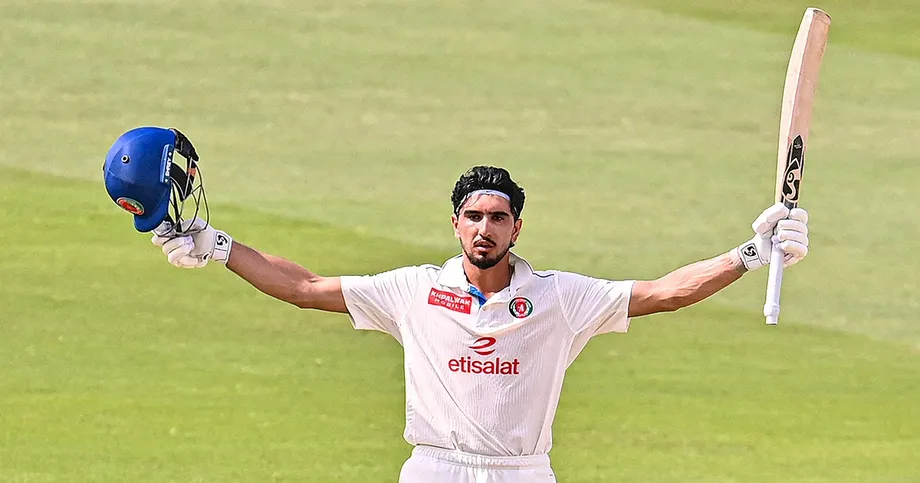
Hashmatullah Shahidi struck the winning boundary, leaving Zadran unbeaten on 70 from 96 balls, with four fours and a six. It was Zadran's second half-century of the tournament.
The finishing time, 34.3 overs, means 34 completed overs and three legal deliveries, rather than a decimal fraction of an over. With six legal balls in an over, Afghanistan used 207 of the possible 300 deliveries and had 93 remaining.
An unbeaten run ends with the trophy
Afghanistan had reached the decider after an unbeaten tri-series run, beating both Zimbabwe and Bangladesh in the league stage. The final gave them a third victory from three matches and a second convincing win over Zimbabwe within five days.
The tournament's short schedule shows how the finalists separated themselves from Bangladesh:
- October 17, Abu Dhabi: Zimbabwe scored 271 for eight and dismissed Bangladesh for 172, winning by 99 runs.
- October 19, Abu Dhabi: Afghanistan made 294 and bowled Zimbabwe out for 136, winning by 158 runs.
- October 21, Sharjah: Afghanistan dismissed Bangladesh for 160 and reached 161 for three in 35.3 overs, winning by seven wickets.
- October 23, Sharjah: Afghanistan bowled Zimbabwe out for 169 and reached 170 for three in 34.3 overs to win the final.
Afghanistan finished the league stage with four points, Zimbabwe with two and Bangladesh with none. Zimbabwe's opening victory secured their place in the final, but Afghanistan proved stronger in both meetings between the finalists.
Before the decider, Afghanistan coach Richard Pybus had cautioned against assuming that the earlier victory over Zimbabwe would settle the final. He pointed to the experience in Zimbabwe's side:
As Zimbabwe showed in their first game against Bangladesh, they've got some very experienced players in the side and they can put in big performances. So we'll be treating them with a lot of respect.
Raza's innings justified that attention, although Zimbabwe could not build enough partnerships around their captain. Sharjah's first ODI tournament final since 2003 ended with Afghanistan controlling both innings.
Why Afghanistan moved above England
Afghanistan's rise and England's fall came from results in two different places: the tri-series in the UAE and England's defeats in Rawalpindi. Afghanistan gained two rating points, while England lost two, reversing their order in the standings.
The official table lists Afghanistan with 31 matches, 2,926 points and a rating of 94. England have 36 matches, 3,331 points and a rating of 93. The rating column determines their order, so England's larger points total still leaves them below Afghanistan.
Sri Lanka sit immediately above both teams, with 41 matches, 3,896 points and a rating of 95. Afghanistan are therefore one rating point away from sixth and one ahead of eighth. No date for the teams' next ODI fixtures was given alongside the ranking update.
Afghanistan's return to seventh equals their previous best rather than setting a new highest position. Their nearest rivals are now tightly grouped, while the gap to the teams immediately below England is wider: Bangladesh have a rating of 81 and West Indies 79.
Using those published figures, Afghanistan lead Bangladesh by 13 rating points and West Indies by 15. Their distance from Sri Lanka is much smaller than either of those gaps.
How the rest of the rankings stand
India lead the rankings with a rating of 115 from 36 matches and 4,122 points. New Zealand are second on 109 from 35 matches and 3,809 points, giving India a six-point advantage at the top.
South Africa are third with a rating of 104, Pakistan fourth on 103 and Australia fifth on 102. Those three teams are separated by only two rating points, another close grouping above Sri Lanka, Afghanistan and England.
Zimbabwe gained two rating points during their run to the final but remained 11th. The official table gives them 21 matches, 1,315 points and a rating of 63. Their improvement brought a higher rating without a change of position.
Bangladesh lost two rating points after failing to win a match in the tri-series, but stayed ninth. They have 41 matches, 3,304 points and a rating of 81. West Indies remain tenth with 37 matches, 2,924 points and a rating of 79.
Below Zimbabwe, Ireland are 12th with a rating of 53, followed by Scotland on 45, the Netherlands on 44 and the United States on 41. Namibia are 16th on 31, just ahead of Nepal on 30. Oman have 23, the United Arab Emirates 14 and Canada 12, completing the 20 teams listed.
Key Points
- Afghanistan beat Zimbabwe by seven wickets in Sharjah on October 23, 2026, to win the UAE ODI tri-series without losing a match.
- The ICC rankings dated October 23 place Afghanistan seventh on 94, England eighth on 93 and Sri Lanka sixth on 95.
- Afghanistan matched the highest ranking they first reached in May 2025.
- Ibrahim Zadran made an unbeaten 70 as Afghanistan completed their chase with 93 balls remaining.
- Rashid Khan took three wickets in the final and finished with 11 in the tournament, earning the player of the series award.
- Mohammad Nabi reached 300 international wickets across formats, while Zimbabwe captain Sikandar Raza scored 68.
- Zimbabwe remained 11th despite gaining two rating points; Bangladesh stayed ninth after losing two.