A longer route, with a sharper test of ticket access
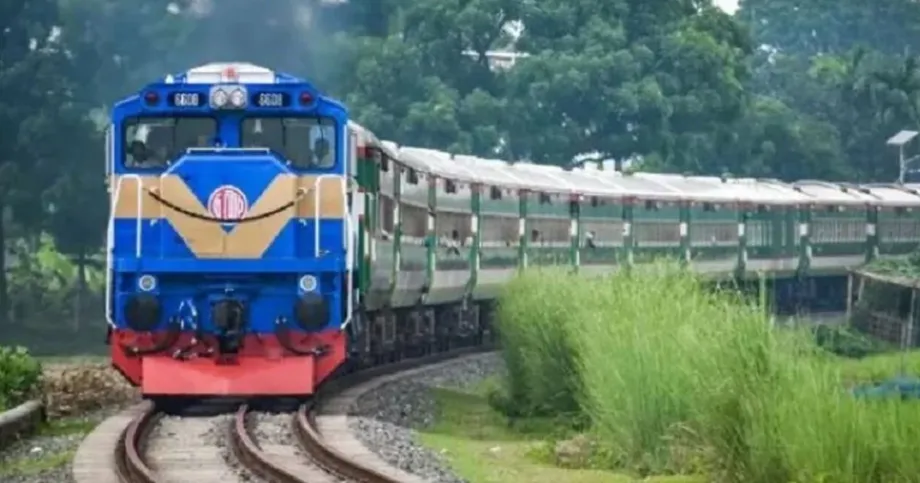
Bangladesh Railway plans to extend the Mahanagar Express from Chattogram to Cox's Bazar on October 26, giving passengers at 11 intermediate stations a direct journey to the coastal destination. Train 722 is scheduled to leave Dhaka's Kamalapur station at 8:30pm and reach Cox's Bazar at 6am the following day, a journey of nine hours and 30 minutes.
Contents
- A longer route, with a sharper test of ticket access
- What changes along the route?
- Departure times and the return journey
- Launch and ticket dates
- Fares, classes and conflicting capacity figures
- Feni's 47 seats bring the booking problem into focus
- How passengers can book
- Five train pairs serving Cox's Bazar
- Station staffing and local business expectations
- Key Points
The extension promises a practical change for passengers in Narsingdi, Brahmanbaria, Cumilla and Feni: they will be able to board locally and stay on the same train to Cox's Bazar. The existing Cox's Bazar Express and Parjatak Express, also called Tourist Express, do not serve those intermediate stations.
Feni's allocation shows why a new stop alone may not meet demand. Station master Mohammad Harun said the station has 47 seats allocated for Cox's Bazar, alongside 15 for Chattogram. Local passengers have complained that online tickets disappear within seconds of becoming available.
Railway officials have confirmed the extension, the October 26 launch and the removal of the Kumira stop. However, published timetable and capacity details contain conflicting figures, including an 8am or 9am return departure from Cox's Bazar. Passengers should check the departure time and accommodation shown when booking.
What changes along the route?
The Mahanagar Express already runs between Dhaka and Chattogram. Bangladesh Railway is extending that service to Cox's Bazar rather than introducing a completely separate train along its entire route. Its established intermediate stops are the main reason the change matters beyond the two largest departure cities.
The listed stops between Dhaka and Chattogram are Airport, Narsingdi, Bhairab Bazar, Ashuganj, Brahmanbaria, Akhaura, Kasba, Cumilla, Laksam, Nangalkot and Feni. Passengers boarding at these stations will gain a direct service to Cox's Bazar without changing trains.
Cumilla resident Rokeya Begum described the previous journey as requiring extra time and inconvenience because a direct train was unavailable from her local station. She expects the extension to make travel easier by removing the need to change trains.
Kumira, in Chattogram's Sitakunda area, will lose its Mahanagar Express stop under the revised schedule. Mohammad Shafiqur Rahman, chief operating superintendent of Bangladesh Railway's Eastern Zone, confirmed that change. Passengers who used the stop will need another train or another form of transport.
Departure times and the return journey
Chattogram station manager Abu Bakar Siddique confirmed preparations for a schedule under which the train leaves Dhaka at 8:30pm, reaches Cox's Bazar at 6am, then departs Cox's Bazar at 8am. The return service, train 721, is scheduled to reach Chattogram at 12:20pm and Dhaka at 6:30pm. The train's weekly closure is Sunday.
An Eastern Zone order described by Cox's Bazar station master Zainal Abedin gives the outbound Chattogram arrival as 2:40am and departure as 3am. Launch arrangements described by Siddique instead put those times at 3am and 3:20am. Both versions allow a stop of 20 minutes and give the same 6am arrival in Cox's Bazar.
The order described by Abedin puts the return departure from Chattogram at 12:30pm, following the 12:20pm arrival. Other published timetable details put departure from Cox's Bazar at 9am and arrival in Chattogram at 12:10pm, while retaining the 6:30pm arrival in Dhaka.
Under the 8am return schedule, the journey from Cox's Bazar to Dhaka takes 10 hours and 30 minutes, one hour longer than the outbound trip. The conflicting return departure times make the time attached to an individual booking especially important for passengers arranging local transport or onward travel.
Launch and ticket dates
Railway public relations director Anisur Rahman announced the launch arrangements on October 23. Railways Minister Sheikh Rabiul Alam is scheduled to inaugurate the extended service at Kamalapur. Rahman's announcement put the ceremony at 8pm, while other launch arrangements placed the inauguration at the scheduled 8:30pm departure.
Ticket sales for the extended route began on October 16. Tickets for the first return journey from Cox's Bazar, on October 27, went on sale on October 17. Abedin said regular passenger departures from Cox's Bazar would begin on October 27, after the first overnight train arrives from Dhaka.
- December 4, 1985: The Mahanagar Express began operating, according to railway information.
- October 16: Ticket sales opened for the extended route.
- October 17: Tickets went on sale for the October 27 return journey.
- October 23: Railway officials announced launch arrangements and confirmed preparations.
- October 26: The first departure from Dhaka for Cox's Bazar is scheduled for 8:30pm.
- October 27: The first train is due in Cox's Bazar at 6am, with regular return passenger service beginning that day.
The extension adds Cox's Bazar to a service that has long carried passengers between Dhaka, Chattogram and stations along the way. Those existing boarding points remain central to the expanded route.
Fares, classes and conflicting capacity figures
The listed Dhaka to Cox's Bazar fares are Tk 685 for Shovon Chair, Tk 1,311 for Snigdha and Tk 2,408 for an AC berth. The train is also due to offer AC seats. Shovon Chair provides seating without air conditioning; Snigdha is an air conditioned seating class, while an AC berth provides sleeping accommodation.
Mohammad Mehedi Hasan, platform master at Cox's Bazar Iconic Railway Station, gave a different fare range of Tk 685 to Tk 1,570 for travel between Cox's Bazar and Dhaka. He put fares between Cox's Bazar and Chattogram at Tk 240 to Tk 547. A confirmed breakdown explaining how his upper fare relates to the listed Tk 2,408 berth fare has not been given.
Railway preparations consistently describe a train of 16 coaches, but the stated capacity varies substantially. Launch information puts seating at 706 to 736, while another description of the railway order says capacity rises from 700 to 736. The Eastern Zone order described by Abedin was also cited as listing 1,366 seats.
For passengers, the useful figure is the number of seats actually available for their boarding station, destination and class. A train's total capacity and a particular station's allocation are different numbers: Feni passengers, for example, are booking against a much smaller destination allocation than the capacity of the whole train.
Feni's 47 seats bring the booking problem into focus
Harun said Feni has 62 allocated seats across two destinations: 15 for Chattogram and 47 for Cox's Bazar. The Cox's Bazar allocation comprises 15 Snigdha seats, 30 Shovon Chair seats and two cabin seats. The 47 seats make up about 76% of Feni's total allocation, calculated from 47 out of 62.
For the October 26 journey, Harun said seven tickets were sold at the station counter and the remaining tickets were sold online. He said there was no opportunity for a syndicate or irregularities in counter sales, while online sales were outside the station authority's control.
Passenger Shahadat Hossain expressed concern about organised ticket buying and black market sales after seats became unavailable rapidly online. Feni residents Shahidul Islam and Mahmudul Hasan also described being unable to secure tickets despite welcoming the direct connection. Their accounts describe difficulty buying seats; Harun's figures identify the limited allocation passengers are competing for.
Feni passengers had sought stops for the Cox's Bazar Express and Parjatak Express since those services began. The Mahanagar extension meets the demand for a direct boarding opportunity, but the small allocation leaves ticket availability as an immediate concern.
How passengers can book
Bangladesh Railway's electronic ticketing service allows passengers to register an account, search for a journey and select available accommodation. Registration may require a national identity card number, date of birth and an active mobile number. A security code may be sent to the phone to verify the account.
After signing in, passengers select their travel date, departure station, destination, train and class. The booking system then displays available seats and the price. Payment must be completed using one of the methods displayed by the service, which may include bank cards and online payment options.
A successful purchase normally produces an electronic ticket sent to the registered email address, with booking details also accessible through the account. Passengers boarding at intermediate stations need to select their actual departure station when searching, because the allocation for a journey from Feni, for example, differs from the train's total capacity.
Passenger Sabina Haque welcomed the additional service but called for tickets to be available when people need them. Tourist Keya Haque described difficulties buying both online and at counters, and called for transparent sales and action against people involved in black market ticketing.
Five train pairs serving Cox's Bazar
Bangladesh Railway's plan increases the number of train pairs serving Cox's Bazar from four to five. A pair means a service travelling to a destination and its corresponding return journey. The change therefore adds one pair, rather than five new services departing from Dhaka.
The existing network consists of the Cox's Bazar Express and Parjatak Express between Dhaka and Cox's Bazar, and the Saikat Express and Prabal Express between Chattogram and Cox's Bazar. The extended Mahanagar Express becomes the fifth pair across those two corridors.
Moving from four pairs to five is a 25% increase in the number of service pairs. The practical gain is also geographic: passengers in intermediate districts gain a direct connection that the two existing trains from Dhaka do not provide from their local stations.
Passenger Abir Hossain said the additional stops would allow more people to visit Cox's Bazar. He also called for the train to follow its timetable and reduce delays, a concern for travellers choosing a direct service to simplify their journey.
Station staffing and local business expectations
Abedin said Cox's Bazar station authorities were ready to serve passengers, although the station faced a shortage of staff. He expressed hope that the gap would be addressed gradually. The October 27 return departure will bring the extended service into regular passenger operations at the station.
Abu Taleb Shah, general manager of Hotel Cox Today, expects the direct connection from more districts to bring additional domestic tourists. He said greater visitor numbers could benefit hotels, restaurants, transport operators and businesses supplying fish and vegetables.
Shah also described efforts to develop and recruit skilled workers to handle additional demand. These are expectations for business growth as access improves; the extension's immediate, concrete change is that people at more stations can reach Cox's Bazar on the same train.
Ticket availability, punctual operation and staffing will shape how convenient that journey becomes. For Feni, the first test is already specific: making a direct connection useful to passengers competing for 47 allocated seats.
Key Points
- The Mahanagar Express is scheduled to extend from Chattogram to Cox's Bazar on October 26.
- Train 722 leaves Dhaka at 8:30pm and is due in Cox's Bazar at 6am the following day.
- Eleven intermediate stations retain stops, while Kumira loses its stop.
- Ticket sales began October 16; the first regular return departure from Cox's Bazar is scheduled for October 27.
- Published return times conflict between 8am and 9am departures from Cox's Bazar.
- The train will have 16 coaches, but published seat totals and upper fares vary.
- Feni has 47 seats allocated for Cox's Bazar and 15 for Chattogram.
- The extension increases services reaching Cox's Bazar from four train pairs to five, with Sunday listed as the weekly closure.