A resignation offer after a disputed certificate
Indonesia's Vice President Gibran Rakabuming Raka offered to resign during a meeting with President Prabowo Subianto on November 10, 2026, as lawmakers considered action over an education equivalency certificate invalidated by the Supreme Court on October 30.
Contents
- A resignation offer after a disputed certificate
- What Gibran told the president
- Why the education document matters
- Two courts have played different roles
- How the dispute reached this point
- What lawmakers need to move a case forward
- Protesters press for action outside parliament
- A dispute inside a strained political alliance
- What happens next
- Key Points
The document, dated August 6, 2019, recognised Gibran's overseas education as equivalent to completing senior secondary school in Indonesia. He used it to register for the 2024 vice presidential election. Completing senior secondary school or its equivalent is an eligibility requirement for the office.
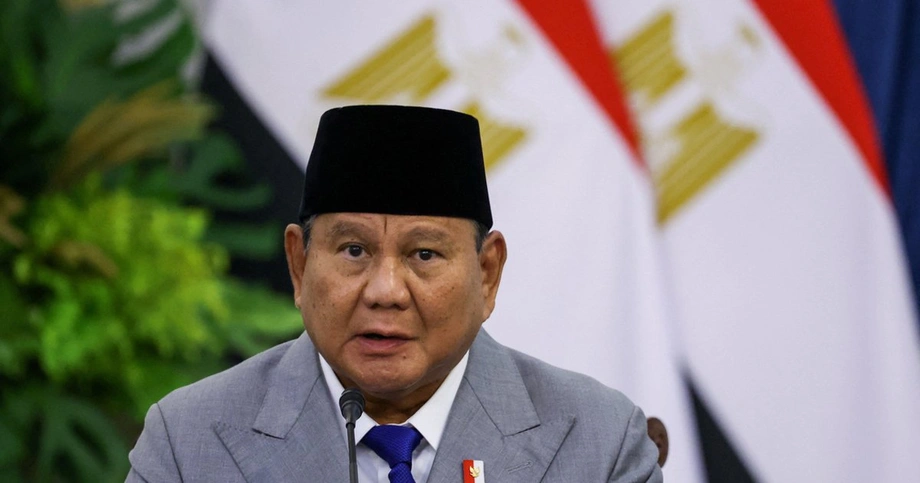
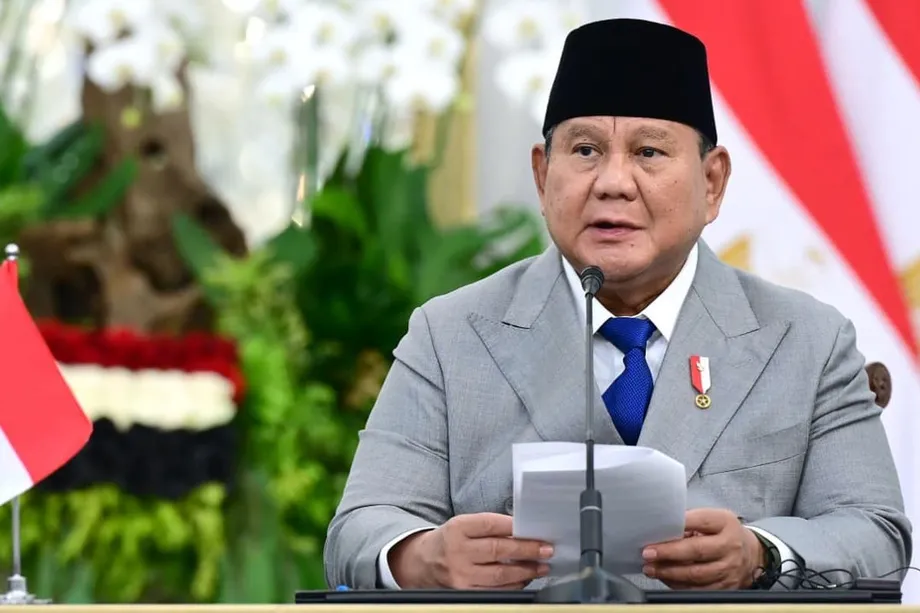
State Secretary Prasetyo Hadi said Gibran expressed his intention to step down during talks lasting about two and a half hours. Prasetyo denied that Prabowo had rejected the offer, while leaving the president's acceptance unconfirmed. No written resignation or completed constitutional process ending Gibran's tenure had been announced.
Nearly 50 lawmakers have signed a proposal seeking parliamentary scrutiny of Gibran's eligibility. The dispute now involves several institutions with different responsibilities: courts considering his education documents, the House of Representatives weighing its response, and potentially the People's Consultative Assembly, which would make a final impeachment decision.
What Gibran told the president
Prasetyo described the resignation offer as Gibran's response to the court decisions and the developing political situation. The vice president also asked for an opportunity to defend the validity of his education documents through the State Administrative Court.
Prasetyo, speaking about the meeting, explained Gibran's position:
During the discussion, the vice president expressed his intention to resign in light of the evolving situation.
Gibran subsequently spoke about Prabowo's advice to continue his legal challenge. He said he would pursue proceedings in the State Administrative Court and seek a civil review of the Supreme Court ruling. Those are requests for judges to reconsider legal questions surrounding the document.
Gibran described his relationship with Prabowo in personal terms, saying the president had given him advice about the controversy. Speaking later to reporters, the vice president also addressed public criticism:
I respect all criticism and feedback from the public regarding the developments that are taking place. I do not want the current situation to become a prolonged political controversy.
Why the education document matters
Gibran completed his secondary and higher education overseas. For his election candidacy, he needed documentation showing that his schooling satisfied Indonesia's minimum education requirement. An equivalency certificate serves that purpose by recognising how a qualification earned abroad compares with a domestic qualification.
The case centres on the August 2019 recognition document. Subhan Palal challenged it in a lawsuit against the Ministry of Primary and Secondary Education, seeking to have it declared invalid, withdrawn and destroyed.
On October 30, the Supreme Court overturned a lower court decision and upheld Palal's demands. The result placed the document Gibran had used for his candidacy at the centre of a dispute about whether he remained qualified to serve.
Gibran's planned court challenges seek to defend that recognition of his overseas education. For lawmakers, the immediate issue is whether the court's decision warrants a parliamentary investigation or a formal opinion that could begin the constitutional route toward removal.
Two courts have played different roles
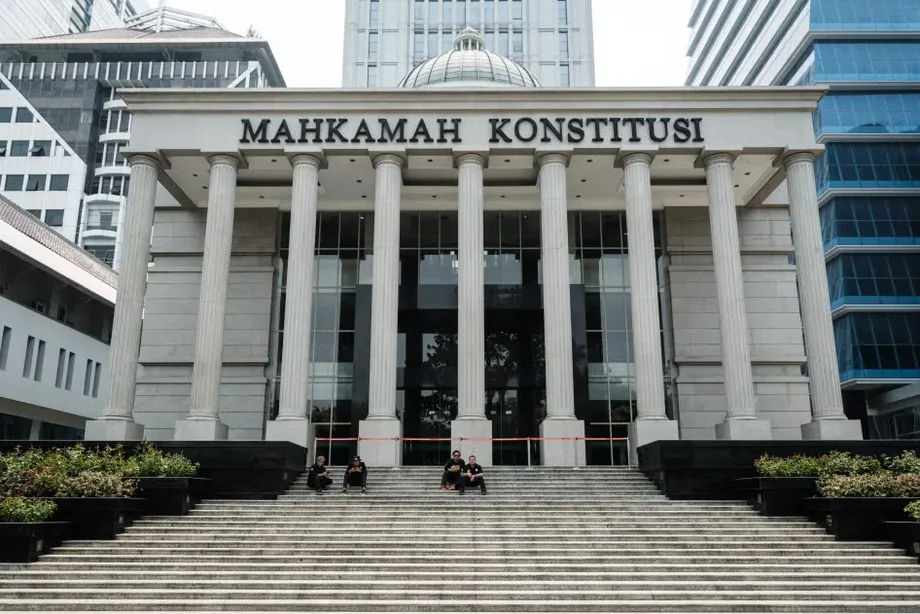
The Constitutional Court considered an eligibility petition before the Supreme Court issued its October 30 decision. On October 6, the Constitutional Court dismissed the petition, while stating in its reasoning that it had found no document showing completion of overseas education equivalent to senior secondary school.
The Constitutional Court also said it lacked the authority to disqualify Gibran through that petition. Its dismissal left the question of action by other institutions in place, while the later Supreme Court decision addressed the validity of the equivalency certificate.
Indonesia's constitutional removal procedure gives the Constitutional Court another possible role. If the House approves a formal opinion against Gibran under the required voting rules, the court would examine whether there was a serious legal breach or a failure to meet the qualifications for office.
How the dispute reached this point
The controversy brings together a document issued years before Gibran's election, two court decisions in October and a parliamentary campaign that gathered pace as lawmakers returned from recess.
- August 6, 2019: The disputed document recognised Gibran's overseas education as equivalent to Indonesian senior secondary schooling.
- 2024: Gibran used the certificate when registering as Prabowo's vice presidential running mate.
- October 6, 2026: The Constitutional Court dismissed an eligibility petition and discussed the absence of documentation establishing the required education equivalence.
- October 30: The Supreme Court invalidated the certificate after granting Subhan Palal's appeal.
- November 7: Forms seeking lawmakers' signatures for a motion of opinion began circulating.
- November 10: Parliament reconvened after a month of recess, protesters gathered outside its gates, and Gibran discussed resignation and further legal action with Prabowo.
House Speaker Puan Maharani said lawmakers had received many opinions about Gibran's eligibility during the recess and would discuss their next steps. No date for a vote or a hearing on Gibran's planned legal challenges was announced.
What lawmakers need to move a case forward
Indonesia's MD3 Law sets out the powers and procedures of its representative bodies. It gives the House separate rights to question the government, conduct an inquiry and state a formal opinion. The motion of opinion is the step described in the potential route toward impeachment.
A motion requires signatures from at least 25 of the House's 580 members, drawn from more than one of its eight factions. That minimum is about 4.3 percent of the chamber. The nearly 50 signatures backing scrutiny of Gibran amount to roughly twice that numerical threshold, although support across factions is also required.
Approval in a plenary session demands much broader backing. At least two thirds of House members must attend, and at least two thirds of those present must vote in favour. With 580 seats, the minimum attendance is 387 members.
If only those 387 members attend, 258 affirmative votes are needed. If all 580 attend, the requirement rises to 387 votes. The signature campaign is therefore an opening stage in a process that would require hundreds of lawmakers to support further action.
A motion approved under those rules would go to the Constitutional Court. If the court found a serious legal breach or ineligibility, the People's Consultative Assembly would decide whether to remove Gibran, with a quorum of three quarters of its members and approval from two thirds of those present.
Protesters press for action outside parliament
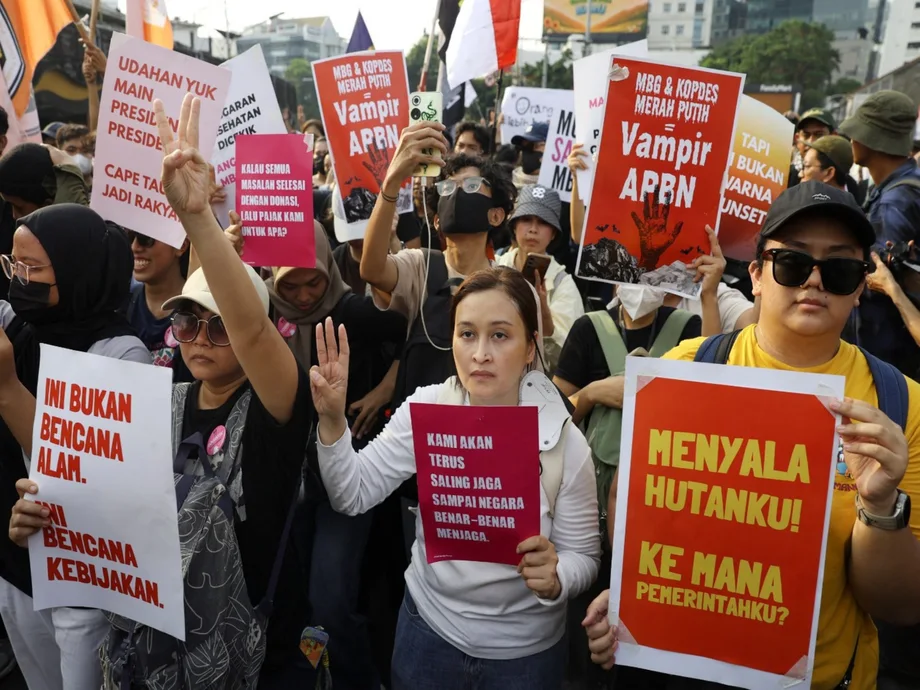
Small groups gathered outside the Parliament building in Central Jakarta on November 10, calling for lawmakers to begin impeachment proceedings. Banners displayed slogans including "#GibranOut" and "Impeach Gibran".
Meri Samiri, coordinator of a group of about a dozen women calling itself the National Coalition of Indonesian Women, said its members had been protesting outside the building for 21 days. She said the group had also collected signatures supporting Gibran's resignation or dismissal.
Samiri explained the group's demand in terms of the qualifications expected of a national leader:
We want a leader who has a real diploma.
Scattered demonstrations had taken place across Indonesia since the Constitutional Court decision on October 6. The gathering outside parliament brought those demands directly to lawmakers as they resumed work and considered whether to exercise their investigative and constitutional powers.
A dispute inside a strained political alliance
Gibran, 39, is the son of former President Joko Widodo, widely known as Jokowi. His place on Prabowo's ticket helped bring together two political camps that had previously competed for the presidency.
Widodo defeated Prabowo in the 2014 and 2019 presidential elections, then backed Prabowo's bid to succeed him after Gibran became the vice presidential candidate in 2024. Prabowo and Gibran won that election by a large margin.
The education dispute has intensified amid a widening rift between Prabowo and Widodo. Figures loyal to the former president have been dismissed or reassigned in administration changes since 2025. Gibran has generally kept a low public profile, with joint appearances alongside Prabowo occurring infrequently.
Prabowo's broad coalition holds an overwhelming position in parliament. That makes decisions by its factions central to whether the campaign against Gibran gains enough votes to advance beyond signatures and discussion.
Gibran's eligibility also faced controversy before the 2024 election. A Constitutional Court ruling in 2023 allowed him to run despite being below the usual minimum age of 40. The court's chief justice, Gibran's uncle, was subsequently found by an ethics panel to have a conflict of interest.
What happens next
Gibran has identified two legal avenues: proceedings before the State Administrative Court and a request for civil review of the Supreme Court ruling. His stated aim is to defend the education documents used to support his candidacy.
Parliament must separately decide whether to launch an inquiry or advance a motion of opinion. Puan's announcement that lawmakers would discuss the next steps leaves faction support and the scheduling of parliamentary action as the immediate political decisions.
For Indonesia's leadership, the dispute now turns on three concrete developments: whether Gibran submits a formal resignation, how judges respond to his legal challenges, and whether lawmakers assemble the votes needed to refer a case to the Constitutional Court.
Key Points
- Gibran offered to resign during a November 10, 2026, meeting with President Prabowo Subianto.
- The Supreme Court invalidated his education equivalency certificate on October 30.
- Gibran plans further legal action to defend his education documents.
- Nearly 50 lawmakers have backed parliamentary scrutiny, while a formal motion requires support across factions.
- Impeachment would require substantial parliamentary votes, a Constitutional Court finding and a final decision by the People's Consultative Assembly.
- No formal departure from office or timetable for the next court and parliamentary steps had been announced.