Two rallies put competing demands before Indonesia's president
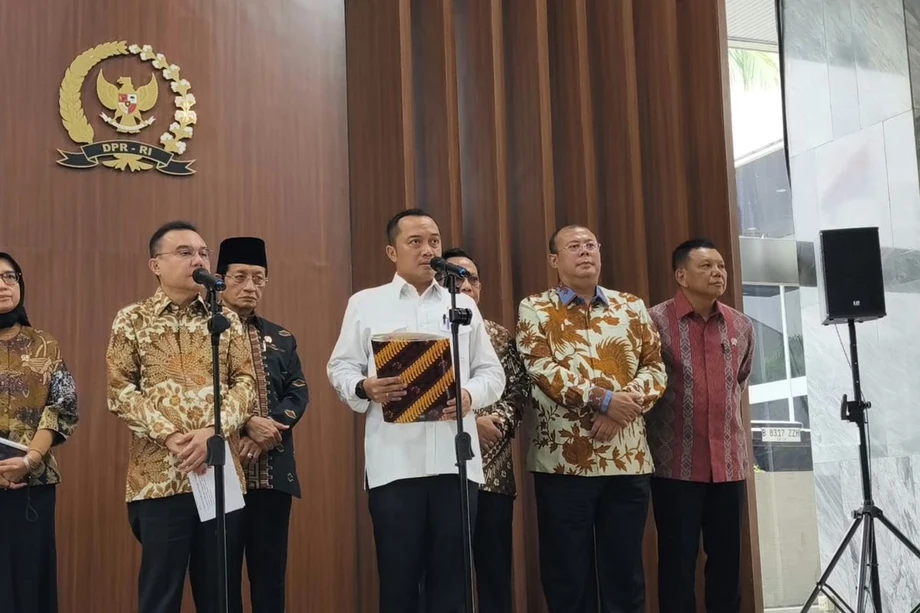
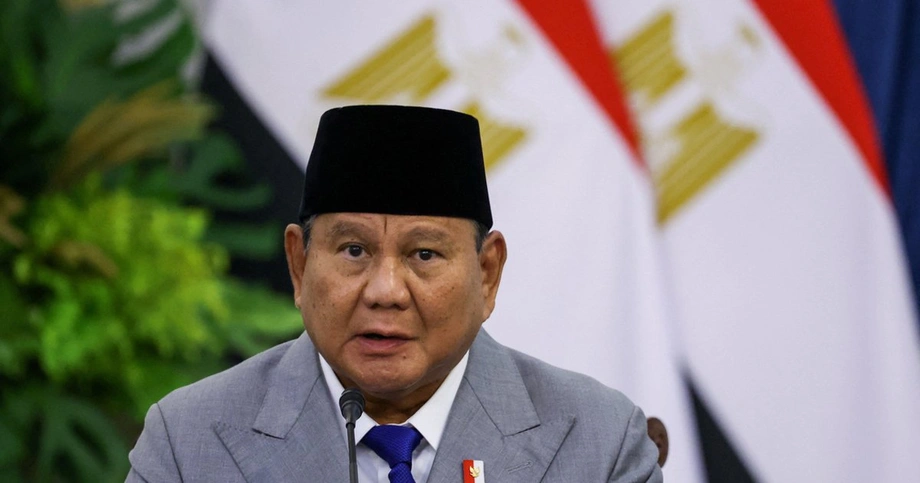
Hundreds of workers rallied behind Indonesian President Prabowo Subianto in Jakarta on Saturday, November 7, 2026, while hundreds of women marched against his policies, bringing two different sets of demands onto the capital's streets. The workers called for support for the president amid an investigation into alleged illegal surveillance of his communications. The women's march challenged his handling of forest fires, public spending and women's rights.
Contents
- Two rallies put competing demands before Indonesia's president
- Labour leader promises support across factories and towns
- Four police suspects and a change inside the presidency
- A relationship under strain and a rapid sequence of events
- Women bring nine demands onto Jakarta's streets
- Sherina and other public figures join the march
- Months of fires connect the latest march to earlier protests
- Spending choices and protest policing remain under scrutiny
- Key Points
Labour Party chairman Said Iqbal, who is also a special adviser to Prabowo, led the workers' demonstration and pledged to mobilise union members against threats to the presidency. Police have named four senior officers as suspects in the surveillance investigation, including a former national police chief associated with former president Joko Widodo, widely known as Jokowi.
The Women's March Jakarta brought together civil society groups, workers and public figures around nine demands spanning economic, social, environmental and health concerns. Singer and actor Sherina Munaf joined participants carrying posters about forest and land fires, which have been burning for months.
The gatherings followed student demonstrations in Jakarta and other cities against the government's response to the fires and its spending priorities. They showed that pressure on Prabowo comes from several directions: an investigation reaching into senior police ranks, organised supporters promising to defend his presidency, and protesters seeking changes to policies affecting their daily lives.
Labour leader promises support across factories and towns
Said urged unity behind Prabowo and described a union network capable of organising far beyond the capital. His position as both Labour Party chairman and a presidential adviser connects the rally's leadership directly to the administration it was supporting.
Said Iqbal, the Labour Party chairman and special adviser to the president, described the reach of his organisation:
We can mobilise members of our organisation across every town, every factory.
Said also said members were ready to respond if unrest arose. He presented that readiness as a way to maintain order and protect Prabowo's presidency.
We are prepared to respond at any moment to maintain order should any unrest arise, whether instigated by foreign interests or by individuals seeking to cause trouble.
His remarks gave the demonstration a broader purpose than expressing approval of a government programme. Said was promising organised support for the president during a sensitive investigation and a period of repeated street protests. His reference to foreign interests was part of that warning; he named no foreign actor in the quoted remarks.
Four police suspects and a change inside the presidency
Police accuse four senior officers of attempting to intercept Prabowo's communications. Interception means obtaining communications while they are being transmitted. The investigation concerns whether police surveillance equipment was used outside lawful investigative procedures, as well as alleged unauthorised access to electronic information and destruction of records.
The case expanded on November 5 when investigators named Inspector General Slamet Uliandi as the fourth suspect. Three other officers, including former national police chief Listyo Sigit Prabowo, were being held at the Mobile Brigade headquarters in Depok, West Java. Police said Slamet had not been detained because he was recovering from a stroke.
The other two detained suspects were Inspector General Ahrie Sonta and Inspector General Eko Hadi. At a November 5, 2026, press conference, police cybercrime director Brigadier General Suhermanto said investigators had found the elements of unlawful conduct in Slamet's actions. Police allege that, in early October 2026, Slamet authorised Ahrie to delete files containing intercepted communications. Slamet was then serving on the supervisory board of the police criminal investigation agency's Monitoring Center.
Police criminal investigation chief Commissioner General Asep Safrudin said an officer who knew about the alleged interception filed a police report on October 30, 2026. Investigators examined 10 witnesses and three expert witnesses and seized 11 mobile phones, one iPad and four flash drives. Police said phone numbers had been entered into the Lawful Interception Management System without verification and allegedly intercepted outside law-enforcement investigations, contrary to National Police Chief Regulation No. 5 of 2010.
Suhermanto said Slamet faced allegations under Criminal Code Article 332(1) and/or (2), concerning illegal access and carrying a maximum six-year prison sentence; Article 258(1) of Law No. 1 of 2023, carrying up to 10 years; and Article 32(1) of the Electronic Information and Transactions Law, carrying up to eight years, in conjunction with Criminal Code Article 20(j).
Coordinating Minister for Law, Human Rights, Immigration and Corrections Yusril Ihza Mahendra said on November 4 that investigators were also examining possible alleged makar under Criminal Code Articles 191–193, including whether the interception was intended to prevent Prabowo from exercising governmental power. He stressed that this remained under investigation and was not a final conclusion.
The widening surveillance investigation also concerns alleged targets beyond the president, including government officials, politicians, journalists, civil society figures and businesspeople. That scope makes the inquiry relevant to people whose work depends on private conversations and confidential information.
Prabowo dismissed Listyo from his position as head of the Presidential Staff Office. On November 4, he appointed Lieutenant General Ariyo Windutomo to take over temporarily. The appointment of Ariyo Windutomo, who also heads the Presidential Secretariat, kept the office operating while the investigation continued.
Jokowi has said he respects the legal process, and a lawyer for one suspect said his client would cooperate with investigators. The case remains at the investigation stage; no date for a trial or final decision was announced in the accounts of the November 7 rallies.
A relationship under strain and a rapid sequence of events
Listyo became national police chief in 2021 after Jokowi appointed him. Prabowo retained him after becoming president in 2024, and Listyo moved into the Presidential Staff Office in October 2026. His removal only weeks later brought the surveillance allegations into the centre of the administration.
Jokowi was Prabowo's predecessor and political backer. The investigation has exposed strains between their political camps, particularly because a suspect held senior positions under both presidents. The immediate legal task for investigators is to determine who authorised the alleged surveillance and what happened to the information collected.
The main developments unfolded in this order:
- Early 2025: Police say the alleged unauthorised surveillance began and continued into 2026.
- Late October 2026: Investigators allege that files containing intercepted communications were ordered deleted.
- October 28: Students and civil society groups protested over fires, spending and other grievances in Jakarta and several other cities.
- November 3: Police announced the first three suspects in the surveillance case.
- November 4: Prabowo appointed Ariyo as acting head of the Presidential Staff Office after removing Listyo.
- November 5: Investigators named Slamet as the fourth suspect.
- November 7: Workers rallied for Prabowo while the women's march challenged his policies.
Women bring nine demands onto Jakarta's streets
The women's march linked gender equality with environmental protection, economic concerns and access to health facilities. Among its nine demands were calls for tolerance and diversity, protection of the environment, and safeguards for women workers.
Participants also protested against the government's costly free meal programme and a tax on women's sanitary products. Their objections placed both national spending choices and the cost of essential personal goods within the same demonstration.
Protections for women workers connected the march to employment issues, even as another labour gathering backed the president. The two demonstrations therefore presented different political responses among people concerned with work and livelihoods: support for Prabowo's presidency at one rally, and demands for policy changes at the other.
The women's agenda extended beyond a single government decision. Participants raised social justice, women's rights and environmental justice, meaning fair treatment of people affected by pollution and damage to the natural world. In this march, those concerns were expressed through specific complaints about fires, spending and the treatment of women.
Sherina and other public figures join the march
Sherina Munaf carried a poster drawing attention to the continuing forest and land fires. She also raised environmental protection and wildlife protection, connecting her participation to one of the most persistent complaints against the administration.
Actor Tara Basro joined other participants with demands for social justice and women's rights. She was also described as helping form a human barrier around marchers. Musician and actor Eva Celia took part in support of gender equality while wearing a pink kebaya, a traditional garment.
Other participants included Kristo Immanuel, Lutesha, Della Dartyan, Yoshi Sudarso and Shahnaz Soehartono. Della carried a poster expressing concern about Indonesia's environment, while Yoshi's poster focused on gender equality and protection for women.
The public figures joined a march whose demands were already broad. Their participation brought recognisable faces to concerns shared by civil society groups and other demonstrators, from workplace protection to damage caused by the fires.
Months of fires connect the latest march to earlier protests
Forest fires were a direct link between the women's march and the student demonstrations held in late October. Deforestation monitor Nusantara Atlas said more than 1.9 million hectares had burned in the nine months through September. That is more than 19,000 square kilometres, using the conversion of 100 hectares to one square kilometre.
The estimate comes from an independent assessment published by Nusantara Atlas on October 21, 2026, using Sentinel-2 satellite imagery and a method published in PLOS ONE. The assessment put the January–September total at about 1.9 million hectares affected by fire, with more than half detected in September. It measures land affected, not an equivalent area of vegetation destroyed: some vegetation within mapped areas may remain unburned, survive or recover.
The assessment maps burn scars and checks candidate burned areas against NASA FIRMS active-fire hotspots from five satellites, processing the data in Google Earth Engine. It excludes burned patches smaller than 6.25 hectares and uses conservative identification to reduce false detections. Persistent cloud and smoke can delay detection, and the figures are subject to revision as more imagery becomes available.
Natural forest affected by fire amounted to about 88,000 hectares using the Ministry of Forestry's classification, or 85,000 hectares using Nusantara Atlas's own forest baseline. The mapped area affected was 38% higher than in January–September 2019. Separately, cumulative hotspot detections by October 18 were 67% higher than in the same period in 2019, but 33% below the corresponding period in 2015, using consistent satellite sets for each comparison. Hotspots measure active-fire detections rather than the area affected, and Nusantara Atlas has no comparable burned-area estimate for 2015.
The October wildfire protests brought thousands onto the streets across Jakarta, Bandung, Malang, Yogyakarta and Makassar. Students demanded a national disaster declaration and more resources to respond to fires in Sumatra and Kalimantan, Indonesia's portion of Borneo.
Smoke had increased respiratory illness and spread into neighbouring Malaysia and Singapore. El Niño, a climate pattern that can bring drier conditions to Indonesia, had worsened the crisis. Dry peatland was a particular problem: peat contains partly decayed plant material that can burn beneath the surface and produce smoke that is difficult to stop.
The government's communications office said authorities had prosecuted companies linked to the fires, delivered aid to affected provinces and would continue monitoring the blazes. Protesters wanted a larger response. Sherina's poster on November 7 kept attention on an emergency that marchers considered unresolved.
Spending choices and protest policing remain under scrutiny
Prabowo's free meal programme was another point of criticism at the women's march. Protesters challenged its cost alongside the government's response to the fires, putting pressure on the administration to explain its spending priorities while communities faced an environmental emergency.
The sanitary products tax brought that debate down to the level of recurring household purchases. A tax on an essential product contributes to what buyers pay. The demand concerned a regular expense for women, while the broader march also sought protection at work and access to health facilities.
Earlier demonstrations had already tested how authorities managed dissent. On October 28, students heading towards Jakarta's Hotel Indonesia Roundabout were stopped near the Bank UOB building on Jalan Sudirman. The barricades near HI Roundabout coincided with a police pledge to encourage greater use of cameras worn by officers and to prioritise dialogue when handling protests.
Police chief General Suyudi Ario Seto had called for a preventive approach that allowed people to express their views safely. For demonstrators, the practical issues included whether they could reach planned protest locations and whether encounters with officers would be recorded.
The November 7 gatherings added support for Prabowo to a period marked by criticism of his administration. Their concrete demands remained different: workers led by Said rallied around the presidency, while the women's march pressed for action on rights, essential costs and the continuing fires.
Key Points
- Hundreds of workers supported Prabowo in Jakarta on November 7, 2026, while hundreds joined a women's march against his policies.
- Labour Party chairman and presidential adviser Said Iqbal pledged to mobilise union members in support of the presidency.
- Police have named four senior officers as suspects in an investigation into alleged illegal surveillance.
- The women's march presented nine demands covering economic, social, environmental and health concerns.
- Sherina Munaf and other public figures joined participants calling for women's rights and environmental protection.
- Forest fires, the cost of the free meal programme and the sanitary products tax were among the marchers' complaints.