November hiring plan moves toward an announcement
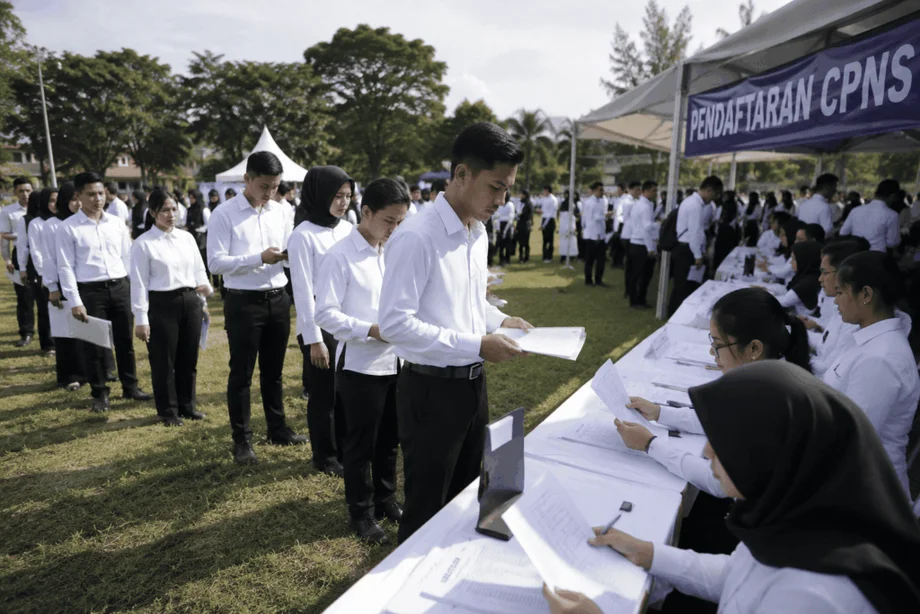
Indonesia plans to open registration for prospective civil servants in November 2026, Minister of State Secretary Prasetyo Hadi said on November 6, as the government prepares to replace retiring employees and recruit staff for priority programs. Minister for Administrative and Bureaucratic Reform Rini Widyantini will lead the recruitment committee.
Contents
- November hiring plan moves toward an announcement
- Why retirements matter to the recruitment plan
- How preparations developed during 2026
- Supreme Court seeks judges and support staff
- What applicants need to check before registering
- What the previous basic test required
- Passing scores and ranking both matter
- The stages between application and appointment
- January changes concern government contract employees
- Key Points
The Supreme Court has already outlined a staffing request: 4,430 positions, comprising 1,600 prospective judges and 2,830 CPNS positions. Its announcement is targeted for late November, giving applicants a more specific institutional timetable while the national recruitment arrangements are being prepared.
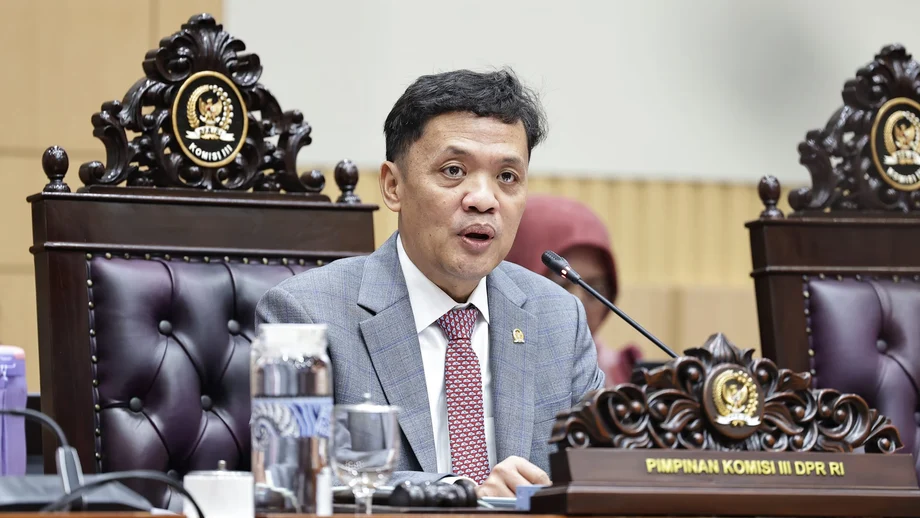
Prasetyo spoke at the parliamentary complex in Jakarta after discussions between government officials and House of Representatives leaders about the employment status of government workers. He explained why recruitment would proceed this year.
"Certainly, there are priority government programs that need personnel, which is why we have agreed to conduct the CPNS recruitment this year," said Prasetyo.
CPNS is the Indonesian abbreviation for prospective civil servants. Applicants compete for government positions through a selection process that includes checks of their qualifications and tests of their abilities. Successful candidates then complete the administrative steps required for appointment.
The November target comes after months of preparation involving staffing requests, retirement figures and funding calculations. The government has not yet detailed the exact national opening day, total allocation, complete list of participating agencies or examination calendar. Registration remains subject to fiscal capacity, meaning the government must have enough money to run the selection process and pay the people it recruits.
For applicants, the immediate task is to watch for the national announcement and the individual notices from agencies offering positions. Those notices will determine which qualifications are accepted and where successful candidates will work.
Why retirements matter to the recruitment plan
Rini said in Jakarta on February 25 that about 160,000 civil servants had retired during 2025. She indicated that recruitment of around 160,000 CPNS might be possible in 2026, placing a potential hiring figure alongside the scale of departures.
The final allocation will depend on the jobs agencies need and the funding approved for them. A retirement creates a staffing gap, but agencies are being asked to assess the position, required education and necessary skills before proposing a replacement.
The government has used a principle described as zero growth in its planning. In simple terms, this limits expansion of the workforce and directs recruitment mainly toward replacing retirees or filling vacant positions. Education and health remain priorities within that approach.
Prasetyo's November announcement also points to demand from priority government programs. Recruitment therefore has two purposes: maintaining services as existing employees leave and supplying the skills needed for current government work.
How preparations developed during 2026
The November target follows several stages of planning. In February, Rini said her ministry had written to Finance Minister Purbaya Yudhi Sadewa to request calculations for the cost of the recruitment tests. Agencies also needed to identify the positions and competencies they required.
A ministry circular dated March 12 subsequently requested staffing proposals through the e-formasi system, the government's platform for submitting workforce needs. Agencies were given a March 31 deadline; those that missed it were to be considered as not opening ASN positions that year. ASN is the broader category of government personnel, covering civil servants and employees working under government employment agreements.
- February 25, 2026: Rini discussed about 160,000 retirements in 2025 and a possible recruitment allocation of similar size.
- March 12: The administrative reform ministry issued its request for agencies to submit staffing needs.
- March 31: The deadline fell for submissions through e-formasi.
- July 29: SSCASN displayed a selection schedule for Sekolah Rakyat, rather than a national CPNS recruitment calendar.
- November 5: Supreme Court Acting Secretary Sobandi outlined plans for 4,430 new personnel.
- November 6: Prasetyo announced the plan to begin national CPNS registration during November.
The July position and the November announcement describe different stages of the same preparation process. By November, the government had moved from collecting staffing proposals toward a stated registration target.
Supreme Court seeks judges and support staff
The Supreme Court's proposed recruitment provides a concrete example of the pressure behind the national hiring plan. Acting Secretary Sobandi said the court was among 14 ministries and government bodies receiving priority for additional personnel this year.
Sobandi said about 500 judges and court personnel leave annually through retirement or death. The last recruitment of judges took place in 2021, and vacancies were affecting court services.
The court's planned intake has two components: 1,600 prospective judges and 2,830 CPNS employees. Together they total 4,430 positions. The CPNS component represents about 64 percent of that combined plan, calculated from 2,830 divided by 4,430; prospective judges account for the remaining 36 percent.
Those figures show that the court needs both people who will hear cases and personnel who support the operation of the justice system. Sobandi targeted late November for the announcement, when applicants can expect the details needed to assess their eligibility, including jobs, education requirements, placements and selection arrangements.
What applicants need to check before registering
SSCASN, the recruitment portal operated by the National Civil Service Agency, or BKN, is the central place to check available positions. Applicants also need to read the announcement from the particular ministry, institution or local government offering the job.
Previous recruitment included positions for people with senior secondary qualifications, three year diplomas and undergraduate degrees. Eligibility depends on the individual vacancy. An agency may accept one educational level for a particular role while requiring a specific degree or professional qualification for another.
The previous recruitment round cited in the planning coverage offered 250,407 positions across 69 central institutions and 478 regional institutions. That gives a sense of the breadth of a national selection exercise, although the participating agencies and jobs for 2026 will depend on this year's decisions.
Applicants should check the job title, duties, accepted qualifications, placement, income range and document requirements together. A suitable position is one whose stated requirements match the applicant's education and circumstances, rather than simply an agency they would like to join.
Prasetyo encouraged prospective candidates, including younger applicants and new graduates, to follow government announcements and prepare for the full series of tests. Applicants should also be cautious of unofficial vacancy messages, particularly those promising selection success or requesting payments outside the stated rules.
What the previous basic test required
The Basic Competency Selection, known as SKD, gives applicants a useful starting point for preparation. Previous rules divided it into three parts: the National Insight Test, or TWK; the General Intelligence Test, or TIU; and the Personal Characteristics Test, or TKP.
TWK assessed understanding of national principles, integrity, the Indonesian language and the foundations of the state. Its subject matter included Pancasila, the 1945 Constitution, national unity and the principle of unity in diversity.
TIU tested verbal, numerical and visual reasoning. Questions covered areas such as word relationships, logical conclusions, calculations, number sequences and patterns in pictures. TKP presented workplace situations involving public service, cooperation, cultural awareness, technology and professional conduct.
The previous format contained 110 questions: 30 TWK, 35 TIU and 45 TKP, generally completed in 100 minutes. That amounts to about 55 seconds per question on average, illustrating why preparation involves time management as well as familiarity with the material.
Passing scores and ranking both matter
The 2024 general selection thresholds were 65 for TWK, 80 for TIU and 166 for TKP. The same thresholds applied to the special category for applicants from Kalimantan. These are historical reference figures; the minister's decision for the 2026 selection will govern the new round.
Some special categories had different arrangements in 2024. Graduates with distinction and diaspora applicants needed a combined score of at least 311, including at least 85 in TIU. Applicants with disabilities, applicants from Papua and those from designated disadvantaged regions needed a combined score of at least 286, including at least 60 in TIU.
Ranking also determined who advanced to the Field Competency Selection, known as SKB. Under the 2024 arrangement, candidates had to meet the applicable threshold and rank within a group limited to three times the number of positions for the job.
For example, a vacancy allocation of 10 positions allowed up to 30 of the highest ranked eligible candidates to proceed to SKB. Candidates therefore competed against others applying for the same position as well as working toward the minimum scores.
The stages between application and appointment
Applicants begin by registering through SSCASN after agencies publish their vacancies and requirements. The administrative selection checks whether their information and documents match those requirements. An objection process allows candidates to challenge a rejection caused by an error in the committee's verification.
Candidates who pass the administrative stage take SKD through BKN's computer assisted testing system. Those meeting the applicable score and ranking requirements then proceed to SKB, which assesses abilities relevant to the job. Depending on the position, this can involve BKN testing and additional agency assessments.
The SKD and SKB results are combined to determine final selection. Successful applicants then complete their personal history information and submit appointment documents. The employing agency requests an employee identification number from BKN before issuing the appointment decision with its effective date.
For candidates, this sequence means that registration, examination success and appointment occur at different points. Each stage has its own requirements, and the agency's published schedule will determine when documents, objections and other submissions must be completed.
January changes concern government contract employees
The November 6 discussions also produced a separate employment agreement concerning PPPK, government employees hired under employment agreements. The government and House agreed that employees working part time would move to full time status, with implementation phased in from January 1, 2027.
Prasetyo described the decision at the parliamentary press conference.
"Today, we have decided that part-time PPPK employees will be appointed as full-time PPPK employees," he said.
The November registration target concerns CPNS recruitment; January 1 is the start of the phased PPPK employment changes. Prasetyo said the policy covered teachers, lecturers, firefighters, public order officers, healthcare and medical personnel, technical staff and other government employees.
Employees appointed as full time PPPK would also have an opportunity to enter CPNS recruitment in 2027. The government was considering special age provisions for certain fields, with the details still under consideration.
The agreement also included contract extensions for qualifying teachers at public schools registered in the Basic Education Data system, known as Dapodik, and teachers under the Ministry of Religious Affairs whose contracts expire in December 2026. Prasetyo said the same arrangement would apply to healthcare and medical personnel.
Deputy House Speaker Sufmi Dasco Ahmad said the agreement followed concerns brought to parliament about the employment status of teachers, healthcare workers, technical staff and other personnel. For those employees, contract continuity and the transition to full time work are the immediate issues, alongside any later opportunity to compete for CPNS positions.
Key Points
- Indonesia targets November 2026 for CPNS registration, with Rini Widyantini leading the recruitment committee.
- The exact national application dates, total allocation and examination calendar await announcement.
- About 160,000 civil servants retired in 2025; the final hiring allocation depends on staffing needs and funding.
- The Supreme Court plans 1,600 prospective judge positions and 2,830 CPNS positions, with an announcement targeted for late November.
- Previous test formats and 2024 passing scores provide preparation references; new decisions will govern the 2026 selection.
- The transition of part time PPPK employees to full time status is scheduled to begin gradually on January 1, 2027.