Fourteen villages face shortages as river contamination persists
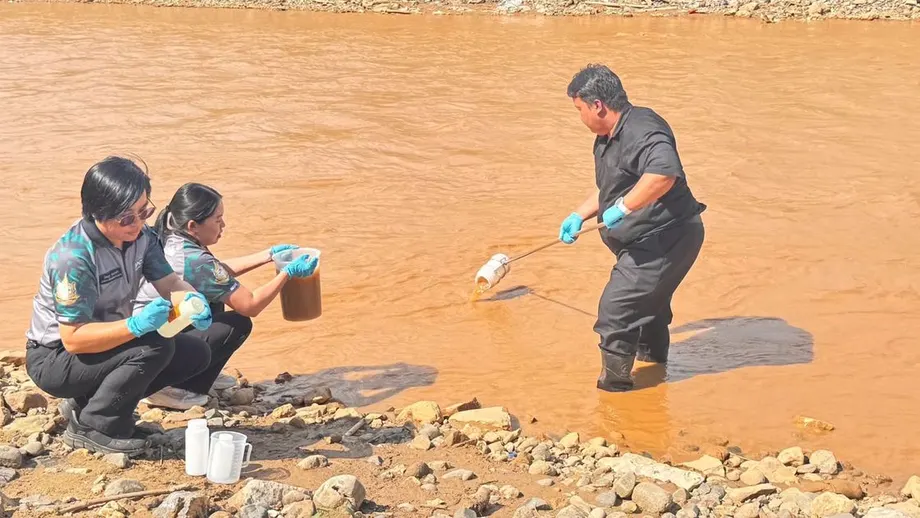
Tap water production in Thailand's Mae Sai district recovered to about 80% of normal on November 6, 2026, a day after unusually muddy water disrupted treatment for 14 villages. An initial test of the Sai River, which supplies the treatment plant, found arsenic at 0.25 milligrams per litre, or 25 times the surface water standard of 0.01 milligrams per litre.
Contents
- Fourteen villages face shortages as river contamination persists
- Why the treatment plant cut production
- What the arsenic measurements show
- How the warnings and water cuts unfolded
- What residents should know about drinking water
- Health screening reaches 400 people
- Rainfall and upstream mining draw scrutiny
- Regional tests reveal a changing pollution pattern
- Alternative supplies depend on construction and cooperation
- Key Points
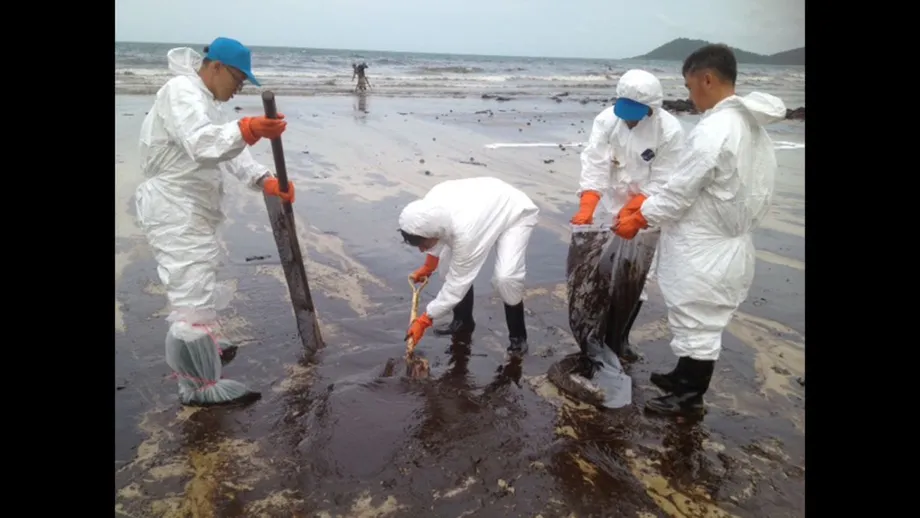
Chiang Rai governor Chucheep Pongchai inspected the Hua Fai community with environmental and waterworks officials as authorities collected samples for laboratory analysis. The immediate task was to restore enough water for households in Mae Sai and Wiang Phang Kham subdistricts while checking the quality of both incoming river water and treated supplies.
The latest preliminary arsenic reading followed an earlier peak of about 28 times the standard in August. September measurements had fallen to between 0.012 and 0.017 milligrams per litre, but all three monitored locations on the Sai still exceeded the limit.
Mae Sai now faces two connected problems: pollution in its principal water source and river conditions that can overwhelm its treatment equipment. Emergency storage tanks are helping residents obtain water, while a proposed supply from the Mekong through Chiang Saen would reduce dependence on the Sai.
For households, the disruption has brought shortages, extra spending on bottled water and concern about using local water and eating river fish. For authorities, restoring production is only part of the response. Environmental investigations, checks on drinking water and health screening are proceeding alongside plans for alternative supplies.
Why the treatment plant cut production
The Provincial Waterworks Authority (PWA) began experiencing filtration problems at about 3:30 p.m. on November 5. Supply fell to roughly 60% of normal across the 14 affected villages before recovering to 80% the following day. That recovery amounts to 20 percentage points, leaving production about one fifth below normal.
Komsan Sammana, manager of the Mae Sai PWA branch, said raw water turbidity reached approximately 14,000 nephelometric turbidity units, known as NTU. Turbidity measures how cloudy water is because of suspended particles such as mud and sediment.
The treatment system has handled or been tested at about 6,000 NTU. The November 5 reading was more than twice that level. Ordinary dry season readings are approximately 800 to 1,200 NTU, while readings during flooding have been put at between 3,000 and 6,000 NTU.
Komsan said the waterworks temporarily stopped production when the incoming water exceeded the equipment's treatment capability. He expected production conditions to improve after the unusually muddy water moved downstream. The branch checks raw water daily and increased monitoring of arsenic and turbidity during the disruption.
What the arsenic measurements show
Piyanuch Suangkham, director of the water, air and noise quality division at the regional environmental office in Chiang Mai, said the November inspection used a field test kit before samples were sent for detailed laboratory analysis. The 0.25 milligram reading is therefore a preliminary result awaiting laboratory confirmation.
The surface water limit used by the Pollution Control Department (PCD) is 0.010 milligrams per litre. Dividing 0.25 by 0.010 gives 25 times the limit. The figure of 28 times the limit refers to the earlier August peak.
The PCD's 23rd monitoring round, based on samples collected from September 26 to 30, covered 23 surface water locations in Chiang Mai and Chiang Rai. On the Sai, the results were:
- Ban Hua Fai: 0.017 milligrams per litre, 70% above the standard.
- Second Sai River Friendship Bridge: 0.013 milligrams per litre, 30% above the standard.
- Ban Pa Sang Ngam: 0.012 milligrams per litre, 20% above the standard.
The September results show why officials continued monitoring even after the August peak subsided. Arsenic remained above the limit at every Sai sampling location. August samples also recorded lead at more than five times the permitted level.
How the warnings and water cuts unfolded
Repeated contamination findings preceded November's supply disruption. Suebskul Kitinukorn of Mae Fah Luang University's School of Social Innovation said arsenic had exceeded the standard at all three Sai monitoring points whenever they were tested since May 2025. Environmental officials also described a continuing series of exceedances from August onward.
The main developments span more than a year:
- May 2025: A regional pollution assessment found arsenic at about 49 times the national limit at Ban Pa Sang Ngam in Koh Chang subdistrict.
- February to March 2026: Regional monitoring identified arsenic concerns in parts of the Kok, Sai, Ruak and Mekong river system.
- Early August 2026: Sai River arsenic reached about 28 times the standard.
- September 26 to 30: The PCD sampled 23 locations, finding arsenic above the limit at all three Sai sites.
- October 8: A health warning advised residents in five Mae Sai subdistricts against using untreated Sai water for drinking, cooking or making ice, and against eating fish caught in the river.
- October 14: Health teams collected urine samples from 400 people considered at risk of exposure.
- November 5 to 6: Treatment difficulties reduced water supply to 60% before production recovered to about 80%.
The earlier high reading at Ban Pa Sang Ngam, the August peak and the November field test represent different sampling occasions. Together with September's lower but persistent exceedances, they show a river whose contamination levels change over time.
What residents should know about drinking water
The PCD instructed agencies, especially the PWA, to strengthen checks on both raw water and treated tap water. River samples measure the water entering the supply process. Tests after treatment establish the quality of water distributed to homes.
Health authorities advised residents to use bottled drinking water meeting standards or tap water whose quality local agencies have checked. Boiling water and adding chlorine cannot remove arsenic. Water containing excessive arsenic needs suitable treatment technology and testing before consumption.
The Department of Health said 38 village water systems using groundwater in Mae Sai, Chiang Saen and Wiang Chiang Rung passed arsenic standards during its checks. Those results cover the systems tested; other supplies require their own monitoring.
Residents in Ban Tham Pha Chom, in the Hua Fai area, described buying bottled water and avoiding locally caught fish. Some also reported itching after using groundwater and were reluctant to bathe in reddish tap water. Health authorities advised anyone with unusual symptoms or suspected exposure to seek medical care.
The PWA installed reserve tanks containing tap water for distribution. Suebskul also called for clean water deliveries and mobile drinking water production units to serve at least two subdistricts, making emergency access a priority while ordinary supply remained restricted.
Health screening reaches 400 people
Public health teams visited Mae Sai and Koh Chang health centres on October 14 to assess exposure risks. They interviewed residents about contact with contaminated water and collected 400 urine samples: 233 at Koh Chang and 167 at Mae Sai.
Dr Anek Mungomklang, deputy director general of the Department of Disease Control, said the work combined exposure assessment, laboratory testing and advice on reducing contact with arsenic. Urine testing helps health teams assess arsenic exposure and decide what further evaluation a person may need.
The department's surveillance programme covers the Kok, Sai, Ruak, Salween and Mekong rivers over 2025 to 2029. Officials also discussed treatment, patient referrals and investigation procedures with Chiang Rai Prachanukroh Hospital.
Investigations into possible contamination of agricultural products, including rice, were also under way. Irrigation drawn directly from the Sai makes testing of water, soil and crops relevant to farmers as well as drinking water users. The findings from the 400 urine samples and the agricultural investigations had not been announced.
Rainfall and upstream mining draw scrutiny
Piyanuch said rain in the upstream catchment during the preceding one or two days may have washed sediment and accumulated metals into the river. Officials also pointed to low river volume, which can increase the concentration of contaminants in the remaining water.
The PCD said inspections had found no domestic pollution source responsible for the northern contamination under investigation. Provincial authorities were seeking more information about activities across the border in Myanmar, including mining around Tachileik and the upper Sai basin.
Security information described 28 mining companies in the Tachileik area: 12 extracting gold, six manganese, six lead and zinc, three tin and one antimony. Thai security agencies also identified 14 gold and rare earth mining sites in the upper Sai basin, more than half in or beside the river and its tributaries. The figures count different things, companies across an area and sites within a river basin.
Some gold operations were identified around Mong Ton and Mong Hsat, about 25 kilometres from the Thai border, with four companies around Doi Ko Wan approximately 30 kilometres from Mae Sai. Mining around Mong Hsat has been linked to the United Wa State Army, Myanmar's military, local militias and Chinese business investment.
Officials were still investigating which activities contributed to the latest surge. Suebskul urged Thailand to negotiate with Myanmar to stop mining near the headwaters, arguing that emergency water distribution needed to be accompanied by action upstream.
Regional tests reveal a changing pollution pattern
The Mekong River Commission's April monitoring statement provides a wider view of the problem. Published on April 29, 2026, it described February and March measurements showing arsenic contamination in parts of the Kok, Sai, Ruak and Mekong system.
The commission identified particular concern in river sediment, the material deposited on the riverbed. Some samples from Sai and Ruak locations, as well as all three monitored Mekong stations in Chiang Rai, exceeded hazardous levels under Thai guidelines. Rainfall, river flow and the movement of sediment can affect where contamination travels and accumulates.
The commission described its assessment in these terms:
Arsenic contamination remains localised but requires sustained attention due to its persistence in both water and sediment.
In northern Laos, Bokeo exceeded the arsenic water limit on February 6, 2026. Follow up tests on February 23, March 8 and March 24 were within the limit. Measurements in Luang Prabang stayed below 0.01 milligrams per litre throughout the monitoring period.
Thailand's September round later found the Kok, Ruak and Mekong, along with the Fang, Lao and Korn tributaries, within heavy metal standards at every monitored point. The PCD subsequently flagged rising arsenic concentrations in the Mekong, linked to flooding from neighbouring countries. The results make continued checks relevant to Mae Sai's plan to obtain water from that river.
Alternative supplies depend on construction and cooperation
Chiang Rai's main alternative supply plan would take Mekong water through a treatment plant in Chiang Saen and send it to Mae Chan and Mae Sai. The proposed plant would produce 1,000 cubic metres per hour, equivalent to one million litres each hour.
Construction was described as about halfway complete, although one description placed that progress before the major floods of 2024. Officials gave no firm opening date. Further plans involve the Mae Lao River and sources around Doi Mae Kham, including reservoirs that could connect to the provincial pipe network.
The Department of Groundwater Resources also plans groundwater systems and storage tanks under its 2027 work programme. Together, these projects would give the district more choices when the Sai becomes too muddy or polluted for reliable treatment.
Thailand and Myanmar signed terms of reference on pollution across their border during Myanmar military leader General Min Aung Hlaing's visit to Thailand in August. A joint working group was due to meet later in November 2026, while the PCD planned coordination with Laos through the Mekong River Commission.
The commission said cooperation with Myanmar on joint monitoring began in May 2025, and Myanmar agreed in January 2026 to work with Thailand and welcome technical support. Regional programmes supported by Japan and the United Kingdom are planned for 2026 to 2028. The PCD is also working with international and industry partners on contaminated sediment management and better equipment for detecting metals.
Key Points
- Mae Sai water production recovered from 60% to about 80% of normal after disruption affecting 14 villages in two subdistricts.
- A preliminary November 6 river test found arsenic at 0.25 milligrams per litre, 25 times the surface water limit.
- September testing found arsenic above the standard at all three Sai monitoring locations.
- Turbidity reached about 14,000 NTU, exceeding the treatment system's capacity.
- Health teams collected urine samples from 400 people, while authorities advised using water with verified quality.
- Boiling water or adding chlorine cannot remove arsenic.
- Alternative supplies include a Chiang Saen treatment project and groundwater systems planned for 2027.
- A Thailand and Myanmar working group was due to meet later in November to address pollution across the border.