Donation inquiry brings nationwide scrutiny
Thailand has ordered inspections of foundations nationwide as police investigate the alleged misuse of 527 million baht from approximately 815 million baht in donations connected to actress and charity founder Panadda "Boom" Wongphudee. Investigators said three accounts received more than 3.2 million transactions from about one million donor accounts, making the inquiry a test of how charitable money is collected, recorded and spent.
Contents
- Donation inquiry brings nationwide scrutiny
- What police say happened to the money
- How the fundraising operation developed
- Construction payments are a central focus
- What the accused say and what happens next
- Every foundation must account for its activities
- Where foundations can file their records
- When fundraising can become a criminal case
- Why donation counts do not determine prison terms
- Key Points
Prime Minister and Interior Minister Anutin Charnvirakul instructed the Department of Provincial Administration to examine foundation operations, with particular attention to organisations run by celebrities. The review covers registration, fundraising methods and whether donations support registered charitable purposes or personal interests.
On November 7, 2026, Deputy Government Spokesperson Ploythalay Laksameesaengjan also rejected a viral claim that 1.8 million donations could automatically produce 1.8 million fraud charges and nine million years in prison. Courts consider the alleged deception, intention, timing and circumstances when deciding how many offences occurred, she said.
The nationwide response combines three responsibilities: obtaining permission for fundraising covered by law, keeping annual accounts and organisational records, and using donated money for the purposes presented to donors. Failures can bring different legal consequences, from penalties for collecting without permission to prosecution for public fraud or money laundering.
Panadda and her husband, Atip "Got" Anantawan, deny the charges. Panadda faces allegations of public fraud, entering false information into a computer system and jointly laundering money. Atip faces an allegation of jointly laundering money. Police are continuing to trace transfers and examine the roles of other recipients.
What police say happened to the money
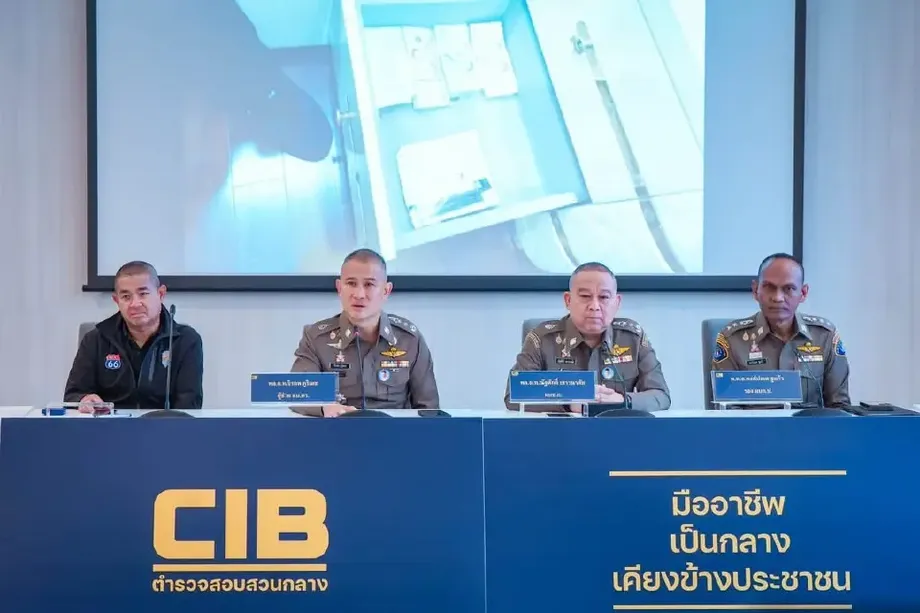
Economic Crime Suppression Division commander Pol Maj Gen Thaspoom Charuprach presented preliminary findings on November 7. Police identified approximately 527 million baht allegedly used for purposes inconsistent with the foundation's objectives, including personal spending and investments.
The 527 million baht represents about 64.7% of the 815 million baht examined, or roughly 65 baht out of every 100 donated. Police also described personal use as exceeding 70% in another briefing account. The detailed account review attributed about 280 million baht to foundation activities.
A broader police update put donations connected to the organisation above 900 million baht, compared with the approximately 815 million baht identified in the detailed review of three collection accounts. The broader update said about 20% entered the foundation's system and 80% went into personal accounts. Investigators have yet to publish a complete reconciliation of those totals.
Police said more than 600 million baht passed through private accounts, while just over 200 million baht was found in accounts belonging to the foundation. Those account figures describe where money was held or received; the spending inquiry follows where it went afterwards, including transfers between accounts.
Investigators identified 24 million baht invested in mutual funds, 19 million baht used for credit card payments and 10 million baht paid for life insurance. Mutual funds pool money from investors to buy assets such as shares or bonds. Police also traced approximately 2.7 million baht from fund accounts to jewellery and luxury handbags.
How the fundraising operation developed
Panadda, a former Miss Thailand and television presenter, built Ongkorn Thamdee from a volunteer network into a registered foundation. Its activities included flood relief, community kitchens, medical equipment and support for vulnerable women and children. During the COVID-19 pandemic, the team helped arrange hospital beds, oxygen equipment and other supplies.
Police trace public fundraising through her personal account to November 2015. The foundation's explanation dates the opening of the original account to 2014, when Panadda's own money initially supported the volunteer work. The organisation later continued using that account alongside an account in the foundation's name, with board endorsement.
- November 2015: Police say online donation appeals were collecting money through Panadda's personal account.
- December 12, 2017: The Ongkorn Thamdee Facebook page was created to solicit contributions.
- March 30, 2022: Police date the foundation's establishment to this day. Its registration application listed initial capital of 500,000 baht.
- July 2022: The board endorsed continued use of the original personal account, and an account in the foundation's name opened on July 27.
- May 3, 2025: A third account opened for construction of a planned foundation facility in Pathum Thani.
- October 29, 2026: The foundation suspended donations through all channels and Panadda temporarily stepped aside as chair.
- November 5–7, 2026: Arrest warrants were issued, the couple entered police custody and investigators brought them to court.
Police said Panadda controlled payment authorisations for all three donation accounts. The original personal account remained open after the foundation obtained its own account, leaving investigators to examine charitable and personal transactions across several channels.
Construction payments are a central focus
Investigators are examining payments involving a pool villa in Phuket and a new foundation facility at Khlong 8 in Pathum Thani. Panadda described the Pathum Thani project as a charitable facility with a budget of about 50 million baht.
The detailed financial briefing identified approximately 249 million baht transferred to nine additional accounts linked to Panadda and about 99 million baht transferred to accounts belonging to Atip. Police also identified 36 million baht sent to a foundation board member and 4.6 million baht transferred to Panadda's father.
Police described a construction trail involving more than 90 million baht paid to a Phuket contractor, about 18 million baht above the agreed price, with nearly 50 million baht returning to Atip. Another police account put contractor repayments to accounts linked to the couple at 99 million baht. Investigators are examining the contracts and onward transfers to determine the purpose of the payments.
The foundation's rules generally required board approval for withdrawals exceeding 500,000 baht, with exceptions for urgent circumstances. Police allege that transfers among foundation and personal accounts allowed money to move outside the usual approval procedures.
Police have seized or frozen assets belonging to Panadda and people close to her. Authorities valued seized assets at more than 100 million baht, including houses, land, 22 luxury vehicles, six firearms and bank accounts. Investigators are comparing purchases, transfer dates and income records as they trace the source of the money.
What the accused say and what happens next
Panadda denied the charges, while police said she acknowledged personally handling financial transactions and using some money for purposes different from those stated in fundraising appeals. According to investigators, she explained that the large number of transactions had caused confusion over disbursements.
Atip also denied the allegations and said he carried out transactions on his wife's instructions. Investigators said their allegation against him concerns receiving and moving money. His charge is jointly laundering money.
Police detained Panadda at her Bangkok home on November 6, while Atip surrendered to authorities. On November 7, investigators sought an initial remand of 12 days. Remand means keeping an accused person in custody while a criminal case proceeds. The Criminal Court rejected Atip's bail application; Panadda did not seek bail, and both were transferred to prison.
Anutin denied political interference after Panadda claimed the prosecution was politically motivated. He said the accused could explain their positions and defend themselves, while the government had to ensure fairness for all sides.
Police plan to question further recipients, including board members, contractors and other people connected to the accounts, beginning in the week after the November 7 briefing. They will examine the reasons for transfers and recipients' knowledge of the money's origins. Officers also said they had preserved fundraising posts and questioned page administrators.
Every foundation must account for its activities
Department of Provincial Administration director general Narucha Khosasivilize said foundations must submit annual operating and financial records to their registrar. The department's notice seeks to protect public interests and maintain donor confidence by making foundation operations open to inspection.
The required submission contains three main sets of documents:
- A report describing the foundation's activities during the previous year.
- Income and expenditure accounts and a copy of the annual balance sheet certified by a licensed auditor.
- Copies of the minutes from every foundation board meeting.
A balance sheet records what an organisation owns and owes at a particular date. Income and expenditure accounts show money received and spent over a period. Meeting minutes provide a record of decisions, including decisions about projects and the use of funds.
Police allege that Ongkorn Thamdee failed to submit required annual financial statements and balance sheets. Investigators also said annual meeting records and reports were missing and that tax filings had been made only during its first two years. They said donations reached approximately 200 million to 300 million baht annually in 2024 and 2025.
Interior Ministry permanent secretary Unsit Sampuntharat said responsibility for reporting compliance rests with the entire foundation board. Narucha warned that foundations failing to meet their reporting duties could face legal proceedings, including under the 1956 law governing offences involving registered partnerships, companies, associations and foundations.
Where foundations can file their records
Foundations with headquarters in Bangkok can submit annual reports in person at their district office. Those headquartered in other provinces can file at the relevant district administration office. Reports go to the foundation registrar responsible for the organisation.
The Department of Provincial Administration also accepts submissions through its i-Service electronic system. For foundations in Bangkok, user registration is handled through the department's public service centre at Wang Chaiya, through its information systems development unit. Foundations in other provinces can register at their district administration office.
Annual reporting and permission to raise money are separate obligations. A foundation needs to keep its records current while also obtaining any authorisation required for the fundraising it undertakes.
The department warned that appeals asking the public to donate money or property, when they fall within the Fundraising Control Act 1944, require permission before collection begins. Registration as a foundation and authorisation for a particular fundraising activity involve different administrative checks.
When fundraising can become a criminal case
Ploythalay outlined penalties under Sections 6 and 17 of the Fundraising Control Act 1944 for fundraising conducted without required permission: up to one month in prison, a fine of up to 200 baht, or both.
Public fraud carries a much heavier penalty. Sections 341 and 343 of the Criminal Code address deception used to obtain money or property. Section 343 covers false statements made to the public or the concealment of facts that should be disclosed, with a maximum penalty of five years in prison, a fine of up to 100,000 baht, or both.
The Department of Provincial Administration filed a complaint with Nang Loeng police alleging that the foundation solicited flood relief donations through social media into a Kasikornbank account without the required permit. The foundation was given until Tuesday following the November 7 update to submit financial statements.
Money laundering concerns handling or moving proceeds of crime, including transfers intended to conceal where money came from. Police are examining transfers through contractors, investments and personal accounts as part of that allegation.
Panadda's Computer Crime Act allegation concerns entering false information into a computer system. Police say the online fundraising appeals formed part of the alleged deception. Their investigation combines the appeals shown to donors with bank records documenting what happened after money arrived.
Why donation counts do not determine prison terms
Ploythalay addressed the claim that multiplying 1.8 million donation transactions by the five year maximum for public fraud would produce nine million years in prison. Courts decide whether conduct amounts to one offence or several by examining the acts of deception, intention, dates, times and circumstances.
Section 91(2) of the Criminal Code also limits combined prison terms for multiple separate offences to 20 years when the most serious offence carries a maximum sentence above three years and no more than 10 years. The government cited that rule in explaining how consecutive sentences are limited within that category.
The 1.8 million transactions mentioned in the viral claim also appeared in an earlier examination attributed to the Anti-Money Laundering Office. Police later described more than 3.2 million transactions across the three collection accounts. Investigators said many donors contributed repeatedly, producing about one million donor accounts.
The national review now puts concrete duties before foundations: document their activities, submit audited accounts, retain board records and obtain required fundraising permission. For donors, those records provide a way to follow the connection between a public appeal, the money collected and the work carried out.
Key Points
- Thailand has ordered nationwide inspections of foundations, including scrutiny of organisations run by celebrities.
- Police allege that 527 million baht of approximately 815 million baht examined was used outside stated charitable purposes.
- Panadda Wongphudee and Atip Anantawan deny the charges and were remanded after appearing in court on November 7, 2026.
- Foundations must submit annual activity reports, audited financial records and board meeting minutes.
- Fundraising covered by the 1944 law requires prior permission; public fraud carries a maximum prison term of five years per offence.
- Courts determine offences from the conduct and circumstances, while statutory rules limit combined prison terms.
- Police plan further questioning of people connected to the transfers, and the foundation faces a Tuesday deadline for financial statements.