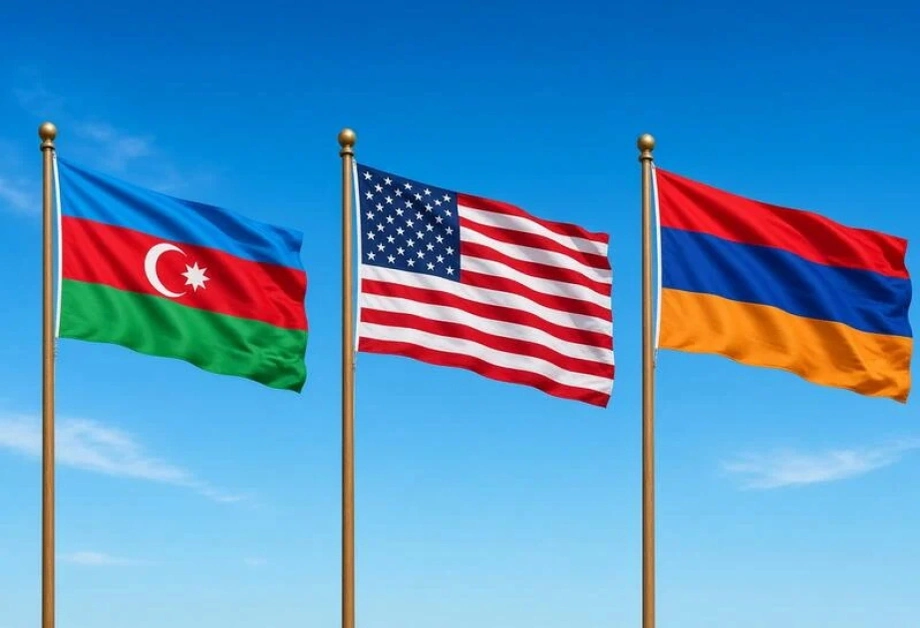
Two technical groups take the route into practical planning
The United States, Armenia and Azerbaijan have launched two technical planning groups to advance a proposed transport and energy route through southern Armenia, moving a project agreed at the White House in August 2025 into a more detailed stage of preparation.
Contents
- Two technical groups take the route into practical planning
- What would TRIPP connect?
- What the planning groups will do
- How the project reached this stage
- Syunik visits put route choices in focus
- What the ratified agreement provides
- Transport work and the peace treaty move in parallel
- Sovereignty and reciprocal access shape the debate
- What comes next for construction?
- Key Points
A joint statement issued on November 6 announced that the first groups would focus on transportation and electricity transmission. Their work will support the Trump Route for International Peace and Prosperity, known as TRIPP, which is intended to connect mainland Azerbaijan with its Nakhchivan Autonomous Republic through Armenia's Syunik province.
U.S. Assistant Secretary of State for European and Eurasian Affairs Brendan Hanrahan, Armenian Deputy Foreign Minister Vahan Kostanyan and Azerbaijani Deputy Foreign Minister Elnur Mammadov launched the initiative. The format brings government representatives and technical experts from all three countries together to address the practical requirements of the project.
The announcement follows electricity discussions in the Armenian town of Goris, an Armenian government visit to the proposed project area and parliamentary approval of an agreement between Armenia and the United States related to TRIPP. Armenian officials expect construction to begin in 2027.
The immediate task is to turn political commitments into plans for infrastructure that can connect with existing regional networks. That brings decisions about transport routes and electricity lines into a shared process involving the countries whose cooperation the project requires.
What would TRIPP connect?
TRIPP is designed to provide a connection between Azerbaijan and Nakhchivan, an Azerbaijani territory separated from the country's mainland. The proposed route would pass through Syunik, Armenia's southern province, making Armenian territory central to the connection.
The broader project envisages railway and road links, oil and gas pipelines, electricity transmission lines and internet communications infrastructure. It is described as a multimodal route, meaning a connection that can accommodate more than one form of transport rather than relying on a single road or railway.
Transport and electricity are the first two subjects assigned dedicated trilateral planning groups. Those priorities also match the areas Armenian officials have been examining on the ground: the possible routes of railway, highway and energy infrastructure.
For Azerbaijan, the intended benefit is a connection to Nakhchivan through Armenia. Armenia's government also wants access to third countries through Azerbaijani territory and infrastructure. Whether businesses gain useful new routes will depend on how those connections are designed and operated.
What the planning groups will do
The transportation group will address technical questions involved in developing the transit route. The electricity transmission group will examine the energy infrastructure needed to support regional connections. Electricity transmission means carrying power over lines between places where it is produced and places where it is used.
The governments say both groups will help resolve complex technical issues and prepare the next stages of implementation. Their remit includes connections with other regional infrastructure, placing the proposed facilities within a wider network rather than planning them in isolation.
Policymakers and technical specialists have different tasks in that process. Government representatives can work through decisions requiring agreement between countries, while specialists examine how the infrastructure could be laid out and connected. Bringing them into the same format creates a regular setting for that work.
The joint statement issued on behalf of Hanrahan, Kostanyan and Mammadov described the purpose of the groups in these terms:
a crucial step toward resolving complex technical issues and moving to the next phases of implementation, including connection with other regional infrastructures.
The November 6, 2026, statement reads in full:
Today, U.S. Assistant Secretary of State for European and Eurasian Affairs Brendan Hanrahan, Armenian Deputy Minister of Foreign Affairs and International Trade Vahan Kostanyan, and Azerbaijani Deputy Foreign Minister Elnur Mammadov launched Trilateral Technical Planning Groups to advance the Trump Route for International Peace and Prosperity (TRIPP), a multimodal transit route. This forum brings together policymakers and technical experts from our three countries to work collaboratively and contribute to long-term stability, economic vitality, regional connectivity, and commercial prosperity across the region, underscoring the landmark August 8, 2025, Peace Summit Declaration brokered by President Trump.
Demonstrating a shared commitment to turn vision into tangible progress, the parties agreed to inaugurate the first two Trilateral Planning Groups focused on transportation and electricity transmission. These technical planning groups represent a crucial step toward resolving complex technical issues and moving to the next phases of implementation, including connection with other regional infrastructures.
The sides reaffirmed their respective commitments to expeditious operationalization of all modalities of TRIPP.
The three governments also reaffirmed their commitment to making all components of TRIPP operational as soon as possible. Their stated goals include regional stability, economic activity and commercial opportunities, alongside the physical connections themselves.
How the project reached this stage
TRIPP grew out of the August 8, 2025, summit at the White House, where Azerbaijani President Ilham Aliyev and Armenian Prime Minister Nikol Pashinyan met with U.S. President Donald Trump. The summit declaration set out commitments to normalize relations and develop regional connectivity.
The November announcement builds on that political framework. Several preparatory steps during October 2026 had already brought attention to the infrastructure and agreements needed for implementation.
- August 8, 2025: Aliyev and Pashinyan signed the Washington summit declaration, with Trump acting as broker.
- October 2026: Armenian and Azerbaijani specialists met in Goris to examine possible electricity transmission routes.
- October 22, 2026: Armenia announced the start of the project's practical phase and sent a working group led by Deputy Prime Minister Mher Grigoryan to Syunik.
- October 28, 2026: Armenia's National Assembly ratified an agreement between Armenia and the United States related to TRIPP.
- November 6, 2026: The three governments announced the trilateral technical planning groups.
- 2027: Armenian officials expect construction to begin.
The progression connects three kinds of preparation: political agreement between leaders, approval through Armenia's parliament and technical examination of potential infrastructure routes. The new groups add a shared planning mechanism involving all three governments.
Syunik visits put route choices in focus
Armenian Deputy Prime Minister Mher Grigoryan led a delegation to the proposed project area in October to examine potential infrastructure locations. The visit was intended to support the beginning of design work, giving the planning process a geographical focus.
Grigoryan explained the purpose at a subsequent cabinet meeting:
We visited the site to familiarize ourselves with the potential layout of the infrastructure in order to organize the start of design work. At this stage, we are talking about the routing of the railway, highway, and energy infrastructure.
The visit followed discussions between Armenian and Azerbaijani specialists in Goris about power transmission lines. Electricity therefore has its own technical preparation under way alongside the more widely discussed transport connection.
Armenia's National Assembly then ratified the agreement with the United States on October 28, amid opposition concerns about the project. Armenia and the United States also intend to establish a joint company under TRIPP, adding a proposed organizational structure to the infrastructure planning.
What the ratified agreement provides
The Framework Agreement between Armenia and the United States on Strategic Cooperation Concerning the Trump Route for International Peace and Prosperity (TRIPP) was signed in June 2026 and ratified by Armenia's parliament on October 28, 2026, with 63 votes in favor and 32 against. Civil Contract supported ratification, while Strong Armenia and Armenia (Hayastan) opposed it.
The agreement provides for a TRIPP Development Company with a 26% Armenian stake and a 74% U.S. stake for an initial 49-year term. If the parties mutually agree to extend cooperation for another 50 years, Armenia's stake would rise to 49% and the U.S. stake would become 51%.
Presenting the agreement during the October 27 parliamentary debate, Armenia's Minister of Foreign Affairs and International Trade Ararat Mirzoyan said the company's charter and shareholders' agreement still needed to be negotiated and adopted. He said the American co-founder company would remain under U.S. government ownership and management at all times.
Mirzoyan also emphasized that all infrastructure planned on Armenian territory would operate under Armenia's sovereignty and jurisdiction. He said the project envisaged unblocking regional communications, giving Armenia access to third countries through Azerbaijan and ensuring domestic railway connectivity, while providing Azerbaijan with a connection to Nakhchivan through Armenian territory.
Transport work and the peace treaty move in parallel
Armenia's government has argued that practical cooperation can begin while the formal peace treaty with Azerbaijan awaits completion. Foreign Minister Ararat Mirzoyan told parliament that TRIPP could proceed before the treaty is signed, following the start of practical preparations in Syunik.
Mirzoyan said the treaty text had already been initialed and that both governments publicly stood behind it. Initialing records agreement on the wording. Formal signature and ratification, or approval through domestic procedures, are further steps.
The government's approach is to develop transport cooperation while working toward those remaining diplomatic steps. Opposition politician Narek Karapetyan has challenged that approach, arguing that Azerbaijan could gain its desired route while postponing the treaty and withholding the access Armenia seeks.
Pashinyan has separately set a peace treaty target of signing and ratifying the agreement before 2031. Azerbaijan wants changes to Armenia's Constitution before signature, while Armenia maintains that the agreed treaty text already addresses concerns about territorial claims.
The treaty timetable and the infrastructure timetable therefore serve different purposes. Armenian officials expect construction in 2027, while Pashinyan's stated objective for completing the treaty extends to before 2031. The government is pursuing practical cooperation during that interval.
Sovereignty and reciprocal access shape the debate
Armenia committed in the Washington declaration to providing Azerbaijan with "unimpeded connectivity" to Nakhchivan through its territory. That commitment makes the arrangements for movement through Syunik a central part of the project.
Pashinyan and his political allies have maintained that TRIPP will operate with respect for the sovereignty, territorial integrity and jurisdiction of the states involved. Jurisdiction means the authority to apply and enforce a country's laws, a concrete concern when an international route crosses national territory.
Armenian officials also present TRIPP as a way for Armenia to reach markets through Azerbaijan, rather than simply providing passage between two parts of Azerbaijan. The opposition debate focuses partly on whether those benefits will be reciprocal and whether the project will help secure a completed peace agreement.
The trilateral groups now provide a forum for practical coordination within that political setting. Their first assignments concern transport and electricity, while the wider project includes communications and potential pipeline infrastructure.
What comes next for construction?
Armenian officials have identified 2027 as the expected year for construction to begin. The joint announcement gave no exact start date, construction budget, final route or opening schedule, and it did not explain the allocation of ownership and operating responsibilities.
The next stage is preparation for implementation: resolving technical issues, developing designs and examining connections with existing networks. The recent Syunik visit and Goris electricity discussions show the kinds of decisions feeding into that work.
For businesses, the practical value would come when the proposed links can carry goods, electricity or communications across the region. A railway, road or power line becomes more useful when it connects to facilities beyond its immediate route, which explains the groups' explicit focus on regional integration.
The governments' shared commitment is to move quickly. Their new planning structure gives that commitment a working format, while the construction expected in 2027 provides the next stated milestone for a project that now combines diplomatic negotiations, domestic approval and infrastructure design.
Key Points
- The United States, Armenia and Azerbaijan announced two TRIPP technical planning groups on November 6, 2026.
- The first groups will focus on transportation and electricity transmission, including connections with regional infrastructure.
- TRIPP is intended to connect mainland Azerbaijan with Nakhchivan through Armenia's Syunik province.
- Specialists have discussed electricity routes in Goris, and Armenian officials have examined potential infrastructure locations in Syunik.
- Armenia's parliament ratified an agreement with the United States related to TRIPP on October 28, 2026, by 63 votes to 32.
- The agreement provides for a TRIPP Development Company with 26% Armenian and 74% U.S. ownership for an initial 49 years; a mutually agreed 50-year extension would change the stakes to 49% and 51%, respectively.
- The company's charter and shareholders' agreement remained to be negotiated; Mirzoyan said its U.S. co-founder would remain under U.S. government ownership and management, and infrastructure in Armenia would operate under Armenian sovereignty and jurisdiction.
- Armenian officials expect construction in 2027, while work toward completing a peace treaty continues separately.