Fishing communities seek more than compensation
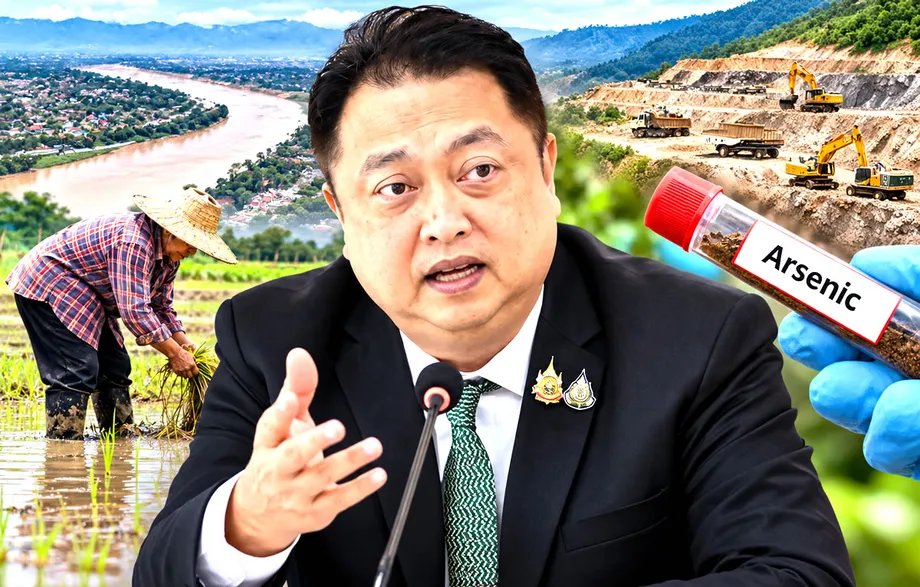
A demand to make PTT Global Chemical finance the recovery of Rayong's marine environment is at the centre of a Supreme Court case arising from the July 27, 2013 oil spill. The Rayong Provincial Court has scheduled the reading of the judgment for October 22 at 9 a.m. The hearing announcement does not specify a year, and the Supreme Court's decision has not been announced.
Contents
- Fishing communities seek more than compensation
- How the spill reached Koh Samet
- A large cleanup with a longer dispute behind it
- What the compensation awards mean
- Why the recovery fund was refused twice
- Residents describe damage beyond the beach
- Several lawsuits followed the same spill
- A second spill renewed pressure for answers
- The main dates in the legal battle
- Key Points
The Rayong Small Boat Fishers Association and fellow plaintiffs, numbering 429 in total, sought compensation and a fund financed with 10% of the company's average annual profit. Their aim is to restore the sea that supports fishing, seafood trading and tourism, alongside payment for income lost after the spill.
Lower courts have already awarded compensation. On September 1, 2020, the Region 2 Court of Appeal increased awards to 150,000 baht for each fishing plaintiff and 120,000 baht for each vendor plaintiff, before deducting 30,000 baht already received in initial relief.
The remaining dispute concerns the legal route to ecological recovery. The appeal court rejected the proposed fund because it found no law authorising plaintiffs to demand that particular remedy. Residents took the issue to the Supreme Court, seeking a ruling that could guide other environmental cases.
How the spill reached Koh Samet
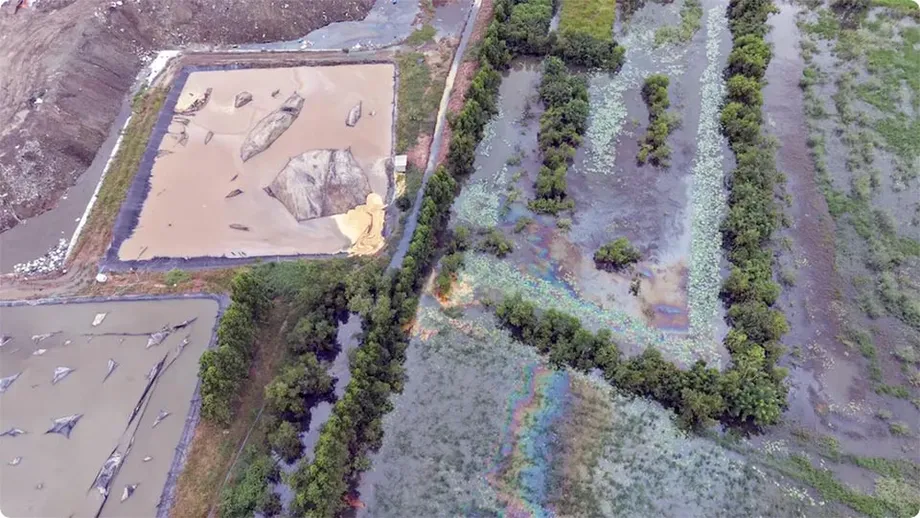
About 50,000 litres of crude oil escaped during an offshore transfer roughly 20 kilometres southeast of Map Ta Phut port. Rayong's provincial natural resources and environment office described a slick covering nine square kilometres before it moved towards Khao Laem Ya–Mu Ko Samet National Park.
The Community Resource Centre Foundation's case chronology identifies the tanker as Malan Plato and places the rupture at the Single Point Mooring, an offshore buoy system through which tankers transfer oil into pipelines leading towards shore.
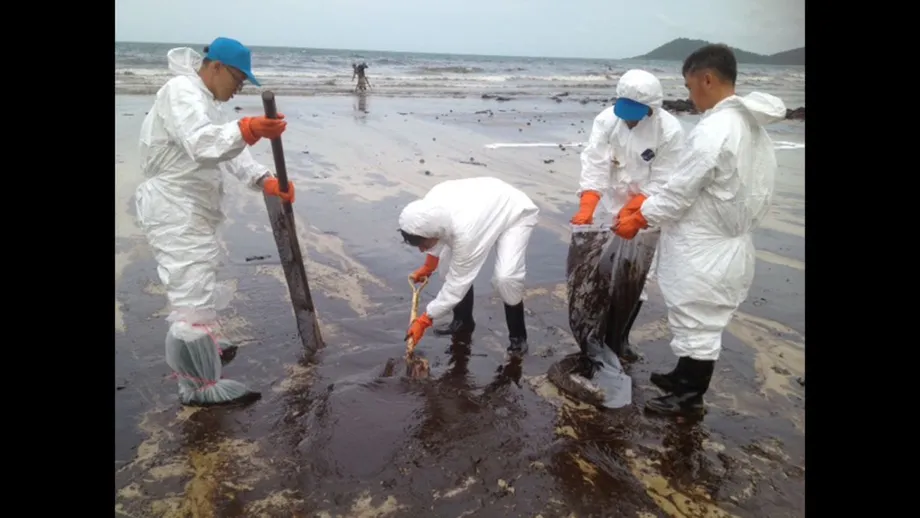
Wind and waves carried the oil towards Koh Samet and the mainland. Ao Phrao, on the island's western side, suffered the heaviest visible damage. Oil blackened the sand, spread a strong smell along the beach and forced the bay to close temporarily.
An estimated 5,000 litres reached Ao Phrao, about one tenth of the estimated 50,000 litres released offshore. The foundation describes oil along more than 400 metres of beach; an account of the July 29 emergency response describes an affected stretch exceeding one kilometre.
A large cleanup with a longer dispute behind it
The First Naval Area Command supported aerial surveillance, while company personnel and government agencies deployed booms, absorbent materials and vessels to collect oil. More than 500 personnel and volunteers were mobilised at Ao Phrao by July 29, and cleanup teams worked around the clock.
An Oil Spill Response C-130 aircraft began spraying operations about 36 hours after the spill. Booms were placed roughly one kilometre from Koh Samet, and heavy machinery later joined the beach operation. Rayong's governor declared a marine disaster area, while then prime minister Yingluck Shinawatra directed agencies to address the damage.
The foundation records the use of at least 37,500 litres of dispersant, a chemical treatment that breaks a surface slick into smaller droplets. That quantity was equivalent to three quarters of the estimated crude oil volume released. Dispersants change how oil moves through the water, while physical recovery removes collected material from the sea.
On August 1, 2013, the company and government agencies announced that the sea and beach had returned to normal conditions, with little visible oil remaining. They reported collecting 54,000 litres of material containing oil and some water. The water content explains why the collected volume could exceed the estimated quantity of crude released.
What the compensation awards mean
The association filed its Rayong civil lawsuit on July 25, 2014, under case number พ 1150/2557. On September 28, 2018, the provincial court awarded fishing plaintiffs 90,000 baht each and vendor plaintiffs 60,000 baht each. Initial relief of 30,000 baht per person was to be deducted.
The fishing award was calculated around three months of lost work opportunities. Residents appealed on March 22, 2019. The September 2020 appeal judgment raised both categories by 60,000 baht, increasing the fishing award by two thirds and doubling the vendor award.
After the initial payment was deducted, the appeal awards left 120,000 baht for each fishing plaintiff and 90,000 baht for each vendor plaintiff. Those deductions matter to households calculating what the judgment would add to money already received.
The foundation's account divides the awards between fishing and vendor plaintiffs. Another description calls the second category tourism operators, while an initial account of the 2018 ruling describes all 429 plaintiffs as fishermen. The association's case history identifies a wider group of affected livelihoods rather than a single occupation.
Why the recovery fund was refused twice
The provincial court and appeal court both rejected the fund, but for different reasons. Understanding that change explains why residents continued their challenge after winning higher compensation.
The provincial court treated the request as repeating proceedings already brought over the same spill in Bangkok's Civil Court. It relied on Section 144 of the Civil Procedure Code, which restricts repeating judicial proceedings on an issue already dealt with in the relevant circumstances.
The Region 2 Court of Appeal disagreed with that reasoning. Its environmental division found that the fund request did not amount to repeated proceedings. It nevertheless ruled that existing law did not authorise plaintiffs to require a defendant to establish a natural resources recovery fund for damage caused by a wrongful act or escaping pollution.
The Supreme Court appeal therefore concerns access to a specific form of repair. Individual compensation pays affected people. The proposed fund would direct money towards restoring shared resources, including the marine habitats on which many households depend. Residents want the court to address that wider recovery through their civil claim.
Residents describe damage beyond the beach
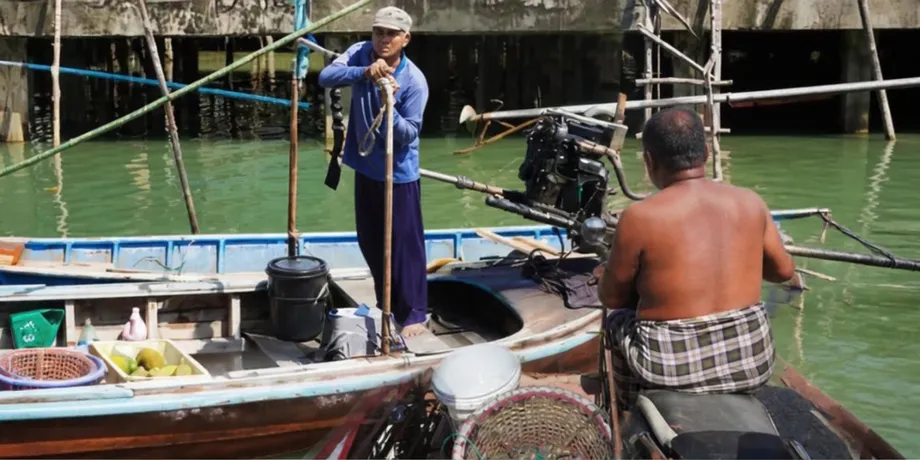
Fishing communities told the foundation that catches fell sharply during the first three years after the spill. They described missing seasonal krill, fewer fish and changes in the range of species caught. Krill are small marine animals eaten by other sea creatures, so their availability matters throughout the local food chain.
The foundation also records community observations of coral bleaching around Ao Phrao, Ao Takhrai and Ao Kio on Koh Samet's western side. Residents contrasted those areas with eastern beaches outside the slick's route, including Sai Kaew, Ao Wong Duean and Ao Saeng Thian. Coral bleaching occurs when stressed corals lose the tiny organisms that help nourish them.
Sor Rattanatameen, the lawyer representing the fishermen, explained after the 2018 judgment why the claim extended beyond cash payments:
The condition of the environment has not fully recovered. Local fishermen didn't care about an amount of money paid by the company, but they really need to see meaningful ecological rehabilitation measures that can return a good marine environment to the villagers,
Seafood vendors also described having to bring in products from other provinces as local supplies declined. For those businesses, marine recovery meant being able to buy and sell Rayong seafood again, while fishing households wanted dependable catches rather than a limited payment for interrupted work.
The association proposed surveying the seabed, collecting environmental data, removing residual oil, conducting research and restoring marine resources. It also asked the governor to close the bay for recovery. These requests set out practical tasks that residents wanted sustained financing to support.
Several lawsuits followed the same spill
The Rayong civil action is one of several legal proceedings arising from the disaster. In 2016, Bangkok's Civil Court ordered compensation of between 30,000 and 50,000 baht each for 302 plaintiffs, depending on their losses, and ordered the company to pay for marine rehabilitation.
The association also pursued government agencies through the administrative courts. On July 25, 2014, the same day as the Rayong civil filing, residents sued bodies responsible for pollution response and marine resources, including the Marine Department, Fisheries Department, Pollution Control Department, Department of Marine and Coastal Resources and Rayong's governor.
On July 21, 2020, the administrative court dismissed the case brought by the association and 454 people. It found that the government defendants had not neglected their duties in responding to the spill. The foundation records an appeal to the Supreme Administrative Court as pending at the time of its account.
The two court routes concern different defendants and responsibilities. The civil case seeks remedies from the company. The administrative case challenges how public authorities carried out their duties to control pollution and protect marine and coastal resources.
A second spill renewed pressure for answers
Rayong faced another offshore oil spill on January 25, 2022, this time involving Star Petroleum Refining, or SPRC. The leak began at 9:06 p.m. near an offshore transfer point serving the Map Ta Phut industrial area. Oil reached Mae Ram Phueng beach on January 28.
The disruption struck as businesses prepared for Lunar New Year visitors following hardship during COVID-19. The tourism account described booking cancellations reaching 100% across 150 Koh Samet hotels with more than 4,000 rooms. Mae Ram Phueng beach was declared a disaster area, and more than 500 people registered for assistance within three days after registration opened on January 30.
SPRC's changing spill estimates prompted demands for clearer information. Governor Channa Iamsaeng said the company estimated a release of no more than 50,000 litres after earlier calculations of 400,000 litres under a worst case scenario and then 160,000 litres. He announced a committee involving government, business and civil society to verify the quantity.
Environmental specialist Sonthi Kotchawat of the Thailand Environment Institute warned about risks from excessive dispersant use and the effects of oil droplets on marine organisms. His concerns echoed the earlier community demand for recovery work extending beyond removal of visible oil.
SPRC also disclosed insurance covering property and business interruption worth $1 billion and third party liability worth $100 million. For Rayong residents, the second emergency renewed the practical demands heard after 2013: timely assistance, reliable information and resources for marine repair.
The main dates in the legal battle
The 2013 spill led to years of proceedings over compensation, public duties and environmental recovery. The main steps in the Rayong civil case are:
- July 27, 2013: About 50,000 litres of crude oil leaked offshore near Map Ta Phut.
- July 25, 2014: The association and fellow plaintiffs filed their Rayong civil lawsuit and an administrative action against government bodies.
- September 28, 2018: The provincial court awarded compensation but rejected the recovery fund.
- March 22, 2019: Residents filed their appeal.
- September 1, 2020: The appeal court increased compensation and rejected the fund on different legal grounds.
- October 22, at 9 a.m.: The announced appointment for reading the Supreme Court judgment.
The central issue reaching the Supreme Court is whether residents can obtain the ecological recovery remedy they requested. Their proposed fund connects the company's finances to restoration of a resource shared by fishing families, vendors and tourism businesses.
Key Points
- The Rayong case involves 429 plaintiffs affected by PTT Global Chemical's 2013 oil spill.
- Residents requested a marine recovery fund financed with 10% of the company's average annual profit.
- The appeal court awarded 150,000 baht per fishing plaintiff and 120,000 baht per vendor plaintiff, less initial relief.
- The appeal court rejected the fund because it found no law authorising the requested remedy.
- The Supreme Court appeal focuses on ecological restoration and the proposed fund.