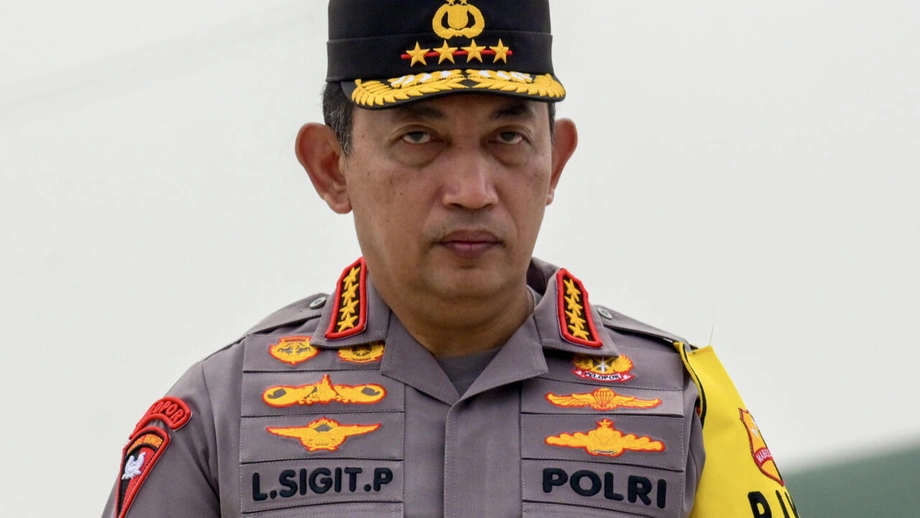
A temporary replacement at the heart of the presidency
President Prabowo Subianto appointed Lieutenant General Ariyo Windutomo as acting head of Indonesia's Presidential Staff Office on November 4, 2026, after dismissing Listyo Sigit Prabowo amid an investigation into alleged illegal surveillance of the president and other public figures.
Contents
- A temporary replacement at the heart of the presidency
- What police allege the three officers did
- How the case unfolded
- Why officials are discussing treason
- Who was targeted, and who wants answers
- Troop movements bring another layer of uncertainty
- Business leaders seek secure communications
- A scandal arrives during market stress
- Political pressure and the demand for transparency
- Key Points
Minister of State Secretary Prasetyo Hadi said Prabowo signed a presidential decree that morning removing Listyo, a former national police chief who had moved to the presidential staff post only the previous month. Ariyo, who also heads the Presidential Secretariat, will temporarily carry out the duties of the vacant office.
The appointment keeps the Presidential Staff Office, known as KSP, operating while its former chief faces allegations involving telephone interception, unlawful access to electronic systems and deletion of electronic evidence. Prasetyo said Prabowo was deeply concerned because one of the suspects occupied a position within his own presidential administration.
The investigation reaches beyond the president's communications. Police described alleged targets across government, politics, journalism, civil society and business. At the same time, military personnel were being mobilised in Jakarta, business groups were demanding protection for confidential communications, and officials were discussing whether the case could extend to treason.
What police allege the three officers did
National Police Criminal Investigation Department chief Asep Safrudin said investigators named three police personnel as suspects after questioning witnesses and seizing evidence. Initially identified as LSP, ASN and EH, they were subsequently named as Listyo Sigit Prabowo, Ahrie Sonta Nasution and Eko Hadi Santoso.
Police allege that the surveillance began in early 2025 and continued into 2026, covering a period when Listyo led the national police. He had held that position since 2021, when former president Joko Widodo appointed him, and remained in office after Prabowo became president in 2024.
Asep said the alleged surveillance operated outside the legal procedures governing police investigations. He described it as being conducted:
"without any legal basis or without any investigative or inquiry process in accordance with applicable laws".
Investigators also allege that the suspects ordered files containing intercepted communications deleted in late October to conceal evidence. Interception means obtaining communications while they are being transmitted; unlawful access concerns entering an electronic system without proper permission. Deleting the resulting files forms another part of the alleged conduct.
The suspects were held at the National Police Headquarters detention centre in Jakarta. Their detention was widely dated to November 3, although police were also quoted as saying they had been detained on Sunday, November 1. The three suspects had not publicly responded to the allegations.
How the case unfolded
Listyo's dismissal came within weeks of his appointment to KSP. The sequence places the alleged surveillance, attempted deletion of files and military mobilisation on separate dates, with the investigation becoming public in early November.
- 2021: Listyo became national police chief under President Joko Widodo.
- Early 2025: Investigators say the alleged unauthorised telephone surveillance began.
- October 2026: Listyo moved from the police leadership to the Presidential Staff Office.
- Late October: Police allege that the suspects ordered intercepted communications files deleted.
- November 2: A military telegram attributed to armed forces commander General Agus Subiyanto instructed a large mobilisation.
- November 3: Police publicly announced three suspects in the surveillance investigation.
- November 4: Prabowo dismissed Listyo by presidential decree and appointed Ariyo as acting KSP chief.
Ariyo's appointment is temporary, and no date was announced for naming a permanent replacement. Prasetyo said police services would continue and urged the public to remain calm while investigators worked.
Why officials are discussing treason
Prasetyo argued that access to a president's communications could expose sensitive information affecting national interests and the safety of the country's leadership. He described the alleged acts as potentially leading toward treason.
Speaking at the presidential palace, Prasetyo explained the government's concern:
If we are talking about a head of state, there is a great deal of highly sensitive information that could potentially be used for purposes that endanger the interests of the nation.
Coordinating Minister for Law, Human Rights, Immigration and Corrections Yusril Ihza Mahendra gave differing assessments as the investigation developed. On November 3, he said investigators had found no indication of treason. Statements attributed to him on November 4 included both an assessment that no such indication had yet emerged and a preliminary assessment that the operation might have aimed at paralysing the government. He was also quoted describing the matter as a criminal wiretapping case unrelated to an attempted coup.
Authorities were examining whether Article 191 of Indonesia's Criminal Code might apply, with penalties extending to a death sentence. Yusril described the assessment as preliminary. Investigators were still examining the motive, who might have directed the operation and how the information was intended to be used.
The legal framework discussed around the case also includes National Police Regulation No. 5 of 2010, the new Criminal Code and the Electronic Information and Transactions Law. These address the rules governing interception and electronic activity. Police interception powers operate through legal procedures, which investigators allege were bypassed.
Who was targeted, and who wants answers
Asep described a broad range of alleged targets: the president, state officials, political figures, media figures, civil society organisations, nongovernmental organisations and businesspeople. Yusril said he had heard that several ministers and politicians were affected, but could not identify the ministers.
Yusril also said he did not know whether Vice President Gibran Rakabuming Raka had been targeted. Police had not published a complete list of the people whose communications were allegedly intercepted. A person identified as SU was still being examined as a witness, according to Asep.
Amnesty International Indonesia called for authorities to disclose the surveillance targets, arguing that the public had a right to know. The organisation warned about the risk of surveillance being used to suppress political opposition:
If this scandal is allowed to continue unchecked, it could pave the way for a secret police apparatus used to tame the opposition.
For journalists, the alleged interception raises concerns about confidential conversations with sources. For civil society groups and businesses, it raises similar concerns about private discussions and sensitive plans. The breadth of the alleged target list makes the investigation relevant far beyond the presidential palace.
Troop movements bring another layer of uncertainty
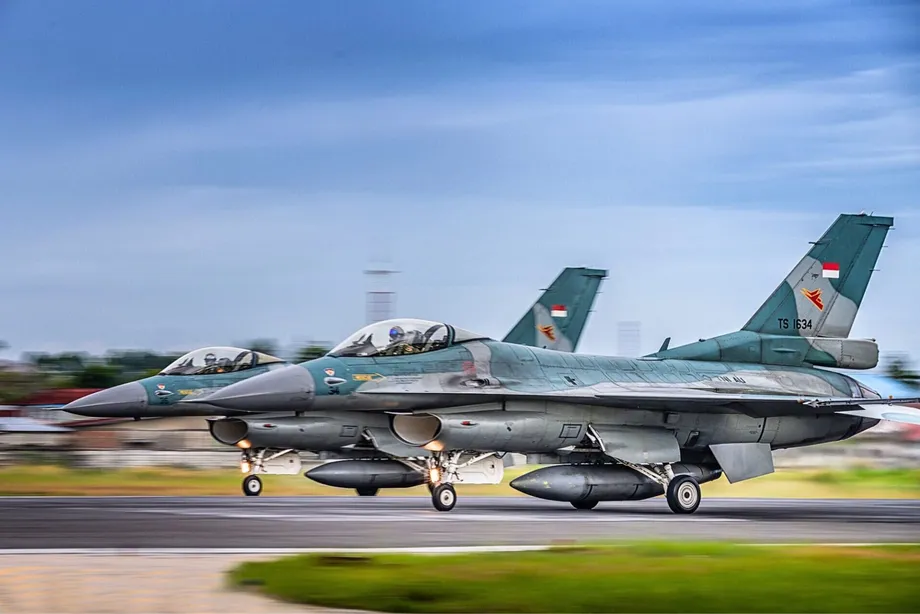
Indonesia's military confirmed personnel movements in and around Jakarta while the surveillance investigation unfolded. Navy spokesperson First Admiral Tunggul M. Han said the deployment supported national security and stability and preparations for military exercises near the capital. Armed forces spokesperson Major General Muhammad Nas described troop movements as standard procedure.
The publicly described numbers contain a substantial difference. Navy operations assistant Vice Admiral Yayan Sofiyan gave a figure of 20,980 personnel involved in the deployment, with another 13,140 on standby. A circulated internal military plan instead described 20,980 as the entire four phase mobilisation: 2,100 personnel already in Jakarta, 5,740 scheduled to arrive and 13,140 remaining at their bases on standby.
Under the internal plan's breakdown, 7,840 personnel would be in Jakarta or scheduled to arrive, while the larger group would remain ready elsewhere. Personnel were drawn from naval and marine units, training institutions and bases across Java and Lampung. Transport arrangements included the vessels KRI Makassar and KRI Dr Soeharso, with operations under Jakarta Military Command control.
Authorities had not confirmed a connection between the deployment and the wiretapping investigation. The mobilisation instruction was dated November 2, before the public announcement of suspects on November 3.
Sana Jaffrey, a researcher at the Australian National University, said the deployment could reflect concerns about tension between the military and police associated with Listyo. She warned of unintended escalation and said a president increasingly concerned about personal security might rely more heavily on the military. Military analyst Aris Santoso viewed the Marine presence as possible preparation for heightened political tension and demonstrations.
Business leaders seek secure communications
Business organisations focused on the security of commercial information and the need for a transparent investigation. Confidential messages can contain investment plans, transaction details and business strategies, all of which companies need to protect.
Erwin Aksa, deputy chair of the Indonesian Chamber of Commerce and Industry, known as Kadin, and a Golkar Party lawmaker, called for an investigation grounded in evidence. He explained the commercial concern:
Businesses need secure information, confidential communications and legal certainty to maintain investor confidence.
Donna Priadi, managing director of the American Chamber of Commerce in Indonesia, said political stability, predictable regulation and the rule of law were central to investor confidence. She said it was too early to conclude that business operations had been materially affected, while stressing that the authorities' handling of the allegations would matter for public trust.
Prasetyo said Prabowo had instructed National Police Chief General Suyudi Ario Seto to conduct an objective investigation under the law and withhold nothing. Suyudi had informed the president about the case. Parliament's Commission III, which oversees legal and security matters, also supported the investigation.
A scandal arrives during market stress
Indonesia's financial markets were already under pressure when news of the investigation spread. On November 3, foreign investors recorded net share sales of Rp 575 billion, compared with Rp 112.5 billion a day earlier. Net sales measure how much selling exceeds buying; the figures show that the net outflow grew to about 5.1 times the previous day's level.
The IDX Composite fell 3.78 percent that day to 4,904.3. It opened another 0.97 percent lower on November 4 before recovering to close at 4,919.8, about 0.32 percent above the previous close.
Harry Su, research managing director at Samuel Sekuritas Indonesia, said rising domestic political risks, including the surveillance allegations, were adding to market unease alongside expectations of weaker economic growth in the third quarter. Mirae Sekuritas chief economist Rully Arya Wisnubroto also pointed to uncertainty around index provider MSCI's review, foreign selling and concerns about Indonesian equities.
Investors were weighing several pressures at once: a weaker rupiah, concerns about government policy, high United States Treasury yields and a stronger dollar. Regional markets also fell, with Japan's Nikkei 225 dropping 4.5 percent and MSCI's broad index of Asia Pacific shares outside Japan declining 1.9 percent during the November 4 session.
Political pressure and the demand for transparency
Prabowo faces the investigation amid public dissatisfaction over food prices, his free meals and village cooperatives programmes, and the government's response to destructive forest fires. Student demonstrations and falling approval ratings have added pressure during his second year in office.
Listyo was associated with former president Widodo, whose relationship with Prabowo has become strained. Widodo's son, Vice President Gibran, has separately faced renewed calls for removal following a court ruling invalidating his school certificate. These disputes form the political setting in which police are examining the surveillance allegations.
Gerindra secretary general Sugiono described the scandal as insubordination within government and said Prabowo's party would discuss it with other political parties. Former president Susilo Bambang Yudhoyono appealed for calmer political conduct.
In a public message on November 4, Yudhoyono urged Prabowo to:
"restore civility to our politics".
Bambang Rukminto, a police analyst at the Institute for Security and Strategic Studies, called for investigators to trace the intended use of the intercepted information and identify any parties interested in obtaining it. That demand connects the central concerns running through the case: the president's security, the privacy of other alleged targets and accountability for the use of police surveillance powers.
Key Points
- Prabowo dismissed Listyo Sigit Prabowo on November 4, 2026, and appointed Lieutenant General Ariyo Windutomo as acting KSP chief.
- Police named three senior officers as suspects in alleged illegal interception, unlawful electronic access and deletion of electronic evidence.
- The alleged surveillance ran from early 2025 into 2026 and targeted the president and figures across government, politics, media, civil society and business.
- Officials discussed possible treason charges, while the motive and intended use of the intercepted information remained under investigation.
- The military confirmed troop movements around Jakarta, citing security and training needs; published deployment figures used different totals.
- Business groups called for secure communications and a transparent investigation as Indonesian markets faced continued pressure.