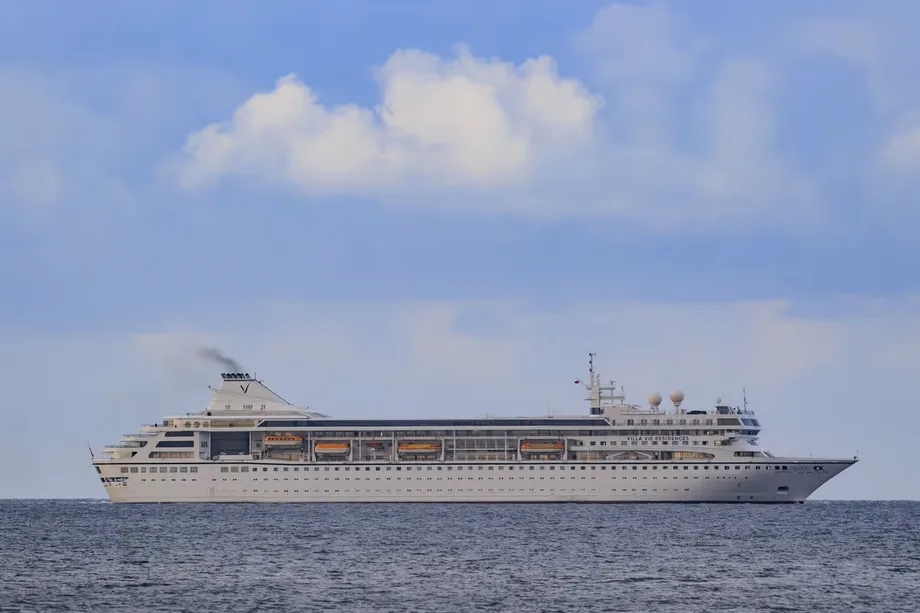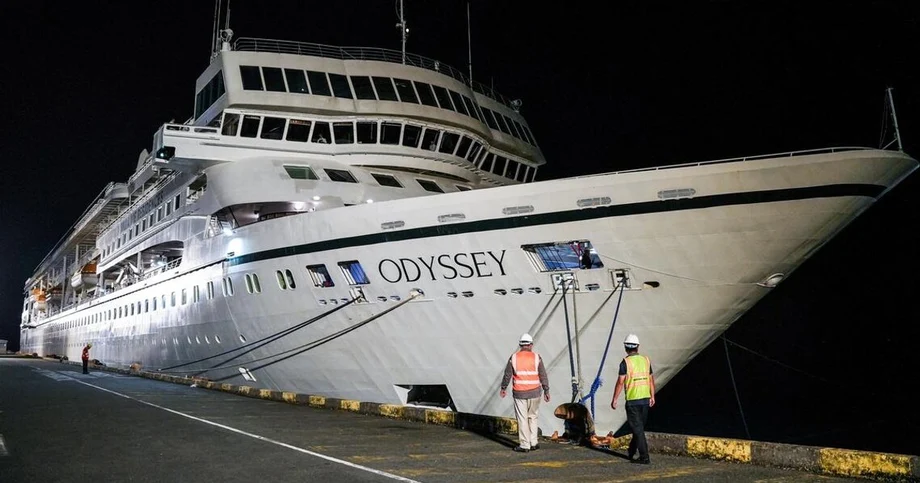
A floating home sails away without its residents
Villa Vie Odyssey has left Cambodia without the more than 200 residents whose world voyage stopped in Sihanoukville, leaving passengers who had paid substantial sums for years aboard searching for housing, flights and answers about their money.
Contents
- A floating home sails away without its residents
- Passengers collect what they can
- How the voyage reached this point
- Fuel costs more than tripled
- Residents describe earlier warning signs
- Large cabin payments meet continuing expenses
- Cambodia provides a place to regroup
- Hotel help and an unanswered request for information
- A lender takeover and a proposed restructuring
- Key Points
Cambodian Prime Minister Hun Manet said the vessel departed on the night of November 3, 2026. Local tourism chief Taing Sochitkrishna placed its departure early on November 4 and said approximately 50 crew members, but no passengers, were aboard. Around 100 former residents remained in Cambodia, while most others had flown elsewhere in the region.
The Florida company Villa Vie Residences blamed sharply higher fuel costs associated with the war in Iran for suspending operations. Passengers described financial appeals and shrinking services before the shutdown, followed by orders to pack and leave within hours.
Hun Manet confirmed the departure in remarks recorded by Cambodia's state news agency, Agence Kampuchea Presse, in its November 5 statement. He said Cambodia had imposed no deadline for the ship to leave and had allowed passengers, many of them elderly, to rest in hotels.
The voyage had lasted at least 755 days. For residents who had sold possessions or given up homes on land, the interruption meant losing their everyday accommodation as well as their planned journey.
Passengers collect what they can
Passengers returned to retrieve their remaining belongings on November 3, shortly before the ship sailed. Some said they did not expect to return to the vessel that had become their home.
Shirine Thomas, a passenger from Wilmington, North Carolina, described what she was leaving behind after collecting some final possessions.
There are still many things on the ship that I wish I could take with me.
Some residents had only several hours to pack, with descriptions placing the notice period at roughly seven hours. People who were away from the vessel when the announcement arrived faced particular difficulty retrieving larger belongings or furnishings.
The passenger count at the shutdown was widely put at 203, although another description placed it at 300. Most residents were Americans. Their immediate tasks were practical: find a room, arrange transport, carry what could fit into luggage and decide whether to wait in Cambodia or travel elsewhere.
How the voyage reached this point
Villa Vie bought the ship in 2023. Built in 1993, it had sailed under several names before being refitted in Belfast, Northern Ireland, where its current voyage began in October 2024. The planned itinerary covered three years, while some customers purchased rights intended to last much longer.
The company had already discussed another cruise and the purchase of a second vessel. Instead, its first residential voyage stopped during a scheduled visit to Sihanoukville, a port on Cambodia's Gulf of Thailand coast.
The main developments unfolded as follows:
- October 2024: Odyssey began its current world voyage from Belfast.
- September 2026: Passenger Pamela Reckamp said the company sought $1 million to leave Ha Long Bay in Vietnam because fuel supplies were running low.
- October 27: Villa Vie announced a suspension of operations and plans to seek restructuring and funding.
- Late October: Residents were ordered ashore within hours. The evacuation is dated October 28 in several descriptions and October 18 in another.
- November 1: Passengers were told that the lender would take over the ship and cover crew wages and fuel.
- November 3: Residents collected remaining belongings; Hun Manet said the ship departed that night.
- November 5: Hun Manet publicly described Cambodia's assistance to the passengers and vessel.
The October suspension announcement had presented the stop as temporary, with crew remaining aboard to maintain essential systems while the company pursued funding over the next 60 days.
Fuel costs more than tripled
Villa Vie said its historical monthly fuel expense, expressed as an equivalent cost per cabin, was about $1,800. In parts of Asia, it estimated that expense had reached $6,000 to $8,000. Another company account used a starting figure of $1,600 and a new range of $5,000 to $7,000.
Using the more widely cited $1,800 baseline, the increase amounts to an extra $4,200 to $6,200 per cabin each month. The new range is approximately 3.3 to 4.4 times the earlier figure. These are allocations of the ship's fuel burden across cabins, rather than individual meters measuring fuel used inside each room.
The company linked the increase to the war in Iran. Reduced traffic through the Strait of Hormuz, an important route for petroleum shipments, put pressure on fuel supplies and prices, including in Southeast Asia.
Villa Vie said it tried to save fuel by slowing the itinerary and spending longer in port. Those measures changed the pace of the voyage, but the company said the savings were insufficient to keep operating.
The financial pressure reached passengers directly. Residents said they had been asked for contributions for months, including additional payments intended to fund the vessel's next movements.
Residents describe earlier warning signs
Kit and Randy Cassingham, passengers from the United States who moved into a Cambodian hotel on October 28, described reduced menus and portions, unreliable internet access, adjustments to air conditioning to save fuel and shorter shore excursions.
Residents were also asked to contribute $1,800 each to help the ship reach Bangkok. For people who had budgeted around a fixed retirement income, such requests added unpredictable expenses to a lifestyle sold around extended residence at sea.
Sharon Lane, a retired American teacher aged 78, said she had sold most of her belongings and paid $200,000 for a cabin intended to accommodate her for 15 years. She moved aboard in June 2025 and returned to land in August because of health problems.
Lane described limited food between lunch and an evening meal served close to 7 p.m., with inadequate portions for the number of people aboard. She said she voluntarily contributed hundreds of dollars toward fuel out of concern for fellow passengers relying on social security income.
Villa Vie also offered loans to passengers at annual interest rates of 12% to 24%, according to an account of the company's financing arrangements. Borrowing at those rates would add another recurring obligation for residents already being asked to help cover operating costs.
Large cabin payments meet continuing expenses
Cabin purchases were described as ranging from $119,999 to $439,999, with some passengers saying they paid more than $300,000 for suites for the lifetime of the vessel. A separately quoted starting price for a suite was $230,000. Customers joined under different arrangements, including rentals, stays lasting many years and rights tied to the ship's remaining life.
Residents also faced ongoing fees for services and maintenance. Paying a large sum at the beginning therefore left them dependent on the operator's ability to keep meeting fuel, staffing and other expenses throughout their stay.
The vessel's commonly cited passenger capacity was 650, although another description put it at 300. Against the 650 figure, 203 residents represent about 31% of capacity. Fewer residents mean the costs of moving and maintaining a large ship must be supported by a smaller paying community.
The crew count also changed with the circumstances. Figures for the ship before departure ranged from 145 to 160, including a frequently cited total of 156. Sochitkrishna's figure of approximately 50 referred specifically to those aboard when it left Cambodia.
The shutdown brought the relationship between cabin rights and vessel ownership into immediate focus. Residents needed a functioning operator to provide the accommodation and services they had purchased, while the lender's reported intervention placed control of the ship at the centre of the financial negotiations.
Cambodia provides a place to regroup
Hun Manet said Cambodia allowed the vessel to dock after the company cited financial difficulties caused by rising fuel prices. He spoke on November 5 at Pursat Provincial Stadium during a ceremony distributing rice seeds and food packages to families affected by flooding.
The prime minister said the tourism minister personally travelled to welcome passengers. He described assistance to the residents as a humanitarian responsibility and said Cambodia expected nothing in return.
Hun Manet explained the government's approach in these words:
This is the culture and spirit of the Cambodian people. Cambodia is not a wealthy country, but when others are in difficulty, we help and find solutions,
The government said passengers and crew had expressed appreciation for the help they received. Cambodian authorities also reportedly coordinated with foreign embassies over consular assistance and onward travel.
Hun Manet recalled Cambodia's decision to welcome the Westerdam during the early COVID-19 pandemic in 2020 after other ports had refused it entry. In the Odyssey case, the immediate need was to accommodate people whose planned home at sea had suddenly stopped operating.
Hotel help and an unanswered request for information
Villa Vie said it would help residents find temporary accommodation. Some passengers received short hotel stays, while others said they received no assistance or missed out on hotel vouchers. Later accommodation and flights were largely left to individuals to arrange and pay for.
Nearly 100 passengers remained in Sihanoukville, according to local tourism officials, while others travelled elsewhere in Cambodia or abroad. Residents seeking international flights often needed to arrange transfers to larger transport centres, adding another step to their departure.
Mary Ann Demsar, a retired high school teacher from Ontario, Canada, aged 67, said the owners had provided little information about whether the voyage would continue.
We don't get any clear indication from the owners of Villa Vie as to what is happening," she said. "They've been so quiet, the only information we get is from the wonderful government and the representatives here in Cambodia.
Villa Vie Residences did not respond to requests for comment by email or telephone after the departure. Passengers were left balancing the cost of waiting nearby against the expense of making new travel and housing arrangements.
A lender takeover and a proposed restructuring
Passengers were told on November 1 that the ship's lender would take control, pay crew wages and cover fuel costs. An auction was expected as a possible next step. A lender selling a vessel would use the process to seek repayment of money owed to it.
Mikael Petterson, head of Villa Vie Residences, described a potential restructuring period and the company's hope of bringing in an operating partner.
This process will take 30-90 days. During that time, we have the opportunity to restructure. The company still hopes to regain Odyssey if we find an operating partner,
The earlier 60 day funding effort and Petterson's subsequent estimate of 30 to 90 days describe proposed financial work, rather than a scheduled passenger departure. Singapore was the expected destination cited by passengers and vessel tracking accounts, but Cambodian officials had not confirmed where the ship was going.
No firm date had been announced for a return to residential cruising, an auction, refunds or the recovery of belongings still aboard. Passengers seeking repayment or renewed accommodation will depend on their contracts and the outcome of negotiations involving the operator and lender.
Key Points
- Villa Vie Odyssey left Sihanoukville around the night of November 3 into November 4, 2026, without passengers.
- More than 200 residents were displaced; around 100 remained in Cambodia.
- Villa Vie said monthly fuel expenses per cabin rose from about $1,800 to $6,000–$8,000 in parts of Asia.
- Passengers described repeated funding requests and reductions in services before the shutdown.
- Cambodia allowed passengers to disembark and rest in hotels, and imposed no departure deadline on the vessel.
- A lender takeover and possible auction were described to passengers, while the company sought a restructuring partner.
- No firm restart or refund timetable had been announced.