New York court opens another route to serve Indian officials
A U.S. federal judge has allowed Gurpatwant Singh Pannun to pursue service of legal papers on India's National Security Adviser Ajit Doval and former intelligence chief Samant Goel through Indian courts, adding a new procedural step to a civil lawsuit over an alleged assassination plot in New York in 2023.
Contents
- New York court opens another route to serve Indian officials
- What the November 9 order requires
- Why the State Department became involved
- India rejects the allegations and cites its legal channel
- Who Pannun is suing and what he seeks
- How Gupta's criminal case connects to the lawsuit
- Yadav's alleged role and India's inquiry
- The dates that shape the next steps
- Key Points
U.S. District Judge Katherine Polk Failla's November 9, 2026, order requires Pannun to submit a proposed service packet by November 30. The State Department had already told the U.S. District Court for the Southern District of New York that summonses had been delivered through the Indian Embassy in Washington.
India rejected the lawsuit and challenged the route for delivering judicial documents. Its Ministry of External Affairs said requests for service in India must pass through the Ministry of Law and Justice, the country's designated central authority.
The developments bring two legal proceedings into view. Pannun is seeking damages in a civil case against the Indian government, senior officials and other defendants. Separately, U.S. prosecutors have pursued criminal charges over the alleged plot. Nikhil Gupta, an Indian national accused of arranging the killing, pleaded guilty in February 2026 and is scheduled to be sentenced on November 20.
For Pannun, the immediate task is getting the lawsuit's papers formally delivered through a route the court will accept. For India, the response combines a denial of the allegations with an objection about how an American court's documents should reach officials in another country.
What the November 9 order requires
Judge Failla allowed Pannun to pursue service on Doval and Goel through Indian judicial channels. Service is the formal delivery of court papers, giving a defendant notice of a lawsuit and an opportunity to respond.
Pannun must submit copies of the summonses, a proposed order specifying the method of service, relevant Indian legal provisions and records of earlier attempts to deliver the papers through the Hague Convention. That convention provides a framework for transmitting judicial documents between countries.
The November 30 deadline is for submitting that proposed packet. The court would then examine the documents before its clerk transmits them to the Indian courts identified in the request. Delivery through those courts therefore involves further steps.
The order concerns how the case can proceed. Decisions on responsibility for the alleged plot and any damages belong to later stages of the civil proceedings.
Why the State Department became involved
The State Department's role was to transmit legal notice through diplomatic channels. It said it was legally obliged to do so and was taking no position on the lawsuit. The Indian Embassy in Washington was the recipient of the diplomatic communication.
The notice's date is described differently in the published accounts: October 20 in one description, while the chronology associated with an October 28 court filing gives September 30 as the signing date and October 9 as the date it was sent to the embassy. Both descriptions place the diplomatic transmission before the November 9 court order.
The October 28 filing confirmed delivery to the embassy. The subsequent order addressed Pannun's request to pursue service on Doval and Goel through Indian courts, bringing the mechanics of notifying the individual defendants into focus.
A diplomatic transmission and a court's consideration of service perform different tasks. The State Department carries the communication between governments; the judge manages the lawsuit and the procedures needed to move it forward.
India rejects the allegations and cites its legal channel
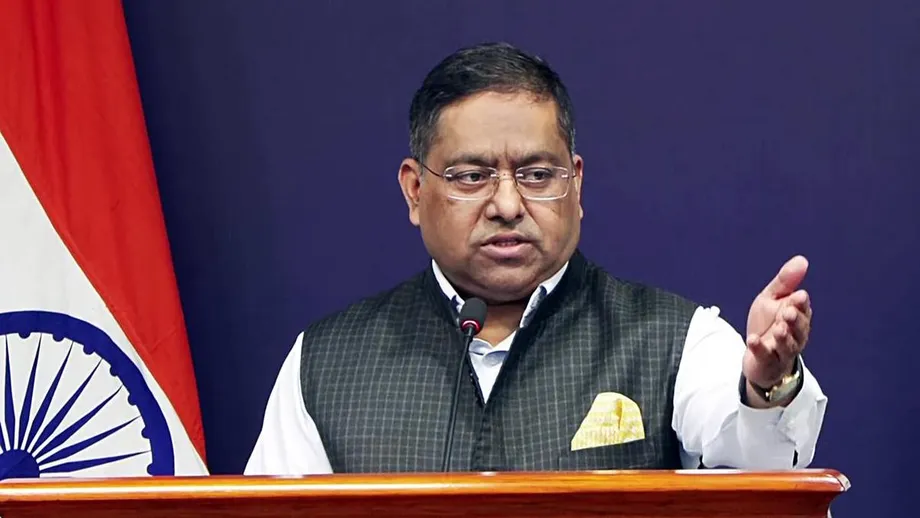
Ministry of External Affairs spokesperson Randhir Jaiswal rejected the accusations against Indian officials at a November 10 briefing. He also described the lawsuits as frivolous.
"We reject the fabricated and malicious attacks on our high officials, as also the frivolous lawsuits," Jaiswal said.
Jaiswal then set out India's position on the delivery of judicial documents, identifying the ministry responsible for receiving such requests.
"Requests for the service of judicial documents in India can only be routed through India's designated central authority, that is, the ministry of law and justice," he said.
Foreign Secretary Vikram Misri had also rejected Pannun's allegations in September, describing them as "completely unwarranted and unsubstantiated imputations". India's position therefore covers both the substance of the accusations and the procedure for bringing the papers before its officials.
Who Pannun is suing and what he seeks
Pannun filed the civil lawsuit in September 2024. It names the Government of India, Doval, Goel, Gupta, Vikash Yadav and unnamed individuals as defendants. Pannun seeks damages over the alleged attempt on his life and accuses Doval of orchestrating a plot involving India's foreign intelligence agency.
Doval is India's national security adviser. Goel formerly headed the Research and Analysis Wing, commonly known as RAW, the agency responsible for gathering foreign intelligence. Their inclusion gives the civil case a wider set of defendants than the criminal proceedings against Gupta.
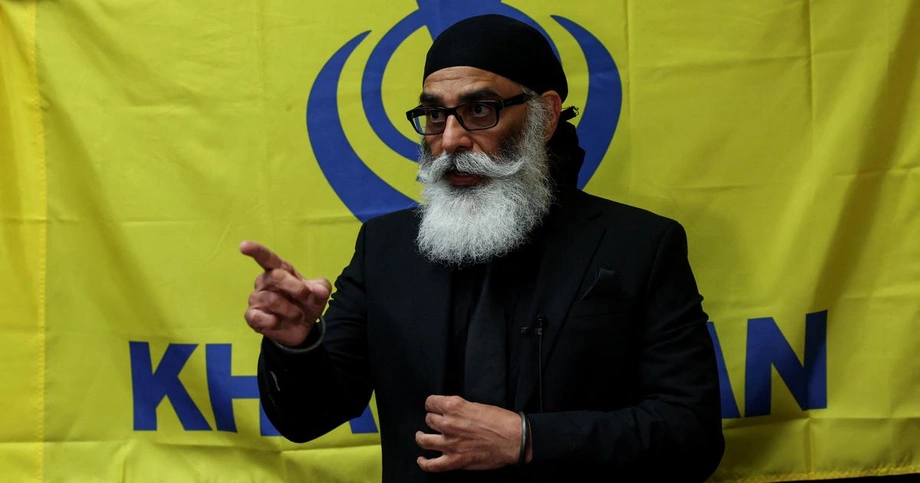
Pannun is an American and Canadian citizen and general counsel of Sikhs for Justice. He advocates Khalistan, a proposed independent state for Sikhs. India's Ministry of Home Affairs declared Sikhs for Justice an unlawful association under the Unlawful Activities Prevention Act in 2019, and India designated Pannun an individual terrorist under that law in 2020.
The civil case places Pannun, who says he was targeted for assassination in the United States, against a government that has banned his organisation and firmly denies his accusations. The next court deadlines concern service of papers and Gupta's sentencing, rather than a scheduled civil trial.
How Gupta's criminal case connects to the lawsuit
U.S. investigators traced an alleged effort to hire someone to kill Pannun in New York in June 2023. The investigation involved the FBI and the Drug Enforcement Administration, including an undercover DEA informant whose contacts helped investigators identify Gupta and communications involving Yadav.
Prosecutors accused Gupta of working with an Indian government employee to arrange the killing. Gupta was arrested in Prague in June 2023 and later extradited to the United States. Extradition is the legal process through which one country transfers a person to another to face criminal proceedings.
Gupta pleaded guilty in February 2026 to three counts: murder for hire, conspiracy to commit murder for hire and conspiracy to commit money laundering. In simple terms, those charges concern arranging a paid killing, agreeing with others to organise it and agreeing to move money connected with unlawful activity.
His sentencing is set for November 20. The criminal case concerns punishment for offences prosecuted by the U.S. government. Pannun's civil lawsuit concerns his own claims for damages against a broader group of defendants. Gupta's guilty plea is a major development in the criminal proceedings, while the civil court must separately address the claims against each defendant.
Yadav's alleged role and India's inquiry
U.S. court documents identify Vikash Yadav as Gupta's handler. American officials said Yadav was employed, at relevant times, by India's Cabinet Secretariat, which houses RAW. Prosecutors alleged that he contacted Gupta to arrange Pannun's killing.
The indictment describes Yadav as reporting to a government superior referred to as a boss, without naming that person. U.S. authorities charged Yadav in October 2024. His alleged role connects the criminal investigation to Pannun's broader accusations involving Indian officials.
Yadav was arrested in Delhi in December 2023 on separate charges and granted bail in April 2024. Indian officials have said he faces a case in an Indian court. Those proceedings concern a separate matter from the American prosecution over the alleged New York plot.
India established a committee in 2023 to examine evidence and concerns shared by U.S. investigators. New Delhi has continued to deny involvement by its officials while pointing to that inquiry as its response to Washington's information.
The dates that shape the next steps
The alleged plot, the criminal investigation and the civil lawsuit now span more than three years. The key events show how the dispute moved from an investigation into a planned killing to proceedings involving diplomatic delivery and Indian judicial channels.
- June 2023: The alleged New York assassination plot was under investigation, and Gupta was arrested in Prague.
- December 2023: Yadav was arrested in Delhi on separate charges.
- April 2024: Yadav was granted bail in the Indian case.
- September 2024: Pannun filed his civil lawsuit naming India, senior officials and other defendants.
- October 2024: U.S. authorities charged Yadav over the alleged plot.
- February 2026: Gupta pleaded guilty to three criminal counts.
- October 28, 2026: The State Department confirmed delivery of summonses to the Indian Embassy in a court filing.
- November 9, 2026: Judge Failla allowed Pannun to pursue service on Doval and Goel through Indian courts.
- November 20, 2026: Gupta's sentencing is scheduled.
- November 30, 2026: Pannun's proposed service packet is due.
The two November deadlines serve different purposes. Gupta's sentencing concerns the consequences of his guilty plea. Pannun's filing deadline concerns the documents and legal basis needed to pursue service on two senior Indian figures.
Key Points
- A U.S. judge has allowed Pannun to pursue service of his civil lawsuit on Ajit Doval and Samant Goel through Indian courts.
- Pannun must submit a proposed service packet by November 30, 2026, for the court's consideration.
- The State Department transmitted summonses through the Indian Embassy and said it was taking no position on the lawsuit.
- India rejects the allegations and says judicial service requests must go through its Ministry of Law and Justice.
- Gupta pleaded guilty in the separate criminal case in February 2026. His sentencing is scheduled for November 20.
- The civil lawsuit seeks damages over an alleged assassination plot against Pannun in New York in 2023.