Buyers' money would stay in banks until homes are ready
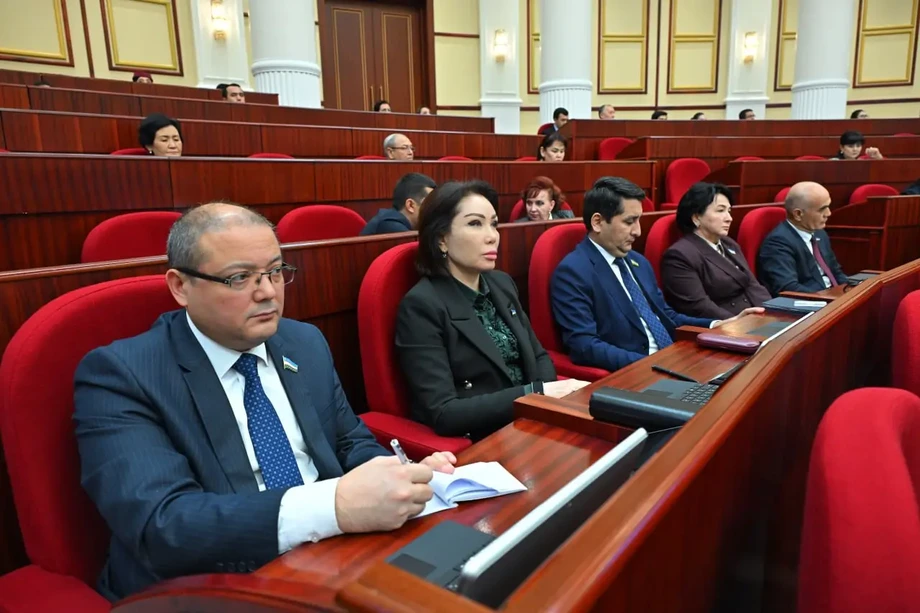
Uzbekistan's Legislative Chamber approved a housing construction bill on November 10, 2026, that would keep buyers' payments in bank escrow accounts, require banks to finance at least 70% of construction costs on projects using shared equity, and introduce criminal liability for unlawfully collecting citizens' money.
Contents
- Buyers' money would stay in banks until homes are ready
- A reform already moving through several stages
- Developers would face checks before collecting payments
- Contracts would need formal checks and registration
- Why the 70% bank financing rule drew objections
- Officials weigh stronger protection against higher costs
- Missed deadlines would trigger earlier action
- Apartment size complaints changed the draft
- Illegal fundraising would become a criminal offence
- Key Points
The bill, covering apartment buildings and other real estate built through shared participation, has been sent to the Senate. It still needs Senate approval, the president's signature and official publication before taking effect. Its requirements would apply to projects receiving construction permits after that point, leaving construction already underway outside the new framework.
The proposed protections address a market where buyers have faced both unfinished homes and substantial financial losses. Figures presented to President Shavkat Mirziyoyev on June 10 put losses from troubled construction projects during the preceding year at 668 billion soums, affecting almost 3,000 participants.
The central change is straightforward: a buyer would pay into a special bank account rather than directly to the developer. The company would receive the money after completing construction to the required standards and commissioning the property, with the arrangement tied to fulfilling its obligations to the buyer and handing over the home.
Keeping those payments out of developers' hands creates another challenge: builders still need money for materials, workers and equipment. The bill answers that through bank project financing, but deputies debated whether compulsory borrowing could raise housing costs or leave otherwise capable developers dependent on a bank's lending decision.
A reform already moving through several stages
The legislation builds on a presidential decree dated January 27, 2025, which established a timetable for introducing escrow accounts. An escrow account holds money until agreed conditions are met. Here, the bank keeps the buyer's payment while the developer builds the property.
The decree and the bill form different stages of the reform. The decree scheduled the move to escrow, while the bill sets out a broader legal framework for contracts, project financing, disclosure, delayed construction and unlawful fundraising.
- January 27, 2025: A presidential decree set out the phased introduction of escrow accounts for shared construction.
- July 1 to December 31, 2025: Buyers and developers could choose voluntarily to use escrow accounts.
- January 1, 2026: The decree scheduled funds from shared construction buyers to be collected exclusively through escrow accounts.
- July 28, 2026: The Legislative Chamber approved the bill in its first reading.
- November 10, 2026: Deputies approved the second and third readings and sent the bill to the Senate.
The second reading passed with 110 votes in favour, two against and six abstentions, while three deputies did not participate. The third reading received 111 votes in favour, two against and four abstentions. No date was given for Senate consideration or for the law to take effect.
Developers would face checks before collecting payments
A developer seeking money from buyers would first have to meet the law's requirements, register in the Unified Information System, sign a general agreement with an authorised bank and publish a project declaration. These steps would become conditions for raising public funds.
Advertising would also be restricted. A residential complex, or apartments within it, could not be advertised before its project declaration appeared in the Unified Information System. This puts publication of project information ahead of efforts to attract prospective buyers.
The system would publish information about developers, properties and construction progress. A planned digital platform called Uy-joy would bring together information on developers, permits, projects, work progress, escrow accounts and participation agreements. Authorities also plan to track projects throughout their life using digital passports, meaning a digital record that follows a project through its stages.
For buyers, the practical change would be access to information beyond a sales advertisement or a developer's promises. For companies, permission to collect payments would depend on completing a defined set of legal and banking steps.
Contracts would need formal checks and registration
Shared participation agreements would require notarisation and state registration. Amendments and additions would also have to go through formal checks rather than being settled through unofficial side agreements.
Mandatory notarisation and registration are intended to reduce the risk of the same apartment being sold to several people. Requiring amendments to be notarised would also create a formal record when the buyer and developer change their agreement.
A buyer whose money was collected in violation of the law would be able to demand repayment and interest for the use of those funds. The reform proposals also provide for buyers to receive the full amount they paid when a contract is terminated.
These measures address different stages of a purchase. Registration is intended to protect the buyer's contractual claim, escrow controls access to the money, and repayment rights provide a remedy when fundraising breaks the rules or an agreement ends.
Why the 70% bank financing rule drew objections
The most contested financing provision would require at least 70% of construction costs to come from bank project financing and limit the developer's own contribution to no more than 30%. Project financing means a bank provides money for a particular development rather than the builder relying directly on buyers' advance payments.
Deputy Saidullo Azimov questioned why a developer with enough money of its own should be required to borrow. He pointed to the possibility that a bank could reject the loan application or require extra collateral and interest. Collateral is an asset pledged to a lender that can be used to recover an unpaid debt.
Officials said the restrictions concern projects that raise funds through shared participation agreements. Developers building entirely with their own money, without such agreements, would remain outside those financing limits.
The bill's approach also differs from the earlier decree's financing terms. The January 2025 decree allowed banks to provide targeted project loans after a developer had paid at least 30% of construction costs itself. The bill would instead cap the developer's own contribution at 30%, with bank financing covering at least 70%.
Deputies approved the provision, but officials did not give a specific answer on what would happen if a bank refused financing after a developer had accepted a buyer's money and the developer could not contribute more of its own funds because of the cap.
Officials weigh stronger protection against higher costs
Supporters argue that bank involvement could help construction continue when a developer runs into financial trouble. A Central Bank representative said financing through a bank could make it easier to transfer a stalled project to another developer, saving five to six months in some cases.
Officials also said the money accumulated in escrow accounts could enable banks to offer project loans at lower rates than ordinary loans, which average 21% to 22% annually. The 2025 decree linked project loan interest rates to the amount held in escrow accounts. No specific rate for loans under the proposed framework was announced.
Deputy Anvarkhon Temirov raised the risk of higher construction costs during a July discussion. Jamshid Mirzayev, head of the Justice Ministry's economic legislation department, said research organisations that examined the issue had recognised that risk.
Mirzayev explained that developers currently able to spend buyers' money directly effectively receive financing without paying interest. Under escrow, the payments remain locked in the bank while the developer borrows to fund construction. He described the trade between price and protection:
Yes, in the future the price of housing will rise, but a citizen, if they cannot receive an apartment, will be able to go to the bank and get their money back without worry.
The proposal therefore changes who finances the building work before completion. Buyers would still commit their money, but banks would provide construction funding while those payments remained protected in escrow. Borrowing costs would become part of the economics of delivering the homes.
Missed deadlines would trigger earlier action
Revisions made before the second reading removed an additional six months of waiting before a project could be classified as troubled after a developer missed the housing handover deadline. The missed deadline could therefore lead to that classification sooner.
A developer would also be unable to remove a project from the troubled project register simply by paying compensation while identified problems remained unresolved. The revised approach connects removal from the register to dealing with the underlying shortcomings.
The bill allows an authorised bank or developer to be replaced when necessary and provides mechanisms intended to maintain continuous construction financing. These provisions connect the response to a stalled development with the money needed to finish it.
For a household waiting to move in, compensation and completion meet different needs. The revisions seek to preserve pressure to resolve the construction problems even when the developer has made a payment for delay.
Apartment size complaints changed the draft
Complaints about differences between the apartment area promised in contracts and the area delivered prompted changes to Article 34. Deputies removed a provision allowing the area of a property to vary by up to 5% from the contract.
They also removed percentage limits governing substantial changes to project documentation. The revision followed consultations with buyers, developers, banking representatives and others, alongside visits by deputies to apartment buildings under construction.
The area issue has a direct effect on what a buyer receives. A home is purchased according to agreed specifications, including its size, so a difference between the contract and the completed apartment can become a dispute over the substance of the purchase.
Other revisions removed vague requirements for businesses to provide unspecified additional information. Deputies also set deadlines for preparing implementing regulations under more than ten provisions that refer to further rules. Those regulations would supply details needed to put parts of the law into practice.
Illegal fundraising would become a criminal offence
The bill would add Article 188-2 to Uzbekistan's Criminal Code, establishing criminal liability for unlawfully raising citizens' money for real estate construction. The offence would be based on the unlawful collection itself, without requiring proof that a buyer had already suffered material damage.
The Justice Ministry said the purpose is to stop illegal fundraising before more people are harmed. Alongside that criminal provision, buyers would retain the proposed right to seek repayment and interest when developers collect money in breach of legal requirements.
The scale of the market helps explain the focus on prevention. Figures presented in June showed that apartment construction financed with participants' money exceeded 11 million square metres in 2025, after growing by a factor of 2.5 in recent years.
Deputy Shokirjon Akhmedov said more than 10,000 apartment buildings had been built over the past decade. He also reported that 251 residential complexes were being built using escrow accounts and that more than 5,000 participation agreements had been registered.
Akhmedov said projects causing major public concern had mainly begun before the new mechanisms were introduced in 2026. The transition provision would avoid making existing projects repeat administrative procedures or register their documents and contracts again. Buyers in those developments would therefore remain outside the bill's new requirements, which are tied to the date of the construction permit.
Key Points
- The Legislative Chamber approved the bill on November 10, 2026, and sent it to the Senate.
- Buyers' payments would remain in bank escrow accounts until the required completion and handover conditions were met.
- Projects raising money through shared participation would need at least 70% bank financing, with developers contributing no more than 30% of construction costs themselves.
- Participation contracts and amendments would require notarisation and state registration.
- A missed handover deadline could trigger troubled project status without an additional six months of waiting.
- Unlawfully collecting citizens' money for construction would become a criminal offence without requiring proof of material damage.
- The new law would apply to projects receiving construction permits after it takes effect, rather than construction already underway.