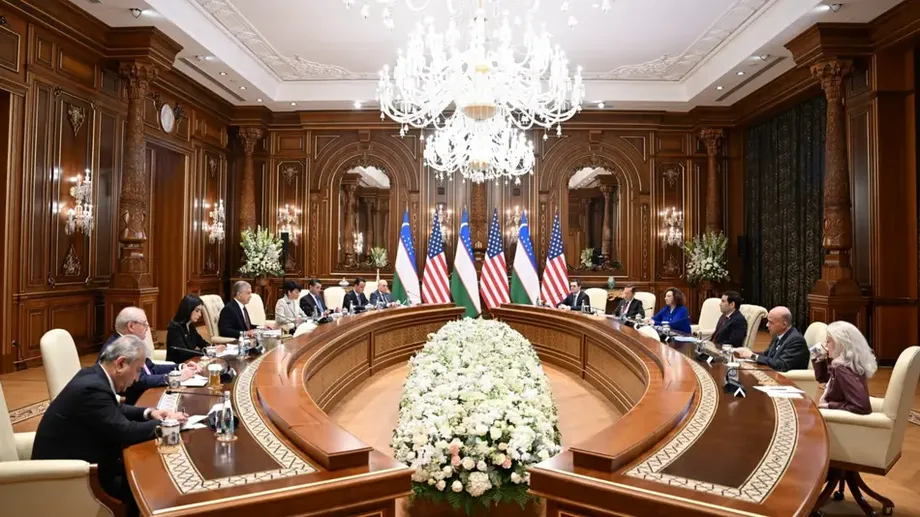
54 agreements put investment at the centre of closer ties
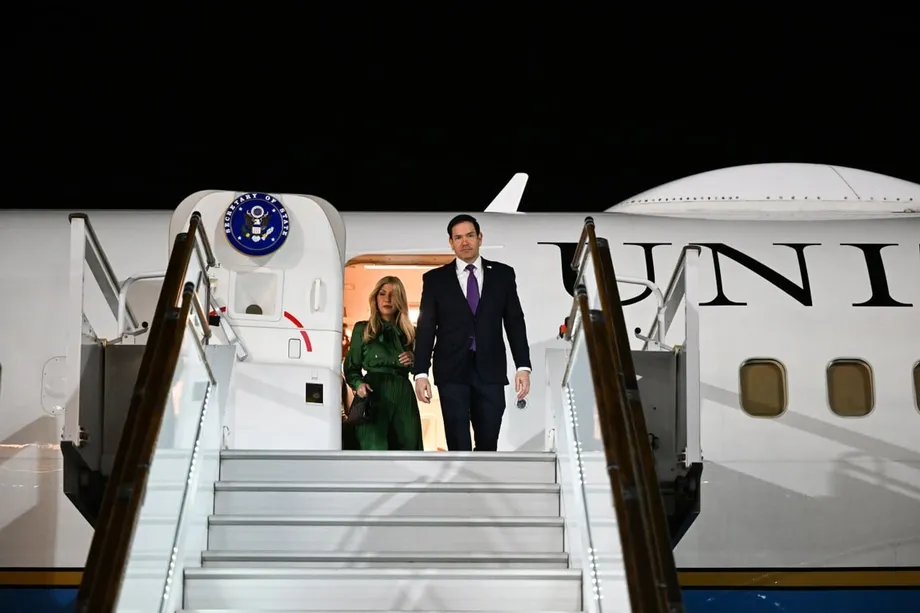
Uzbekistan and the United States announced a package of 54 agreements and proposed initiatives worth approximately $12 billion during Secretary of State Marco Rubio's visit to Samarkand on October 19, 2026, bringing critical minerals, aviation, energy and digital technology to the centre of their expanding partnership.
Contents
- 54 agreements put investment at the centre of closer ties
- What the business council is meant to deliver
- Minerals talks focus on processing inside Uzbekistan
- Aircraft and railways show the scale of transport demand
- Energy, technology and finance broaden the package
- Prepared sites and permits are part of the investment pitch
- Diplomacy expands without closing other relationships
- Education and space cooperation meet rights concerns
- The next steps extend to December and 2035
- Key Points
President Shavkat Mirziyoyev said preparation for the second Uzbekistan–U.S. Business and Investment Council meeting involved 45 Uzbek ministries and agencies. He proposed an action plan to turn the package into operating projects and a broader programme for trade, investment and technology cooperation through 2035.
The Uzbek presidency's October 19 statement described $12 billion in signed agreements. Mirziyoyev's more detailed remarks at the council described a package combining agreements with promising initiatives. The amount of financing secured, the timetable for individual projects and whether the package forms part of an existing commercial portfolio were not specified.
Rubio also met the foreign ministers of Kazakhstan, Kyrgyzstan, Tajikistan, Turkmenistan and Uzbekistan through the C5+1 format, which brings those five countries together with the United States. His first official visit to Central Asia combined regional diplomacy with a large business delegation.
For Uzbekistan, the stated goal is to bring in technology, industrial skills and investment alongside new export opportunities. Washington is seeking stronger commercial ties, more secure mineral supplies and a larger economic presence in a region that also maintains close relationships with Russia and China.
Mirziyoyev and Rubio launched an Enhanced Strategic Partnership Dialogue, while Uzbekistan joined the Artemis Accords on peaceful space exploration. Together, the announcements widened the relationship beyond the business package into science, education, security and continuing diplomatic coordination.
What the business council is meant to deliver
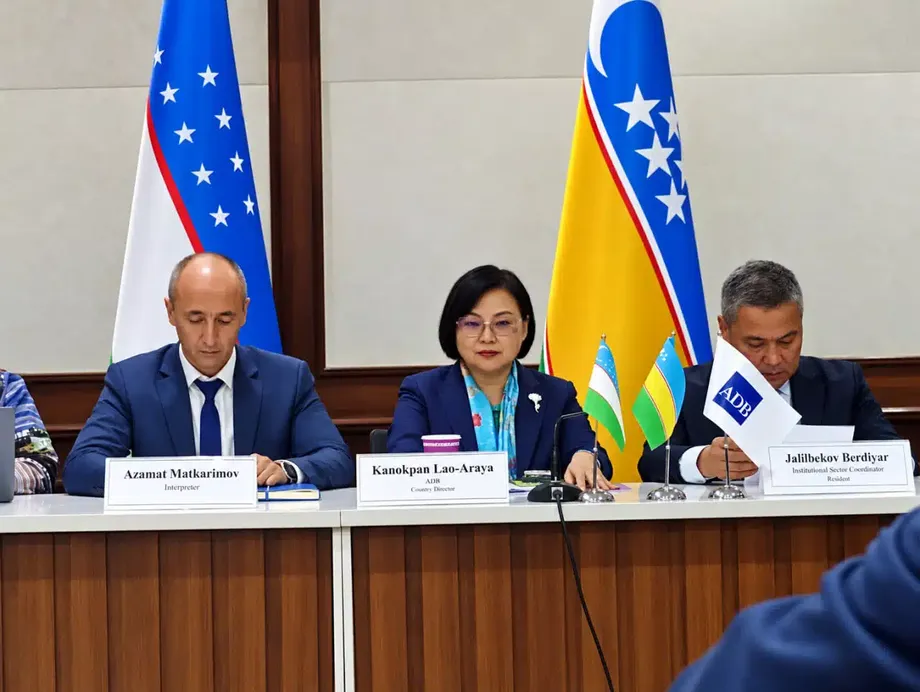
The Business and Investment Council is jointly chaired by Saida Mirziyoyeva, head of Uzbekistan's presidential administration, and Sergio Gor, the U.S. special envoy to South and Central Asia. Its purpose is to connect companies with government partners and help resolve problems that delay projects.
Mirziyoyev told executives that Uzbekistan wanted investment to bring knowledge and production capacity, rather than capital alone. His priorities included training engineers, developing competitive products and helping companies from both countries establish joint ventures.
The State Department's business council transcript records his proposed measure of success:
The principal measure of our work should be concrete results, including new enterprises, jobs, and greater prosperity for people in both countries.
Rubio said more than 200 American business leaders had travelled to Samarkand. Uzbekistan's investment ministry put participation in the wider business programme at more than 400 representatives, including over 100 from the United States, about 100 from other Central Asian countries and 200 from Uzbekistan. Those counts describe different groups: individuals in the travelling delegation and participants grouped by origin in the programme.
Mirziyoyeva also described sustained corporate interest. Almost 200 American companies visited Tashkent in June, followed by about 100 more accompanying Rubio four months later. Her message was that businesses should bring practical problems to the council so officials could work on solutions.
Minerals talks focus on processing inside Uzbekistan
Critical minerals are a central meeting point between the two countries' interests. These are materials needed for important industrial and technological uses, including electronics, electric vehicles and energy equipment, whose supply governments want to keep reliable.
Washington wants more sources of supply. Mirziyoyev said Uzbekistan wanted to develop the full production process, from deposits and mineral processing to finished products using advanced technology. Processing minerals domestically would give Uzbek businesses a larger role than selling raw material alone.
Announced cooperation involving ReElement Technologies, Traxys and Trafigura covers exploration, development, processing technology and supplies. Traxys has established a regional headquarters in Tashkent, and its discussions with Uzbek officials included making industrial products using American technology.
Political analyst Abduvali Soyibnazarov connected the talks to Uzbekistan's $4.2 billion critical minerals development programme for 2026–2030. He argued that processing plants, laboratories and manufacturing would help the country earn more from its resources and create skilled employment.
Rubio identified the Colorado School of Mines as a partner in modernising Uzbekistan's ability to mine and process minerals. That connects the commercial agenda with training: expanding production requires people who can assess deposits, operate equipment and manage more complex processing.
Aircraft and railways show the scale of transport demand
Uzbekistan's airports handled 15.5 million passengers in the previous year, an increase of 15 percent, Rubio told the council. Tashkent International Airport accounted for almost 10 million, or roughly two thirds of the national total. Cargo reached 98,200 metric tons, up 12 percent.
Rubio said Boeing had sold Uzbekistan Airways 22 widebody 787 Dreamliners the previous year. He also pointed to cooperation with Boeing and GE Aerospace on aircraft, engines, parts and training. Aircraft purchases create continuing demand for maintenance and technical skills as fleets expand.
Railway cooperation with Wabtec includes discussions on locomotive supplies, maintenance and local production of components. Mirziyoyev's talks with Wabtec chairman and chief executive Rafael Santana also covered financing and facilities to service mining equipment.
The C5+1 governments supported further development of the Trans-Caspian Trade Route, which links Central Asia across the Caspian Sea to the South Caucasus and Europe. More transport options would give Uzbek exporters additional ways to reach customers and reduce reliance on a small number of routes.
Economist Norpulat Daniyarov pointed to demand for routes to Asia that bypass Russia. Uzbekistan also uses connections through Iran, making access, sanctions and shipping costs practical issues for companies choosing how to move goods.
Energy, technology and finance broaden the package
Mirziyoyev invited American companies to help modernise Uzbekistan's energy system, develop renewable generation and build electricity storage. He linked those needs to a growing economy that requires a more reliable power supply.
Rubio described cooperation on small modular nuclear reactors, the electricity grid and gas distribution. Small modular reactors are nuclear power units designed to be smaller than conventional large reactors. The council announcements set out areas of cooperation, with individual developments still requiring their own financing and implementation arrangements.
Digital proposals include data centres, artificial intelligence and satellite communications involving Amazon Leo. Mirziyoyev said he wanted Uzbekistan's young people to develop technologies themselves and compete internationally. Scientific cooperation also includes a relationship between the University of Texas at Dallas and the Samarkand Quantum Center.
Other initiatives involve medical technology with GE HealthCare and agricultural development with Valmont Industries. Silver Leaf International chief executive Dan Patterson identified opportunities for Uzbek fruit exports to reach American consumers, alongside investment in mining.
Financial arrangements involving Franklin Templeton, Oppenheimer & Co., Citigroup and BlackRock seek to connect Uzbek companies with international investors and infrastructure funding. Deputy investment minister Shokhrukh Gulyamov said Citigroup was discussing project financing with Uzbek banks. BlackRock is also helping develop the structure of the Tashkent International Financial Centre.
Bluestone president Quinn Martin said his firm had been involved in three transactions concerning U.S. investors over five months, covering the national investment fund, banking and hospitality. Investment minister Laziz Kudratov had put the wider U.S. commercial agreements portfolio at $35 billion in September, with $7 billion in projects completed, equivalent to one fifth of that stated portfolio.
Prepared sites and permits are part of the investment pitch
Mirziyoyev proposed giving investors projects with sites, infrastructure connections, permits and documentation already prepared. Uzbek businesses would participate as partners and share risks, while an established direct investment fund could also contribute.
The approach targets a practical concern: investors need to know where a project can be built, how it will obtain utilities and which officials can make decisions. Mirziyoyev said the council should provide clear contacts and predictable conditions.
The president also proposed industrial clusters and research centres, moving from individual transactions toward continuing cooperation between industries. His programme through 2035 would connect companies' plans with national priorities in trade, investment and technology.
Investment is moving in both directions. Rubio cited AKFA Group's $80 million investment in Bowling Green, Kentucky, to establish a manufacturing presence in the American aluminium industry. The project gives a concrete example of an Uzbek company putting capital into U.S. production.
Another issue requires action in Washington. Mirziyoyeva urged retirement of the Jackson-Vanik amendment, a U.S. trade provision dating from the Cold War. Rubio said the administration supported repeal, while Congress had yet to act. Its removal therefore depends on lawmakers as well as diplomatic agreement.
Diplomacy expands without closing other relationships
Rubio presented the visit as a commitment to opportunities that might otherwise receive less attention than international crises. At the council, the secretary of state described Washington's intention in direct terms:
Let there be no doubt that the United States wants to be a partner of this region and wants to be a partner of this country. We already are, and we intend to build that and grow it.
Uzbek Foreign Minister Bakhtiyor Saidov welcomed Rubio and his wife, Janet, to Samarkand ahead of the meetings. He said the regional talks should help turn cooperation into practical projects serving both sides.
Rubio also acknowledged Uzbekistan's wish to maintain broad international ties. Speaking to journalists alongside Mirziyoyeva, he said:
Uzbekistan's been clear: They want to be friends to everybody.
That position matters across Central Asia, where Russia remains an important economic partner and China has expanded investment and infrastructure links. On October 19, while Tajikistan's foreign minister attended the Samarkand talks, Chinese Premier Li Qiang was in Dushanbe discussing further cooperation. He put trade between China and Tajikistan at about $2.5 billion in the first eight months of 2026.
The Uzbek presidency said security cooperation with Washington includes efforts against terrorism, extremism, drug trafficking and illegal migration. Mirziyoyev awarded Rubio the Order of Outstanding Merit and Gor the Friendship Order during the visit.
Education and space cooperation meet rights concerns
Uzbekistan became the 77th country to join the Artemis Accords, which set out principles for peaceful space exploration and the use of space resources. The presidency placed the signing among documents produced through the inaugural Enhanced Strategic Partnership Dialogue.
Education already provides an institutional base for cooperation. The presidency identified Webster University, the American University of Technology and the Colorado School of Mines Competence Center as operating in Tashkent. Their presence connects the diplomatic relationship with students, technical training and research.
The business focus has also drawn criticism from named regional observers. Galiya Ibragimova, a regional expert from Uzbekistan based in Moldova, said the Trump administration had shifted attention away from human rights and political reform toward commercial transactions.
Ivar Dale, a senior policy adviser at the Norwegian Helsinki Committee, urged the State Department to restore attention to human rights within C5+1. Alisher Ilkhamov, head of Central Asia Due Diligence, similarly criticised the lack of attention to political opponents and independent journalists.
Uzbekistan's history gives those concerns weight. President Islam Karimov allowed a U.S. military base in 2001, then expelled it in 2005 after Washington criticised the suppression of protests in Andijan, where hundreds of unarmed civilians were killed. The present expansion of commercial ties is taking place alongside continuing debate over how rights concerns should feature in the relationship.
The next steps extend to December and 2035
Mirziyoyev and Rubio discussed future meetings between the Uzbek and American presidents. The State Department's bilateral meeting transcript records Mirziyoyev saying he looked forward to meeting Donald Trump in Miami.
The recent sequence and announced next steps are:
- June 2026: Almost 200 American companies visited Tashkent, according to Mirziyoyeva.
- August 2026: Mirziyoyev and Trump discussed strengthening the strategic partnership by telephone.
- October 19, 2026: Samarkand hosted the C5+1 ministerial meeting and second bilateral business council, alongside the $12 billion package and launch of the enhanced dialogue.
- Mid-December 2026: Mirziyoyev and Kazakhstan's President Kassym-Jomart Tokayev are scheduled to participate in the G20 gathering in Florida.
- Through 2035: Mirziyoyev proposed a joint programme covering trade, investment and technology cooperation.
Rubio said planning for the Samarkand gathering began three months earlier. Gor also described accelerated negotiations on a Reciprocal Trade & Investment Framework. Alongside those talks, the immediate work for officials is to organise implementation of the announced projects, connect companies with financing and carry forward the proposed action plan.
Key Points
- Uzbekistan announced 54 agreements and proposed initiatives worth approximately $12 billion during Rubio's October 19 visit.
- Priority sectors include critical minerals, transport, energy, finance, digital technology, agriculture and healthcare.
- Mirziyoyev proposed prepared investment sites, shared financing and a cooperation programme through 2035.
- Uzbekistan joined the Artemis Accords and launched an Enhanced Strategic Partnership Dialogue with Washington.
- Rubio backed broader regional partnerships, while human rights advocates urged renewed attention to rights concerns.
- Project implementation, financing, congressional trade action and December diplomatic meetings are the next practical steps.