From Kai Tak Stadium to a global audience
The Weeknd's Hong Kong has turned a song premiered at Kai Tak Stadium into a global video hit, reaching No. 1 on YouTube's worldwide music trending chart and drawing more than 5.76 million views within its first day, by November 14, 2026. Featuring a sample of Faye Wong's Seasonal Wind, the track has also set debut records on two of China's biggest music platforms.
Contents
- From Kai Tak Stadium to a global audience
- What the YouTube numbers show
- Faye Wong's recording connects two generations
- A new lead for the official video
- Why the images recall Hong Kong cinema
- Two Chinese platforms report record debuts
- How the release unfolded
- A city song at the end of a major tour
- Key Points
The video, directed by Evan Larsen and starring Chinese supermodel Ming Xi, takes viewers through Mong Kok, Hong Kong Island and Victoria Harbour. Its markets, karaoke setting, tunnel journeys and neon streets give the city a central role in a story about a brief romance and departure.
The release followed the song's first public performance on October 24, when The Weeknd opened a run of four shows at Kai Tak Stadium. The single arrived on October 31, initially as an Asia exclusive, before the official video brought its images of Hong Kong to a wider audience in November.
In its Hong Kong release announcement, Universal Music Canada described records across NetEase Cloud Music and QQ Music, alongside a tour that sold more than nine million tickets. Together, those figures show how the song's stadium introduction, streaming release and video launch reached audiences through different routes.
Universal Music Canada's original release announcement, dated October 31, 2026, introduced Hong Kong as a love letter to the region and confirmed its October 24 live debut at the start of the four-night Kai Tak Stadium run.
What the YouTube numbers show
Hong Kong reached the top of YouTube's worldwide music trending ranking shortly after release. By November 14, chart tracking website Kworb placed it at No. 5 worldwide, while it remained No. 1 across English speaking markets. It also reached the top position in the United States and the United Kingdom.
The video's more than 5.76 million views measured how often it had been watched. Its trending position tracked its place among music videos attracting attention at that moment. A video can keep adding views while moving down a changing chart, as Hong Kong did after its initial No. 1 peak.
The launch was dated November 12 in Toronto and appeared in Hong Kong in the early hours of November 13. Those dates place the video roughly three weeks after its Kai Tak premiere and less than two weeks after the single's release.
Faye Wong's recording connects two generations
Faye Wong's Seasonal Wind supplies the musical connection between The Weeknd's new song and Hong Kong's pop history. The 1993 recording is also known in English as Monsoon. Hong Kong uses a sample, meaning it incorporates part of an existing recording into a new track.
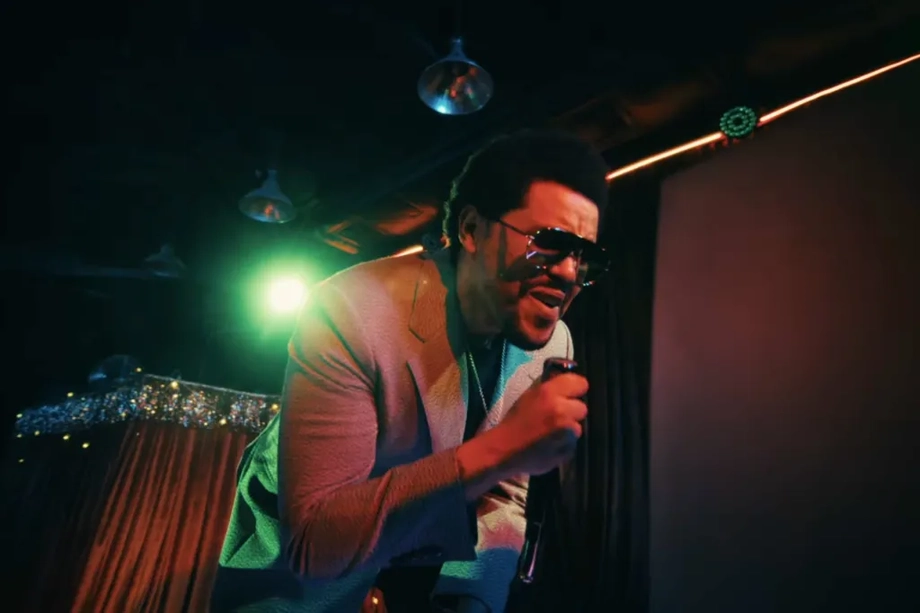
Wong's presence extends beyond the soundtrack. In the official video, The Weeknd sings in front of a television showing her Seasonal Wind music video. Viewers can therefore see the earlier work as well as hear its contribution to the new song.
The track has brought renewed attention to Wong's recording. Universal's October 31 announcement said Chinese media reported Monsoon at No. 1 on the rising charts at QQ Music and NetEase Cloud Music. It also reported a No. 3 ranking on Apple Music China on October 28, a climb into the Top 10 on Spotify Hong Kong and a 15-place rise to No. 3 on Shazam China's daily chart a day earlier. For listeners discovering it through The Weeknd, the television scene provides a direct route back to the song that helped shape Hong Kong.
The visual connection also reaches into the single's artwork, which Universal credits to cinematographer Christopher Doyle. The original release announcement said the artwork features a photograph of Hong Kong from Doyle's personal collection; he was cinematographer on Wong Kar-wai's Chungking Express, which starred Faye Wong alongside Tony Leung. Between Wong's recording, Doyle's cover image and the locations selected for the video, Hong Kong's identity runs through several parts of the release.
A new lead for the official video
Ming Xi appears as the female lead in the official release, replacing Wang Liuwen from the version shown during the Hong Kong concerts. The television scene featuring Wong's video is another change from the concert version, giving audiences who attended Kai Tak something new to watch.
Larsen's video opens with daylight across the harbour and moves through busy streets and markets before settling into a more solitary nighttime story. The Weeknd appears alone in a bar, while Xi travels through a tunnel in a red sports car. Later, he sings in a karaoke setting and ends alone on a balcony above the city.
The movement from crowded streets to private spaces follows the song's account of a relationship interrupted by departure. Hong Kong is shown as both a busy place full of movement and the setting for one person's loneliness. That contrast gives the familiar skyline a role beyond a scenic backdrop.
Why the images recall Hong Kong cinema
The video's television, tunnel and trench coat scenes have drawn comparisons with films by Wong Kar-wai. Singing in front of a television and travelling through a tunnel recall elements of Fallen Angels, while the image of a woman in a long trench coat brings Chungking Express to mind.
A sequence involving the red sports car has also been compared with John Woo's 1992 film Hard Boiled. These are visual parallels identified in coverage of the video; Larsen's precise intentions behind each scene have not been publicly detailed in the release announcement.
The comparisons help explain the video's nostalgic atmosphere. Alongside recognisable locations, it uses coloured light, nighttime travel and separated characters, making the city feel like the setting of a remembered romance. The result connects a contemporary pop release with images familiar to audiences of Hong Kong cinema.
The camera also moves between ordinary activity and dramatic settings. Markets and street traffic sit alongside harbour views, a fast car and a balcony high above the city. That range gives viewers more than a sequence of landmark shots, showing everyday movement as part of the song's mood.
Two Chinese platforms report record debuts
On NetEase Cloud Music, Hong Kong achieved the "biggest first-day debut for a non-Mandarin song in the past five years across streams, likes, saves, comments and shares," according to Universal. The comparison measured both listening and the ways users responded to the release.
The Weeknd also became the first international artist in five years to reach No. 1 on all three of NetEase's major charts on release day: Hot Song, Surging and New Music. Those chart positions describe the song's reach across several rankings within the same platform.
On QQ Music, Universal said the track earned the "biggest debut ever for a Western male artist across streams, saves, comments and shares" and made The Weeknd the "first Western artist in 2026 to top all three major charts on release day."
The categories matter to understanding the achievement. NetEase's comparison concerns songs outside Mandarin over five years; QQ Music's debut record concerns Western male artists. Universal gave the record categories and chart positions but did not publish the underlying totals for streams or other activity.
How the release unfolded
Hong Kong reached listeners in stages, starting with a stadium audience and moving to streaming platforms before its official video appeared. The sequence gave the song several moments of attention rather than a single launch.
- October 24, 2026: Hong Kong made its live debut on the opening night of The Weeknd's four shows at Kai Tak Stadium.
- October 31: The song received a surprise release, initially as an Asia exclusive.
- November 5: The After Hours Til Dawn tour concluded at TM National Stadium in Kuala Lumpur, Malaysia.
- November 12 in Toronto and November 13 in Hong Kong: The official video arrived, directed by Evan Larsen and starring Ming Xi.
- By November 14: The video had exceeded 5.76 million views and had reached No. 1 on the worldwide music trending chart before moving to No. 5.
The first release put the song in front of fans physically gathered in the city it names. Streaming then widened access, particularly across Asian markets, while the video carried its Hong Kong locations to audiences watching internationally.
A city song at the end of a major tour
Hong Kong was one of four cities given songs bearing their names during The Weeknd's After Hours Til Dawn tour, alongside São Paulo, Rio and Tokyo. That places the track within a broader connection between the tour's destinations and his music.
The tour ran from 2022 to November 2026 and finished after 176 shows in 67 cities, spanning 30 countries and five continents. Its final performance took place in Kuala Lumpur on November 5, shortly before the Hong Kong video launch.
The October 31 release announcement put the tour's totals at more than 7.5 million tickets sold and over US$1 billion grossed since its 2022 launch. It said the Asia leg had expanded from 11 to 17 stadium shows due to demand, with the final two nights listed for Kuala Lumpur on November 4 and 5.
Universal said the tour sold more than nine million tickets and grossed more than US$1.3 billion, making it the highest grossing tour by a male artist in history. Dividing nine million tickets by 176 shows gives an average of more than 51,000 tickets per performance, illustrating the scale of the audiences reached across the run.
Universal also said The Weeknd donated US$8.5 million to the XO Humanitarian Fund and Global Citizen, supporting hunger relief and children's education worldwide. The charitable figure accompanied the company's account of the tour's commercial results.
For Hong Kong, the most immediate result is a song carrying the city's name into international charts and a video placing its streets, harbour and cultural references before millions of viewers. The release connects the audience gathered at Kai Tak with listeners discovering Wong's earlier recording and viewers encountering the city through Larsen's images.
Key Points
- Hong Kong reached No. 1 on YouTube's worldwide music trending chart and exceeded 5.76 million views within its first day.
- The song premiered at Kai Tak Stadium on October 24, 2026, before its October 31 release.
- Evan Larsen directed the official video, which stars Ming Xi and was filmed across Mong Kok and Hong Kong Island.
- The track samples Faye Wong's 1993 Seasonal Wind, also known as Monsoon, and includes her video on a television screen.
- Universal reported record debut performances on NetEase Cloud Music and QQ Music.
- The After Hours Til Dawn tour ended after 176 shows, more than nine million tickets sold and more than US$1.3 billion in ticket revenue.