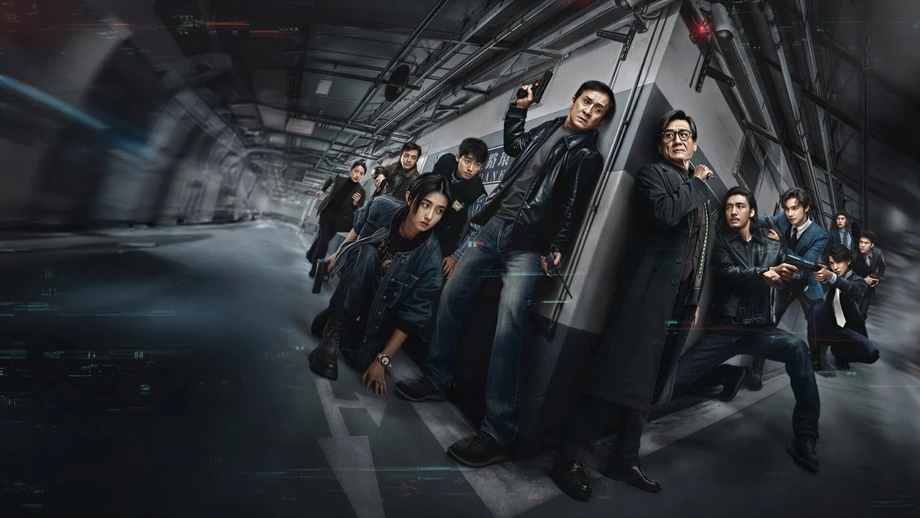
A first nomination brings a career milestone
Tony Leung Ka-fai won Best Actor at the 39th China Golden Rooster Awards in Xiamen, Fujian, on November 10, 2026, completing a rare collection of leading actor prizes across three major Chinese language film awards. The 68-year-old Hong Kong actor received the honour for playing Fu Longsheng, the villain in The Shadow's Edge.
Contents
- A first nomination brings a career milestone
- What the three trophies mean
- A veteran among five first nominees
- From a late train to the awards stage
- A trophy he wanted to carry himself
- Gao Ye's first nomination ends in victory
- Supporting performances bring personal rewards
- New directors and a broader range of films
- An early results post causes confusion
- Key Points
Leung had already won five Hong Kong Film Awards for Best Actor and a Golden Horse Best Actor award in Taiwan. His first Golden Rooster nomination, arriving after more than 40 years in cinema, brought the missing trophy and made him the second Hong Kong actor after Tony Leung Chiu-wai to complete that acting triple crown.
Aaron Kwok and Zhu Yilong announced the leading actor award. Leung reached the microphone and remained silent for more than ten seconds before speaking, visibly moved by a prize he had never previously been nominated to receive.
The ceremony closed the China Golden Rooster and Hundred Flowers Film Festival, held from November 6 to 10. Gao Ye won Best Actress for playing Lin Yuxiu in Dead to Rights, which also took Best Feature Film. Both leading acting winners succeeded on their first nomination in their respective categories.
What the three trophies mean
The triple crown refers to Best Actor victories at the Hong Kong Film Awards, Taiwan's Golden Horse Awards and mainland China's Golden Rooster Awards. It describes an achievement across three separate award systems, rather than a trophy presented by a single organisation.
Leung's five Hong Kong wins came for Reign Behind a Curtain, 92 Legendary La Rose Noire, Election, Cold War and The Shadow's Edge. His first victory dates to 1984, giving that collection a span across five calendar decades. He won the Golden Horse Best Actor prize in 1990 for Farewell China.
The Shadow's Edge therefore connects two parts of his latest achievement: the role brought him a Hong Kong Film Award earlier in 2026 before earning the Golden Rooster. His performance had also received recognition at the Hong Kong Film Directors' Guild annual awards and the 38th Hundred Flowers Awards.
A veteran among five first nominees
Leung competed against Wu Lei, Jiang Long, Jiang Qiming and Tan Jianci. All five men were receiving their first nomination for Golden Rooster Best Actor, placing an actor born in February 1958 alongside four competitors born in the 1990s.
Fu Longsheng gave Leung a physically demanding role as well as a dramatic one. His performance included several fights with Jackie Chan, and he reportedly performed nearly all his action scenes himself. The award recognised his portrayal of an antagonist, adding another kind of character to a career already rewarded for comedy, crime drama and political conflict.
Leung thanked director Larry Yang, Chan, the Jackie Chan Stunt Team and colleagues working in front of and behind the camera. His speech treated the trophy as encouragement to keep working, rather than a final achievement.
Leung, accepting the Best Actor award, described the moment in remarks translated from Chinese:
I have been making films for more than 40 years. This is my first Golden Rooster nomination, and now I am holding the award in my hands. It feels wonderful, very dreamlike.
He said the recognition affirmed his performance while reminding him to act well in the work still to come. He also thanked audiences for keeping his ambition as an actor alive.
From a late train to the awards stage
Leung's journey to Xiamen had attracted attention before the ceremony. Photographs circulating online showed him carrying his own luggage and resting against a suitcase while waiting for a high speed train late on November 8.
Leung later explained that colleagues were travelling with him. Some had briefly gone shopping or to the toilet, leaving him alone when the photographs were taken. He said he had just finished filming, was tired and had only that train available to reach Xiamen.
The journey was reportedly fitted around filming for The Shadow's Edge 2, following nearly two weeks of intensive work. Leung's own explanation focused on the practical circumstances: he had finished a shoot, needed to travel and could manage his luggage.
The festival's closing days brought three distinct moments in his appearance:
- November 8: Leung was photographed waiting for a train to Xiamen after finishing filming.
- November 9: At the nominees' recognition ceremony, he thanked audiences for noticing The Shadow's Edge and Fu Longsheng.
- November 10: He won Best Actor at the festival's closing awards ceremony.
At the November 9 event, Leung described being seen by audiences through a character as an actor's good fortune. That thought carried into his acceptance speech the following evening, when he thanked viewers for seeing the film, the role and the performer behind it.
A trophy he wanted to carry himself
Leung's reaction continued backstage. A video showed a staff member offering to carry his new trophy, only for the actor to decline with a joke.
Leung, still holding his first Golden Rooster award, told the staff member:
Don't even think about it! I can't let go of it.
The clip spread on Weibo and became a popular entertainment topic. It captured a lighter side of the same emotion that had briefly left him unable to speak onstage.
Leung also expressed hope that more people working both in front of and behind the camera would receive recognition. Away from awards, he described home as the place where he returns to himself after becoming a character on set.
Leung explained that personal measure of satisfaction with a simple image:
What I'm proud of is how many lights I can turn on at home.
His closing message at the ceremony was equally practical: winning a prize did not mean that work was finished. He ended by calling for work to begin again.
Gao Ye's first nomination ends in victory
Gao Ye won Best Actress for her performance as Lin Yuxiu in Dead to Rights, ahead of fellow nominees Li Sitong, Song Jia, Zhang Zifeng and Chen Lijun. She cried onstage as she described reaching a goal after years of effort.
Gao, who entered the Beijing Film Academy in 2006, counted 2026 as her twentieth year in the profession. In her acceptance speech, translated from Chinese, she described what the award meant:
So this is what it feels like when a dream becomes reality. From entering the Beijing Film Academy in 2006 until now, this is my twentieth year in the profession, and now is the moment my dream comes true.
Gao thanked the production team, her fellow actors and the audience. She referred to the film's 137 minutes as time that viewers had helped give weight and meaning, allowing the history depicted on screen to be seen and remembered.
Her thanks also turned to her mother, whose belief and support she credited with helping her continue. At the earlier nominees' event, Gao had spoken about taking a long time to reach this point and sometimes feeling she might never arrive.
Dead to Rights also won Best Feature Film. Dear You received the Jury Special Award and Best Screenplay, although an initial description of the results had assigned Dear You the top film prize.
Supporting performances bring personal rewards
Lan Xiya won Best Supporting Actress on her first nomination for playing Zhang Xiaorui in Sound of Silence. Tan Jianci, the film's leading actor and a Best Actor nominee, hugged her when the result was announced.
Lan spoke about the friendships and skills that cinema had brought into her life. She said she could speak for herself and would keep trying to create better characters and work, rather than claim to represent others.
Wushouer Sailai won Best Supporting Actor for playing Turdi Akhun in Wan Tong Shu. The 62-year-old Uyghur actor, a graduate of the Central Academy of Drama, had spent nearly a year preparing for the role and lost 15 kilograms over two months.
Wan Tong Shu follows the real experiences of Central Conservatory of Music researcher Wan Tongshu and his wife, Lian Xiaomei. In 1951, they travelled to Xinjiang on an assignment from Premier Zhou Enlai to preserve and organise the Uyghur Twelve Muqam musical tradition.
Wushouer Sailai thanked the film's workers and said he would continue putting care into telling stories from Xinjiang. The production received five nominations and also won Best Music for Gao Xiaoyang, giving the film two awards from those five nominations.
New directors and a broader range of films
Wan Li won the renamed Best New Director award for Sound of Silence, which focuses on people with hearing disabilities. The film, starring Tan Jianci and Lan Xiya, had earned more than 257 million yuan at the box office despite a modest production budget.
The category had previously been called Best Directorial Debut. Wan became its first winner under the new name, while Sound of Silence finished the evening with both a directing award and Lan's supporting actress prize.
Zheng Dasheng won Best Director for Hideaway: The Dossiers. Dear You's screenplay award went jointly to Lan Hongchun, Zheng Xuanxuan, Yang Leng and Zhu Liyun, alongside the film's Jury Special Award.
The awards also recognised several different forms of filmmaking. Nobody won Best Animated Film, Sentimental Value won Best Foreign Language Film and Cai Rou Hun Tun won the category for features with small and medium budgets.
Other winners included Chuang Wai Shi Lan Xing for documentary or science education film, Ma Lan Hua Kai De Sheng Yin for children's film and Gu Yanwu for opera film. The animation category had previously been called Best Art Film, another naming change introduced for this edition.
Technical awards went to Dong Jinsong for the cinematography of Resurrection, Huang Zenghongchen for editing Fei Xing Jia, Wang Jing for art direction on De Xian Jin Zhi and Wang Yanwei for sound on Blades of the Guardians. Together with the acting and directing prizes, those awards recognised the different crafts that shape what audiences see and hear.
An early results post causes confusion
Xiamen's culture and tourism authorities published a social media post at about 4 p.m. naming Wu Lei and Li Sitong as the leading acting winners, roughly four hours before the ceremony began. The post was subsequently deleted, and the authorities apologised.
The prizes ultimately went to Leung and Gao. Wu and Li were nominees, and the premature announcement briefly put incorrect winners into public circulation before the awards were presented.
Deng Guanghui, the China Film Association's resident vice chairman and party leadership secretary, described the awards as maintaining professional and artistic standards while recognising strong films and discovering new filmmakers. He said this edition sought to respond to changes in the times, audience needs and artistic practice.
The festival paired its awards with a nominees' recognition ceremony, film forums, a project investment event and public film activities. Its closing night combined Leung's career milestone with first nomination victories for Gao and Lan, and a newly renamed directing prize for Wan.
Key Points
- Tony Leung Ka-fai won Golden Rooster Best Actor on November 10, 2026, for Fu Longsheng in The Shadow's Edge.
- His first nomination brought the missing prize in a triple crown spanning the Golden Rooster, Golden Horse and Hong Kong Film Awards.
- Gao Ye won Best Actress for Dead to Rights, which also received Best Feature Film.
- Lan Xiya and Wushouer Sailai won the supporting acting awards for Sound of Silence and Wan Tong Shu.
- Zheng Dasheng won Best Director, while Wan Li received the renamed Best New Director award.
- Xiamen's culture and tourism authorities deleted an incorrect early results post and apologised.