An interview, an objection and a delayed apology
Hong Kong actor Angela Yuen has described repeated sexual harassment during her career, including an unwanted kiss during filming and a sexualised remark at a promotional interview for Gamer Girls. Her essay, The Apologies That Will Never Come, prompted cultural journalist Wong Wing-leung, known as Red Eye, to apologise publicly for inappropriate jokes and his failure to apologise when she objected.
Contents
- An interview, an objection and a delayed apology
- What happened at the Gamer Girls interview?
- What Wong admitted, and what the magazine clarified
- Yuen describes conduct beyond the interview
- Why objecting can carry its own cost
- Other actors describe unwanted touching
- Private warnings and public support
- A career built beyond an appearance based image
- The chronology and the unresolved issues
- Key Points
The nearly 3,000 Chinese character essay first appeared in her City Magazine column in April. Its circulation on Instagram in October 2026 brought a wider response, with more than 46,000 likes recorded by Tuesday morning and messages of support from other actors. Reports place the social media publication either late on October 12 or in the early hours of October 13.
The disclosure came as Yuen received a second Golden Horse best actress nomination, this time for the Hong Kong film 第四幕. Her account connects the treatment of women during interviews, at social gatherings and on film sets, arguing that professional recognition does not protect them from being reduced to sexual objects.
Wong acknowledged making inappropriate remarks and mishandling the interview. His apology addresses that encounter, not the separate allegations against a director and male colleagues whom Yuen did not name. A cultural magazine also clarified that its contractual relationship with Wong had ended in 2025, contradicting descriptions of him as its current editor.
What happened at the Gamer Girls interview?
Yuen said she and six other women had prepared carefully for the interview, reviewing the film and the points they wanted to discuss. Instead, the journalist opened with a Cantonese expression associated with sitting with customers in a hostess club. She described the remark as turning a professional conversation into an imagined nightclub scene.
When challenged, the journalist suggested that he was the male host providing entertainment. Yuen said this did not remove the sexual framing. A producer told him to stop speaking, and she demanded that he either remain quiet or apologise. According to her account, he chose silence and the interview continued without an apology.
That continuation was part of what troubled her. She described suppressing her reaction, putting her smile back on and wondering whether she had been impolite or had disrupted the interview. Her account shows a distinction between an event proceeding without further confrontation and the people involved feeling that the problem has been resolved.
The timing and composition of the interview are disputed. Reports describing Yuen's recollection place it in February 2026, on the film's premiere night, with seven women present. Wong said it took place late in the previous year and involved two directors and five actresses. Gamer Girls has five female leads, but that does not establish the roles of everyone at the interview. The differing dates have not been reconciled.
What Wong admitted, and what the magazine clarified
Wong, a columnist and film critic who writes under the name Red Eye, said he made two inappropriate jokes before the formal interview began. He acknowledged that Yuen expressed her displeasure at the time and that other interviewees had to smooth things over so the conversation could continue.
In his public apology, Wong accepted that his immediate response had been inadequate:
I knew I misspoke, and I regretted that the interview could be finished only by other interviewees smoothing things over. It was poor handling that I did not immediately apologise to all the interviewees.
He said he had no intention of arguing against the criticism and wanted to apologise formally to Yuen and the other participants. He also acknowledged that his tendency to speak carelessly might have offended other interviewees and creators over the years.
His professional affiliation requires a separate correction. Some reports and descriptions of his social media profile identified him as the current editor of the cultural magazine 藝文青. The magazine subsequently stated that it had terminated its contract with Red Eye in 2025. That statement establishes an earlier end to the relationship, rather than a dismissal announced in response to Yuen's October post. It did not give a reason for the termination.
Yuen describes conduct beyond the interview
The interview was the opening example in a wider account of sexual comments and unwanted contact. Yuen said a male director assessed her appearance in terms of whether people would want to have sex with her, rather than discussing her work.
Yuen, an actor whose early public image centred heavily on her appearance, recalled the director's words:
You are not the type people want to [have sex with], but rather stay good friends with.
She also described a drunk male colleague using vulgar Japanese to ask whether she liked his penis. Yuen understood Japanese and said she was the only person at the dinner who understood what he had said. She eventually demanded an apology and received one, but said others mocked her effort to hold him accountable.
In another incident, a veteran male actor repeatedly joked that she wanted to kiss him. During filming, she said, he then kissed her cheek without prior discussion. Reports describing the essay say the kiss was an addition to the scene rather than something agreed beforehand. Yuen did not identify him.
She also recalled male actors suggesting that camera cranes were being used to film actresses' breasts from above. A camera crane allows a camera to move or shoot from an elevated position. Her objection concerned the sexual comments attached to its use, not an allegation that every such shot served that purpose.
Why objecting can carry its own cost
Yuen's essay focuses on what happens after a woman challenges inappropriate behaviour. In her account, an objection can be treated as a failure to take a joke, while the person who made the remark avoids further scrutiny. The woman then has to manage the discomfort of colleagues as well as her own reaction.
She described how casual delivery can make an offensive encounter difficult to process immediately:
How naturally these things happen often make you question yourself and blur your moral judgment. You need to expend a lot of effort simply to get the facts right, never mind objecting immediately,
Her experience also challenges the assumption that an objection made at the time necessarily produces accountability. She said she spoke up during the interview, yet no apology followed then. In the Japanese language incident, she obtained an apology but faced ridicule from others present.
Yuen warned that public disclosure brings another set of pressures. Women may be accused of seeking attention, questioned about why they did not resist sooner or subjected to attacks on their character. These reactions can create a chilling effect, meaning that the anticipated cost of speaking discourages others from reporting what happened.
Her argument goes beyond whether any one person says sorry. It concerns whether women can define their own boundaries and have their professional concerns taken seriously without becoming the focus of blame.
Other actors describe unwanted touching
Other accounts from Hong Kong television and film show why Yuen's essay has struck a chord. Veteran actor Tam Siu-ying previously recalled being grabbed from behind in a dressing room. She said she instinctively turned and slapped the person before seeing who it was, then made clear that she did not welcome being embraced.
Natalie Tong described a casting interview before she joined TVB, when she was in her twenties. According to her account, a member of the production staff repeatedly stroked her back while asking whether she wanted the role. She moved away and used a reference to consulting her mother to leave the situation.
Actor Lee Ka-ting has also recounted intervening when an extra harassed Kathy Chow. These are separate personal recollections, not findings from a shared investigation. They nevertheless place unwanted contact in several work settings, including dressing rooms, auditions and filming.
A further controversy dates to 2008, when actor Yuen King-tan described a male TVB performer allegedly using magic tricks as a pretext to touch female colleagues. Sonija Kwok and Chan Tsz-ching were named in that discussion, while later allegations also referred to Tavia Yeung and Sharon Chan.
Public suspicion at the time turned toward actor Choi Tsz-kin, who responded that he did not need to answer without substantive evidence. That suspicion should not be treated as a proven identification. The reports recounting the controversy do not establish a finding against him.
Private warnings and public support
Actor Moon Lau has said women in the industry privately circulate a list of men they believe require particular caution. She described hearing from female colleagues and friends who felt uncomfortable after physical actions that had not been adequately discussed beforehand.
Lau urged performers, whatever their age or the size of their role, to communicate before filming and to speak up when uncomfortable. The private warning list is her description of an informal practice among actresses, not a published register or an official disciplinary record. No names from it have been established here.
The accounts point to different responses to the same concern. Some women describe immediate physical resistance, others finding a way to leave, and others pursuing an apology later. Those differences do not by themselves establish whether an encounter was welcome. Yuen's essay argues against judging women by a single expected form of resistance.
Her post drew supportive comments from performers including Jennifer Yu, Coffee Lam, Serrini and Theresa Fu. Actor Chung Suet-ying also criticised sexualised promotional language used about her film 善男信女, saying the wording was attention seeking and did not meaningfully address the film.
Wong's apology separately mentioned his recent social media writing about that film as another example of language he regretted. Chung's objection concerns how a performance was presented publicly; it is distinct from Yuen's allegation about the Gamer Girls interview.
A career built beyond an appearance based image
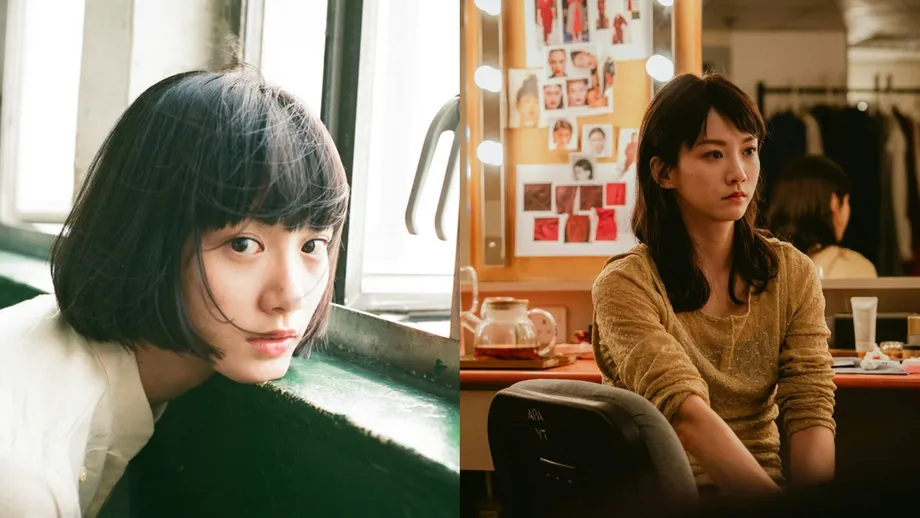
Yuen grew up in Sha Tau Kok and studied accounting at Hong Kong Baptist University while working as a model. A 2015 Lunar New Year advertisement for Maxim's brought her wider attention. She signed a three year contract with Starz People that year and became more widely recognised through ViuTV's 2016 promotional short series We I U.
Her short hair and understated style helped establish an image associated with youth and arts culture. That visibility also came with dismissive judgments that she was valued mainly for her looks, an image she later sought to move beyond through acting.
In July 2017, Starz People filed a breach of contract claim alleging that she had arranged work independently and seeking earnings and compensation. Yuen denied taking work privately. The dispute ended after negotiations, and she moved to Triple S Artiste Management in 2018. No terms of that resolution are specified.
Her role as Candy, a single mother struggling during the pandemic in The Narrow Road, brought nominations for best actress at the 59th Golden Horse Awards and the 41st Hong Kong Film Awards. She later won best actress at the New Zealand Asia Pacific Film Festival in November 2025 for 二十四味, in which she worked with Sylvia Chang.
Her work has also extended to Japan, including a collaboration with photographer Kotori Kawashima, and Taiwan, through the film 山忌:黃衣小飛俠 and the drama 來!金來號! with Eric Chou. The latter is an adaptation of Itaewon Class. Her second Golden Horse nomination in 2026 places the disclosure alongside growing recognition of her acting, rather than at the beginning of her career.
The chronology and the unresolved issues
The sequence matters because the essay existed months before its wider social media circulation, and Wong's relationship with 藝文青 had ended before the public controversy. The interview date remains a point of disagreement.
- 2015 to 2018: Yuen gained attention through advertising and ViuTV, faced a disputed management contract claim and later changed agencies.
- 2022: The Narrow Road brought her first Golden Horse best actress nomination and subsequent Hong Kong Film Awards recognition.
- 2025: 藝文青 says it ended its contract with Wong. Yuen won the New Zealand festival acting award in November.
- Late 2025 or February 2026: Wong and accounts of Yuen's recollection give different dates for the Gamer Girls interview.
- April 2026: Yuen's essay first appeared in her City Magazine column.
- October 12 to 13, 2026: The essay circulated on social media, followed by Wong's apology and the magazine's clarification.
Wong has acknowledged inappropriate jokes and a failure to apologise immediately. The other men described by Yuen remain unnamed, and their responses have not been established. There is no confirmed account here of a formal investigation, legal complaint, disciplinary decision or scheduled hearing.
It is also not established whether Yuen has accepted Wong's apology. Her stated concern is broader than that exchange: she wants sexual comments and unwanted contact to stop being excused as routine behaviour, and women to be able to challenge them without paying a professional or personal penalty.
Key Points
- Angela Yuen described sexual comments, an unwanted kiss and pressure against women who object to inappropriate conduct.
- Journalist Wong Wing-leung, known as Red Eye, apologised for inappropriate jokes at a Gamer Girls interview and for not apologising immediately.
- Accounts differ on whether that interview took place in late 2025 or February 2026.
- 藝文青 said its contract with Wong ended in 2025, correcting descriptions of him as its current editor.
- Yuen's essay was first published in April before its wider circulation in October 2026.
- Other actors have described unwanted touching and informal warnings among women in the industry.
- No formal investigation, scheduled proceeding or acceptance of Wong's apology has been established.