A 1,999 Yuan Mahjong Set Finds Buyers in Minutes
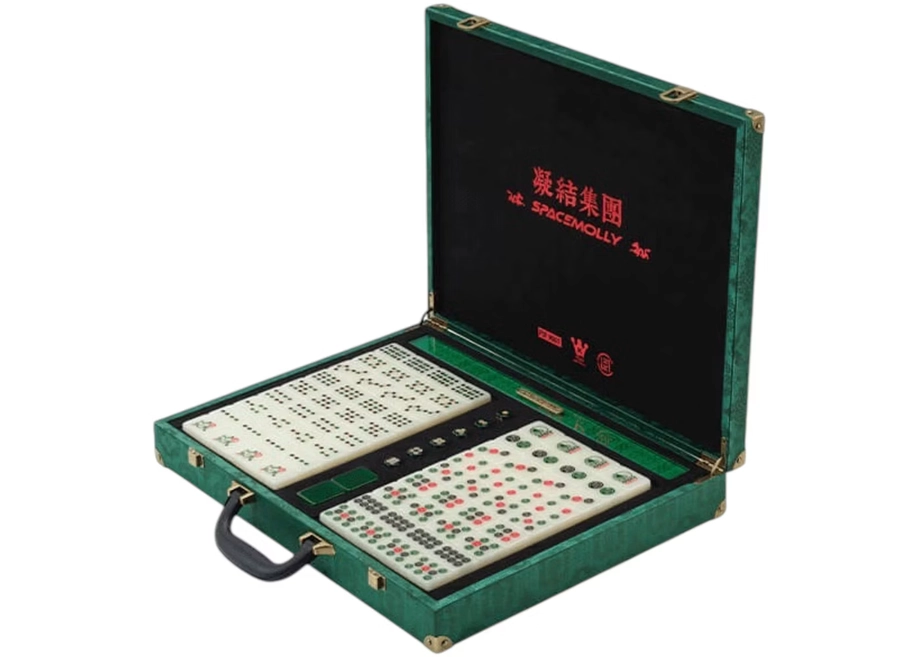
A mahjong set from Edison Chen's streetwear brand CLOT and collectible toy company Pop Mart sold out within 10 minutes of its online release at 10 p.m. on November 5, 2026. Priced at 1,999 yuan, approximately HK$2,200, the limited release reached a highest recorded resale transaction of 2,660 yuan on the Dewu platform by 9 a.m. the following day.
Contents
- A 1,999 Yuan Mahjong Set Finds Buyers in Minutes
- What Buyers Get Beyond the Tiles
- How the Resale Price Rose and Retreated
- Why the Retail Price Drew Objections
- How CLOT Built the Audience for This Launch
- Pop Mart Takes Its Characters Into Daily Life
- A Successful Release During a Revenue Slump
- What the Launch Changes for Shoppers and the Brands
- Key Points
That was a premium of 661 yuan, or about 33%, over the original price. By the afternoon of November 6, the latest transaction price had fallen to 2,278 yuan, still 279 yuan, or about 14%, above retail. The movement captured both the immediate demand for the collaboration and how quickly prices could retreat after its launch.
The set belongs to the Gang Shang Kai Fa collection, which brings together CLOT's signature silk patterns, mahjong imagery and Pop Mart's Space Molly character. Its acrylic tiles turn a familiar tabletop game into a branded collectible, placing the product between something people can play with and something fans may buy to display.
The launch also arrived during a difficult period for Pop Mart. The company had disclosed a sharp decline in quarterly revenue just days earlier, while continuing to expand into food, accessories and other products built around its characters. A fast sellout gives the company a successful individual release, but its wider business faces the larger task of sustaining spending across products, shops and markets.
What Buyers Get Beyond the Tiles
CLOT and Pop Mart built the collection around more than a single mahjong set. Prices across the range run from 129 yuan to 2,999 yuan, covering figures sold in blind boxes, collectible display pieces, dice charms, vinyl charms, incense burners and bags shaped like dice. A blind box conceals the specific figure inside until the buyer opens it.
The collection also includes a modular incense burner, designed from components that can be fitted together. Mahjong and dice imagery connect these different objects, allowing the collaboration to reach shoppers seeking a smaller accessory as well as those willing to spend almost 2,000 yuan on a complete game.
Chen has said that he began playing mahjong with his father at the age of 10 and wanted to bring those childhood memories into the design. That personal connection gives the collaboration a specific starting point: a game associated with family gatherings, interpreted through the visual language of his fashion business.
The collection was previewed at CLOT's redesigned Ning Jie Bing Shi retail space. Its combination of traditional Chinese design elements and industrial interiors echoed the approach taken in the products, placing familiar cultural references in a contemporary setting.
How the Resale Price Rose and Retreated
Dewu transactions show the difference between the original selling price and what some buyers were prepared to pay after the set sold out. The 2,660 yuan peak was followed by lower prices, including a reported move to 2,299 yuan as consumers sought lower offers. By the afternoon of November 6, the latest recorded transaction stood at 2,278 yuan.
A buyer paying the peak would have spent 382 yuan more than someone paying the later 2,278 yuan price. That is a decline of roughly 14% from the peak within the launch period. For shoppers arriving after the initial sale, the timing of a purchase therefore made a substantial difference.
The main events unfolded over less than a day:
- November 5, 10 p.m.: The collection went on sale online, with the mahjong set priced at 1,999 yuan.
- About 10 minutes later: The limited mahjong set sold out.
- November 6, by 9 a.m.: The highest recorded Dewu transaction reached 2,660 yuan.
- November 6, afternoon: The latest recorded transaction fell to 2,278 yuan.
The number of sets released and the total value of sales were not disclosed. Those figures would help show the commercial scale of a launch that attracted buyers quickly.
Why the Retail Price Drew Objections
Some consumers questioned whether a mahjong set was worth nearly 2,000 yuan. Their objections focused on the price of an object that serves a familiar practical purpose, even as collectors were paying extra for the CLOT design and Space Molly branding.
Pop Mart's official customer service responded that product prices were public and transparent, and that differences in style, product type, material and manufacturing processes could produce different prices. The response explained the company's pricing approach without providing a breakdown of the costs of this particular set.
Pop Mart had already tested mahjong as a product category in 2024, when it released a small quantity of limited sets at a local temporary retail event for 899 yuan. The CLOT edition costs 1,100 yuan more, making its retail price about 2.2 times that earlier price. The two releases differ in design and collaboration, but the comparison helps explain why the new price attracted attention.
Jiang Han, a senior researcher at the Pangoal Institution, argued that the collaboration went beyond adding a logo to an existing object. He said it brought Pop Mart's characters into gatherings among friends, creating another setting in which people could use and encounter them. He also cautioned that lasting value would depend on avoiding excessive reliance on resale premiums driven by limited availability.
How CLOT Built the Audience for This Launch
Chen founded CLOT in 2003 with an approach that combines Chinese cultural references and international streetwear. Silk patterns and traditional motifs have become recurring parts of its products, giving the mahjong collaboration a connection to designs that customers already associate with the brand.
CLOT gained recognition through collaborations with Nike, including Air Force 1 shoes incorporating Chinese silk elements. It later worked with Levi's, Coca-Cola, Stüssy and fragment design, while also taking part in fashion weeks in New York and Paris.
In 2023, Chen and adidas Originals announced a global partnership. Their subsequent shoes and clothing continued CLOT's use of Chinese cultural themes, including a collection for the Year of the Horse in 2026. The Pop Mart release carries that approach from clothing and footwear to a game that can sit at the centre of a social gathering.
Chen's retail business also extends through JUICE, which sells CLOT products and goods from other international streetwear brands. Its network includes Hong Kong, Shanghai, Chengdu, Taipei and Los Angeles, alongside an online store. CLOTTEE, a separate line aimed at younger shoppers, covers clothing, footwear and lifestyle products.
Pop Mart Takes Its Characters Into Daily Life
Pop Mart's mahjong collaboration forms part of a broader expansion beyond collectible figures. Its partnerships have covered clothing, beauty products, food and drinks, jewellery, consumer electronics and household goods, with collaborators including Uniqlo, adidas Originals, L'Oréal, Coca-Cola, Starbucks, Chow Sang Sang and Huawei.
The company's own product range has also grown to include plush toys, cards, construction blocks, fragrances, baked goods and small appliances. It has opened a theme park and jewellery shops, taking its characters into settings where customers spend money for reasons other than collecting a figure.
On October 31, its dessert brand POPBAKERY opened its first Beijing store. Alongside cookies and ice cream, the shop introduced products including puddings shaped like succulent plants, cakes and dorayaki, a Japanese confection made with two small pancakes and a filling. A Labubu themed David cake and dorayaki made their exclusive debut at the Beijing location.
Mahjong serves a different occasion from dessert or fashion. A set can be used repeatedly by a group around a table, while bags and charms can be carried outside the home. Jiang's assessment centres on that shift: the characters become part of an activity shared with other people rather than remaining only on a collector's shelf.
A Successful Release During a Revenue Slump
Pop Mart disclosed unaudited results for the third quarter of 2026 on October 27, showing total revenue down 45% to 50% from the same period a year earlier. Revenue in China fell 25% to 30%, while overseas regions, including Asia Pacific, the Americas and Europe, recorded steeper declines.
The gap between domestic sales channels was also large. Revenue from physical locations in China declined 5% to 10%, while online revenue fell 45% to 50%. Those ranges show why stores and products linked to social activities matter to the company's efforts to encourage spending.
Chief operating officer Si De told the quarterly earnings call that the comparison was against an exceptionally strong period in the third quarter of 2025. He said overseas markets were becoming steadier after continued declines and that the fourth quarter sales season could bring an improvement.
Si also said traffic at physical stores remained stable and that China's full year performance could still achieve positive growth. That was management's outlook, with the final annual outcome still ahead. He said the group had already begun planning the following year's business and continued to prioritise healthy development over the longer term.
Pop Mart's shares fell sharply at the opening of trading the day after the results, touching HK$123.80 during the session. They subsequently recovered some ground and closed at HK$141.90 on November 6, although the stock remained down more than 23% since the start of the year.
What the Launch Changes for Shoppers and the Brands
Buyers who missed the original sale faced a concrete choice: pay a resale premium or wait as transaction prices changed. The fall from 2,660 yuan to 2,278 yuan shows how much that choice could cost within a short period, even while both prices remained above retail.
CLOT gained another route for applying its established patterns and cultural references beyond apparel. Pop Mart gained a product that uses Space Molly in a familiar group activity, supported by accessories at several prices. Together, the companies connected streetwear customers, character collectors and people interested in a distinctive mahjong set.
The commercial test extends beyond launch night. Jiang's warning about dependence on limited releases points to the challenge facing both brands: building demand for products people continue to value and use after the first rush of buying. Pop Mart must pursue that work while managing falling quarterly revenue and a much weaker online sales performance in China.
Key Points
- The CLOT and Pop Mart mahjong set launched at 1,999 yuan on November 5, 2026, and sold out within 10 minutes.
- Dewu's highest recorded resale transaction reached 2,660 yuan, about 33% above retail, before the latest price fell to 2,278 yuan.
- The acrylic tiles combine CLOT silk patterns with Space Molly imagery, alongside a wider collection priced from 129 yuan to 2,999 yuan.
- Pop Mart previously released a limited mahjong set for 899 yuan in 2024.
- The launch followed a disclosed decline of 45% to 50% in Pop Mart's revenue for the third quarter of 2026.
- Management said China's full year business could still grow, while the company continued expanding into shops, food and everyday products.