Fresh forms and doorstep checks ordered before final voter lists
The Election Commission of India has ordered another opportunity for previously registered voters left out of draft electoral rolls in Delhi and six states, allowing them to submit fresh enumeration forms rather than apply again through Form 6. The November 6, 2026 directive covers Delhi, Maharashtra, Haryana, Andhra Pradesh, Jharkhand, Telangana and Nagaland.
Contents
- Fresh forms and doorstep checks ordered before final voter lists
- Who can use the new procedure?
- Where voters can check their names
- Local officers must try to reach people again
- Special arrangements for people who moved or lack a home
- Why Form 6 became a legal concern
- Delhi figures put address changes at the centre
- Court scrutiny and the approaching deadlines
- Verification and monitoring will decide the outcome
- Key Points
The arrangement applies to people whose enumeration forms were issued but never returned during the Special Intensive Revision, or SIR, and whose names were consequently omitted under the categories absent, shifted, dead or duplicate, collectively called ASDD. Election officials must display their names again, explain the probable reasons for omission and make renewed efforts to contact them.
The decision follows Supreme Court scrutiny of how previously registered voters were being asked to seek inclusion again. In Delhi alone, activists Anjali Bhardwaj and Amrita Johri cited 47.56 lakh exclusions, equivalent to about 4.76 million names, from the first phase of the exercise.
For affected households, the change creates a more direct route back into the final list: use the earlier voter identification number, complete a fresh enumeration form and provide the required statement and supporting information. People who have already submitted Form 6 do not need to repeat the process.
Who can use the new procedure?
The Election Commission's instructions focus on an identifiable group: existing electors marked ASDD whose forms did not reach officials during the revision. An electoral roll is the list that determines who is registered to vote in a particular area. The draft is published before the final version so that claims and corrections can be examined.
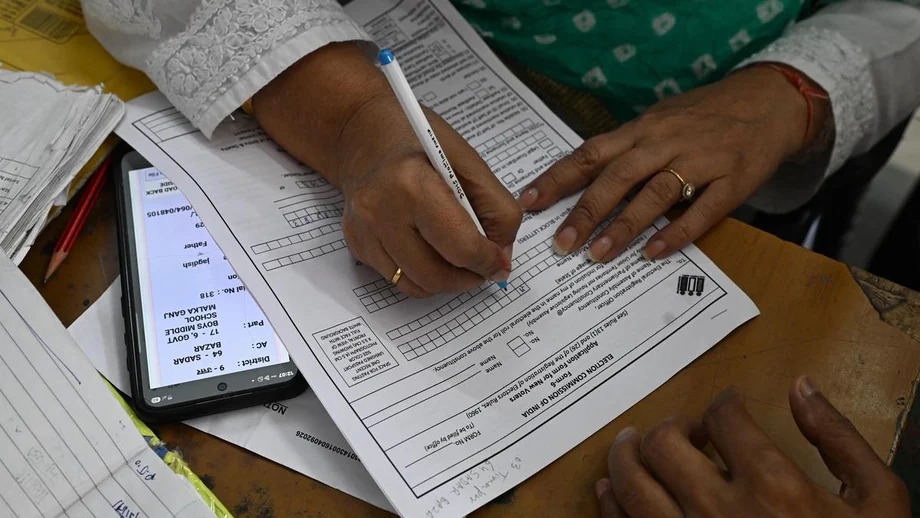
An enumeration form collects information used to check an existing electoral entry during SIR. Under the new procedure, officials must generate fresh forms containing some existing details, making it easier for affected people to respond without starting with a blank application.
Voters who remain at their registered address must submit a completed and signed enumeration form with a signed statement explaining why they did not submit it earlier. They or a family member can deliver the documents to the relevant Electoral Registration Officer, Assistant Electoral Registration Officer or Booth Level Officer.
The Electoral Registration Officer, usually shortened to ERO, is responsible for examining applications and deciding entries in the constituency's roll. A Booth Level Officer, or BLO, carries out local checks and helps voters complete the process. Online submission through ECINET will also be available with an electronic signature option.
Where voters can check their names
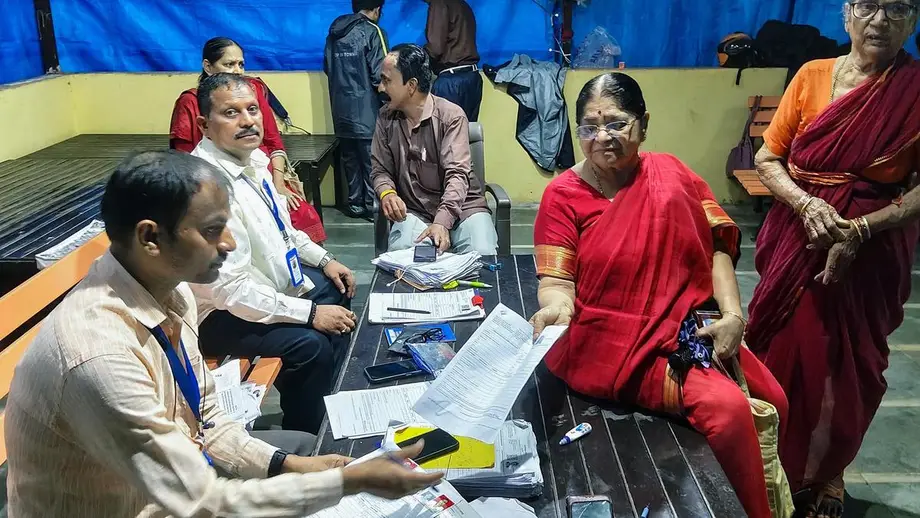
Chief Electoral Officers must arrange for lists of affected voters to be displayed again at the polling stations where their names previously appeared. Each entry must carry the probable reason for exclusion, giving people a starting point for seeking correction.
The lists must also be available at panchayat buildings, urban local body offices and relevant local administrative offices. Readable PDF copies must be uploaded to the websites of the respective Chief Electoral Officers, allowing people to check without travelling to a polling station.
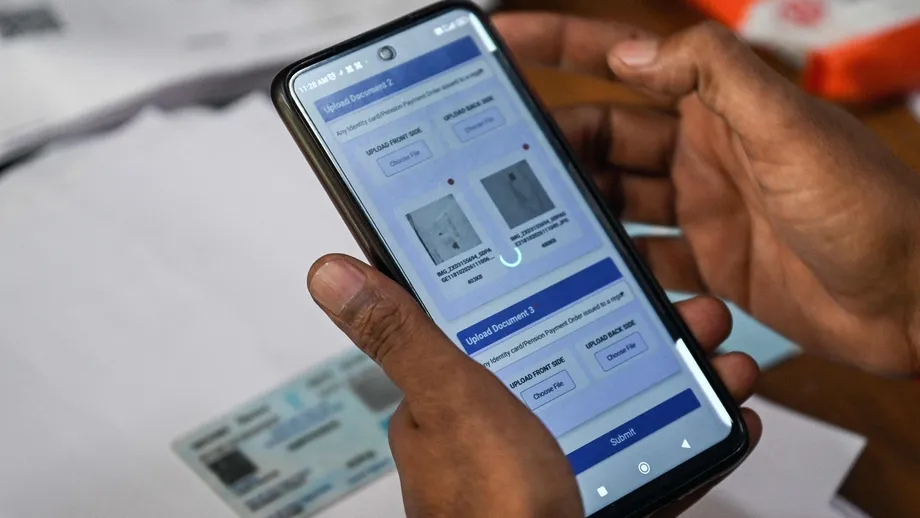
District election officials and EROs must generate the fresh forms through the ERO dashboard in ECINET, the Election Commission's digital platform. Forms can reach voters physically or through WhatsApp, email or SMS where contact details are available.
Electors can also obtain or complete the form through the Election Commission website or ECINET application using their original Elector Photo Identity Card number, commonly called an EPIC number. Keeping that number connects the application to the person's earlier electoral record.
Local officers must try to reach people again
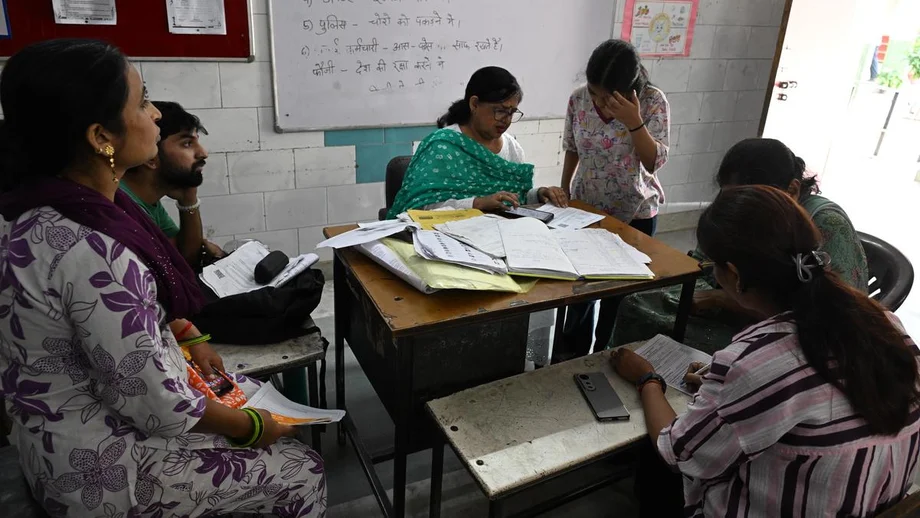
BLOs have been instructed to make renewed home visits and enquiries rather than wait for every omitted voter to approach an office. They can contact neighbours, family members and resident welfare associations, and use available telephone numbers to trace affected electors.
Political parties' booth level agents can help officers establish contact. These agents represent parties at the local polling area level; registration decisions remain with election officials.
The Commission described the contact effort in its instructions to officials:
The BLOs shall make every possible effort in coordination with concerned BLAs of various political parties to establish contact with such electors through house-to-house visits, enquiries from neighbours or family members or Resident Welfare Associations (RWAs) and by using available contact numbers, wherever feasible,
The renewed outreach matters especially for voters who were away when an officer first visited, missed a message or did not understand that a form had to be returned. The new statement gives them a way to explain the missed submission while officials check their eligibility.
Special arrangements for people who moved or lack a home
Voters who have moved within the same state can use the fresh enumeration form without submitting Form 8 under this procedure. They must provide a signed statement identifying their new address and Assembly constituency, together with address proof.
An Assembly constituency is the area that elects a representative to the state legislature. Recording the correct constituency helps officials place a voter on the roll for their current home and avoid leaving entries at both the old and new addresses.
People who have moved can submit their documents to the ERO or Assistant ERO responsible for their new constituency. The BLO for their new polling area can also assist them.
Homeless electors who lack documents proving their address can rely on a BLO's field verification report as residence proof. That provision gives people without conventional housing documents a practical route through the checking process.
Why Form 6 became a legal concern
Before the November 6 directive, previously registered voters missing from SIR draft rolls were being directed to Form 6, the application used for fresh inclusion. Its declaration about seeking registration for the first time caused concern among people who had already voted in earlier elections.
On November 3, the Election Commission issued a clarification to Chief Electoral Officers across all states and Union Territories. It said earlier registration alone should not expose an applicant to prosecution for submitting Form 6 when their name was absent from the draft roll.
The clarification addressed Section 31 of the Representation of the People Act, 1950, which concerns false declarations connected with electoral registration. The Commission instructed officials not to initiate action solely because someone previously enrolled had submitted Form 6 during or after SIR.
Conditions still apply: the applicant must not already be enrolled in another parliamentary or Assembly constituency, and the declaration must otherwise comply with the law. The Commission cited the Delhi High Court case Nilotpal Dutta and Others, in which applicants were permitted to submit Form 6 for consideration according to law.
The Commission also separated the declaration specific to SIR from the online Form 6 application. Anyone who has already submitted Form 6 can continue through that application without filing another enumeration form and statement.
Delhi figures put address changes at the centre
Bhardwaj and Johri, the activists challenging Delhi exclusions in the Supreme Court, said 31.59 lakh of the 47.56 lakh names removed in the first phase were classified as permanently shifted. Another 11.73 lakh were marked absent or untraceable.
Together, those two groups account for 43.32 lakh names, about 91% of the total they cited. The figures explain why the revised procedure places so much weight on locating people and recording changes of address.
The activists welcomed the new route and the provision for retaining earlier voter identification numbers. They said preserving those numbers would protect the historical record of people who were already registered.
The practical difficulty was visible before this directive. Delhi tailor Kamta Prasad, whose record listed him as dead, described losing working time while trying to correct his entry after the earlier voter exclusions. An October 20 account of Delhi processing recorded decisions on only 1,238 of roughly 450,000 Form 6 applications over 42 days. That earlier snapshot shows why receiving an application and completing its examination are separate tasks for election offices.
Court scrutiny and the approaching deadlines
The Supreme Court questioned the treatment of omitted Delhi voters on October 28, asking why previously registered people were being directed to Form 6 and why Form 8 could not be used. The court also urged a mechanism to contact people who had been missed during enumeration.
The following dates frame the new opportunity and the next stages:
- August 31: Delhi's draft electoral roll was published, with approximately 47.6 lakh names excluded.
- October 28: The Supreme Court questioned the procedure for previously registered voters missing from the draft.
- October 29: The Election Commission extended revision schedules in several states.
- November 3: The Commission clarified the use of Form 6 and protection from prosecution solely because of earlier enrolment.
- November 6: Fresh enumeration forms and renewed contact efforts were ordered.
- November 13: Maharashtra's reopened period for claims and objections closes.
- November 19: The Supreme Court is scheduled to examine related concerns about omitted Delhi voters.
- November 25: Delhi's extended deadline for claims and objections expires.
- November 30: Final rolls are scheduled in Maharashtra, Haryana, Andhra Pradesh, Telangana and Nagaland.
- December 22: Delhi's final electoral roll is scheduled for publication.
A corresponding final publication date for Jharkhand was not specified in the announced schedule described alongside these instructions. Voters there will need to follow the timetable issued by their election authorities.
Verification and monitoring will decide the outcome
EROs must examine the enumeration forms and accompanying statements under Rule 21(1) of the Registration of Electors Rules, 1960. Accepted forms will be kept separately for inclusion in the final rolls during the ongoing revision. Restoration follows examination and acceptance by the responsible officer.
The Commission has ordered a monitoring mechanism, broad publicity and an action taken report from officials. Its stated objectives are to give every eligible elector an opportunity for inclusion while preventing duplicate registrations.
The digital handling of corrections also remains relevant. The Commission's refusal to disclose software details under the Right to Information Act in October left information about screening tools and review procedures undisclosed. The Commission maintained that EROs decide inclusion and exclusion using facts and records. The fresh instructions now place responsibility on those officers to turn returned forms into examined cases and accepted entries.
Congress general secretary responsible for communications Jairam Ramesh called the November 6 directive a belated admission of wrongful exclusion. The Commission's instructions concentrate on renewed contact, individual verification and safeguards against duplicate enrolment. For affected voters, the immediate task is concrete: check the republished list, complete the relevant submission before the local deadline and follow its progress toward the final roll.
Key Points
- The November 6 directive covers Delhi, Maharashtra, Haryana, Andhra Pradesh, Jharkhand, Telangana and Nagaland.
- Previously registered ASDD electors whose enumeration forms were not returned can submit fresh forms and the required statements.
- Officials must republish exclusion lists with probable reasons and renew efforts to contact voters.
- People who moved within the same state can use this procedure without Form 8; homeless voters can rely on field verification for residence proof.
- Anyone who already submitted Form 6 need not submit another enumeration form.
- Election officers must verify applications before accepted names enter the final rolls.
- Delhi's claims deadline is November 25, with its final roll scheduled for December 22.