Political Controversy Erupts in Tamil Nadu
Thol Thirumavalavan, who serves as the president of the Viduthalai Chiruthaigal Katchi and as a member of parliament for Chidambaram, traveled to Sri Lanka on November 17, 2026. His journey included a stop at Valvettithurai in the Jaffna district, where he visited the former residence of Velupillai Prabhakaran, the slain leader of the Liberation Tigers of Tamil Eelam. This visit swiftly ignited a political firestorm across Tamil Nadu, placing the ruling coalition under intense pressure from opposition parties.
Contents
The Liberation Tigers of Tamil Eelam was an armed separatist organization that fought for an independent Tamil state during the decades-long civil war in Sri Lanka. The group was banned in India following a series of violent conflicts and its involvement in high-profile political assassinations. The most significant of these events occurred on May 21, 1991, when a suicide bomber affiliated with the group killed former Indian Prime Minister Rajiv Gandhi during an election campaign rally in Sriperumbudur, Tamil Nadu. Because Rajiv Gandhi was serving as the president of the Congress party at the time of his death, the legacy of the assassination remains a deeply sensitive subject for party members and supporters.
The political alliance in Tamil Nadu brings together several parties that supported Chief Minister C Joseph Vijay and his party, the Tamilaga Vettri Kazhagam, after the 2026 Assembly election. The Tamilaga Vettri Kazhagam emerged as the single-biggest party by winning 108 seats in the 234-member Assembly, falling short of the 118 seats needed for a majority. To form a government, the party relied on backing from the Congress, Left parties, the Indian Union Muslim League, and the Viduthalai Chiruthaigal Katchi. Although the Viduthalai Chiruthaigal Katchi holds only two seats in the legislature, its role as a coalition partner representing Dalit rights and Tamil identity gives it considerable influence within the governing arrangement.
Demolished Homestead and Memorial Sites
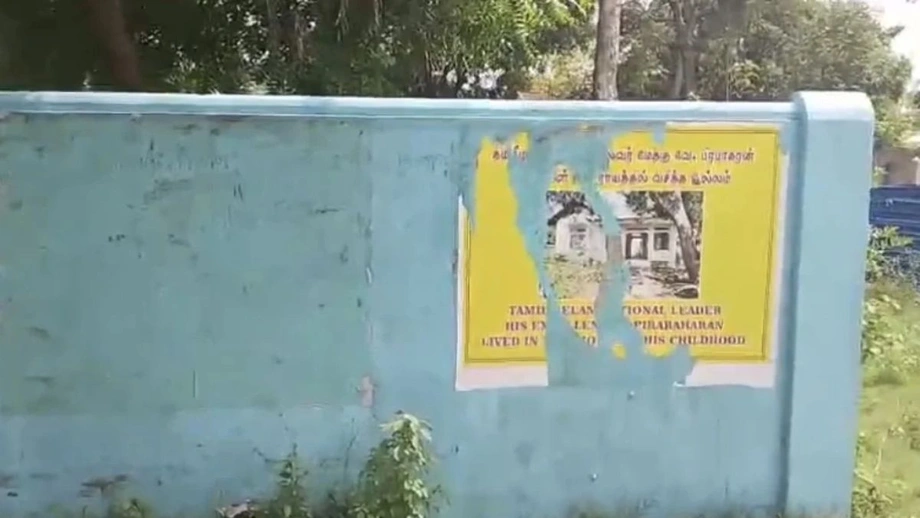
The site of the visit in Valvettithurai bears little resemblance to the home where the insurgent leader spent his childhood years. The Sri Lankan Army demolished the ancestral property in 2010, just one year after the conclusion of the civil war that tore the island nation apart. Authorities subsequently leveled the ground, leaving behind an empty plot of land where the house once stood. Today, the only marker at the location is a roadside board written in Tamil and English stating that the Tamil Eelam national leader lived in the house as a child. Shortly after the visiting politician departed, unidentified individuals tore down a banner that had been placed on the boundary wall of the property.
The trip to Sri Lanka served multiple purposes for the Viduthalai Chiruthaigal Katchi leader, who traveled primarily to attend the funeral services of veteran Tamil politician M.K. Shivajilingam held on November 16. During his time in the northern provinces, the visiting lawmaker also stopped at the Chemmani memorial site in Jaffna. This location is associated with the discovery of mass graves, where he paid his respects at the Anaiyaa Vilakku memorial pillar in memory of individuals buried there. Relatives of missing persons marched on the Chemmani grounds the following morning, burning an interim report authored by Professor Raj Somadeva and demanding that future excavations of the mass graves be placed under international supervision.
In addition to visiting memorial sites, the visiting Indian parliamentarian met with Jaffna member of parliament Sivagnanam Shritharan to discuss current living conditions and political developments affecting Tamil communities in the northern and eastern provinces. These engagements occurred alongside his presence at a flower exhibition organized by the Tamil Desiya Pasumai Iyakkam to coincide with tree planting month across the northern districts. While his itinerary included mourning a political figure and addressing regional human rights concerns, the stop at the razed homestead of the former insurgent leader drew intense scrutiny from political opponents.
Sharp Condemnation from the Bharatiya Janata Party
The Bharatiya Janata Party in Tamil Nadu launched a vigorous attack against the visiting politician, utilizing the event to target both the Viduthalai Chiruthaigal Katchi and its coalition partners in the state government. Narayanan Thirupathy, who serves as the chief spokesperson for the Bharatiya Janata Party in Tamil Nadu, published a statement on the social media platform X describing the visit as a shameful and unpardonable act. He argued that the former insurgent leader was not a freedom fighter but rather the head of a banned terrorist organization responsible for killing an elected Indian prime minister on Indian soil.
Narayanan Thirupathy directed strong words at the actions of the visiting official, making clear his party's stance on the matter. He articulated this position directly in his public statements regarding the tribute paid at the demolished residence.
Prabhakaran was not a freedom fighter. He was the head of a banned terrorist organisation that murdered an elected Prime Minister of India on Indian soil. Any Indian political leader who chooses to visit his house is not showing solidarity with Tamils, he is insulting the memory of Rajiv Gandhi and the Indian security personnel who fought the Liberation Tigers of Tamil Eelam and normalising a man who waged war against India.
The opposition spokesperson also questioned why the Congress party continues to maintain a political alliance with the Viduthalai Chiruthaigal Katchi in the current state administration. He argued that sharing power with a party whose leader paid respects at the residence of the man responsible for the assassination of the former prime minister compromises the political integrity of the Congress party. He demanded that the Congress either sever its ties with the regional party or accept the political burden of association with figures who allegedly glorify the architect of the deadly attack.
The Dilemma Facing the Congress Party
The Congress party found itself placed in a difficult political position following the remarks and the widespread media coverage of the visit. The assassination of Rajiv Gandhi remains a defining and painful moment in the history of the national party. Leaders of the party have previously addressed the personal tragedy with statements of forgiveness, reflecting a desire to move beyond personal bitterness. Rahul Gandhi, who served as the Congress president, stated in Malaysia in 2018 and reiterated in 2021 that he and his sister Priyanka Gandhi had completely forgiven the individuals responsible for their father's death and harbored no anger or hatred toward anyone.
Despite these past statements regarding personal forgiveness, the political reality of sharing power in a regional coalition creates friction for the party organization. Breaking the alliance with the Viduthalai Chiruthaigal Katchi could destabilize the government led by Chief Minister C Joseph Vijay, potentially fracturing the rainbow coalition that successfully unseated previous administrations. Conversely, remaining silent in the face of persistent opposition attacks allows political rivals to portray the party as unprincipled and indifferent to its own historical legacy. The silence maintained by regional and national leaders of the party left a vacuum that opponents eagerly filled with accusations of political opportunism.
The broader political landscape in the state features competing demands from various regional groups seeking concessions from the administration. While the coalition navigates the fallout from the visit to Jaffna, other allied factions have raised separate controversial issues that test the unity of the ruling arrangement. Demonstrations in Chennai organized by the Manithaneya Makkal Katchi, led by Nagapattinam MLA MH Jawahirullah, demanded the release of twenty-two Muslim prisoners who have spent nearly twenty-eight years behind bars, including fourteen individuals convicted in the February 14, 1998 Coimbatore serial bomb blasts that killed fifty-eight people. These simultaneous pressures compound the challenges faced by the leadership in maintaining stability across the governing partnership.
Water Sector Infrastructure and Regional Context
Infrastructure development across the island nation continues alongside political debates, supported by international financing aimed at improving basic services for local populations. The Asian Development Bank announced a $300 million financing package for Sri Lanka, combining physical construction with institutional reforms in the water and sanitation sectors. Shannon Cowlin, the country director for the bank in Sri Lanka, emphasized the connection between basic services and regional well-being. She explained that access to safe and reliable water services remains essential for public health and economic growth across communities.
The approved funding package allocates $200 million toward the Climate-Resilient Sustainable Water Supply and Sanitation Project, which accounts for two-thirds of the total financial commitment. This infrastructure initiative focuses on constructing water treatment plants, transmission and distribution networks, and storage reservoirs in locations such as Colombo and Lunugamwehera. In Jaffna, the investment targets the development of wastewater treatment facilities, sewerage networks, and pumping stations to improve sanitation standards for approximately 250,000 residents. The remaining $100 million supports the second subprogram of the Water Supply and Sanitation Reform Program, focusing on water safety, tariff structures, resource management, and the financial performance of the National Water Supply and Drainage Board.
A cabinet approval registered earlier in May 2026 outlined five specific subprojects under the infrastructure umbrella, including upgrades to the Ambatale water treatment system, improvements to the Jubilee water supply system, non-revenue water management in Kolonnawa, an integrated water scheme in Lunugamwehera with a capacity of 20,000 cubic meters, and the Jaffna wastewater project. These developments build upon earlier infrastructure investments in the region, such as the major water network expansion noted after last year's water network approvals that sought to upgrade urban distribution systems. The combination of international financing and local administrative reforms highlights ongoing efforts to address long-standing infrastructure deficits in areas affected by decades of conflict.
Key Points
- Viduthalai Chiruthaigal Katchi leader Thol Thirumavalavan visited the razed home of Velupillai Prabhakaran in Valvettithurai on November 17, 2026.
- The Sri Lankan Army demolished the ancestral home in 2010, leaving an empty plot marked by a roadside sign.
- The opposition Bharatiya Janata Party strongly condemned the visit, labeling it an insult to the memory of former Prime Minister Rajiv Gandhi.
- The Congress party, which shares power with the Viduthalai Chiruthaigal Katchi in Tamil Nadu, remained publicly silent on the controversy.
- The visiting lawmaker also attended the funeral of M.K. Shivajilingam and visited mass grave memorials in Chemmani during his trip to Jaffna.