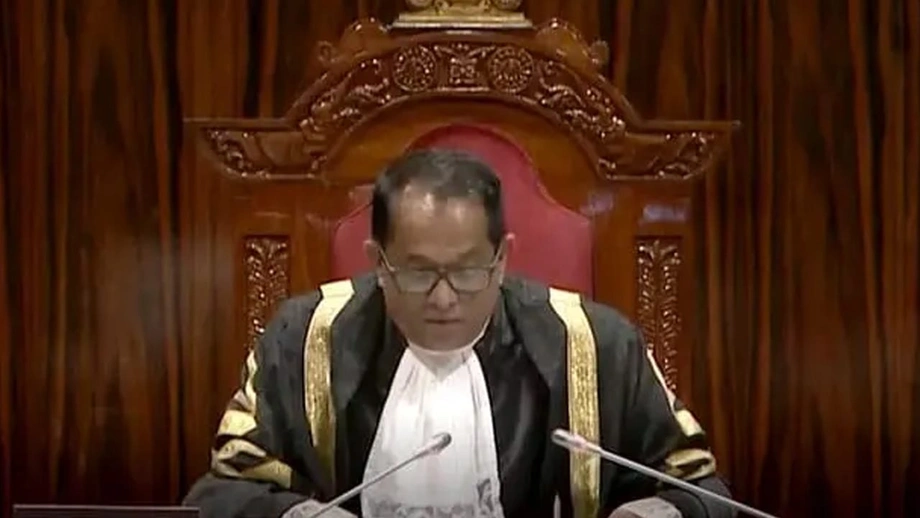
Parliament can pass the bill after required changes
Sri Lanka's Supreme Court has ruled that the provisions of the Prevention of Organised Crime Bill are consistent with the Constitution, clearing the way for Parliament to pass it by a simple majority if specified amendments are made. Speaker Dr Jagath Wickramaratne announced the decision in Parliament on November 21, 2026.
Contents
The ruling sets conditions for the vote. Lawmakers must make amendments agreed to by the Acting Attorney General and changes specified by the Court during the bill's committee stage, when Parliament examines and can revise individual clauses. Once those changes are included, the bill does not need support from two thirds of Parliament.
The decision resolves the constitutional question raised by petitions challenging the bill, while leaving Parliament to carry out the required changes and complete its own legislative process. The final wording of the amended bill and the date of a vote have not been announced.
What did the Court decide?
The Court's determination concerns whether the bill's provisions conflict with Sri Lanka's Constitution and what level of parliamentary support it needs. The Speaker told lawmakers that the Court found the provisions consistent with the Constitution, subject to the changes made at committee stage.
A simple majority means more votes in favour than against among members voting. A two thirds majority is a higher threshold, requiring support from at least two thirds of Parliament's full membership. The Court's ruling means the bill can proceed without that higher threshold if Parliament incorporates the specified amendments.
The bill had been challenged under Article 121(1) of the Constitution, which provides a process for bringing proposed legislation before the Supreme Court for review. The petitioners had asked the Court to find that the bill, in its challenged form, required a two thirds majority and approval at a public referendum.
The announcement does not itself enact the bill. Parliament must still consider the changes and vote on the legislation. The Court also directed that its full determination be included in Parliament's official record.
Which parts must change?
The changes cover a broad range of provisions. The Speaker's announcement listed sections 2, 3, 4, 5, 7 to 12, 14 to 17, 20, 21, 23 to 25, 29 to 34, 36, 37, 39, 41 to 55, and 57, 58 and 61 to 66 for amendment at committee stage.
Section 6 is to be removed from the bill, and items 15, 16, 17 and 33 are to be taken out of its First Schedule. A schedule is an attachment to a law that can list additional details, such as offences or other matters covered by its provisions.
The long list shows that the required revision is not limited to a single clause. It spans dozens of sections, alongside a complete section removal and changes to the schedule. Parliament's committee stage is where lawmakers can work through those details before a final vote.
The Court's conditions include amendments agreed to by the Acting Attorney General as well as amendments specified by the judges. The Speaker's announcement provides the section numbers, but the full determination and revised bill wording are needed to show precisely how each provision will read after the changes.
How did the changes emerge?
The government's proposed revisions were presented during the Supreme Court proceedings. Solicitor General Viraj Dayaratne, appearing for the Attorney General, told the Court that several disputed provisions would be removed and others amended. The Court indicated that further revisions were needed beyond the government's proposals.
Among the provisions the government representative said would be removed were clauses relating to tattoos, arrest for excise offences, arrest powers and requirements to obtain court permission before reporting on serious crimes. The proposed revisions also included reducing a detention period from 72 hours to 48 hours, a reduction of one day.
Other proposed changes concerned copyright under the Intellectual Property Act and provisions of the Bail Act. The Court's final determination requires amendments at committee stage, but the information announced by the Speaker does not set out the full wording of those changes.
The proceedings were heard by a three judge panel led by Chief Justice Preethi Padman Surasena, with Justices Achala Wengappuli and Sampath Abeykoon. Written submissions were due by 4 p.m. on November 11, before the Court communicated its decision to Parliament.
What was at stake in the challenge?
The case brought together objections from the Bar Association of Sri Lanka, civil society groups and individuals. Petitioners argued that the bill's provisions raised constitutional concerns and sought a ruling that its passage required a two thirds majority and a referendum.
During the hearing, President's Counsel Romesh de Silva raised concerns about bail powers and the role of magistrate courts. His argument focused on whether removing or limiting the ability of a magistrate to grant bail would affect judicial authority and people's rights.
Dayaratne argued for the government that the bill would not violate fundamental rights or require a two thirds majority. He described its aim as updating how organised crime is investigated and dealt with, and said the proposed amendments would be made at committee stage. The Court's decision allowed passage by a simple majority only on the condition that the amendments are incorporated.
The bill's reach had also prompted questions about who could be caught by its provisions. In the hearing, judges raised the example of a person transporting someone involved in a crime. Dayaratne said a person who knew about the offence could be covered, and the Court noted that such wording could affect a taxi driver. That exchange illustrates why the meaning and limits of the revised clauses matter to people beyond members of criminal groups.
What would the law cover?
In court, Dayaratne described organised crime as more than several people coming together for one act. His explanation referred to people organising over a period of time to commit crimes for financial or other benefit, where the offence could carry a prison term of four years or more. He said the proposed law was intended to support investigations and prosecution.
That description came from the government's argument during the case. The eventual scope of the law will depend on the wording Parliament approves, including the amendments required by the Court. Removing or revising provisions can change which conduct falls within the bill and what powers investigators may use.
The government had earlier indicated it would remove provisions concerning tattoos and hairstyles as ways to identify gang membership, as well as provisions that could make association with gang members a basis for legal action. Public concerns included the risk of treating a person as involved simply because they knew or spent time with someone linked to crime. Those planned revisions form part of the broader changes now to be handled in Parliament.
The government had also said it intended to hold further public consultations and review the bill before passage. The Supreme Court's decision settles the constitutional route for the bill, but the final text and parliamentary timetable remain to be established.
What happens next in Parliament?
Parliament must incorporate the agreed and Court specified changes during committee stage. Members can then consider the amended text before voting. The Court's ruling removes the need for a two thirds majority if its conditions are met, but it does not announce when the committee stage or final vote will take place.
The November 9 hearing, when the government presented proposed changes and the Court completed its consideration, followed earlier arguments over the bill's provisions and constitutional status. The proceedings were brought through 26 petitions challenging the bill, and the November 9 hearing concluded with the Court saying it would communicate its determination to the Speaker and President.
Before the ruling, the government had described plans for substantial revisions and further consultation. Former MP M. A. Sumanthiran, speaking at a Colombo seminar on November 16, warned that the proposed Organised Crime Bill and a separate Protection of the State from Terrorism Bill could restrict people's ability to protest against the government. He called for a nationwide campaign and said he expected the government might seek to bring the bills back to Parliament in January. That was his expectation, not a parliamentary schedule announced with the Court's decision.
The next concrete steps are the committee stage and a parliamentary vote. No date for either has been given, and the full revised text has not yet been set out in the announcement.
Key Points
The Supreme Court found the Prevention of Organised Crime Bill consistent with the Constitution, subject to amendments.
Speaker Dr Jagath Wickramaratne announced the decision in Parliament on November 21, 2026.
Parliament can pass the bill by a simple majority after making the amendments agreed to by the Acting Attorney General and specified by the Court.
Section 6 and four items in the First Schedule are to be removed, alongside amendments to dozens of other sections.
The final wording and dates for committee consideration and a vote have not been announced.