Detention Powers and Constitutional Rights at Centre of Challenge
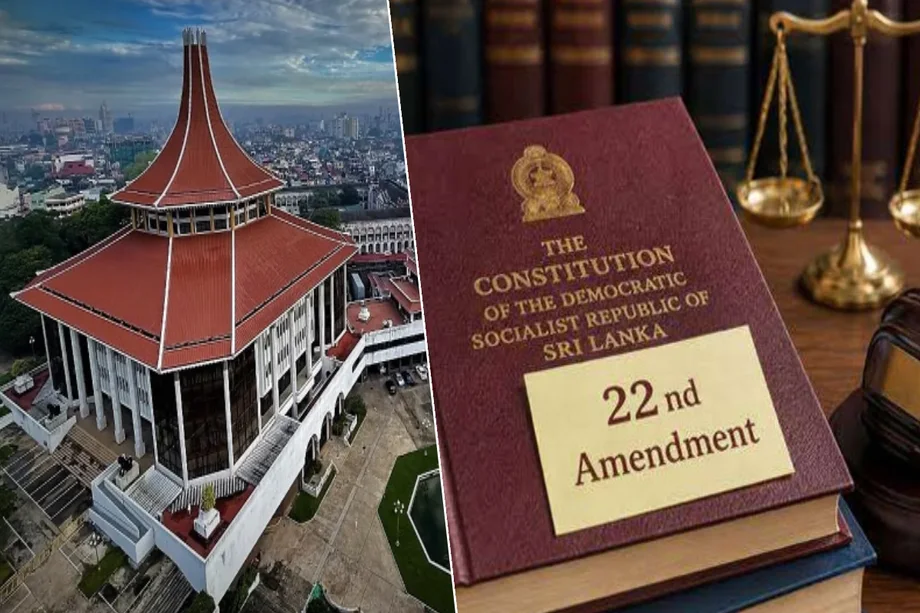
Sri Lanka's Supreme Court is hearing 26 petitions challenging the proposed Organised Crime Prevention Bill, with lawyers contesting provisions they say would allow detention for between two months and a year on the authority of the Defence Ministry secretary. The Attorney General is scheduled to present the government's position on Monday, November 9, following arguments heard on November 4 and 5, 2026.
Contents
- Detention Powers and Constitutional Rights at Centre of Challenge
- What Happened in Court?
- How Broadly Would Serious Crime Be Defined?
- Who Would Control Extended Detention?
- Police Custody, Bail and the Magistrate's Role
- Why Lawyers Are Concerned About Court Reporting
- Why Seek a Two-Thirds Majority and a Referendum?
- What Has the President Promised to Change?
- Key Points
Chief Justice Preethi Padman Surasena is presiding over the bench, alongside Justices Achala Wengappuli and Sampath Abeykoon. The petitioners include the Bar Association of Sri Lanka, Distilleries Company and Malinda Seneviratne. They are asking the court to require a two-thirds majority in Parliament and approval through a public referendum for the bill in its challenged form.
President Anura Kumara Dissanayake has also announced plans to remove a provision concerning tattoos and amend provisions relating to offences under the Excise Ordinance. His announcement identifies two areas the government is prepared to change, while the court proceedings address wider objections involving detention, bail, judicial authority and reporting on criminal cases.
For anyone arrested under the proposed law, the central issue is practical: who would decide whether they remain in custody, how long that custody could last and what power a judge would have to intervene. For journalists, another concern is whether restrictions on publishing information about serious crimes could affect coverage of court proceedings.
What Happened in Court?
Lawyers representing the petitioners began their oral arguments on the morning of November 4 and continued late into the night. The petitions came before the same bench again on November 5.
The judges directed the petitioners to file written submissions setting out their constitutional objections and the amendments they believed were needed. Those submissions were filed on November 5, giving the court the petitioners' detailed positions before the government's scheduled response.
The main dates in the proceedings are:
- November 4, 2026: Lawyers for the petitioners began presenting arguments, with submissions continuing late into the night.
- November 5, 2026: The court considered the 26 petitions again, and petitioners filed written arguments on constitutionality and proposed amendments.
- November 9, 2026: The Attorney General is scheduled to present the government's position.
Alongside the lawyers who addressed specific provisions, counsel appearing for the petitioners included President's Counsel Sanjeewa Jayawardena, M.A. Sumanthiran, Ali Sabry and Naveen Marapana. Solicitor General Viraj Dayaratne, Additional Solicitor General Sudarshana de Silva, Deputy Solicitor General Sudharshi Herath and Dr. Avanthi Perera appeared on behalf of the Attorney General.
How Broadly Would Serious Crime Be Defined?
President's Counsel Romesh de Silva, appearing for petitioner Malinda Seneviratne, argued that the bill's definition of serious offences was excessively broad. That objection concerns the starting point for the proposed law: which suspected offences would bring a person within its reach.
A legal definition determines when particular powers become available. If a law gives investigators exceptional powers for serious offences, the wording of that category determines the range of cases in which those powers can be used. De Silva's argument therefore connects the definition directly to the detention provisions he also challenged.
The court is being asked to examine both parts together: the conduct covered by the bill and the powers authorities would receive when investigating it. For people facing investigation, those provisions would shape the legal process from the beginning, before any decision about guilt.
Who Would Control Extended Detention?
De Silva objected to provisions under which the Defence Ministry secretary could order detention for between two months and a year following a request from the Inspector General of Police or a Deputy Inspector General of Police. His challenge focuses on the authority given to an executive official to keep a suspect in custody.
The executive is the branch of government that administers laws and directs state agencies. Courts perform a different role, including deciding legal disputes and reviewing the lawful basis for restrictions on liberty. The petitioners' concern is about how the bill would divide authority between those branches.
President's Counsel Iraj de Silva also argued that certain provisions would allow the executive to restrict personal freedom without judicial intervention. His submission placed the role of the courts at the centre of the constitutional challenge.
A person detained for investigation loses freedom while authorities examine a suspected offence. The proposed period described in court could extend to a full year, making the rules governing authorisation, review and release a major issue for suspects and their families.
Police Custody, Bail and the Magistrate's Role
Lawyer Suren Fernando raised objections concerning detention in police custody for 72 hours, restrictions on bail and limits on the powers of magistrates. These issues concern the early stages of an investigation and the opportunities a detained person would have to seek release.
Seventy-two hours is three days. That period concerns police custody, while the longer period challenged by Romesh de Silva concerns detention authorised by the Defence Ministry secretary. The court arguments address both the initial custody arrangements and the prospect of a much longer restriction on freedom.
Bail allows an accused person to remain outside custody while a case proceeds, usually subject to conditions intended to secure attendance in court and protect the legal process. Restrictions on bail can therefore have an immediate effect on whether someone remains detained while awaiting further proceedings.
Fernando's objections about magistrates concern the powers available to judges dealing with those decisions. Taken together, the custody, bail and detention arguments ask how much control the courts would retain over a person's continued confinement.
Why Lawyers Are Concerned About Court Reporting
President's Counsel Saliya Peiris, representing the Bar Association of Sri Lanka, argued that the bill would give police powers exceeding those of the judiciary and create opportunities for misuse. He also challenged restrictions on disclosing information concerning serious crimes.
Peiris warned that those restrictions could affect media reporting on court proceedings. Court coverage allows the public to learn what allegations have been made, what lawyers have argued and what judges have decided. A restriction on publishing information about an offence could therefore affect people beyond the suspect and the investigators.
The reporting objection brings another public interest into the case: access to information about the justice process. Peiris placed that concern alongside his arguments about police authority and the fundamental rights protected by the Constitution.
Why Seek a Two-Thirds Majority and a Referendum?
The petitioners argue that provisions of the bill conflict with the Constitution and should require approval by a two-thirds majority in Parliament and by voters in a public referendum. Peiris also argued that the bill should be put to a referendum because of its effect on fundamental rights.
A constitutional challenge asks whether proposed legislation complies with the country's highest law. The question before the Supreme Court concerns the legal requirements for passing the bill, including whether the challenged provisions require a higher level of approval than ordinary legislation.
A two-thirds majority would require broader parliamentary support, while a referendum would place the question before voters. The petitioners are seeking both requirements. The court has yet to give its determination, and the government's detailed response is scheduled for November 9.
The written submissions also set out amendments sought by the petitioners. That makes the wording of possible changes part of the proceedings, alongside the arguments about the bill as presented to Parliament.
What Has the President Promised to Change?
President Dissanayake said the provision concerning tattoos would be removed and provisions relating to offences under the Excise Ordinance would be amended. He made the announcement at a religious conference marking the first anniversary of the operation described as Ekata Nagitimu – Iwath Wenu, also referred to as Together We Rise.
The Excise Ordinance governs matters including liquor regulation and related offences. The president's announcement places those offences among the areas being reconsidered in the proposed organised crime legislation. Distilleries Company is among the petitioners challenging the bill.
The presidential announcement and the legal submissions address different parts of the proposed legislation. Removing the tattoo provision would change one aspect of its reach. The lawyers' arguments also seek changes concerning the definition of serious offences, detention, bail, judicial powers and the publication of information.
The Attorney General's scheduled appearance is the next stated opportunity for the government to explain its position in court. That response will follow the petitioners' oral arguments and their written proposals for amendments.
Key Points
- Sri Lanka's Supreme Court is considering 26 petitions against the proposed Organised Crime Prevention Bill.
- The challenges concern the definition of serious offences, detention powers, bail, judicial authority and restrictions affecting court reporting.
- Lawyers objected to detention for between two months and a year authorised by the Defence Ministry secretary at the request of senior police officers.
- Petitioners seek a two-thirds parliamentary majority and approval through a public referendum.
- President Dissanayake has announced the removal of the tattoo provision and amendments concerning Excise Ordinance offences.
- The Attorney General is scheduled to present the government's position on November 9, 2026.